Alejandro Mejias-Lopez - Böcker
Visar alla böcker från författaren Alejandro Mejias-Lopez. Handla med fri frakt och snabb leverans.
2 produkter
2 produkter
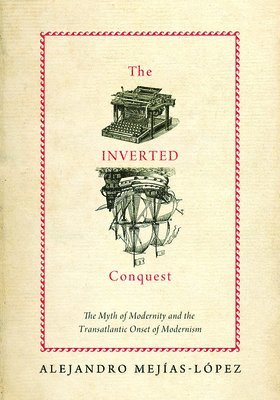
Inverted Conquest
The Myth of Modernity and the Transatlantic Onset of Modernism
Inbunden, Engelska, 2010
1 299 kr
Skickas inom 5-8 vardagar
Modernismo (1880S-1920S) is considered one of the most groundbreaking literary movements in Hispanic history, as it transformed literature in Spanish to an extent not seen since the Renaissance. As Alejandro Mejias-Lopez demonstrates, however, modernismo was also groundbreaking in another, more radical way: it was the first time a postcolonial literature took over the literary field of the former European metropolis. Expanding Bourdieu's concepts of cultural field and symbolic capital beyond national boundaries, ""The Inverted Conquest"" shows how modernismo originated in Latin America and traveled to Spain, where it provoked a complete renovation of Spanish letters and contributed to a national identity crisis. In the process, described by Latin American writers as a reversal of colonial relations, modernismo wrested literary and cultural authority away from Spain, moving the cultural center of the Hispanic world to the Americas. Mejias-Lopez further reveals how Spanish American modernistas confronted the racial supremacist claims and homogenizing force of an Anglo-American modernity that defined the Hispanic as un-modern. Constructing a new Hispanic genealogy, modernistas wrote Spain as the birthplace of modernity and themselves as the true bearers of the modern spirit, moved by the pursuit of knowledge, cosmopolitanism, and cultural miscegenation, rather than technology, consumption, and scientific theories of racial purity. Bound by the intrinsic limits of neocolonial and postcolonial theories, scholarship has been unwilling or unable to explore modernismo's profound implications for our understanding of Western modernities.
811 kr
Skickas inom 7-10 vardagar
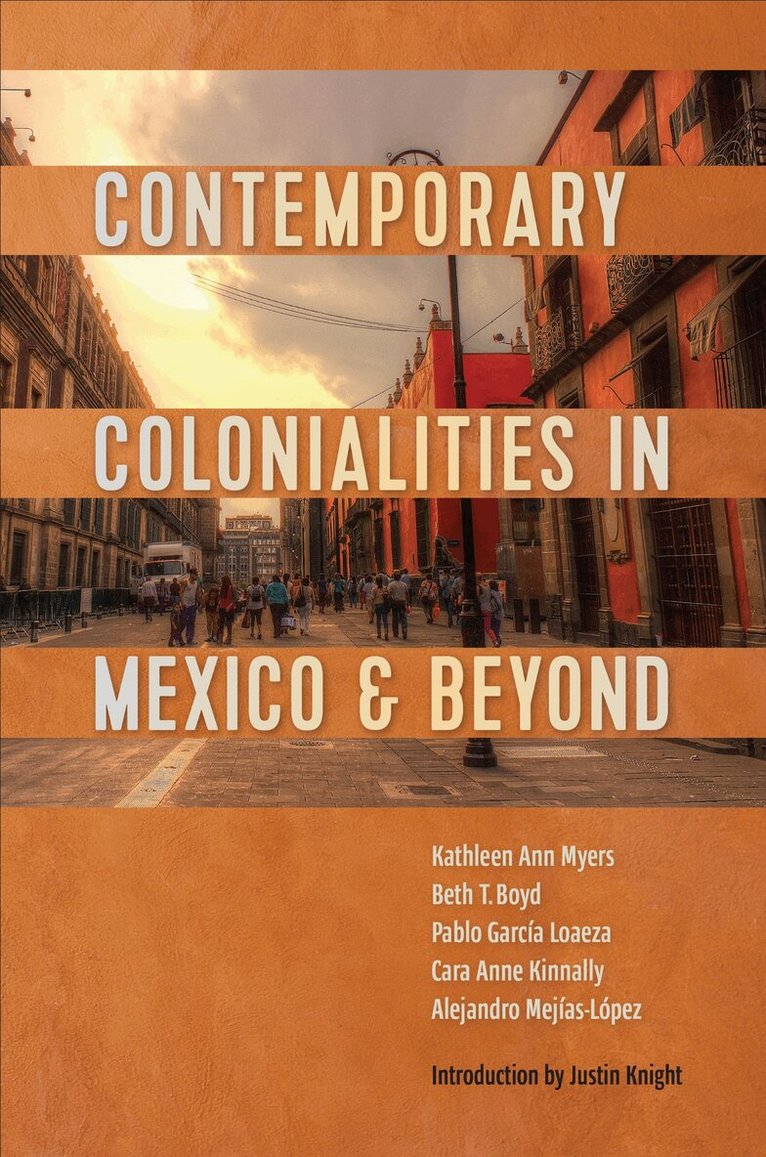
Contemporary Colonialities in Mexico and Beyond explores the changing dynamic of coloniality by focusing on how modern cultural products connect to the foundational structures of colonialism. The book examines how these structures have perpetuated discourses of racial, ethnic, gender, and social exclusion rooted in Mexico’s history. Given the intimate relationship between coloniality and modernity, the volume addresses three central questions: How does the Mexican colonial history influence the definition of Mexico from within and outside its borders? What issues rooted in coloniality recur over time and space? And finally, how do cultural products provide a concrete and tangible way of studying coloniality, its history, and its evolution?The book analyses how literary works, movies, television series, and social media posts reconfigure colonial difference and spatialization. Supported by careful historical and cultural contextualization, these analyses will allow readers to appreciate contemporary Mexico vis-à-vis culture and borderland issues in the United States and debates on imperial memory in Spain. Ultimately, Contemporary Colonialities in Mexico and Beyond presents a handbook for readers looking to learn more about coloniality as a pervasive part of global interactions today.