Aleksandr M. Nekrich - Böcker
Visar alla böcker från författaren Aleksandr M. Nekrich. Handla med fri frakt och snabb leverans.
3 produkter
3 produkter
274 kr
Skickas inom 5-8 vardagar
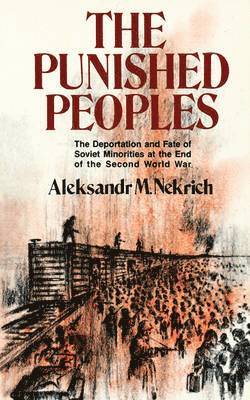
In late 1943 and early 1944, after the Nazi invasion of Russia had been turned back, Soviet troops descended upon the Caucasus, the Caspian steppes, and the Crimea without warning and brutally deported some one million of their people—Chechens, Ingush, Balkars, Karachai, Kalmyks, and Tatars—to Central Asia, Kazakhstan, and Siberia. Hundreds were executed and thousands more were to die of malnutrition, exposure, and harsh treatment. Not until the late 1950s were some of them allowed to return to their homelands, but then, and even now, under a burden of lies and guilt for the treasonous acts of a few.
1 756 kr
Skickas inom 10-15 vardagar
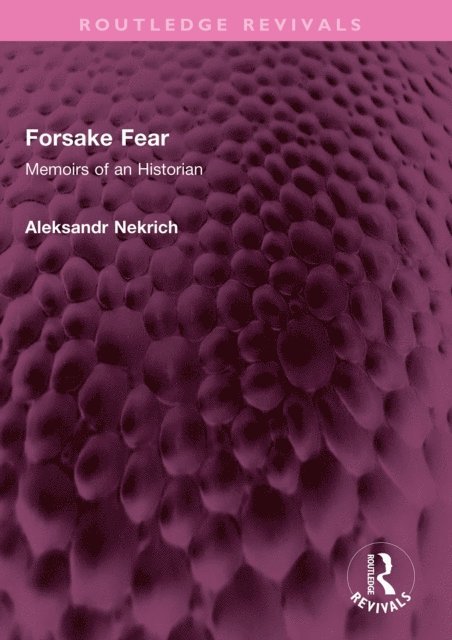
First published in 1991, Forsake Fear is the history of historians in post-war Soviet society. Nekrich, in recounting his own brave story, tells us how he dared to challenge the prevailing conformism. From his unique ad riveting vantage point, Nekrich also provides a broader picture of Soviet society and its intellectual life during high Stalinism and after. In 1945, Aleksandr Nekrich returned from the front. He spent the next three decades at the centre of the Soviet historical profession. He maintained friendships with such noted public figures such as Ivan Maisky, Soviet ambassador to Britain, and Abram Deborin, whom Stalin branded a ‘Menshevik-idealist.’ He also encountered writers, artists, scientists, and even spies. Among Soviet historians, Nekrich was the only one who dared to break the taboo and declare that the Stalin-Hitler pact was advantageous to Nazi Germany. This book will be of interest to students of history, literature, international relations, and political science.
483 kr
Skickas inom 10-15 vardagar
First published in 1991, Forsake Fear is the history of historians in post-war Soviet society. Nekrich, in recounting his own brave story, tells us how he dared to challenge the prevailing conformism. From his unique ad riveting vantage point, Nekrich also provides a broader picture of Soviet society and its intellectual life during high Stalinism and after. In 1945, Aleksandr Nekrich returned from the front. He spent the next three decades at the centre of the Soviet historical profession. He maintained friendships with such noted public figures such as Ivan Maisky, Soviet ambassador to Britain, and Abram Deborin, whom Stalin branded a ‘Menshevik-idealist.’ He also encountered writers, artists, scientists, and even spies. Among Soviet historians, Nekrich was the only one who dared to break the taboo and declare that the Stalin-Hitler pact was advantageous to Nazi Germany. This book will be of interest to students of history, literature, international relations, and political science.