Alex Broadbent - Böcker
Visar alla böcker från författaren Alex Broadbent. Handla med fri frakt och snabb leverans.
9 produkter
9 produkter
1 252 kr
Skickas inom 5-8 vardagar
Philosophy of Medicine asks two central questions about medicine: what is it, and what should we think of it? Philosophy of medicine itself has evolved in response to developments in the philosophy of science, especially with regard to epistemology, positioning it to make contributions that are medically useful. This book locates these developments within a larger framework, suggesting that much philosophical thinking about medicine contributes to answering one or both of these two guiding questions. Taking stock of philosophy of medicine's present place in the landscape and its potential to illuminate a wide range of areas, from public health to policy, Alex Broadbent introduces various key topics in the philosophy of medicine. The first part of the book argues for a novel view of the nature of medicine, arguing that medicine should be understood as an inquiry into the nature and causes of health and disease. Medicine excels at achieving understanding, but not at translating this understanding into cure, a frustration that has dogged the history of medicine and continues to the present day.The second part of the book explores how we ought to consider medicine. Contemporary responses, such as evidence-based medicine and medical nihilism, tend to respond by fixing high standards of evidence. Broadbent rejects these approaches in favor of Medical Cosmopolitanism, or a rejection of epistemic relativism and pluralism about medicine that encourages conversations between medical traditions. From this standpoint, Broadbent opens the way to embracing alternative medicine.An accessible and user-friendly guide, Philosophy of Medicine puts these different debates into perspective and identifies areas that demand further exploration.
325 kr
Skickas inom 5-8 vardagar
Philosophy of Medicine asks two central questions about medicine: what is it, and what should we think of it? Philosophy of medicine itself has evolved in response to developments in the philosophy of science, especially with regard to epistemology, positioning it to make contributions that are medically useful. This book locates these developments within a larger framework, suggesting that much philosophical thinking about medicine contributes to answering one or both of these two guiding questions. Taking stock of philosophy of medicine's present place in the landscape and its potential to illuminate a wide range of areas, from public health to policy, Alex Broadbent introduces various key topics in the philosophy of medicine. The first part of the book argues for a novel view of the nature of medicine, arguing that medicine should be understood as an inquiry into the nature and causes of health and disease. Medicine excels at achieving understanding, but not at translating this understanding into cure, a frustration that has dogged the history of medicine and continues to the present day.The second part of the book explores how we ought to consider medicine. Contemporary responses, such as evidence-based medicine and medical nihilism, tend to respond by fixing high standards of evidence. Broadbent rejects these approaches in favor of Medical Cosmopolitanism, or a rejection of epistemic relativism and pluralism about medicine that encourages conversations between medical traditions. From this standpoint, Broadbent opens the way to embracing alternative medicine.An accessible and user-friendly guide, Philosophy of Medicine puts these different debates into perspective and identifies areas that demand further exploration.
1 982 kr
Skickas inom 5-8 vardagar
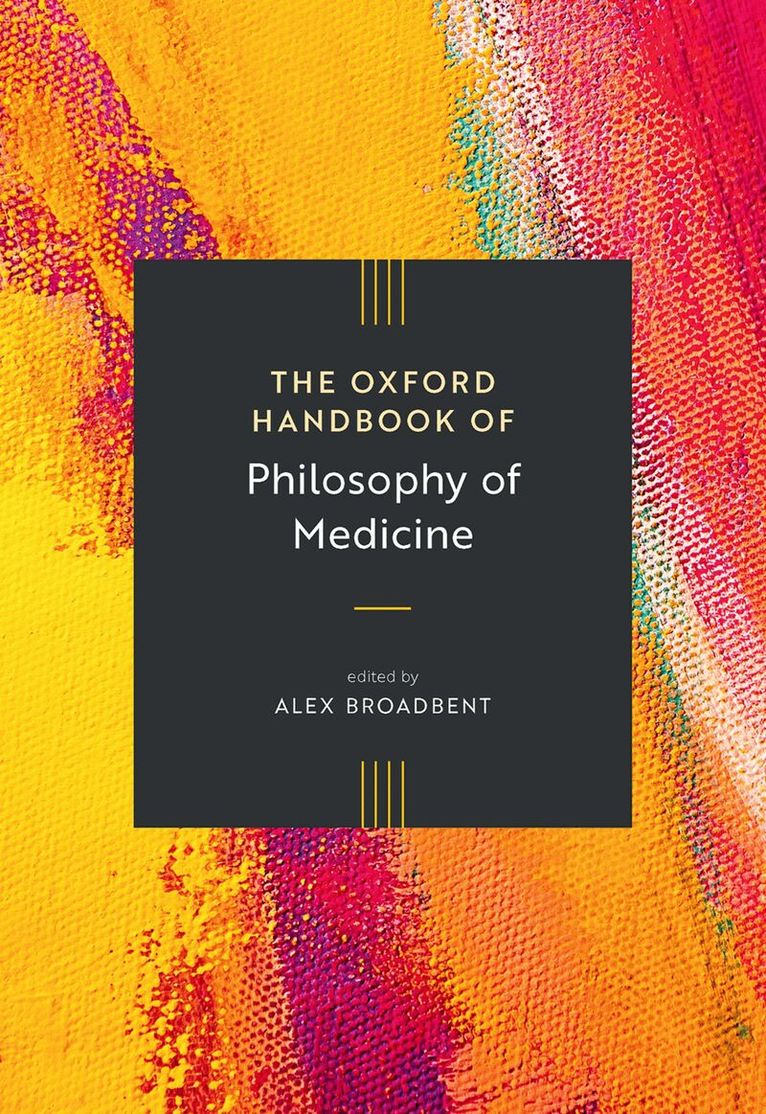
The Oxford Handbook of Philosophy of Medicine is a guide to areas of current activity and change, not only in philosophy of medicine, but also in medical science and practice. It asks questions that concern core problems for this discipline as well as metaphysical questions about the nature of health and truth in medicine, offering critical insights into the evolving landscape of medical thought. This handbook reflects a renewed awareness that medical traditions are culturally diverse and of the philosophical opportunities this creates. It presents important new work on the demarcation of medicine from rivals and the legitimacy of its claims to superiority, while offering a balanced perspective on both the strengths and limitations of biomedicine. The volume explores how to promote better medicine and critically examines the preference in public policy for treatment over prevention, providing nuanced insights into enhancing healthcare practices.Social justice has emerged in contemporary philosophy of medicine as a major concern, and the scholars who have contributed to this volume approach the complex relationship between medical knowledge and action from multiple angles. Medical contexts where race appears--or fails to appear--are covered, as well as concerns regarding gender and models of disability in medicine. Contributors also identify central problems in the uses of artificial intelligence and statistics in medicine, as well as the impact of recent attacks on medical experts from movements such as evidence-based medicine (EBM) and "too much medicine" (TMM). Every chapter in this book seeks to move in two dimensions: to change philosophy, and to change medicine, with many contributors advocating thoughtful reform. This illustrates the paradoxical value of the applied turn in philosophy, which is that, when properly executed, it produces better philosophy. The potential for philosophy of medicine to contribute to medicine is very clear in these chapters, but so is its potential to contribute to philosophy--which is at its best when it seeks to influence something other than itself.
644 kr
Skickas inom 10-15 vardagar
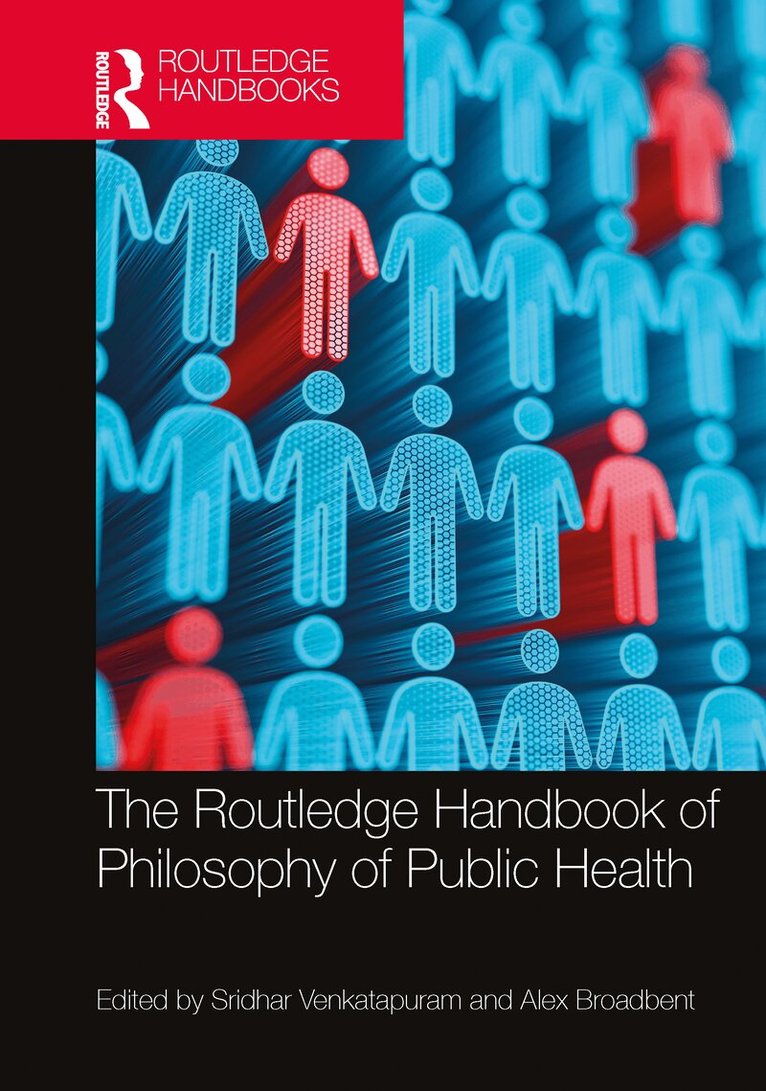
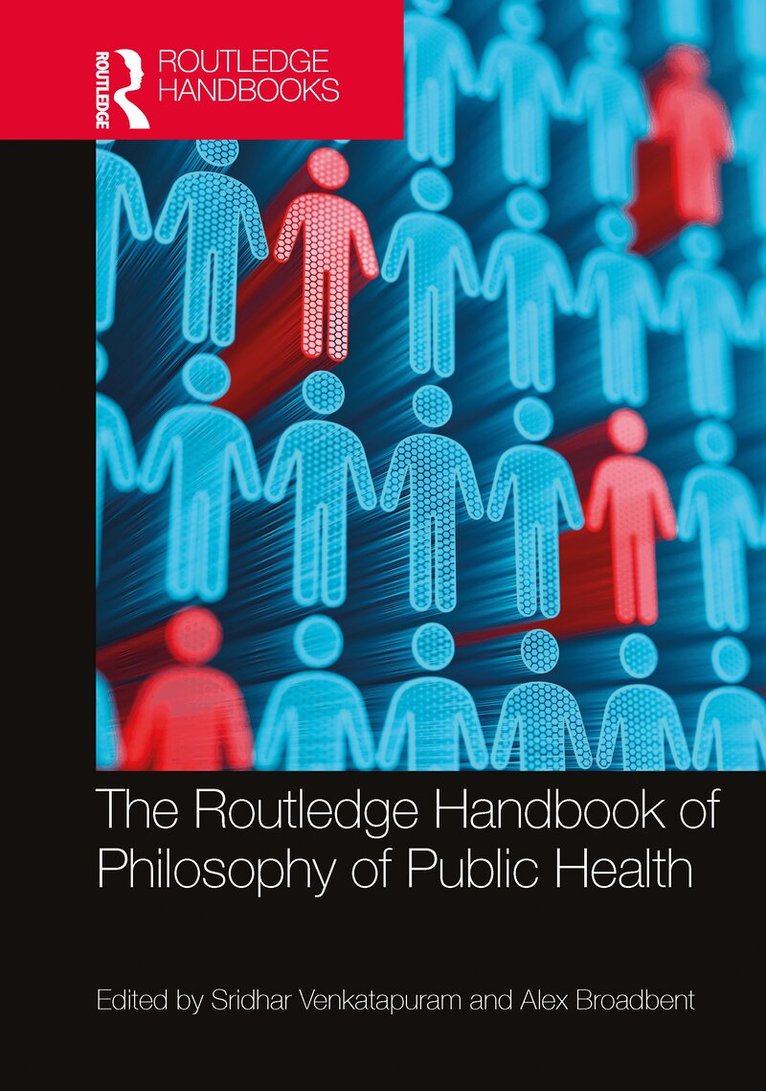
In comparison to medicine, the professional field of public health is far less familiar. What is public health, and perhaps as importantly, what should public health be or become? How do causal concepts shape the public health agenda? How do study designs either promote or demote the environmental causal factors or health inequalities? How is risk understood, expressed, and communicated? Who is public health research centered on? How can we develop technologies so the benefits are more fairly distributed? Do people have a right to public health? How should we integrate ethics into public health practice?The Routledge Handbook of Philosophy of Public Health addresses these questions and more, and is the first collection of its kind. Comprising 26 chapters by an international and interdisciplinary team of contributors, the handbook is divided into four clear parts:Concepts and distinctionsReasons and actionsDistribution and inequalitiesRights and dutiesThe Routledge Handbook of Philosophy of Public Health is a field-defining and sustained reflection on the various ethical, political, methodological, and conceptual aspects of global public health. As such it is an essential reference source for students and scholars working in political philosophy, bioethics, public health ethics, and the philosophy of medicine, as well as for professionals and researchers in related fields such as public health, health economics, and epidemiology.
576 kr
Skickas inom 10-15 vardagar
Power, Knowledge, and Covid-19: The Making of a Scientific Orthodoxy shows, step by step, how a dominant scientific line on Covid-19 was built and defended – and what it left out.Through tightly argued case studies, Alex Broadbent and Pieter Streicher reconstruct how early modelling distinctions (notably the suppression/mitigation frame) and threshold-based reasoning made lockdown the default; how debates on masking and vaccination hardened into dogma; and how rival views were sidelined through credentialing, gatekeeping, and the control of forums. The book names and analyses five recurring features of this orthodoxy – methodological rigidity, scientific dogma, suppression of dissent, indirect political authority (“follow the science”), and scientific injustice – and shows how each shaped decisions across diverse settings.Pairing clear conceptual analysis with accessible evidence reviews, the authors probe where models misled, where uncertainty was overstated or understated, and where costs, context, and equity were neglected – especially in low-resource settings. Rather than relitigating the pandemic, they offer a practical framework for recognizing when science and policy converge too tightly, how to keep plurality alive under pressure, and how to design governance that preserves expertise without closing down legitimate choice. For readers in philosophy, public health, policy, and beyond, this is a concise, non-polemical account of what went wrong, what went right, and how to do better next time.The Open Access version of this book, available at http://www.taylorfrancis.com, has been made available under a Creative Commons Attribution-Non Commercial-No Derivatives (CC BY) 4.0 license.
2 088 kr
Skickas inom 10-15 vardagar
Power, Knowledge, and Covid-19: The Making of a Scientific Orthodoxy shows, step by step, how a dominant scientific line on Covid-19 was built and defended – and what it left out.Through tightly argued case studies, Alex Broadbent and Pieter Streicher reconstruct how early modelling distinctions (notably the suppression/mitigation frame) and threshold-based reasoning made lockdown the default; how debates on masking and vaccination hardened into dogma; and how rival views were sidelined through credentialing, gatekeeping, and the control of forums. The book names and analyses five recurring features of this orthodoxy – methodological rigidity, scientific dogma, suppression of dissent, indirect political authority (“follow the science”), and scientific injustice – and shows how each shaped decisions across diverse settings.Pairing clear conceptual analysis with accessible evidence reviews, the authors probe where models misled, where uncertainty was overstated or understated, and where costs, context, and equity were neglected – especially in low-resource settings. Rather than relitigating the pandemic, they offer a practical framework for recognizing when science and policy converge too tightly, how to keep plurality alive under pressure, and how to design governance that preserves expertise without closing down legitimate choice. For readers in philosophy, public health, policy, and beyond, this is a concise, non-polemical account of what went wrong, what went right, and how to do better next time.The Open Access version of this book, available at http://www.taylorfrancis.com, has been made available under a Creative Commons Attribution-Non Commercial-No Derivatives (CC BY) 4.0 license.
2 289 kr
Skickas inom 10-15 vardagar
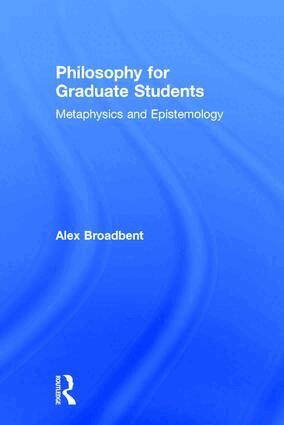
When graduate students start their studies, they usually have sound knowledge of some areas of philosophy, but the overall map of their knowledge is often patchy and disjointed. There are a number of topics that any contemporary philosopher working in any part of the analytic tradition (and in many parts of other traditions too) needs to grasp, and to grasp as a coherent whole rather than a rag-bag of interesting but isolated discussions. This book answers this need, by providing a overview of core topics in metaphysics and epistemology that is at once accessible and nuanced. Ten core topics are explained, and their relation to each other is clearly set out. The book emphasizes the utility of the concepts and distinctions it covers for philosophy as a whole, not just for specialist discussions in metaphysics or epistemology. The text is highly readable and may be used as the basis of a course on these topics. Recommendations for reading are included at the end of each chapter, divided into essential and further readings. The text is also suitable for people approaching philosophy from other disciplines, as an accessible primer to the central topics, concepts and distinctions that are needed to engage meaningfully in contemporary philosophical debate.
630 kr
Skickas inom 10-15 vardagar
When graduate students start their studies, they usually have sound knowledge of some areas of philosophy, but the overall map of their knowledge is often patchy and disjointed. There are a number of topics that any contemporary philosopher working in any part of the analytic tradition (and in many parts of other traditions too) needs to grasp, and to grasp as a coherent whole rather than a rag-bag of interesting but isolated discussions. This book answers this need, by providing a overview of core topics in metaphysics and epistemology that is at once accessible and nuanced. Ten core topics are explained, and their relation to each other is clearly set out. The book emphasizes the utility of the concepts and distinctions it covers for philosophy as a whole, not just for specialist discussions in metaphysics or epistemology. The text is highly readable and may be used as the basis of a course on these topics. Recommendations for reading are included at the end of each chapter, divided into essential and further readings. The text is also suitable for people approaching philosophy from other disciplines, as an accessible primer to the central topics, concepts and distinctions that are needed to engage meaningfully in contemporary philosophical debate.
2 960 kr
Skickas inom 10-15 vardagar
In comparison to medicine, the professional field of public health is far less familiar. What is public health, and perhaps as importantly, what should public health be or become? How do causal concepts shape the public health agenda? How do study designs either promote or demote the environmental causal factors or health inequalities? How is risk understood, expressed, and communicated? Who is public health research centered on? How can we develop technologies so the benefits are more fairly distributed? Do people have a right to public health? How should we integrate ethics into public health practice?The Routledge Handbook of Philosophy of Public Health addresses these questions and more, and is the first collection of its kind. Comprising 26 chapters by an international and interdisciplinary team of contributors, the handbook is divided into four clear parts:Concepts and distinctionsReasons and actionsDistribution and inequalitiesRights and dutiesThe Routledge Handbook of Philosophy of Public Health is a field-defining and sustained reflection on the various ethical, political, methodological, and conceptual aspects of global public health. As such it is an essential reference source for students and scholars working in political philosophy, bioethics, public health ethics, and the philosophy of medicine, as well as for professionals and researchers in related fields such as public health, health economics, and epidemiology.