Alex Lichtenstein - Böcker
Visar alla böcker från författaren Alex Lichtenstein. Handla med fri frakt och snabb leverans.
3 produkter
3 produkter
498 kr
Skickas inom 7-10 vardagar
As a photographer for Life and Fortune magazines, Margaret Bourke-White traveled to Russia in the 1930s, photographed the Nazi takeover of Czechoslovakia in 1938, and recorded the liberation of Buchenwald at the end of WWII. In 1949, Life sent her to South Africa to take photographs in a country that was becoming racially polarized by white minority rule. Life published two photo-essays highlighting Bourke-White's photographs, but much of her South African work remained unpublished until now. Here, these stunning photographs collected by Alex Lichtenstein and Rick Halpern offer an unparalleled visual record of white domination in South Africa during the early days of apartheid. In addition to these powerful and historically significant photographs, Lichtenstein and Halpern include two essays that explore Bourke-White's artistic and political formation and provide background material about the cultural, political, and economic circumstances that produced the rise and triumph of Afrikaner nationalism in South Africa. This richly illustrated book brings to light a large body of photography from a major American photographer and offers a compelling history of a reprehensible system of racial conflict and social control that Bourke-White took such pains to document.
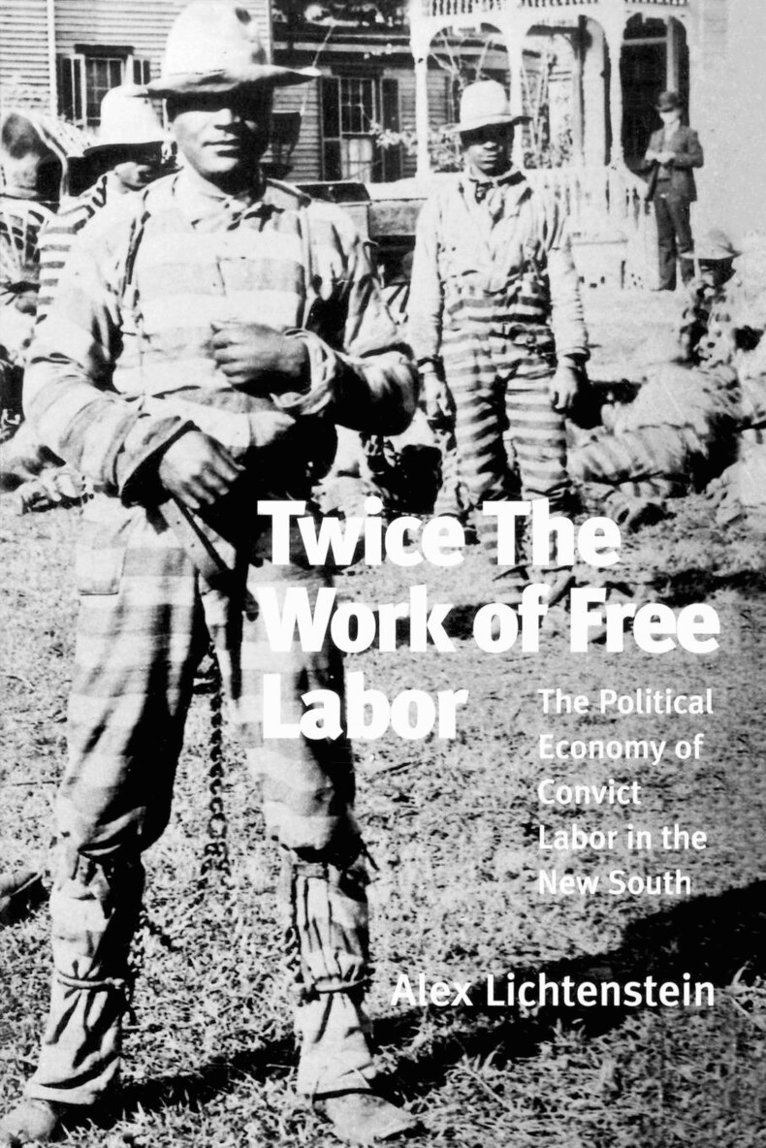
Twice the Work of Free Labor
The Political Economy of Convict Labor in the New South
Häftad, Engelska, 1996
323 kr
Skickas inom 3-6 vardagar
For the first time in a generation chain gangs have reappeared on the roads of the American South. Associated in the past with racial terrorism, this cruel and unusual punishment should invoke strong memories. But, in the rush to embrace ever-harsher sanctions, the American public has ignored the troubling history of Southern punishment.Twice the Work of Free Labor is the first book-length study of the history of the Southern convict-lease system and its successor, the chain gang. For nearly a century after the abolition of slavery, convicts labored in the South's mines, railroad camps, brickyards, turpentine farms and then road gangs, under abject conditions. The vast majority of these prisoners were African Americans. In this timely book, Alex Lichtenstein reveals the origins of this vicious penal slavery, explains its persistent and widespread popularity among whites, and charts its unhappy contribution to the rebirth of the South in the decades following the Civil War.The book also offers an original analysis of the post-Civil War South's political economy. Lichtenstein suggests that, after emancipation, forced black labor was exploited not by those who yearned for the social order of the slave South, but by the region's most ardent advocates of progress. The convict-lease and chain gang allowed a New South to rise while preserving white supremacy.
375 kr
Skickas inom 7-10 vardagar
From Wounded Knee to the Edmund Pettus Bridge, and from the Upper Big Branch mine disaster to the Trail of Tears, Marked, Unmarked, Remembered presents photographs of significant sites from US history, posing unsettling questions about the contested memory of traumatic episodes from the nation’s past. Focusing especially on landscapes related to African American, Native American, and labor history, Marked, Unmarked, Remembered reveals new vistas of officially commemorated sites, sites that are neglected or obscured, and sites that serve as a gathering place for active rituals of organized memory.These powerful photographs by award-winning photojournalist Andrew Lichtenstein are interspersed with short essays by some of the leading historians of the United States. The book is introduced with substantive meditations on meaning and landscape by Alex Lichtenstein, editor of the American Historical Review, and Edward T. Linenthal, former editor of the Journal of American History. Individually, these images convey American history in new and sometimes startling ways. Taken as a whole, the volume amounts to a starkly visual reckoning with the challenges of commemorating a violent and conflictual history of subjugation and resistance that we forget at our peril.