Alexander (Aphrodisiensis) – författare
Visar alla böcker från författaren Alexander (Aphrodisiensis). Handla med fri frakt och snabb leverans.
10 produkter
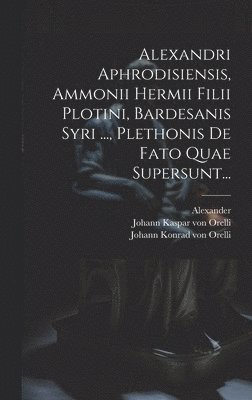
Alexandri Aphrodisiensis, Ammonii Hermii Filii Plotini, Bardesanis Syri ..., Plethonis De Fato Quae Supersunt...
Av Alexander (Aphrodisiensis), Johann Konrad Von Orelli m. fl.
Inbunden, 2023
405 kr
Lägg i varukorg
Alexandri Aphrodisiensis, Ammonii Hermii Filii Plotini, Bardesanis Syri ..., Plethonis De Fato Quae Supersunt...
Av Alexander (Aphrodisiensis), Johann Konrad Von Orelli m. fl.
Häftad, 2023
299 kr
Lägg i varukorg
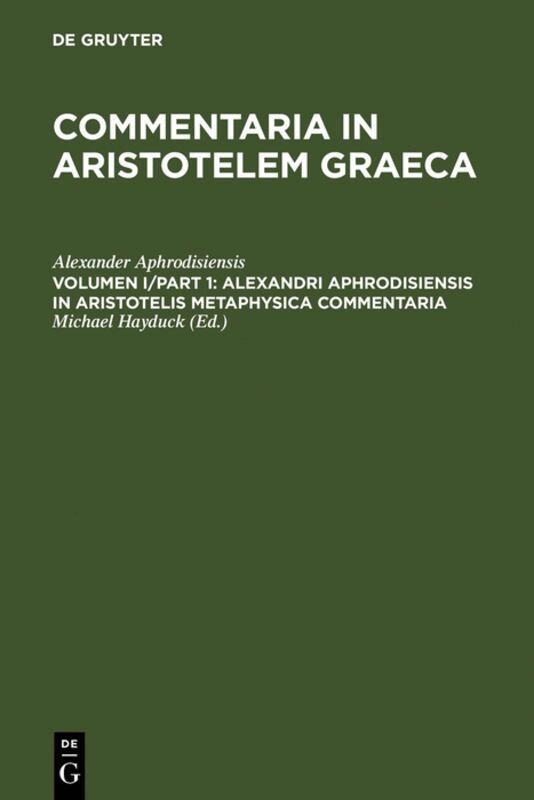
Alexandri Aphrodisiensis in Aristotelis metaphysica commentaria
Av Alexander Aphrodisiensis, Michael Hayduck
Inbunden, 1962
3942 kr
Lägg i varukorg
Commentaries on Aristotle's writings have been produced since the 2nd century AD. This edition contains Greek commentaries on his work from the 3rd to the 8th centuries AD by, among others, Alexander of Aphrodiensias, Themistios, Joh. Philoponus, Simplicius in Greek.
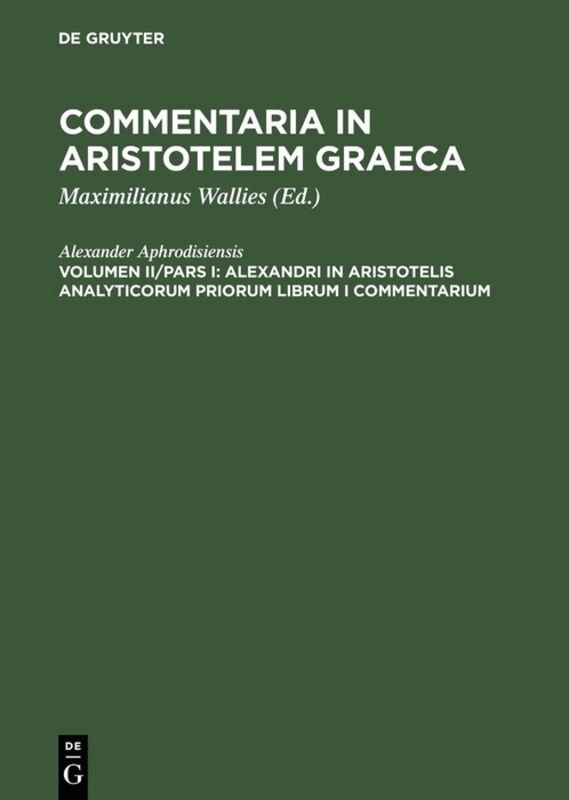
Alexandri in Aristotelis analyticorum priorum librum I commentarium
Av Alexander Aphrodisiensis, Maximilianus Wallies
Inbunden, 1962
5115 kr
Lägg i varukorg
Commentaries on Aristotle's writings have been produced since the 2nd century AD. This edition contains Greek commentaries on his work from the 3rd to the 8th centuries AD by, among others, Alexander of Aphrodiensias, Themistios, Joh. Philoponus, Simplicius in Greek.
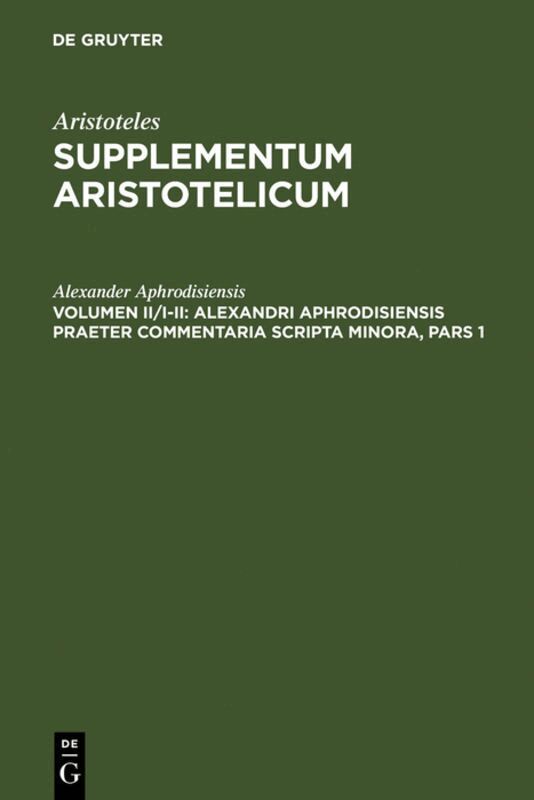
Alexandri Aphrodisiensis praeter commentaria scripta minora
Pars I: De anima Liber cum mantissa. Pars II: Quaestiones. De fato. De mixtion
Av Alexander Aphrodisiensis, Ivo Bruns
Inbunden, 1961
3062 kr
Lägg i varukorg
Between 1883 and 1909 a team of scholars led by Hermann Diels produced 15,000 pages of edited text of commentaries on Aristotle in Greek from the 2nd to the 13th Century AD. This volume is one of three supplements to the collection.
Alexander Aphrodisiensis, "De anima libri mantissa"
A new edition of the Greek text with introduction and commentary
Av Alexander Aphrodisiensis, Robert W. Sharples
Inbunden, 2008
2239 kr
Lägg i varukorg
R. W. Sharples provides a new edition, with introduction and commentary in English, of the Greek text. The Mantissa is a collection of short discussions, transmitted as a supplement to the treatise On the Soul by the Aristotelian commentator Alexander of Aphrodisias (c.200 AD).The collection …
Alexandri in Aristotelis analyticorum priorum librum I commentarium
Av Alexander Aphrodisiensis, Maximilianus Wallies
E-bok, 2013
5546 kr
Lägg i varukorg
No detailed description available for "Alexandri in Aristotelis analyticorum priorum librum I commentarium".
Alexandri Aphrodisiensis praeter commentaria scripta minora
Pars I: De anima Liber cum mantissa. Pars II: Quaestiones. De fato. De mixtion
Av Alexander Aphrodisiensis, Ivo Bruns
E-bok, 2011
3124 kr
Lägg i varukorg
Alexandri Aphrodisiensis in Aristotelis metaphysica commentaria
Av Alexander Aphrodisiensis, Michael Hayduck
E-bok, 2011
3873 kr
Lägg i varukorg
Commentaries on Aristotle''s writings have been produced since the 2nd century AD. This edition contains Greek commentaries on his work from the 3rd to the 8th centuries AD by, among others, Alexander of Aphrodiensias, Themistios, Joh. Philoponus, Simplicius in Greek.
Alexander Aphrodisiensis, "De anima libri mantissa"
A new edition of the Greek text with introduction and commentary
Av Alexander Aphrodisiensis, Robert W. Sharples
E-bok, 2014
2319 kr
Lägg i varukorg
R. W. Sharples provides a new edition, with introduction and commentary in English, of the Greek text. The Mantissa is a collection of short discussions, transmitted as a supplement to the treatise On the Soul by the Aristotelian commentator Alexander of Aphrodisias (c.200 AD). The collection …