Alexander Spektor - Böcker
Visar alla böcker från författaren Alexander Spektor. Handla med fri frakt och snabb leverans.
4 produkter
4 produkter
732 kr
Skickas inom 7-10 vardagar
Almost unknown during his lifetime, Sigizmund Krzhizhanovsky is now hailed as a master of Russian prose. His short stories and novels, unpublishable under Stalinism but rediscovered long after his death, have drawn comparisons to the works of Jorge Luis Borges for their distinctive blend of metafictional play and philosophical thought experiment. Like Borges, Krzhizhanovsky also wrote dazzlingly unconventional essayistic pieces as a slippery extension of his fictional project.Countries That Don’t Exist showcases a selection of Krzhizhanovsky’s exceptional nonfiction, which spans a dizzying range of genres and voices. Playful fantasies dwelling in the borderlands between essay and fable, metaphysical conversations and probing literary criticism, philosophical essays and wartime memoirs—in all these modes Krzhizhanovsky’s writing bristles with idiosyncratic erudition and a starkly original vision of literary creation. Krzhizhanovsky comes across as a strange voice from another past, at once utterly novel yet unmistakably belonging to the high modernist 1920s and 1930s. Taken together, these works present to the English-speaking world a fresh aspect of a newly canonized author.Countries That Don’t Exist also features critical commentary that places these texts in the context of Krzhizhanovsky’s other writings and illuminates their relationship to the philosophical and aesthetic ferment of Russian and European modernism.
189 kr
Skickas inom 7-10 vardagar
Almost unknown during his lifetime, Sigizmund Krzhizhanovsky is now hailed as a master of Russian prose. His short stories and novels, unpublishable under Stalinism but rediscovered long after his death, have drawn comparisons to the works of Jorge Luis Borges for their distinctive blend of metafictional play and philosophical thought experiment. Like Borges, Krzhizhanovsky also wrote dazzlingly unconventional essayistic pieces as a slippery extension of his fictional project.Countries That Don’t Exist showcases a selection of Krzhizhanovsky’s exceptional nonfiction, which spans a dizzying range of genres and voices. Playful fantasies dwelling in the borderlands between essay and fable, metaphysical conversations and probing literary criticism, philosophical essays and wartime memoirs—in all these modes Krzhizhanovsky’s writing bristles with idiosyncratic erudition and a starkly original vision of literary creation. Krzhizhanovsky comes across as a strange voice from another past, at once utterly novel yet unmistakably belonging to the high modernist 1920s and 1930s. Taken together, these works present to the English-speaking world a fresh aspect of a newly canonized author.Countries That Don’t Exist also features critical commentary that places these texts in the context of Krzhizhanovsky’s other writings and illuminates their relationship to the philosophical and aesthetic ferment of Russian and European modernism.
477 kr
Skickas inom 7-10 vardagar
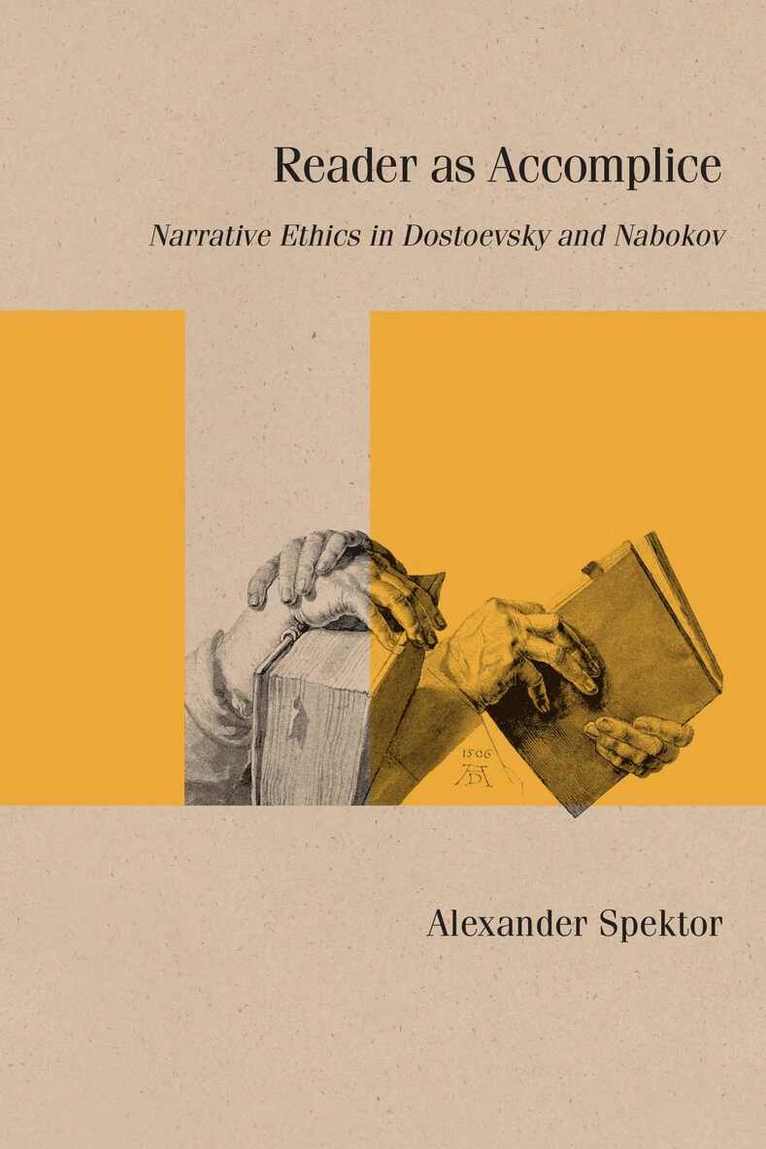
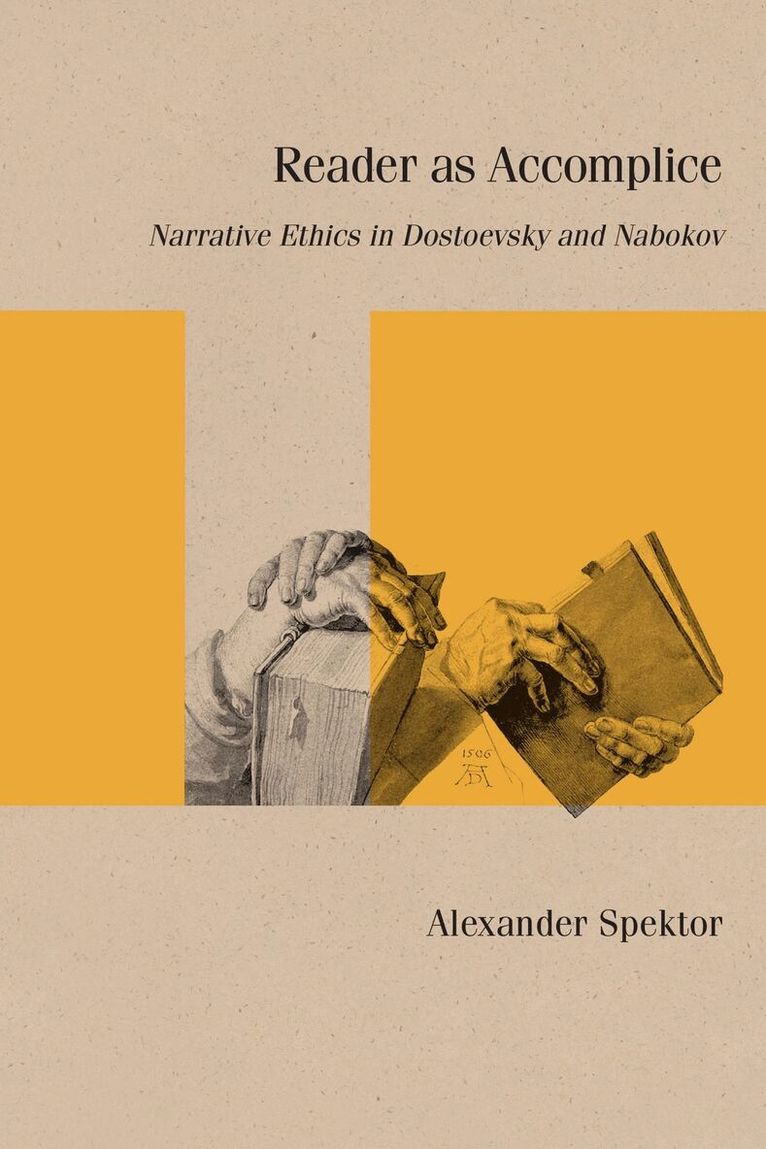
Reader as Accomplice: Narrative Ethics in Dostoevsky and Nabokov argues that Fyodor Dostoevsky and Vladimir Nabokov seek to affect the moral imagination of their readers by linking morally laden plots to the ethical questions raised by narrative fiction at the formal level. By doing so, these two authors ask us to consider and respond to the ethical demands that narrative acts of representation and interpretation place on authors and readers. Using the lens of narrative ethics, Alexander Spektor brings to light the important, previously unexplored correspondences between Dostoevsky and Nabokov. Ultimately, he argues for a productive comparison of how each writer investigates the ethical costs of narrating oneself and others. He also explores the power dynamics between author, character, narrator, and reader. In his readings of such texts as The Meek One and The Idiot by Dostoevsky and Bend Sinister and Despair by Nabokov, Spektor demonstrates that these authors incite the reader’s sense of ethics by exposing the risks but also the possibilities of narrative fiction.
1 480 kr
Skickas inom 10-15 vardagar
Reader as Accomplice: Narrative Ethics in Dostoevsky and Nabokov argues that Fyodor Dostoevsky and Vladimir Nabokov seek to affect the moral imagination of their readers by linking morally laden plots to the ethical questions raised by narrative fiction at the formal level. By doing so, these two authors ask us to consider and respond to the ethical demands that narrative acts of representation and interpretation place on authors and readers. Using the lens of narrative ethics, Alexander Spektor brings to light the important, previously unexplored correspondences between Dostoevsky and Nabokov. Ultimately, he argues for a productive comparison of how each writer investigates the ethical costs of narrating oneself and others. He also explores the power dynamics between author, character, narrator, and reader. In his readings of such texts as The Meek One and The Idiot by Dostoevsky and Bend Sinister and Despair by Nabokov, Spektor demonstrates that these authors incite the reader’s sense of ethics by exposing the risks but also the possibilities of narrative fiction.