Alexandra Barahona de Brito - Böcker
Visar alla böcker från författaren Alexandra Barahona de Brito. Handla med fri frakt och snabb leverans.
3 produkter
3 produkter
1 975 kr
Skickas inom 5-8 vardagar
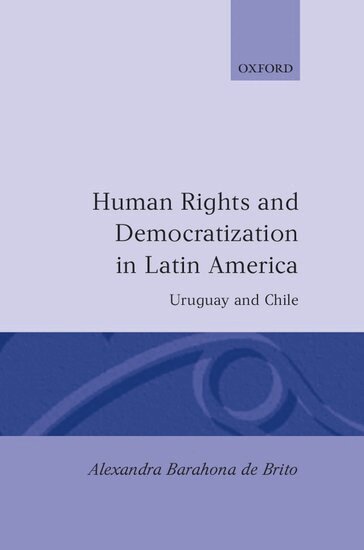
This insightful new work analyses the attempts by Chile and Uruguay to resolve the human rights violations conflicts inherited from military dictatorships. The author focuses on how the post-transitional democratic governments dealt with demmands for official recognition of the truth about the human rights violations committed by the military regimes and for punishment of those guilty of committing or ordering those offences. Alexandra DeBrito sheds light on the political conditions which permitted - or prevented - the politics of truth-telling and justice under these successor regimes. This is the first study to make comparative assessment of human rights abuse in Uruguay and Chile in this way. The author contends that the experiences of these countries offer formative examples of attempts to tackle fundamental aspects of the policies of transition and democratization. She makes an original contribution to our understanding of the key political, legal, and moral issues involved.
The Politics of Memory and Democratization
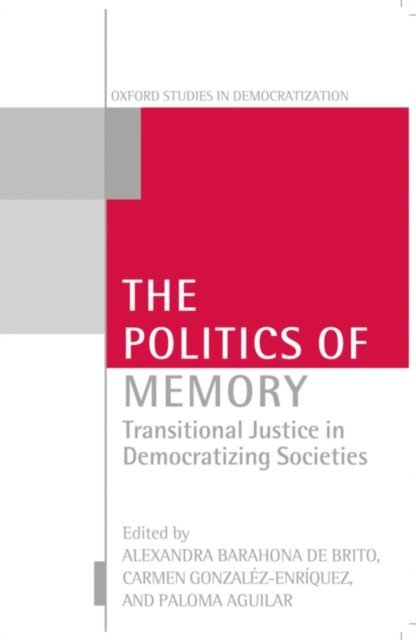
Transitional Justice in Democratizing Societies
Inbunden, Engelska, 2001
2 106 kr
Skickas inom 5-8 vardagar
One of the most important political and ethical questions faced during a political transition from authoritarian or totalitarian to democratic rule is how to deal with legacies of repression. Indeed, some of the most fundamental questions regarding law, morality and politics are raised at such times, as societies look back to understand how they lost their moral and political compass, failing to contain violence and promote the values of tolerance and peace. The Politics of Memory and Democratization sheds light on this important aspect of transitional politics, assessing how Portugal, Spain, the countries of Central and Eastern Europe and Germany after reunification, Russia, the Southern Cone of Latin America and Central America, as well as South Africa, have confronted legacies of repression. The book examines the presence - or absence - of three types of official efforts to come to terms with the past: truth commissions, trials and amnesties, purges. In addition, it looks at unofficial initiatives emerging from within society, usually involving human rights organisations (HROs), churches or political parties. Where relevant, it also examines the 'politics of memory,' whereby societies re-work the past in an effort to come to terms with it, both during the transitions and long after official transitional policies have been implemented or forgotten. The book also assesses the significance of forms of reckoning with the past for a process of democratization or democratic deepening. It also offers analyses made 'from the inside' as well as 'from the outside in.' In other words, it focuses on how national elites and civil societies deal with the past and also analyses the role of international actors. This is important, as external players are becoming increasingly influential in shaping national policy where human rights are concerned.
1 711 kr
Skickas inom 7-10 vardagar
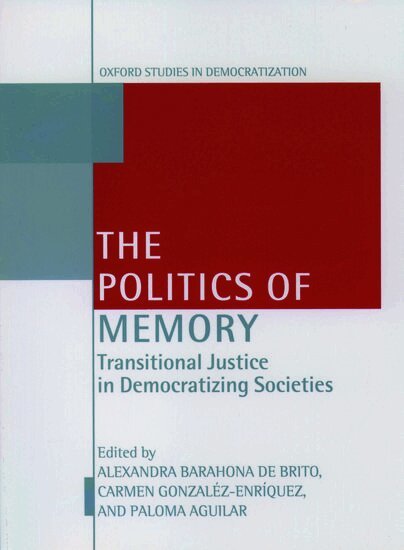
One of the most important political and ethical questions faced during a political transition from authoritarian or totalitarian to democratic rule is how to deal with legacies of repression. Indeed, some of the most fundamental questions regarding law, morality and politics are raised at such times, as societies look back to understand how they lost their moral and political compass, failing to contain violence and promote the values of tolerance and peace. The Politics of Memory sheds light on this important aspect of transitional politics, assessing how Portugal, Spain, the countries of Central and Eastern Europe and Germany after reunification, Russia, the Southern Cone of Latin America and Central America, as well as South Africa, have confronted legacies of repression. The book examines the presence - or absence - of three types of official efforts to come to terms with the past: truth commissions, trials and amnesties, and purges. In addition, it looks at unofficial initiatives emerging from within society, usually involving human rights organisations (HROs), churches or political parties. Where relevant, it also examines the 'politics of memory,' whereby societies re-work the past in an effort to come to terms with it, both during the transitions and long after official transitional policies have been implemented or forgotten. The book also assesses the significance of forms of reckoning with the past for a process of democratization or democratic deepening. It also focuses on the role of international actors in such processes, as external players are becoming increasingly influential in shaping national policy where human rights are concerned.