Alfonso Moreno – författare
Visar alla böcker från författaren Alfonso Moreno. Handla med fri frakt och snabb leverans.
6 produkter
Feeding the Democracy
The Athenian Grain Supply in the Fifth and Fourth Centuries BC
E-bok, 2007
504 kr
Lägg i varukorg
The reliance of democracies on vital supplies of energy from distant and non-democratic sources is probably the most pressing and dangerous problem of modern times, but it is not a new phenomenon. Classical Athens, the birthplace of democracy and the largest and historically most important of the …
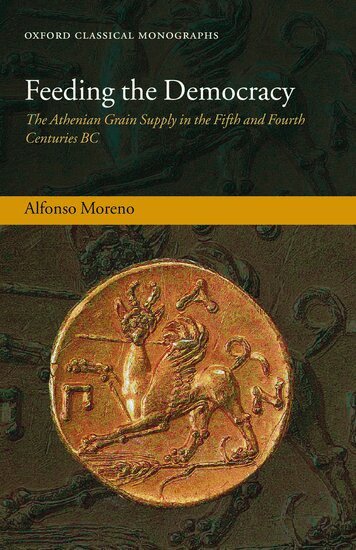
Feeding the Democracy
The Athenian Grain Supply in the Fifth and Fourth Centuries BC
E-bok, 2007
504 kr
Lägg i varukorg
The reliance of democracies on vital supplies of energy from distant and non-democratic sources is probably the most pressing and dangerous problem of modern times, but it is not a new phenomenon. Classical Athens, the birthplace of democracy and the largest and historically most important of the …
A Commentary on Herodotus Books I-IV
Av David Asheri, Alan Lloyd m. fl.
Inbunden, 2007
9240 kr
Lägg i varukorg
Herodotus, one of the earliest and greatest of Western prose authors, set out in the late fifth century BC to describe the world as he knew it - its peoples and their achievements, together with the causes and course of the great wars that brought the Greek cities into conflict with the empires of …
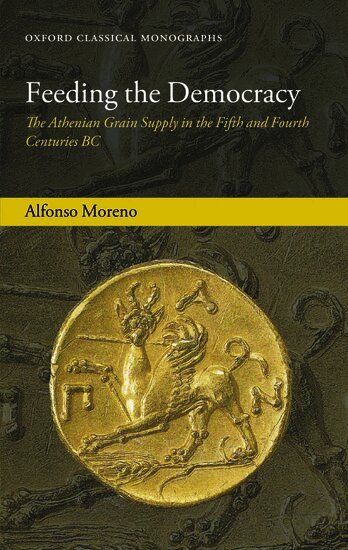
Feeding the Democracy
The Athenian Grain Supply in the Fifth and Fourth Centuries BC
Inbunden, 2007
2247 kr
Lägg i varukorg
The reliance of democracies on vital supplies of energy from distant and non-democratic sources is probably the most pressing and dangerous problem of modern times, but it is not a new phenomenon. Classical Athens, the birthplace of democracy and the largest and historically most important of the …
Feeding the Democracy
The Athenian Grain Supply in the Fifth and Fourth Centuries BC
Häftad, 2012
687 kr
Lägg i varukorg
The reliance of democracies on vital supplies of energy from distant and non-democratic sources is probably the most pressing and dangerous problem of modern times, but it is not a new phenomenon. Classical Athens, the birthplace of democracy and the largest and historically most important of the …
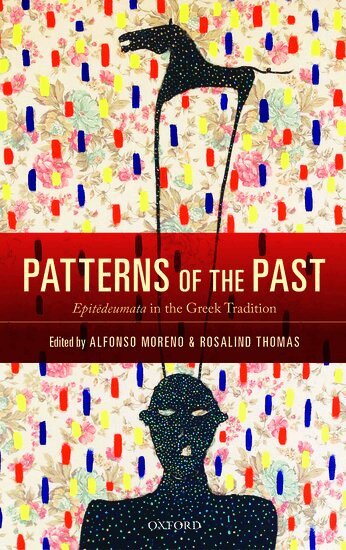
Patterns of the Past
Epitēdeumata in the Greek Tradition
Av Alfonso Moreno, Rosalind Thomas
Inbunden, 2014
2333 kr
Lägg i varukorg
Classical Greek consistently uses epitēdeumata to signify 'way of life' or even 'everyday habits', but always refers to practices that are deliberately pursued, not traditions and customs that are passively carried on. In this volume, an international group of leading academics undertake an …