Alfred Bendixen - Böcker
Visar alla böcker från författaren Alfred Bendixen. Handla med fri frakt och snabb leverans.
15 produkter
15 produkter
730 kr
Skickas inom 10-15 vardagar
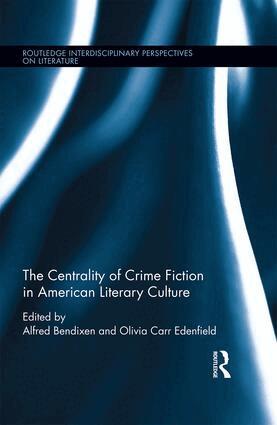
This collection of essays by leading scholars insists on a larger recognition of the importance and diversity of crime fiction in U.S. literary traditions. Instead of presenting the genre as the property of Dashiell Hammett and Raymond Chandler, this book maps a larger territory which includes the domains of Mark Twain, F. Scott Fitzgerald, William Faulkner, Richard Wright, Flannery O’Connor, Cormac McCarthy and other masters of fiction.The essays in this collection pay detailed attention to both the genuine artistry and the cultural significance of crime fiction in the United States. It emphasizes American crime fiction’s inquiry into the nature of democratic society and its exploration of injustices based on race, class, and/or gender that are specifically located in the details of American experience.Each of these essays exists on its own terms as a significant contribution to scholarship, but when brought together, the collection becomes larger than the sum of its pieces in detailing the centrality of crime fiction to American literature. This is a crucial book for all students of American fiction as well as for those interested in the literary treatment of crime and detection, and also has broad appeal for classes in American popular culture and American modernism.
442 kr
Skickas inom 7-10 vardagar
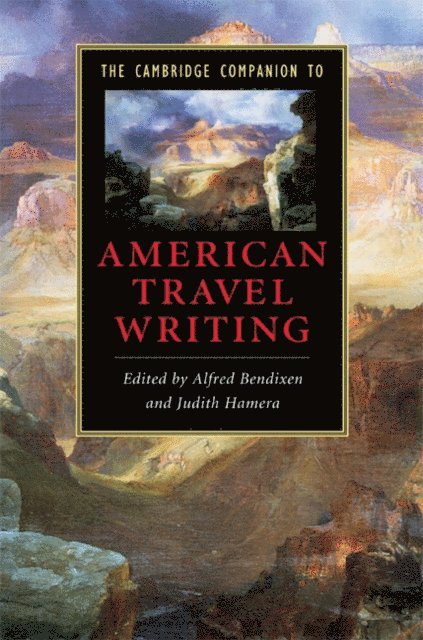
Travel writing has always been intimately linked with the construction of American identity. Occupying the space between fact and fiction, it exposes cultural fault lines and reveals the changing desires and anxieties of both the traveller and the reading public. These specially-commissioned essays trace the journeys taken by writers from the pre-revolutionary period right up to the present. They examine a wide range of responses to the problems posed by landscapes found both at home and abroad, from the Mississippi and the Southwest to Europe and the Holy Land. Throughout, the contributors focus on the role played by travel writing in the definition and formulation of national identity, and consider the experiences of minority writers as well as canonical authors. This Companion forms an invaluable guide for students approaching this new, important and exciting subject for the first time.
1 189 kr
Skickas inom 7-10 vardagar
Travel writing has always been intimately linked with the construction of American identity. Occupying the space between fact and fiction, it exposes cultural fault lines and reveals the changing desires and anxieties of both the traveller and the reading public. These specially-commissioned essays trace the journeys taken by writers from the pre-revolutionary period right up to the present. They examine a wide range of responses to the problems posed by landscapes found both at home and abroad, from the Mississippi and the Southwest to Europe and the Holy Land. Throughout, the contributors focus on the role played by travel writing in the definition and formulation of national identity, and consider the experiences of minority writers as well as canonical authors. This Companion forms an invaluable guide for students approaching this new, important and exciting subject for the first time.
425 kr
Skickas inom 10-15 vardagar
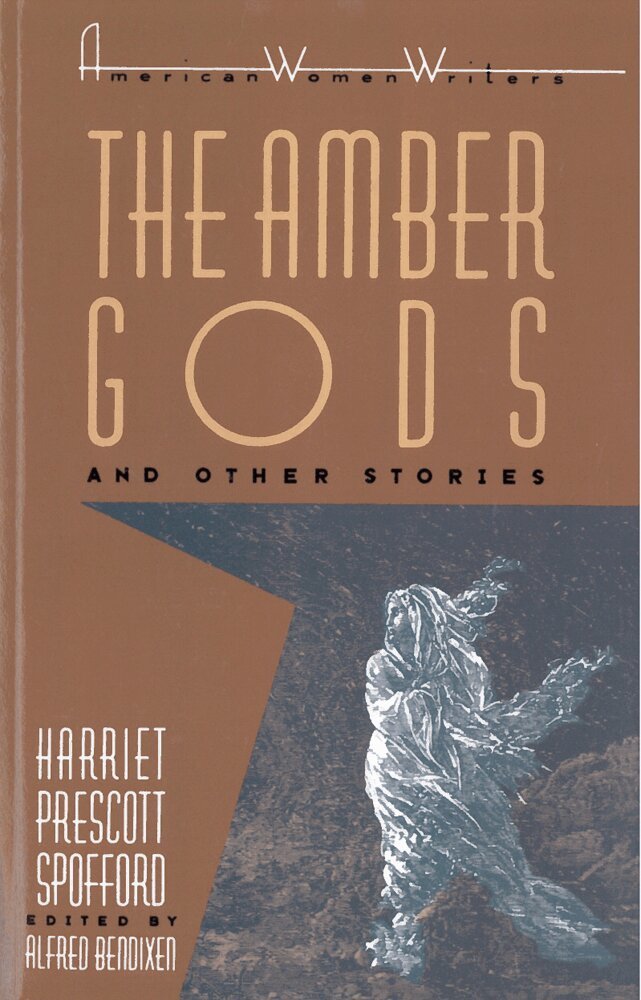
A widely held vision of nineteenth-century American women is of lives lived in naive, domestic peace-the girls of Little Women making do until father comes home from the war. Nothing could be less true of Harriet Prescott Spofford's stories. In fact, her editor at the Atlantic Monthly at first refused to believe that an unworldly woman from New England had written them. Her style, though ornate by our 20th century standards, adds to its atmosphere, like heavy, Baroque furniture in a large and creepy house. The title story presents a self-centered and captivating woman who ruthlessly steals her orphan cousin's lover. In "Circumstance," a pioneer woman returning home through the woods at night is caught by a panther; her husband, who has come to save her, can only watch from the ground as she sings for her life, pinned in a tree. A train engineer hallucinates again and again that he is running over his wife. And Mrs. Craven, who's a bit "weak" in the head, mindlessly repeats "Three men went down cellar and only two came up." These stories combine elements of the best ghost stories-timing, detail, and character -with just enough chill to make you think twice about turning out your lights at night.
2 954 kr
Skickas inom 7-10 vardagar
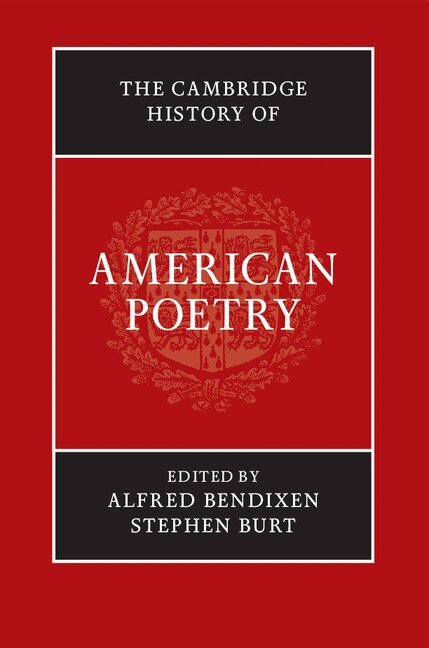
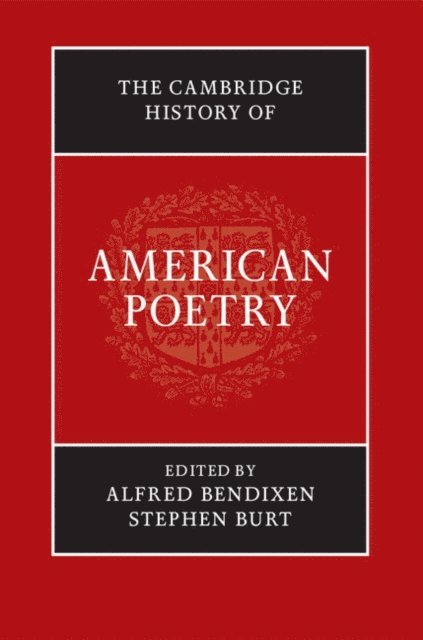
The Cambridge History of American Poetry offers a comprehensive exploration of the development of American poetic traditions from their beginnings until the end of the twentieth century. Bringing together the insights of fifty distinguished scholars, this literary history emphasizes the complex roles that poetry has played in American cultural and intellectual life, detailing the variety of ways in which both public and private forms of poetry have met the needs of different communities at different times. The Cambridge History of American Poetry recognizes the existence of multiple traditions and a dramatically fluid canon, providing current perspectives on both major authors and a number of representative figures whose work embodies the diversity of America's democratic traditions.
674 kr
Skickas inom 7-10 vardagar
The Cambridge History of American Poetry offers a comprehensive exploration of the development of American poetic traditions from their beginnings until the end of the twentieth century. Bringing together the insights of fifty distinguished scholars, this literary history emphasizes the complex roles that poetry has played in American cultural and intellectual life, detailing the variety of ways in which both public and private forms of poetry have met the needs of different communities at different times. The Cambridge History of American Poetry recognizes the existence of multiple traditions and a dramatically fluid canon, providing current perspectives on both major authors and a number of representative figures whose work embodies the diversity of America's democratic traditions.
632 kr
Skickas inom 7-10 vardagar
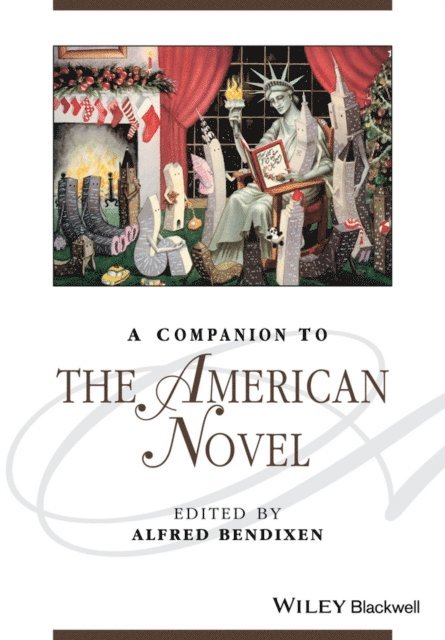
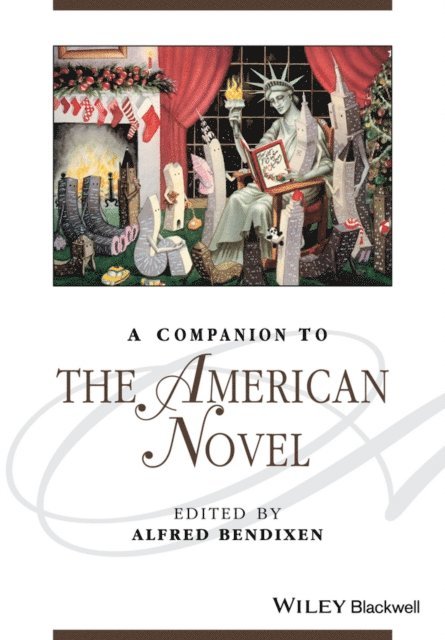
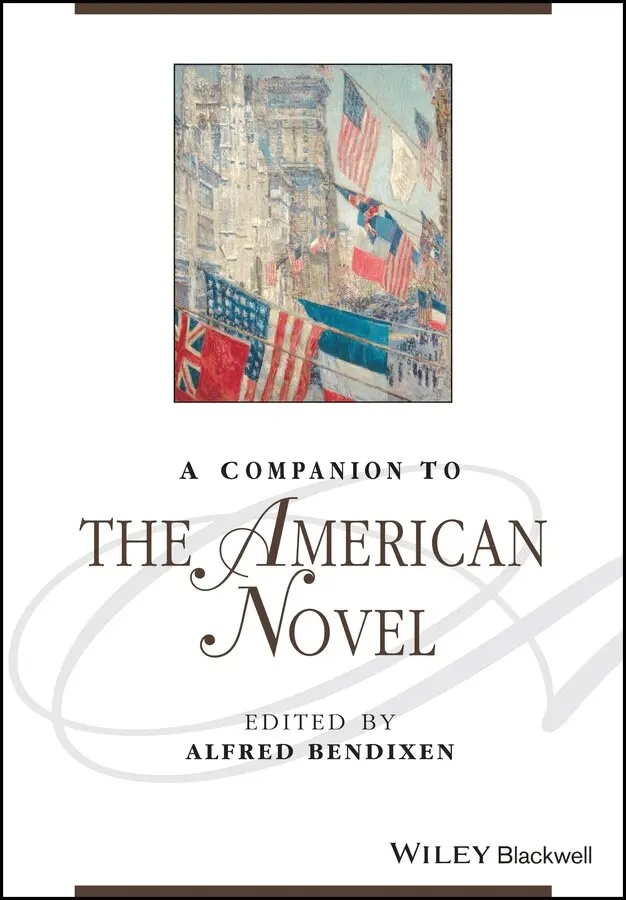
Featuring 37 essays by distinguished literary scholars, A Companion to the American Novel provides a comprehensive single-volume treatment of the development of the novel in the United States from the late 18th century to the present day. Represents the most comprehensive single-volume introduction to this popular literary form currently available Features 37 contributions from a wide range of distinguished literary scholars Includes essays on topics and genres, historical overviews, and key individual works, including The Scarlet Letter, Moby Dick, The Great Gatsby, Beloved, and many more.
645 kr
Skickas inom 7-10 vardagar
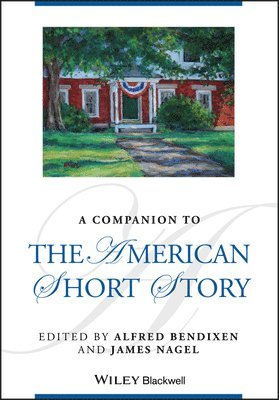
A COMPANION TO THE AMERICAN SHORT STORY A Companion to the American Short Story traces the development of this versatile literary genre over the past two centuries. Written by leading critics in the field, and edited by two major scholars, it explores a wide range of writers, from Edgar Allen Poe and Edith Wharton, at the end of the nineteenth century to important modern writers such as Ernest Hemingway, William Faulkner, F. Scott Fitzgerald, and Richard Wright. Contributions with a broader focus address groups of multiethnic, Asian, and Jewish writers. Each chapter places the short story into context, focusing on the interaction of cultural forces and aesthetic principles. The Companion takes account of cutting edge approaches to literary studies and contributes to the ongoing redefinition of the American canon, embracing genres such as ghost and detective fiction, cycles of interrelated short fiction, and comic, social and political stories. The volume also reflects the diverse communities that have adopted this literary form and made it their own, featuring entries on a variety of feminist and multicultural traditions. This volume presents an important new consideration of the role of the short story in the literary history of American literature.
2 574 kr
Skickas inom 10-15 vardagar
First published in 1992, this volume of essays celebrates the revival of Edith Wharton’s critical reputation. It offers a variety of approaches to the work of Wharton and examines largely neglected texts. It differs from many other collections of Wharton criticism in its insistence that the entire body of Wharton’s work deserves attention.This book will be of interest in those studying nineteenth century and American literature.
636 kr
Skickas inom 10-15 vardagar
First published in 1992, this volume of essays celebrates the revival of Edith Wharton’s critical reputation. It offers a variety of approaches to the work of Wharton and examines largely neglected texts. It differs from many other collections of Wharton criticism in its insistence that the entire body of Wharton’s work deserves attention.This book will be of interest in those studying nineteenth century and American literature.
2 651 kr
Skickas inom 10-15 vardagar
This collection of essays by leading scholars insists on a larger recognition of the importance and diversity of crime fiction in U.S. literary traditions. Instead of presenting the genre as the property of Dashiell Hammett and Raymond Chandler, this book maps a larger territory which includes the domains of Mark Twain, F. Scott Fitzgerald, William Faulkner, Richard Wright, Flannery O’Connor, Cormac McCarthy and other masters of fiction.The essays in this collection pay detailed attention to both the genuine artistry and the cultural significance of crime fiction in the United States. It emphasizes American crime fiction’s inquiry into the nature of democratic society and its exploration of injustices based on race, class, and/or gender that are specifically located in the details of American experience.Each of these essays exists on its own terms as a significant contribution to scholarship, but when brought together, the collection becomes larger than the sum of its pieces in detailing the centrality of crime fiction to American literature. This is a crucial book for all students of American fiction as well as for those interested in the literary treatment of crime and detection, and also has broad appeal for classes in American popular culture and American modernism.
1 988 kr
Tillfälligt slut
Featuring 37 essays by distinguished literary scholars, A Companion to the American Novel provides a comprehensive single-volume treatment of the development of the novel in the United States from the late 18th century to the present day. Represents the most comprehensive single-volume introduction to this popular literary form currently available Features 37 contributions from a wide range of distinguished literary scholars Includes essays on topics and genres, historical overviews, and key individual works, including The Scarlet Letter, Moby Dick, The Great Gatsby, Beloved, and many more.
1 020 kr
Kommande
My major goal is to produce a history that is informed by recent scholarly understandings of American literature and culture, but remains accessible and engaging to an educated reading audience. Thus, the book will have to avoid the mere recitation of names, dates, and facts while still being rooted in the dense texture of history, particularly the history of dramatic change and social turmoil that marks this period. It will have to recognize the achievements of the major literary figures, especially Mark Twain and Henry James, without stooping to the level of literary hagiography or pretending that literary history can be merely the story of great men. The discussion of these figures will not occur in separate chapters but be integrated into the entire book. My goal is to place the work of these and other writers fully into the contexts of the time so that a reader can understand how the various phases of Henry James reflect and respond to the flux of cultural history. Thus, the syntax of James?s major phase needs to be tied to aesthetic movements (especially, the rise of impressionism), political developments (in particular, issues of class and gender), and an emerging science that will challenge moral and epistemological boundaries (reflected perhaps most notably in Freudian psychology). Mark Twain?s career also provides a kind of paradigm for American cultural experience during this period: he began his literary career with an editor named Bliss and ended with one named Paine. The movement from bliss to pain is part of what my narrative will be about. My over-riding aim, however, is to avoid over-simplification while still providing a meaningful guide to the period. This requires that I root the individual texts into multiple cultural contexts. Thus, Twain?s A Connecticut Yankee in King Arthur?s court is best understood when immersed in multiple generic frames, including the international novel (which usually contrasted American democracy and European values), the satire of romanticism in its contemporary form (Tennysonian medievalism), the historical novel (probably the most popular form of the time), and an emerging science fiction (which began to challenge faith in progress and technology). I hope to be able to provide both a lively narrative and a detailed analysis of culture and texts. The overall shape of this history will be marked by three stages: the rise of realism; its complex development into literary forms that struggle to grasp elusive social and psychological realities; and the emergence of naturalism as a literary movement that both extends and rejects the basic premises of realism and that will ultimately culminate in an emerging modernism. Such an overview may seem conventional, but the actual history will challenge some old-fashioned notions of the period. The section dealing with the rise of realism will emphasize the contributions of the New England women who first made regionalism an effective and sometimes powerful literary tool (Stowe, Davis, Phelps, Cooke) and whose best evocations of local life are imbued with the incipient feminism that will finally emerge in Jewett, Freeman, and Chopin. Feminist issues will be important in the discussion of both male and female writers - it is, of course, Henry James who insists throughout his long career that the secret nature of American life is intimately connected with the peculiarities of female identity in our culture. The treatment of local color will confront the sentimentality, nostalgia, and escapism that sometimes mask injustice and bigotry, but it will also explore how regionalism liberated some of the most significant writers of the period, empowering some women to raise troubling questions about the emptiness of domestic life and leading some men as well as some women to confront the contradictions between democratic ideals and American realities. Without lapsing into reductionism, the chapter on regionalism must outline the various traits that distinguish our various regional literatures, thus enabling the reader, for instance, to understand how literary comedy is radically different in the Northeast, South, Midwest, and West and how Mark Twain?s success stems partly from his ability to fuse various regional forms into what will be hailed as American humor. Thus, the text ends up confronting the competing pressures of regional and national impulses that continue to shape American culture. Throughout the history, I attempt to raise the basic contradictions and paradoxes that provide realism with its primary energy - this is the period that discovered the child as literary subject, but our most powerful exemplars, including both Huck Finn and Turn of the Screw are really about abused children and the nature of child abuse. The treatment of realism will need to deal with the form?s long-recognized concern with social issues and political reform, and I hope to give a fuller treatment of the period?s treatment of social class than can be found in most conventional histories. Nevertheless, I also plan to emphasize Howells? recognition that the American literary mind was fundamentally turned inward in ways that made psychological realities of equal importance to social facades. Thus, the period of realism coincides with the great age of the supernatural tale, which exemplifies realism?s underlying epistemological concern with the question of what is real while also providing a powerful literary vehicle for the confrontation with sexual repression and social injustice. The history I propose will be distinguished by its insistence on recognizing the importance of genres that have been unjustly neglected in other treatments of this period, including the ghost story, the historical novel, the adventure tale, detective fiction, and the western. Recent scholarship has begun to unearth more significant poetry than previous scholars recognized, and the history will have to find a way of incorporating these insights and discoveries as well as paying attention to experiments in drama. The history will recognize the importance of race as a subject matter and the rising stature of certain writers, perhaps most notably Charles Chesnutt. While exploring the achievements of Chesnutt, James Weldon Johnson, Dunbar, Dunbar-Nelson, and other African Americans, the chapter focusing on race and immigration will also deal with other ethnic voices (i.e., Sui Sin Far, Abraham Cahan, Maria Mena, Zitkala-Sa) as well as white writers who attacked racism (Cable, Tourgee) or attempted to justify it (Page, Dixon). The concluding section will focus on Naturalism and the relationship to an emerging modernism with emphasis on Wharton, Crane, and London. These three are central to my purpose because they represent most fully naturalism?s uneasy war with the realistic tradition and the varieties of responses that scientific determinism could elicit from writers of talent or genius. Dreiser will be mentioned in passing, but he really represents the start of 20th-century traditions and I expect that he will be important to the author of the next volume of this history. Since I do not have outlines for the other projected volumes, I have to emphasize that I am presuming that some overlap between volumes will be necessary in order to ensure that each volume can stand alone. Of course, attention must be paid to precursors as well as to the ways in which the traditions outlined in my text flowed into twentieth-century literary movements. My proposed volume will begin with the end of the Civil War and include some discussion of Dickinson and Whitman, both of whom will, I presume, receive fuller treatment in the volume immediately preceding mine in the series. It is essential that I briefly discuss the romantic precursors in order to detail the competing ways in which romanticism and realism attempted to define the literary needs of an emerging democratic culture and to dispel the old myth that romantic modes dominate our fictional traditions. The volume will end with a brief discussion of how realistic modes and values became vital to certain modern writers (most notably Fitzgerald, Frost, and Cather) and how the ideas raised by naturalism formed the philosophical underpinnings of much later writing and raised the issues that Eliot, Faulkner, Hemingway, and Ellison would later confront in other ways. The Period: At one time, critics referred to the years between the American civil war and the start of World War I as the ?genteel age? in American literature, but recent scholars agree that it was actually a period of enormous violence as well as astonishing change and radical transformation. The reality of political violence can be represented most acutely by one statistic: three of the seven Presidents elected between 1860 and 1900 were assassinated in office; in other words, of our 43 Presidents, three out of the four who died in office were murdered during this period. At the start of this period, the United States was a relatively young nation attempting to heal the wounds of the most costly and most violent war in our history - (the casualty figures of the American Civil War exceed that of all prior and subsequent American wars combined). In 1865, the nation was primarily agricultural and the bulk of it was unsettled - at least by white Euro-centric standards. Things changed quickly. In 1876, the nation experienced and celebrated its first centennial. By 1890, the frontier, which had once seemed endless, was declared closed and the United States was clearly on its way to becoming a heavily industrialized nation with imperialist ambitions. Jefferson?s idealized agrarian vision was demolished by the early 20th century. Farm life gave way to factory labor. Large cities grew at ferocious rates, packing masses of desperate immigrants into filthy slums. As large-scale poverty became a fact of life for the first time in U.S. history, robber barons and financiers amassed huge fortunes, threatened to dominate crucial markets and industries, and posed new challenges to the ideas and ideals behind American democracy. Labor unions were formed and often violently crushed. It was a period marked by economic turmoil and by corresponding debates on whether the nation should fully commit itself to unbridled capitalism or invest in some form of socialism. Scientific progress provided railroads, automobiles, airplanes, telegraphs, telephones, radio, electricity, and indoor plumbing. Progress was, however, at best problematic. As Americans discovered that the technologies of communication and transportation accelerated at almost frightening rates, they learned those rapid modes of communication and transportation would not give them something meaningful to say or someplace worthwhile to go. Technology would also change writing and publishing. Advances in printing brought about the mass market magazines, which with the rising importance of advertising, would transform publishing into a business that sold marketing access to readers instead of one that sold worthwhile reading material to readers. By the start of the 20th century, the United States was no longer young. Its citizens could no longer pretend to cosmic innocence. The nation had experienced a rate of population growth unparalleled in human history, but it had also experienced economic turmoil, the realities of political corruption, and a world that seemed perpetually on the brink of crisis or even collapse. The political establishment responded to increasing multiculturalism as a threat and created some of the most racist laws in our history. The abolition of slavery gave way to Jim Crow laws and lynching and to a cultural regionalism more engaged in nostalgia than concerned with justice. The major wars against the Native American Indians were fought and largely won during this period. Laws were also passed to stem the tide of immigration especially from Asia, Eastern Europe, and other areas where skin color or religion might differ from white Protestant norms. American democracy was fervent in its desire to cope with change, sometimes violently fervent and sometimes in ways that later generations would find embarrassing, but political reform also became a new fact of American life. Reformers challenged corruption and raised a crusade that would ultimately extend democracy, grant women the vote, create national parks, limit corporations, extend rights to labor, and outlaw alcoholic beverages. BLACKWELL HISTORIES OF AMERICAN LITERATURE Like the volumes proposed for the series on British literature, the Blackwell Histories of American Literature, will be culturally grounded. They will aim to be comprehensive, and succinct, and to recognise that to write literary history involves more than placing texts in chronological sequence. Thus the emphasis within each volume will fall both on plotting the significant literary developments of a given period, and on the wider cultural contexts within which they occurred. Authors will be asked to construe ?cultural history? in broad terms, and address such issues as politics, society, the arts, ideologies, varieties of literary production and consumption, and dominant genres and modes. The emphasis will be on contexts, including a retrospective element on the inheritance of past literature; on texts and authors; and the lasting effects of the literary period under discussion, and incorporate such topics as critical reception and modern reputations. Thisarrangement will help to elicit a full treatment of each period, to establish some conformity between the volumes, to dovetail one with another, and to leave each author with considerable room for manoeuvre. While a thematic, as opposed to a chronological, approach might be tempting in some cases, it would tend to put the subjects treated in this way into a kind of ghetto. We expect anyone writing a volume for a series of this kind to deal with issues of regionalism as well as with African American writing, Native American writing etc. As befits a culturally grounded series, these volumes are first and finally concerned with the plural nature of American culture and how that feeds into American writing. Obviously, in any chronological arrangement, one period shades into and overlaps with the ones before and after. But, in so far as any division into period makes sense, the divisions here may be said to (e.g. many of the great American Modernists were already shifting into gear before the First World War). The effect of each volume will be to give the reader a sense of possessing a crucial sector of literary terrain, of understanding the forces that give a period its distinctive cast, and of seeing how writing of a given period impacts on, and is shaped by, its cultural circumstances. Each volume will recommend itself as providing an authoritative and up-to-date entrée to texts and issues, and their historical implications, and will therefore interest students, teachers and the general reader alike. The series as whole will be attractive to libraries as a work that renews and redefines a familiar form. Proposed volumes: Pre-Columbian, colonial, and revolutionary literatures A large stretch of time but a relatively limited quantity of material. Native American narratives and poetry prior to Columbus and the encounter with Europeans, narratives of exploration, conquest and settlement, sermons and diaries, early poetry, drama, and fiction. Literature until the end of the Civil War The emergence and the threatened split-up of the American nation. The writers of the 'American renaissance', sentimental literature, slave narratives and other literature of the slavery debate, writing of and from the West, the search for an American epic. Literature 1865-1914 The transformation of the American economy. The emergence of realism and naturalism, 'local colour' and new western and southern writing. The literature of the women's movement, the poetry of isolation. Literature 1900-1945 The arrival of the US as a 'superpower'. Modernism, its accompaniments and consequences, the literature of the New Deal, new ethnic literatures, the growth of the literature of immigration. Literature 1945-2000 The Cold War and its aftermath. America postmodernism and the new realism, the poetic wars, genre writing, the emergence of American drama, the impact of the visual arts and popular culture.
Del 109 - Blackwell Companions to Literature and Culture
Companion to the American Short Story
Inbunden, Engelska, 2010
477 kr
Tillfälligt slut
A Companion to the American Short Story traces the development of this versatile literary genre over the past two centuries. Written by leading critics in the field, and edited by two major scholars, it explores a wide range of writers, from Edgar Allen Poe and Edith Wharton, Kate Chopin, and Charles Chesnutt at the end of the nineteenth century. In the twentieth the focus is on such important Modern writers as Ernest Hemingway, William Faulkner, F. Scott Fitzgerald, and Richard Wright before moving into the contemporary period with essays on Raymond Carver, Saul Bellow, and Denise Chávez. Contributions with a broader focus address groups of multiethnic, Asian, and Jewish writers. All the essays set the short story in context, focusing on the interaction of cultural forces and aesthetic principles. The Companion takes account of cutting edge approaches to literary studies and contributes to the ongoing redefinition of the American canon, embracing genres such as ghost and detective fiction, cycles of interrelated short fiction, and comic, social and political stories. The volume also reflects the diverse communities that have adopted this literary form and made it their own, featuring entries on a variety of feminist and multicultural traditions. This volume presents an important new consideration of the role of the short story in the literary history of American literature.
486 kr
Skickas inom 7-10 vardagar