Alfred J. López - Böcker
Visar alla böcker från författaren Alfred J. López. Handla med fri frakt och snabb leverans.
9 produkter
9 produkter
1 215 kr
Tillfälligt slut
Deconstructs the field of postcolonial studies.In Posts and Pasts: A Theory of Postcolonialism, Alfred J. Lopez argues for a formulation of postcolonial studies which diverges in three significant ways from current academic and institutional practices: 1) the postcolonial as diasporic, constituted by a series of dispersed and irregular criticisms not at all containable within a single set of parameters, whether historical, geographical, or socioeconomic; 2) the postcolonial as a distinct ontological moment in the life of a nation or people, in which it conceives itself as doubly haunted—on the one hand by the "memory in advance" of a collective national future and on the other by its colonial past; and 3) the postcolonial as a distinct phenomenological moment, a radical break in the history of a relation between lords and bonds-women and -men.Going further than previous studies to address the postcolonial as a diasporic body of texts and discourses, it looks at a remarkable variety of writers-Joseph Conrad, Wilson Harris, Jose Marti, Edward Kamau Brathwaite, Michelle Cliff, J. M. Coetzee, Franz Fanon, Gabriel Marcia Marquez, and Salman Rushdie.
440 kr
Tillfälligt slut
Deconstructs the field of postcolonial studies.In Posts and Pasts: A Theory of Postcolonialism, Alfred J. Lopez argues for a formulation of postcolonial studies which diverges in three significant ways from current academic and institutional practices: 1) the postcolonial as diasporic, constituted by a series of dispersed and irregular criticisms not at all containable within a single set of parameters, whether historical, geographical, or socioeconomic; 2) the postcolonial as a distinct ontological moment in the life of a nation or people, in which it conceives itself as doubly haunted—on the one hand by the "memory in advance" of a collective national future and on the other by its colonial past; and 3) the postcolonial as a distinct phenomenological moment, a radical break in the history of a relation between lords and bonds-women and -men.Going further than previous studies to address the postcolonial as a diasporic body of texts and discourses, it looks at a remarkable variety of writers-Joseph Conrad, Wilson Harris, Jose Marti, Edward Kamau Brathwaite, Michelle Cliff, J. M. Coetzee, Franz Fanon, Gabriel Marcia Marquez, and Salman Rushdie.
1 215 kr
Tillfälligt slut
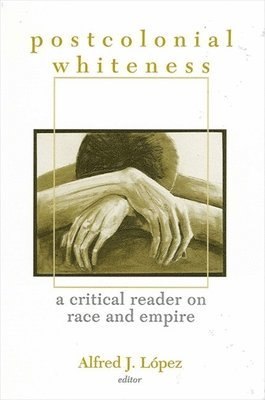
Explores the undertheorized convergence of postcoloniality and whiteness.Postcolonial Whiteness examines the interrelations between whiteness and the history of European colonialism, as well as the status of whiteness in the contemporary postcolonial world. It addresses two fundamental questions: What happens to whiteness after empire, and to what extent do white cultural norms or imperatives remain embedded in the postcolonial or postindependence state as a part-acknowledged or not-of the colonial legacy? Presenting a wide range of critical and theoretical responses, the contributors explore these questions by focusing on such diverse topics as the legacy of Princess Diana; queer self-expression; the changing situation of Gypsy, or Romani, minorities in Eastern Europe; literature, including Joseph Conrad's Heart of Darkness, Caryl Phillips's Cambridge, and Gothic impact on the literature of Australia; reconstruction of white South African social identity; cross-cultural discussions of mental illness; Freud's case history of the Wolfman; and Australia's national anthems.
440 kr
Tillfälligt slut
Explores the undertheorized convergence of postcoloniality and whiteness.Postcolonial Whiteness examines the interrelations between whiteness and the history of European colonialism, as well as the status of whiteness in the contemporary postcolonial world. It addresses two fundamental questions: What happens to whiteness after empire, and to what extent do white cultural norms or imperatives remain embedded in the postcolonial or postindependence state as a part-acknowledged or not-of the colonial legacy? Presenting a wide range of critical and theoretical responses, the contributors explore these questions by focusing on such diverse topics as the legacy of Princess Diana; queer self-expression; the changing situation of Gypsy, or Romani, minorities in Eastern Europe; literature, including Joseph Conrad's Heart of Darkness, Caryl Phillips's Cambridge, and Gothic impact on the literature of Australia; reconstruction of white South African social identity; cross-cultural discussions of mental illness; Freud's case history of the Wolfman; and Australia's national anthems.
3 781 kr
Skickas inom 10-15 vardagar
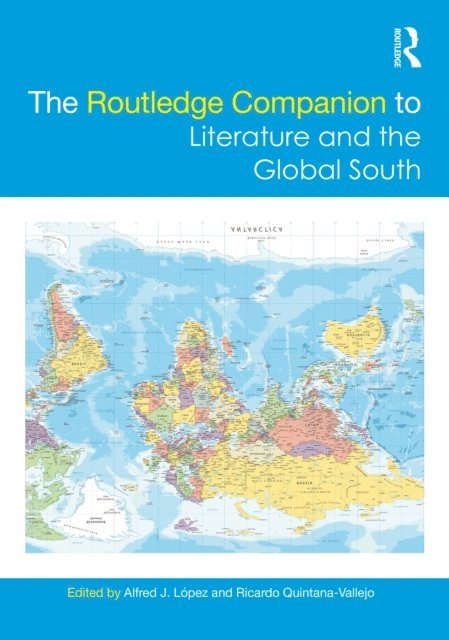
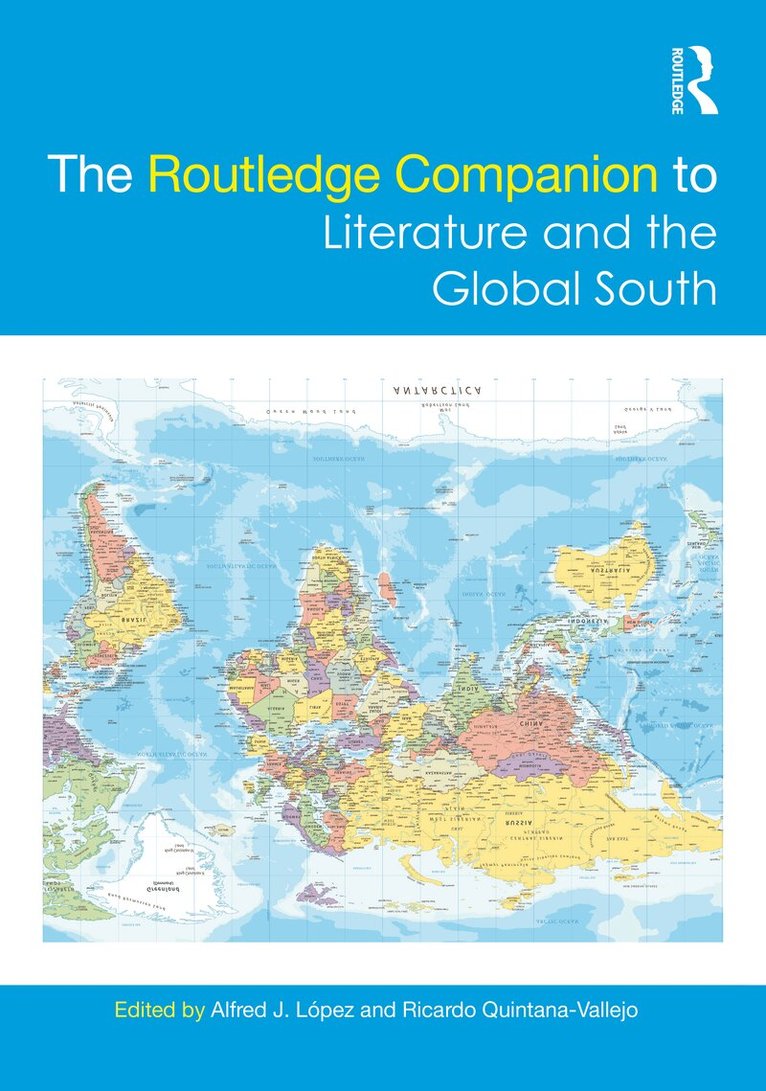
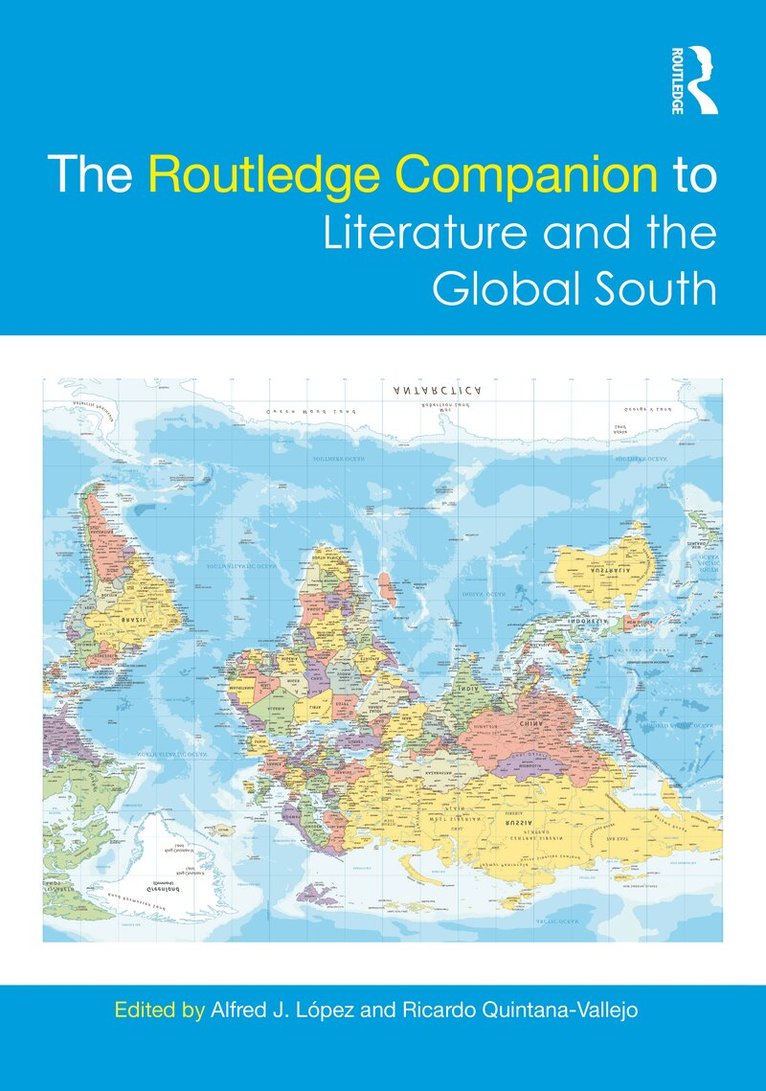
The Routledge Companion Literature and the Global South offers a comprehensive overview of the field at a key moment in its development—a snapshot of where Global South literary studies stands in its second decade. As the aftermath of a string of global cataclysms since the rise of neoliberal globalization has demonstrated, it is the poor, the disenfranchised, and the marginalized who consistently bear the brunt of the suffering. What defines the Global South is the recognition across the world that globalization’s promised bounties have not materialized. It has failed as a global master narrative. Global South studies centers on three general areas: Globalization, its aftermath/failure, and how those on the economic bottom survive it.Organized into three parts, this volume consists of original essays by 25 contributors from around the world. Part I focuses on the origins and objects of Global South studies, and how this field has come to define and historicize its organizing concept. Part II considers subsequent critical developments in Global South studies, particularly those that embrace interdisciplinary and transdisciplinary approaches. Part III features case studies which highlight a range of applications and interventions. The contributors critique the boundaries and definitions explored in the earlier parts and push "settled" literatures or methods into new analytical spaces.This innovative collection is an invaluable resource for anyone studying and researching Global South studies and literature, but also those interested in world literature, contemporary literature, postcolonialism, decolonizing the curriculum, critical race studies, gender studies, and politics.
809 kr
Skickas inom 10-15 vardagar
The Routledge Companion Literature and the Global South offers a comprehensive overview of the field at a key moment in its development—a snapshot of where Global South literary studies stands in its second decade. As the aftermath of a string of global cataclysms since the rise of neoliberal globalization has demonstrated, it is the poor, the disenfranchised, and the marginalized who consistently bear the brunt of the suffering. What defines the Global South is the recognition across the world that globalization’s promised bounties have not materialized. It has failed as a global master narrative. Global South studies centers on three general areas: Globalization, its aftermath/failure, and how those on the economic bottom survive it.Organized into three parts, this volume consists of original essays by 25 contributors from around the world. Part I focuses on the origins and objects of Global South studies, and how this field has come to define and historicize its organizing concept. Part II considers subsequent critical developments in Global South studies, particularly those that embrace interdisciplinary and transdisciplinary approaches. Part III features case studies which highlight a range of applications and interventions. The contributors critique the boundaries and definitions explored in the earlier parts and push "settled" literatures or methods into new analytical spaces.This innovative collection is an invaluable resource for anyone studying and researching Global South studies and literature, but also those interested in world literature, contemporary literature, postcolonialism, decolonizing the curriculum, critical race studies, gender studies, and politics.
2 479 kr
Skickas inom 10-15 vardagar
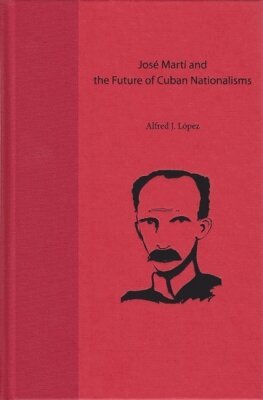
A Posthumous History of José Martí: The Apostle and His Afterlife focuses on Martí’s posthumous legacy and his lasting influence on succeeding generations of Cubans on the island and abroad. Over 120 years after his death on a Cuban battlefield in 1895, Martí studies have long been the contested property of opposing sides in an ongoing ideological battle. Both the Cuban nation-state, which claims Martí as a crucial inspiration for its Marxist revolutionary government, and diasporic communities in the US who honor Martí as a figure of hope for the Cuban nation-in-exile, insist on the centrality of his words and image for their respective visions of Cuban nationhood. The book also explores more recent scholarship that has reassessed Martí’s literary, cultural, and ideological value, allowing us to read him beyond the Havana-Miami axis toward engagement with a broader historical and geographical tableau. Martí has thus begun to outgrow his mutually-reinforcing cults in Cuba and the diaspora, to assume his true significance as a hemispheric and global writer and thinker.
663 kr
Skickas inom 10-15 vardagar
A Posthumous History of José Martí: The Apostle and His Afterlife focuses on Martí’s posthumous legacy and his lasting influence on succeeding generations of Cubans on the island and abroad. Over 120 years after his death on a Cuban battlefield in 1895, Martí studies have long been the contested property of opposing sides in an ongoing ideological battle. Both the Cuban nation-state, which claims Martí as a crucial inspiration for its Marxist revolutionary government, and diasporic communities in the US who honor Martí as a figure of hope for the Cuban nation-in-exile, insist on the centrality of his words and image for their respective visions of Cuban nationhood. The book also explores more recent scholarship that has reassessed Martí’s literary, cultural, and ideological value, allowing us to read him beyond the Havana-Miami axis toward engagement with a broader historical and geographical tableau. Martí has thus begun to outgrow his mutually-reinforcing cults in Cuba and the diaspora, to assume his true significance as a hemispheric and global writer and thinker.
475 kr
Skickas inom 10-15 vardagar
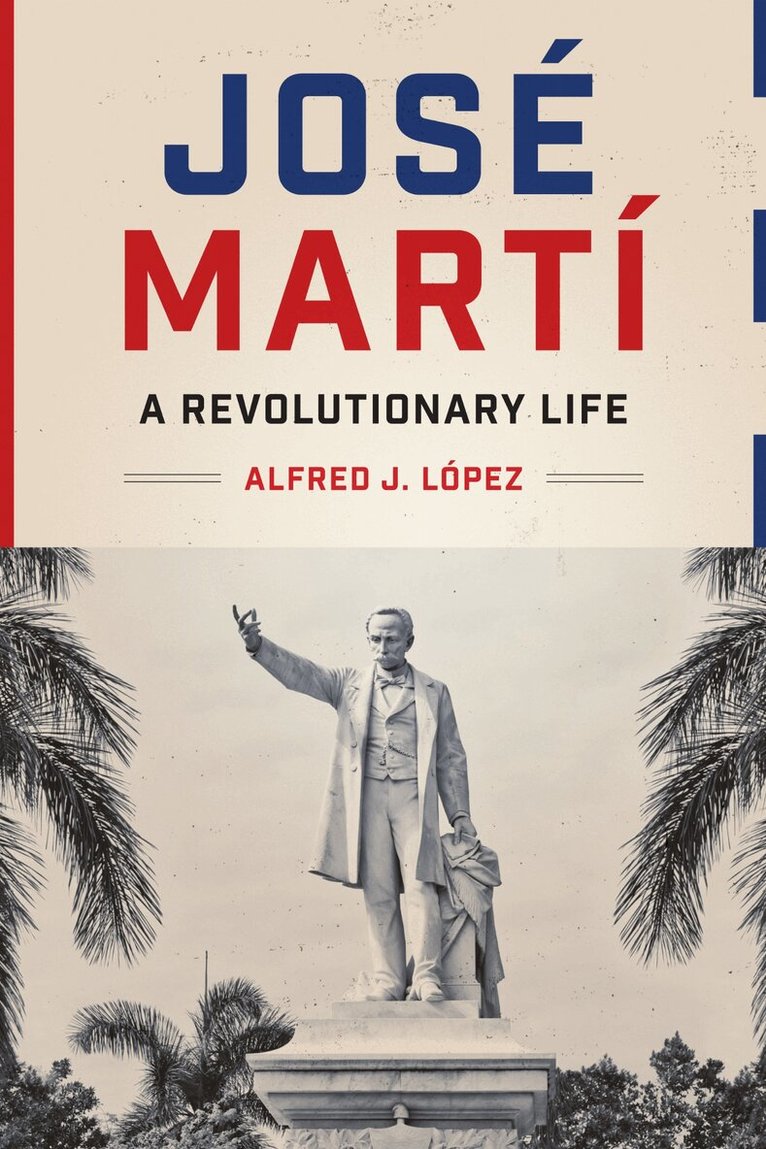
JosÉ MartÍ (1853–1895) was the founding hero of Cuban independence. In all of modern Latin American history, arguably only the “Great Liberator” SimÓn BolÍvar rivals MartÍ in stature and legacy. Beyond his accomplishments as a revolutionary and political thinker, MartÍ was a giant of Latin American letters, whose poetry, essays, and journalism still rank among the most important works of the region. Today he is revered by both the Castro regime and the Cuban exile community, whose shared veneration of the “apostle” of freedom has led to his virtual apotheosis as a national saint.In JosÉ MartÍ: A Revolutionary Life, Alfred J. LÓpez presents the definitive biography of the Cuban patriot and martyr. Writing from a nonpartisan perspective and drawing on years of research using original Cuban and U.S. sources, including materials never before used in a MartÍ biography, LÓpez strips away generations of mythmaking and portrays MartÍ as Cuba’s greatest founding father and one of Latin America’s literary and political giants, without suppressing his public missteps and personal flaws. In a lively account that engrosses like a novel, LÓpez traces the full arc of MartÍ’s eventful life, from his childhood and adolescence in Cuba, to his first exile and subsequent life in Spain, Mexico City, and Guatemala, through his mature revolutionary period in New York City and much-mythologized death in Cuba on the battlefield at Dos RÍos. The first major biography of MartÍ in over half a century and the first ever in English, JosÉ MartÍ is the most substantial examination of MartÍ’s life and work ever published.