Alice Dailey - Böcker
Visar alla böcker från författaren Alice Dailey. Handla med fri frakt och snabb leverans.
5 produkter
5 produkter
392 kr
Skickas inom 10-15 vardagar
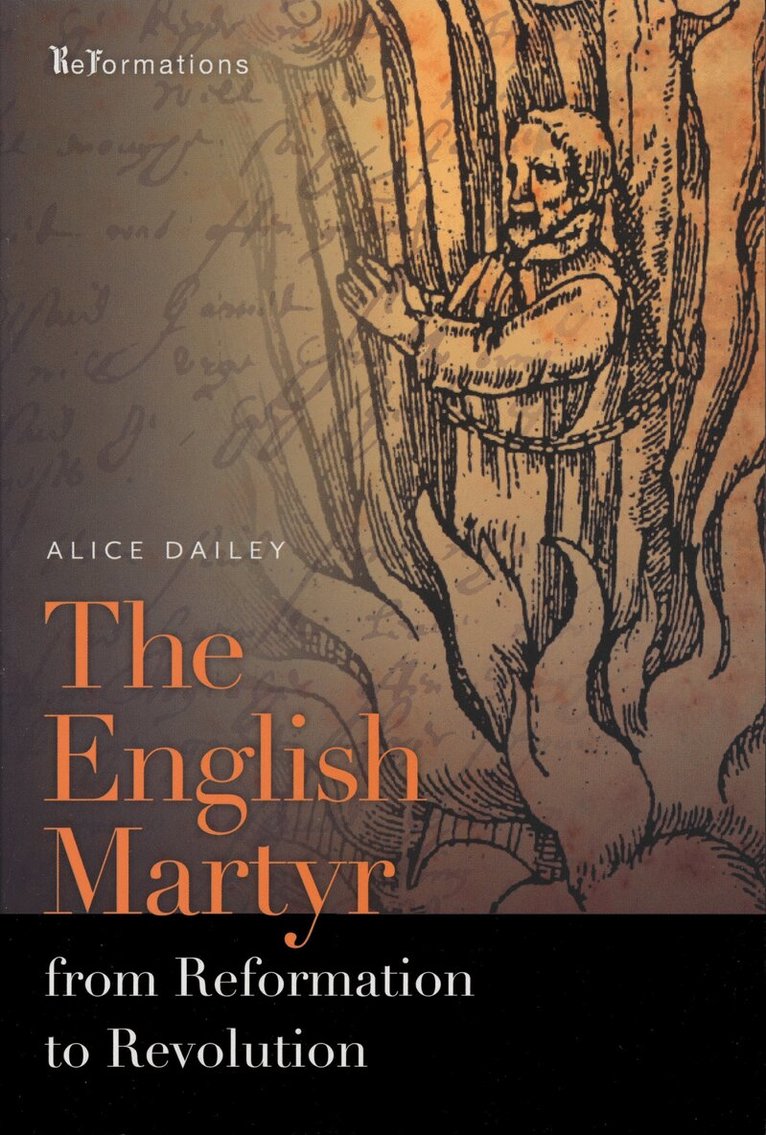
Traditionally, Christian martyrdom is a repetition of the story of Christ's suffering and death: the more closely the victim replicates the Christological model, the more legible the martyrdom. But if the textual construction of martyrdom depends on the rehearsal of a paradigmatic story, how do we reconcile the broad range of individuals, beliefs, and persecutions seeking justification by claims of martyrdom? Observing how martyrdom is constituted through the interplay of historical event and literary form, Alice Dailey explores the development of English martyr literature through the period of intense religious controversy from the heresy executions of Queen Mary to the regicide of 1649. Through close study of texts ranging from late medieval passion drama and hagiography to John Foxe's Acts and Monuments, martyrologies of the Counter-Reformation, Charles I's Eikon Basilike, and John Milton's Eikonoklastes, The English Martyr from Reformation to Revolution traces the shifting constructions of the martyr figure across Reformation England. By putting history and literary form in dialogue, Dailey describes not only the reformation of one of the oldest, most influential genres of the Christian West but a revolution in the very concept of martyrdom. In late sixteenth- and early seventeenth-century England, she argues, martyrdom develops from medieval notions of strict typological repetition into Charles I's defense of individual conscience—an abstract, figurative form of martyrdom that survives into modernity. Far from static or purely formulaic, martyrology emerges in Dailey's study as a deeply nuanced genre that discloses the mutually constitutive relationship between the lives we live and the stories we tell.
How to Do Things with Dead People
History, Technology, and Temporality from Shakespeare to Warhol
Inbunden, Engelska, 2022
489 kr
Skickas inom 7-10 vardagar
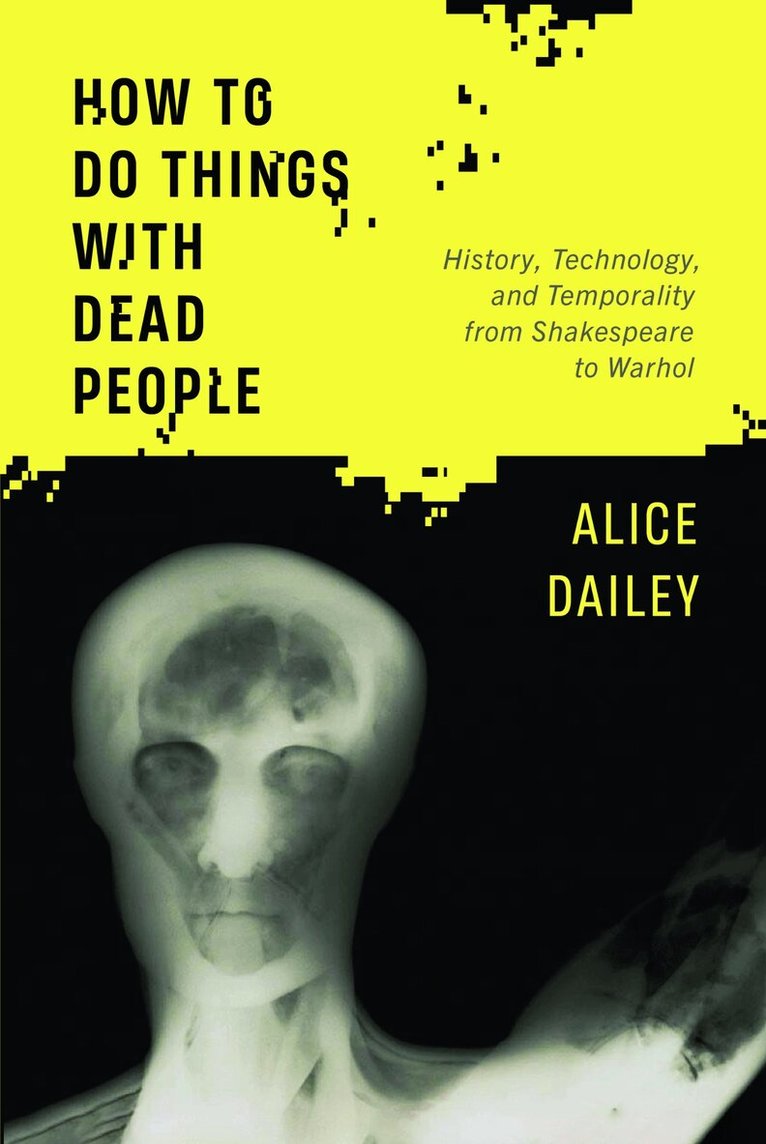
How to Do Things with Dead People studies human contrivances for representing and relating to the dead. Alice Dailey takes as her principal objects of inquiry Shakespeare's English history plays, describing them as reproductive mechanisms by which living replicas of dead historical figures are regenerated in the present and re-killed. Considering the plays in these terms exposes their affinity with a transhistorical array of technologies for producing, reproducing, and interacting with dead things—technologies such as literary doppelgängers, photography, ventriloquist puppetry, X-ray imaging, glitch art, capital punishment machines, and cloning. By situating Shakespeare's historical drama in this intermedial conversation, Dailey challenges conventional assumptions about what constitutes the context of a work of art and contests foundational models of linear temporality that inform long-standing conceptions of historical periodization and teleological order. Working from an eclectic body of theories, pictures, and machines that transcend time and media, Dailey composes a searching exploration of how the living use the dead to think back and look forward, to rule, to love, to wish and create.
How to Do Things with Dead People
History, Technology, and Temporality from Shakespeare to Warhol
Häftad, Engelska, 2024
367 kr
Skickas
How to Do Things with Dead People studies human contrivances for representing and relating to the dead. Alice Dailey takes as her principal objects of inquiry Shakespeare's English history plays, describing them as reproductive mechanisms by which living replicas of dead historical figures are regenerated in the present and re-killed. Considering the plays in these terms exposes their affinity with a transhistorical array of technologies for producing, reproducing, and interacting with dead things—technologies such as literary doppelgängers, photography, ventriloquist puppetry, X-ray imaging, glitch art, capital punishment machines, and cloning. By situating Shakespeare's historical drama in this intermedial conversation, Dailey challenges conventional assumptions about what constitutes the context of a work of art and contests foundational models of linear temporality that inform long-standing conceptions of historical periodization and teleological order. Working from an eclectic body of theories, pictures, and machines that transcend time and media, Dailey composes a searching exploration of how the living use the dead to think back and look forward, to rule, to love, to wish and create.
1 167 kr
Skickas inom 10-15 vardagar
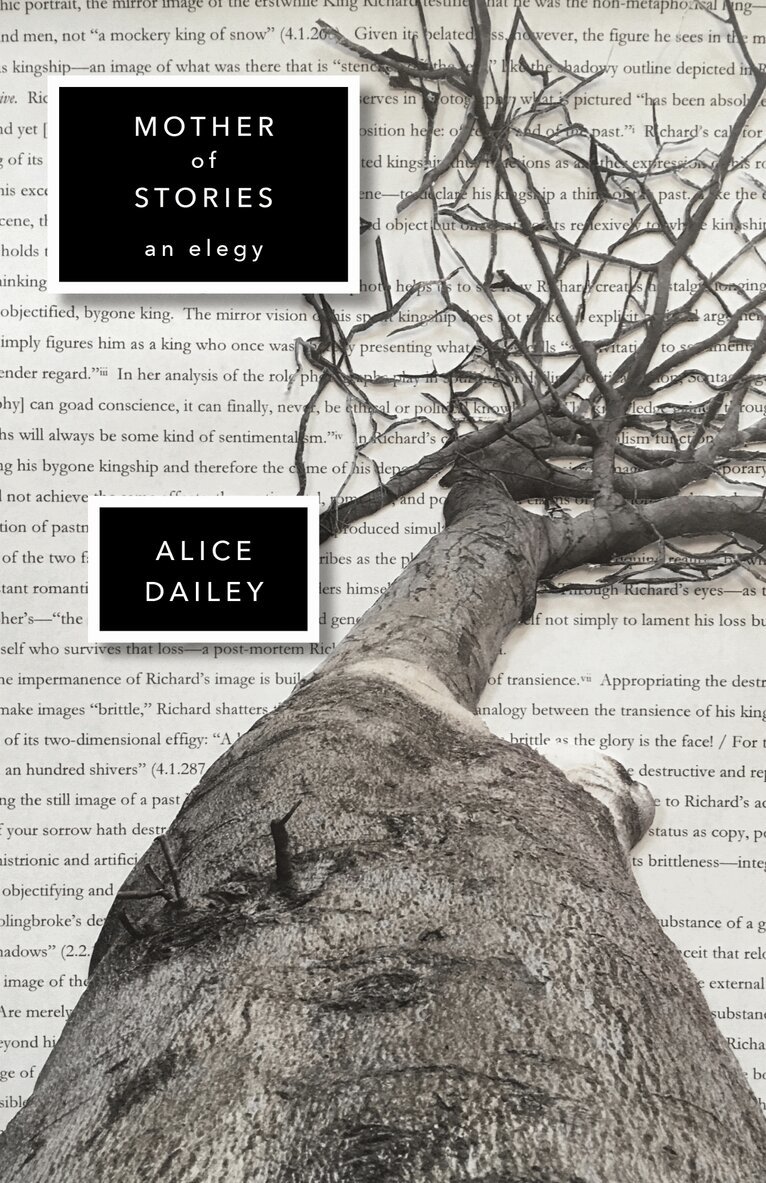
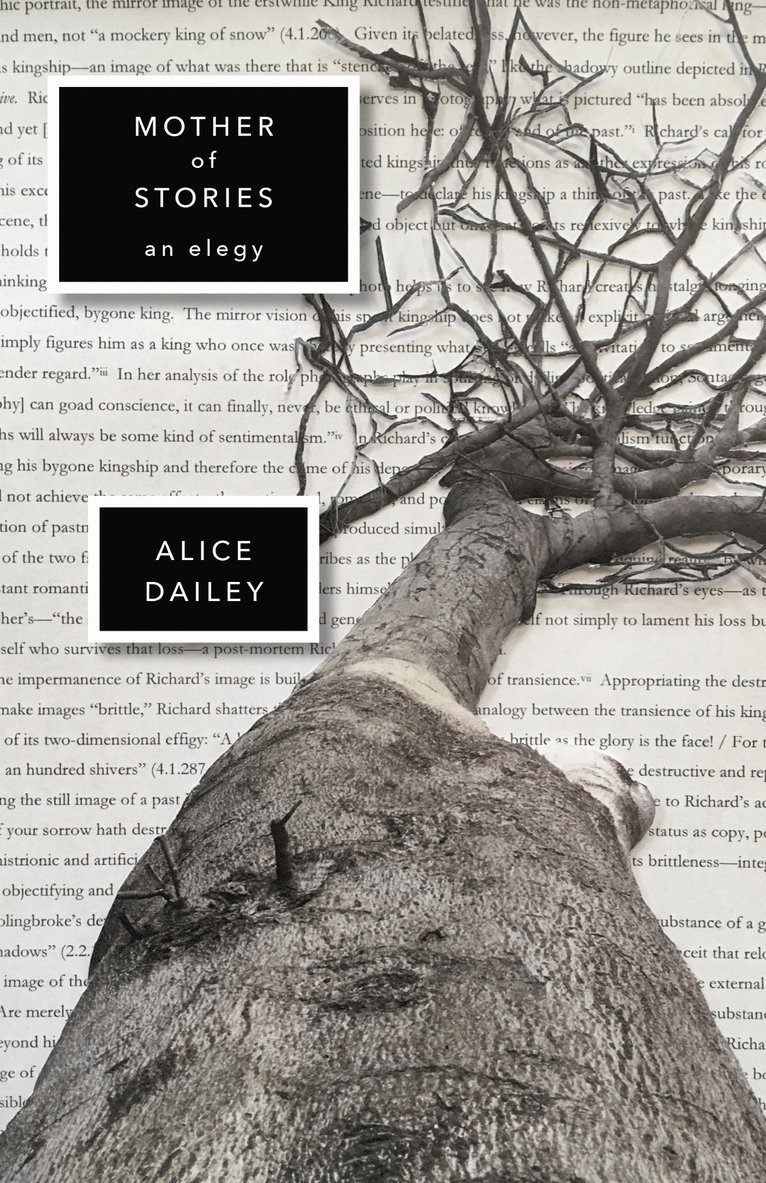
In a breathtaking blend of lyrical memoir, photographs, and textual artifacts, Mother of Stories examines the complex legacy of a mother who was a gifted teacher, a passionate reader, and a pathological liar.While Alice Dailey was immersed in an academic study of death in Shakespeare's history plays, her mother died from toxic exposure to mold. Composed in a fugue of grief, Mother of Stories is Dailey's uncompromising account of the months before and after her mother's death. Through varied forms of episodic and visual recreation, Mother of Stories confronts what it means to inherit violent family narratives and, in their wake, to have to reconceive the borders between lived, imaginary, and literary experience. A hybrid, richly imaginative work that synthesizes past and present, counterfeit and real, Mother of Stories oscillates between the inescapable weight of history and the cathartic liberation of art and storytelling. In constructing a poetic assemblage reminiscent at once of medieval miscellanies and contemporary experimental autotheory, Dailey's acts of rehearsing, cutting, and folding history generate forms of radical critique that puncture and reconstitute the limits of literary nonfiction.
298 kr
Skickas inom 10-15 vardagar
In a breathtaking blend of lyrical memoir, photographs, and textual artifacts, Mother of Stories examines the complex legacy of a mother who was a gifted teacher, a passionate reader, and a pathological liar.While Alice Dailey was immersed in an academic study of death in Shakespeare's history plays, her mother died from toxic exposure to mold. Composed in a fugue of grief, Mother of Stories is Dailey's uncompromising account of the months before and after her mother's death. Through varied forms of episodic and visual recreation, Mother of Stories confronts what it means to inherit violent family narratives and, in their wake, to have to reconceive the borders between lived, imaginary, and literary experience. A hybrid, richly imaginative work that synthesizes past and present, counterfeit and real, Mother of Stories oscillates between the inescapable weight of history and the cathartic liberation of art and storytelling. In constructing a poetic assemblage reminiscent at once of medieval miscellanies and contemporary experimental autotheory, Dailey's acts of rehearsing, cutting, and folding history generate forms of radical critique that puncture and reconstitute the limits of literary nonfiction.