Alice H. Amsden – författare
Visar alla böcker från författaren Alice H. Amsden. Handla med fri frakt och snabb leverans.
10 produkter
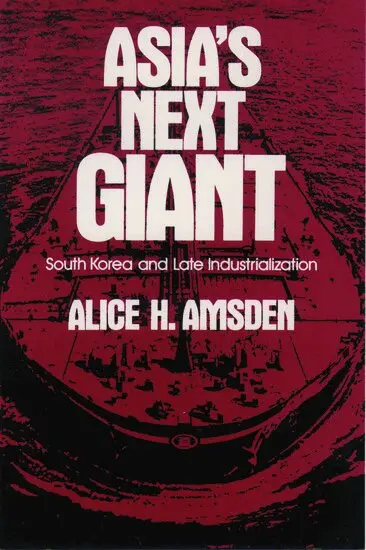
Asia's Next Giant
South Korea and Late Industrialization
Häftad, 1992
435 kr
Lägg i varukorg
While much attention has been focused on Japan's meteoric rise as an economic power, South Korea has been quietly emerging as the next industrial giant to penetrate the world market. South Korea is one of a series of countries (ranging from Taiwan, India, Brazil, and Turkey, to Mexico, and …
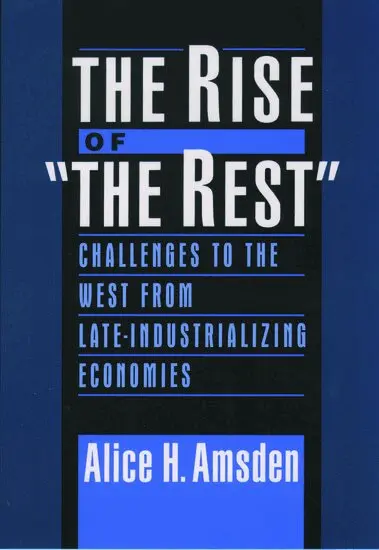
The Rise of "The Rest"
Challenges to the West from Late-Industrializing Economies
Häftad, 2004
905 kr
Lägg i varukorg
After World War II a select number of countries outside Japan and the West--those that Alice Amsden calls "the rest"--gained market share in modern industries and altered global competition. By 2000, a great divide had developed within "the rest", the lines drawn according to prewar manufacturing …
Asia's Next Giant
South Korea and Late Industrialization
E-bok, 1989
340 kr
Lägg i varukorg
South Korea has been quietly growing into a major economic force that is even challenging some Japanese industries. This timely book examines South Korean growth as an example of "late industrialization," a process in which a nation''s industries learn from earlier innovator nations, rather than …
Rise of "e;The Rest"e;
Challenges to the West from Late-Industrializing Economies
E-bok, 2001
621 kr
Lägg i varukorg
After World War II a select number of countries outside Japan and the West--those that Alice Amsden calls "the rest"--gained market share in modern industries and altered global competition. By 2000, a great divide had developed within "the rest", the lines drawn according to prewar manufacturing …
The Role of Elites in Economic Development
Av Alice H. Amsden, the late Alice H. Amsden m. fl.
Inbunden, 2012
2381 kr
Lägg i varukorg
Elites have a disproportionate impact on development outcomes. While a country's endowments constitute the deep determinates of growth, the trajectory they follow is shaped by the actions of elites. But what factors affect whether elites use their influence for individual gain or national welfare? …
Asia's Next Giant
South Korea and Late Industrialization
E-bok, 1989
340 kr
Lägg i varukorg
South Korea has been quietly growing into a major economic force that is even challenging some Japanese industries. This timely book examines South Korean growth as an example of "late industrialization," a process in which a nation''s industries learn from earlier innovator nations, rather than …
Rise of "e;The Rest"e;
Challenges to the West from Late-Industrializing Economies
E-bok, 2001
621 kr
Lägg i varukorg
After World War II a select number of countries outside Japan and the West--those that Alice Amsden calls "the rest"--gained market share in modern industries and altered global competition. By 2000, a great divide had developed within "the rest", the lines drawn according to prewar manufacturing …
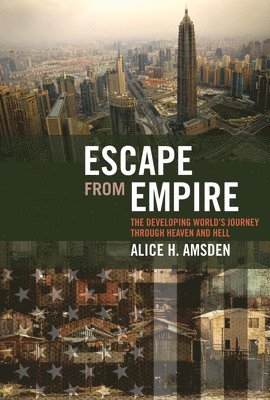
Escape from Empire
E-bok, 2009
310 kr
Lägg i varukorg
A provocative view of economic growth in the Third World argues that the countries that have achieved steady economic growth—including future economic superpowers India and China—have done so because they have resisted the American ideology of free markets. The American government has been both …
Escape from Empire
The Developing World's Journey through Heaven and Hell
Häftad, 2009
387 kr
Lägg i varukorg
Beyond Late Development
Taiwan's Upgrading Policies
Av Alice H. Amsden, Wan-Wen Chu
Inbunden, 2003
192 kr
Tillfälligt slut