Alison Hope Alkon - Böcker
Visar alla böcker från författaren Alison Hope Alkon. Handla med fri frakt och snabb leverans.
8 produkter
8 produkter
646 kr
Skickas inom 5-8 vardagar
983 kr
Skickas inom 7-10 vardagar
1 469 kr
Skickas inom 3-6 vardagar
The New Food Activism explores how food activism can be pushed toward deeper and more complex engagement with social, racial, and economic justice and toward advocating for broader and more transformational shifts in the food system. Topics examined include struggles against pesticides and GMOs, efforts to improve workers' pay and conditions throughout the food system, and ways to push food activism beyond its typical reliance on individualism, consumerism, and private property. The authors challenge and advance existing discourse on consumer trends, food movements, and the intersection of food with racial and economic inequalities.
242 kr
Skickas inom 7-10 vardagar
The New Food Activism explores how food activism can be pushed toward deeper and more complex engagement with social, racial, and economic justice and toward advocating for broader and more transformational shifts in the food system. Topics examined include struggles against pesticides and GMOs, efforts to improve workers' pay and conditions throughout the food system, and ways to push food activism beyond its typical reliance on individualism, consumerism, and private property. The authors challenge and advance existing discourse on consumer trends, food movements, and the intersection of food with racial and economic inequalities.
1 122 kr
Skickas inom 5-8 vardagar
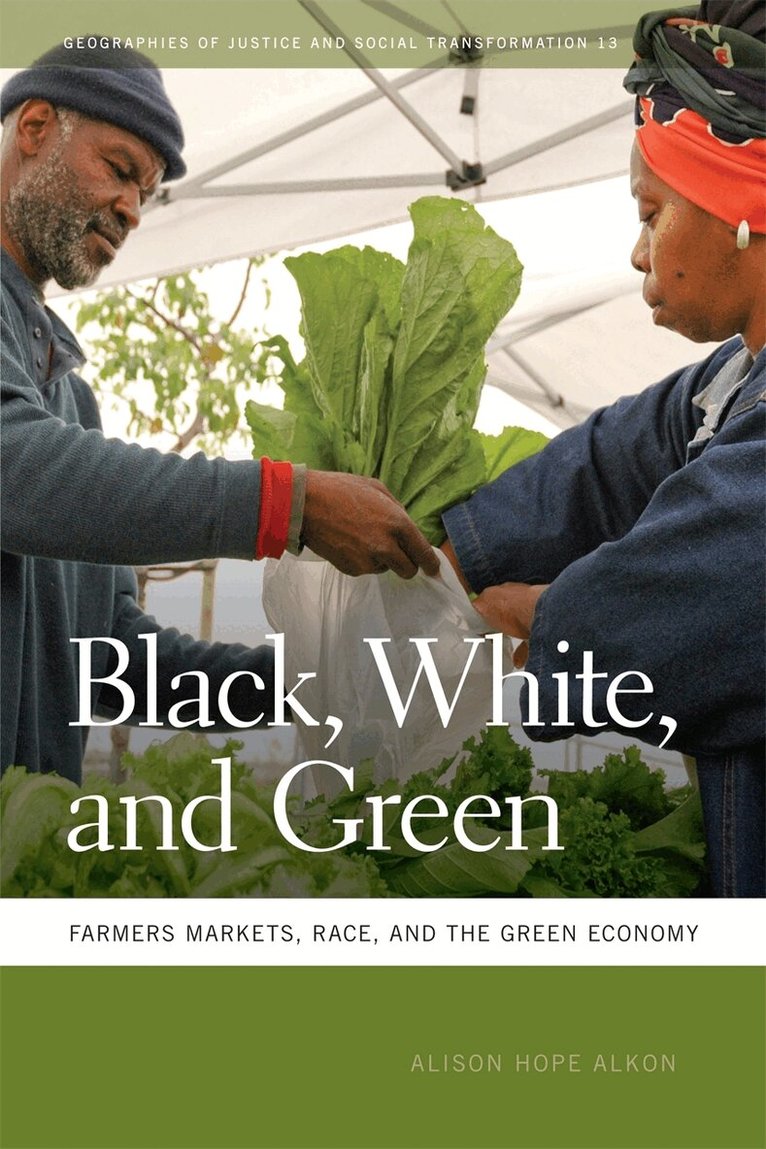
Farmers markets are much more than places to buy produce. According to advocates for sustainable food systems, they are also places to “vote with your fork” for environmental protection, vibrant communities, and strong local economies. Farmers markets have become essential to the movement for food-system reform and are a shining example of a growing green economy where consumers can shop their way to social change.Black, White, and Green brings new energy to this topic by exploring dimensions of race and class as they relate to farmers markets and the green economy. With a focus on two Bay Area markets—one in the primarily white neighborhood of North Berkeley, and the other in largely black West Oakland—Alison Hope Alkon investigates the possibilities for social and environmental change embodied by farmers markets and the green economy.Drawing on ethnographic and historical sources, Alkon describes the meanings that farmers market managers, vendors, and consumers attribute to the buying and selling of local organic food, and the ways that those meanings are raced and classed. She mobilizes this research to understand how the green economy fosters visions of social change that are compatible with economic growth while marginalizing those that are not.Black, White, and Green is one of the first books to carefully theorize the green economy, to examine the racial dynamics of food politics, and to approach issues of food access from an environmental-justice perspective. In a practical sense, Alkon offers an empathetic critique of a newly popular strategy for social change, highlighting both its strengths and limitations.
410 kr
Skickas inom 5-8 vardagar
Farmers markets are much more than places to buy produce. According to advocates for sustainable food systems, they are also places to “vote with your fork” for environmental protection, vibrant communities, and strong local economies. Farmers markets have become essential to the movement for food-system reform and are a shining example of a growing green economy where consumers can shop their way to social change.Black, White, and Green brings new energy to this topic by exploring dimensions of race and class as they relate to farmers markets and the green economy. With a focus on two Bay Area markets—one in the primarily white neighborhood of North Berkeley, and the other in largely black West Oakland—Alison Hope Alkon investigates the possibilities for social and environmental change embodied by farmers markets and the green economy.Drawing on ethnographic and historical sources, Alkon describes the meanings that farmers market managers, vendors, and consumers attribute to the buying and selling of local organic food, and the ways that those meanings are raced and classed. She mobilizes this research to understand how the green economy fosters visions of social change that are compatible with economic growth while marginalizing those that are not.Black, White, and Green is one of the first books to carefully theorize the green economy, to examine the racial dynamics of food politics, and to approach issues of food access from an environmental-justice perspective. In a practical sense, Alkon offers an empathetic critique of a newly popular strategy for social change, highlighting both its strengths and limitations.
362 kr
Skickas inom 7-10 vardagar
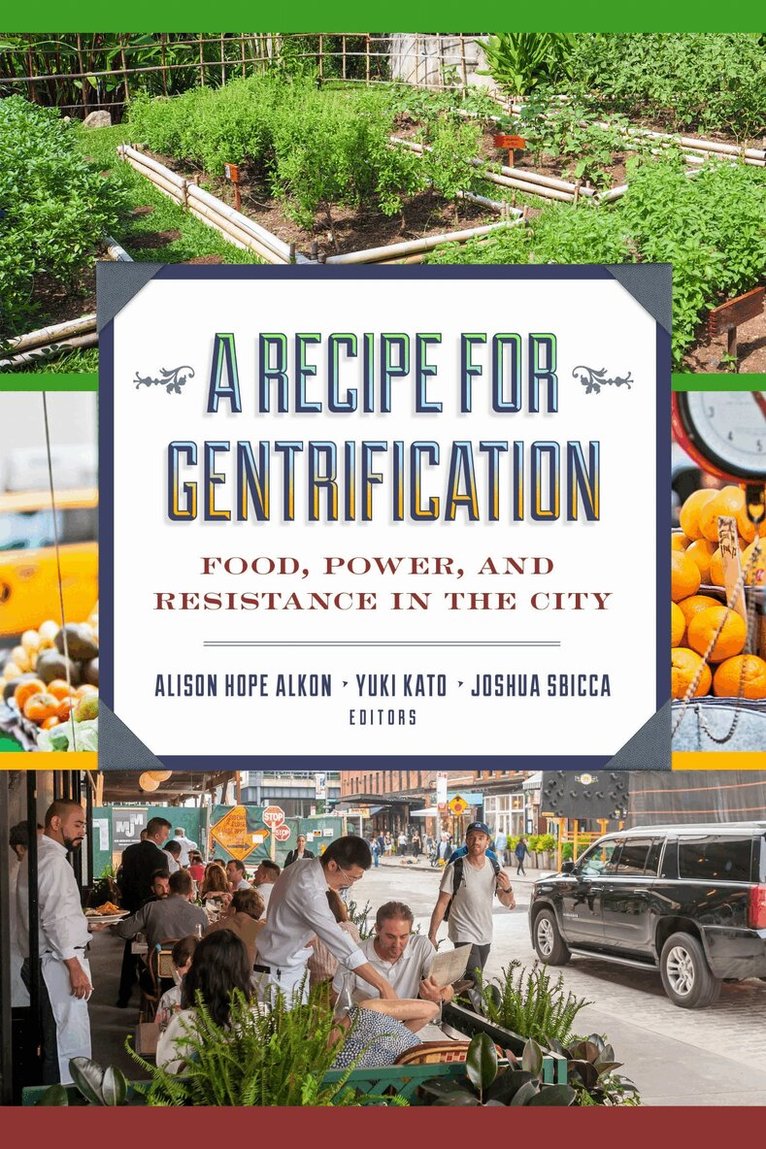
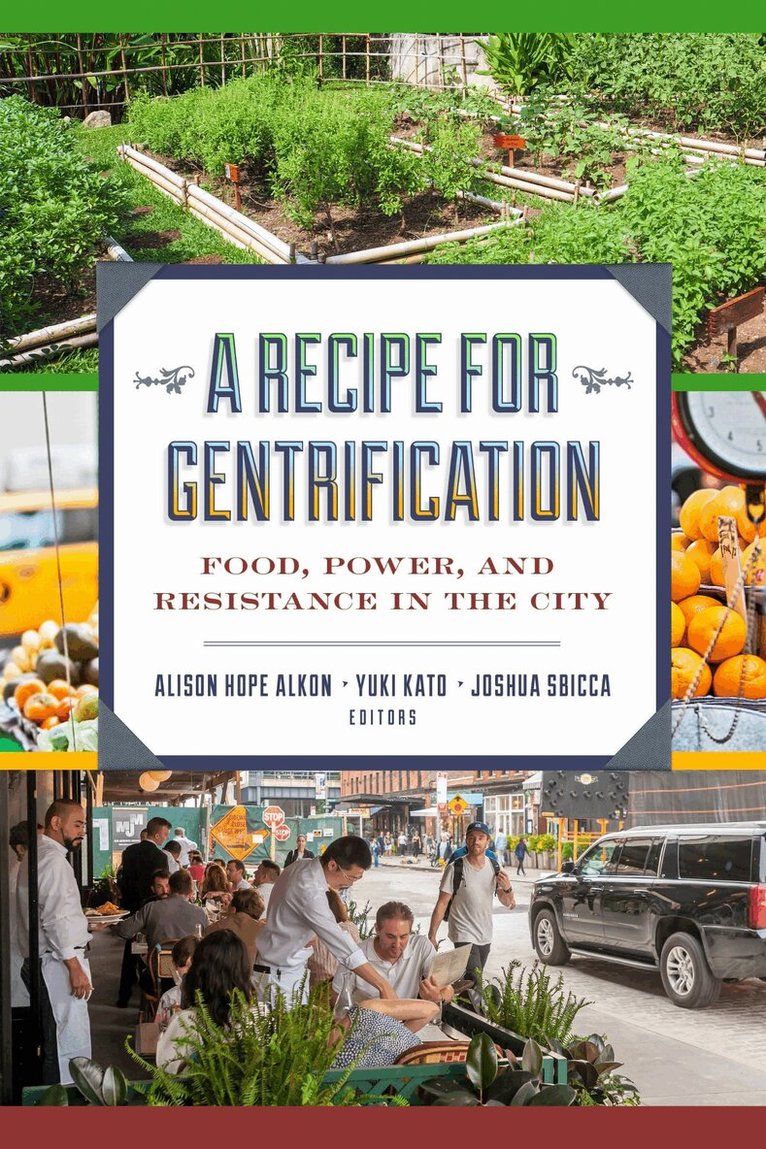
Honorable Mention, 2021 Edited Collection Book Award, given by the Association for the Study of Food and Society How gentrification uproots the urban food landscape, and what activists are doing to resist itFrom hipster coffee shops to upscale restaurants, a bustling local food scene is perhaps the most commonly recognized harbinger of gentrification. A Recipe for Gentrification explores this widespread phenomenon, showing the ways in which food and gentrification are deeply—and, at times, controversially—intertwined. Contributors provide an inside look at gentrification in different cities, from major hubs like New York and Los Angeles to smaller cities like Cleveland and Durham. They examine a wide range of food enterprises—including grocery stores, restaurants, community gardens, and farmers' markets—to provide up-to-date perspectives on why gentrification takes place, and how communities use food to push back against displacement. Ultimately, they unpack the consequences for vulnerable people and neighborhoods. A Recipe for Gentrification highlights how the everyday practices of growing, purchasing and eating food reflect the rapid—and contentious—changes taking place in American cities in the twenty-first century.
1 114 kr
Skickas inom 10-15 vardagar
Honorable Mention, 2021 Edited Collection Book Award, given by the Association for the Study of Food and Society How gentrification uproots the urban food landscape, and what activists are doing to resist itFrom hipster coffee shops to upscale restaurants, a bustling local food scene is perhaps the most commonly recognized harbinger of gentrification. A Recipe for Gentrification explores this widespread phenomenon, showing the ways in which food and gentrification are deeply—and, at times, controversially—intertwined. Contributors provide an inside look at gentrification in different cities, from major hubs like New York and Los Angeles to smaller cities like Cleveland and Durham. They examine a wide range of food enterprises—including grocery stores, restaurants, community gardens, and farmers' markets—to provide up-to-date perspectives on why gentrification takes place, and how communities use food to push back against displacement. Ultimately, they unpack the consequences for vulnerable people and neighborhoods. A Recipe for Gentrification highlights how the everyday practices of growing, purchasing and eating food reflect the rapid—and contentious—changes taking place in American cities in the twenty-first century.