Alison K. Smith - Böcker
Visar alla böcker från författaren Alison K. Smith. Handla med fri frakt och snabb leverans.
8 produkter
8 produkter
349 kr
Skickas inom 5-8 vardagar
Every subject of the Russian Empire had an official, legal place in society marked by his or her social estate, or soslovie. These sosloviia (noble, peasant, merchant, and many others) were usually inherited, and defined the rights, opportunities, and duties of those who possessed them. They were also usually associated with membership in a specific geographically defined society in a particular town or village. Moreover, although laws increasingly insisted that every subject of the empire possess a soslovie "for the common good and their own well-being," they also allowed individuals to change their soslovie by following a particular bureaucratic procedure. The process of changing soslovie brought together three sets of actors: the individuals who wished to change their opportunities or duties, or who at times had change forced upon them; local societies, which wished to control who belonged to them; and the central, imperial state, which wished above all to ensure that every one of its subjects had a place, and therefore a status. This book looks at the many ways that soslovie could affect individual lives and have meaning, then traces the legislation and administration of soslovie from the early eighteenth through to the early twentieth century. This period saw a shift from soslovie as above all a means of extracting duties or taxes, to an understanding of soslovie as instead a means of providing services and ensuring security. The book ends with an examination of the way that a change in soslovie could affect not just an individual's biography, but the future of his or her entire family. The result is a new image of soslovie as both a general and a very specific identity, and as one that had persistent meaning, for the Imperial statue, for local authorities, or for individual subjects, even through 1917.
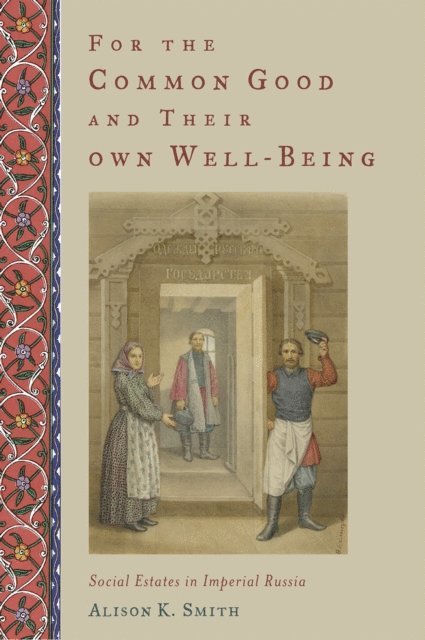
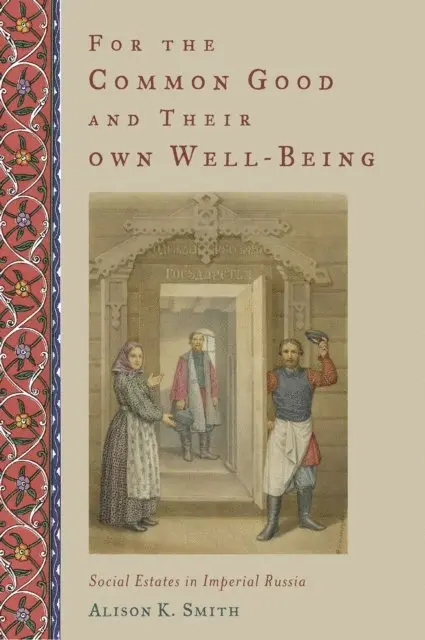
For the Common Good and Their Own Well-Being
Social Estates in Imperial Russia
Inbunden, Engelska, 2014
1 253 kr
Skickas inom 5-8 vardagar
Every subject of the Russian Empire had an official, legal place in society marked by his or her social estate, or soslovie. These sosloviia (noble, peasant, merchant, and many others) were usually inherited, and defined the rights, opportunities, and duties of those who possessed them. They were also usually associated with membership in a specific geographically defined society in a particular town or village. Moreover, although laws increasingly insisted that every subject of the empire possess a soslovie "for the common good and their own well-being," they also allowed individuals to change their soslovie by following a particular bureaucratic procedure. The process of changing soslovie brought together three sets of actors: the individuals who wished to change their opportunities or duties, or who at times had change forced upon them; local societies, which wished to control who belonged to them; and the central, imperial state, which wished above all to ensure that every one of its subjects had a place, and therefore a status. This book looks at the many ways that soslovie could affect individual lives and have meaning, then traces the legislation and administration of soslovie from the early eighteenth through to the early twentieth century. This period saw a shift from soslovie as above all a means of extracting duties or taxes, to an understanding of soslovie as instead a means of providing services and ensuring security. The book ends with an examination of the way that a change in soslovie could affect not just an individual's biography, but the future of his or her entire family. The result is a new image of soslovie as both a general and a very specific identity, and as one that had persistent meaning, for the Imperial statue, for local authorities, or for individual subjects, even through 1917.
446 kr
Skickas inom 10-15 vardagar
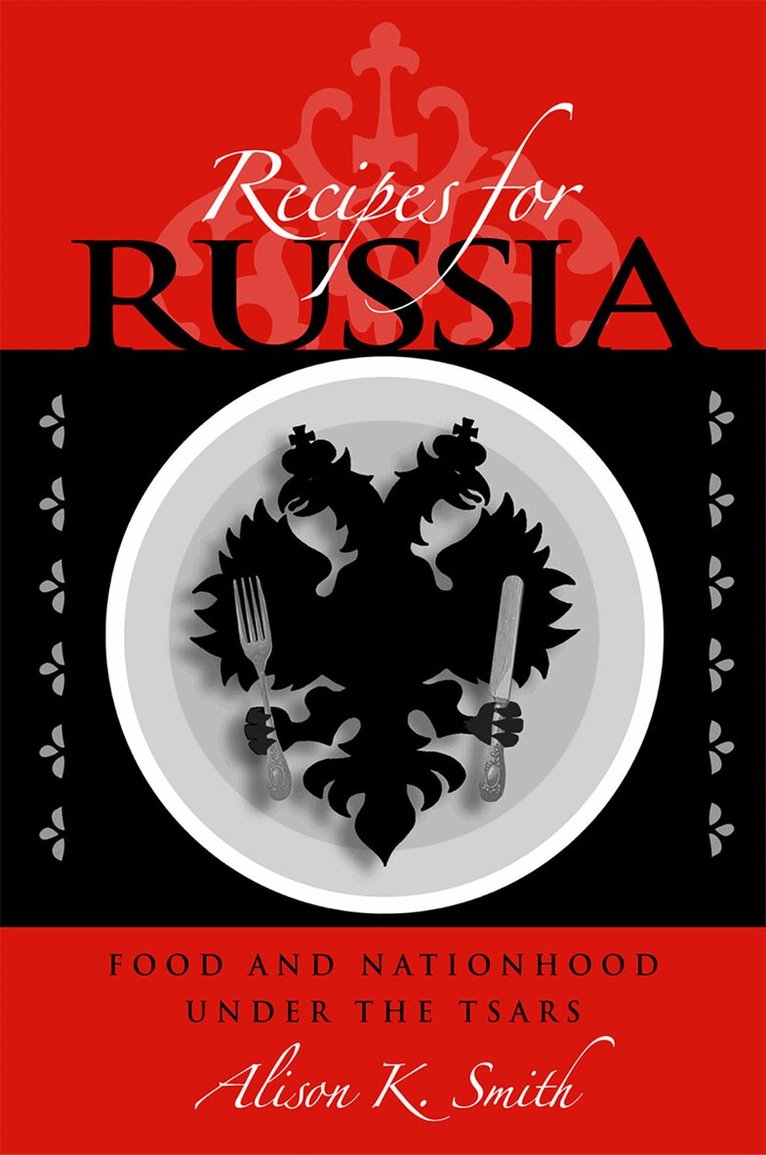
Alison K. Smith examines changing attitudes, behaviors, and beliefs about the production and consumption of food in Russia from the late eighteenth century through the mid-nineteenth century. She focuses on the way that competing ideas based either in "traditional" Russian practice or in new practices from the "rational" West became the basis for Russians' understanding of themselves and their society. The Russians who participated in the process of self-definition were variously private authors and reformers or public servants of the Russian imperial state. Some had great success in creating a sense of themselves as ultimate authorities on a given topic. For example, a series of cookbook authors developed a system of writing Russian cookbooks in ways that borrowed from, but were still quite different from, foreign sources. Others found the process of mediating these ideas more difficult; agricultural reformers, in particular, sometimes found traditional practices, now deemed irrational, hard to eliminate. Recipes for Russia looks at the process of nation-building within the framework of the modern world—that is, it looks at the way individuals sought to define their nationality not only against outside influences but also by incorporating those outside influences into some coherent, yet national, whole. While Smith looks at food as part of Russian culture, she also connects it with the social, legal, and economic background that formed the culture, while examining the pre-reform period in significant detail. As a result, Recipes for Russia illuminates the great changes of this period, both in the food habits of Russians and in their views of themselves and of their nation.
432 kr
Skickas inom 10-15 vardagar
Alison K. Smith examines changing attitudes, behaviors, and beliefs about the production and consumption of food in Russia from the late eighteenth century through the mid-nineteenth century. She focuses on the way that competing ideas based either in "traditional" Russian practice or in new practices from the "rational" West became the basis for Russians' understanding of themselves and their society. The Russians who participated in the process of self-definition were variously private authors and reformers or public servants of the Russian imperial state. Some had great success in creating a sense of themselves as ultimate authorities on a given topic. For example, a series of cookbook authors developed a system of writing Russian cookbooks in ways that borrowed from, but were still quite different from, foreign sources. Others found the process of mediating these ideas more difficult; agricultural reformers, in particular, sometimes found traditional practices, now deemed irrational, hard to eliminate. Recipes for Russia looks at the process of nation-building within the framework of the modern world—that is, it looks at the way individuals sought to define their nationality not only against outside influences but also by incorporating those outside influences into some coherent, yet national, whole. While Smith looks at food as part of Russian culture, she also connects it with the social, legal, and economic background that formed the culture, while examining the pre-reform period in significant detail. As a result, Recipes for Russia illuminates the great changes of this period, both in the food habits of Russians and in their views of themselves and of their nation.
1 314 kr
Skickas inom 10-15 vardagar
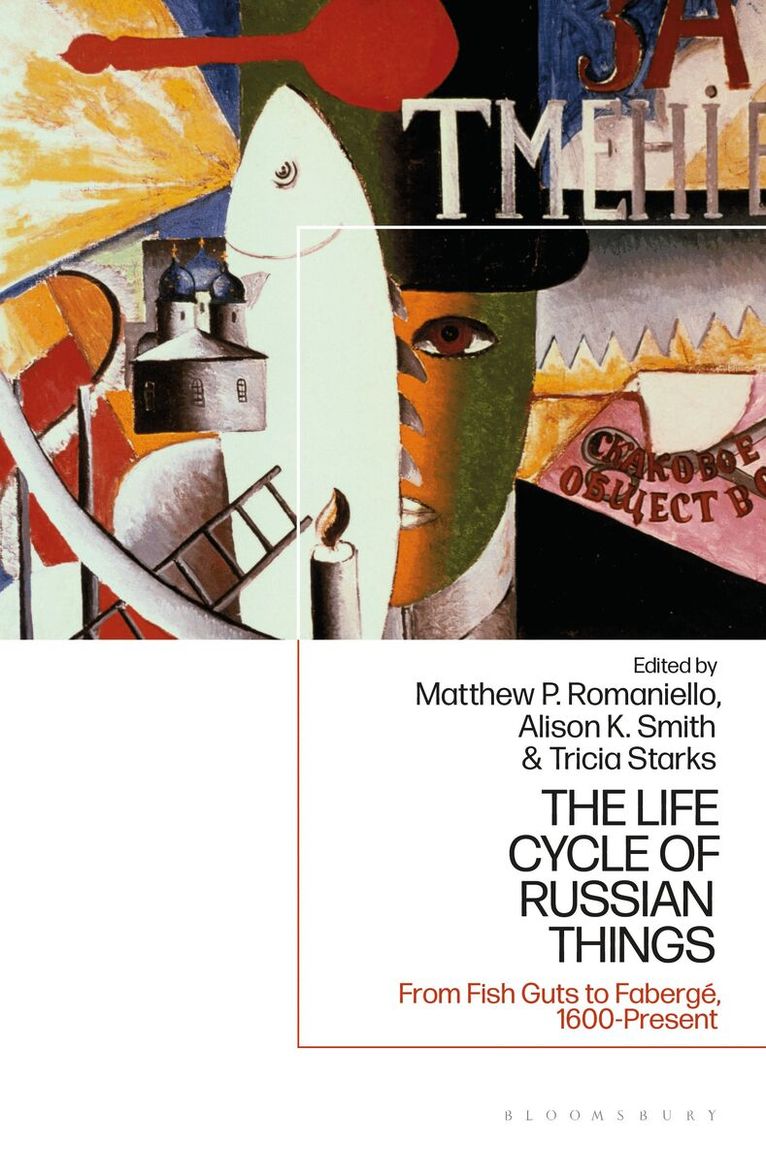
The Life Cycle of Russian Things re-orients commodity studies using interdisciplinary and comparative methods to foreground unique Russian and Soviet materials as varied as apothecary wares, isinglass, limestone and tanks. It also transforms modernist and Western interpretations of the material by emphasizing the commonalities of the Russian experience.Expert contributors from across the United States, Canada, Britain, and Germany come together to situate Russian material culture studies at an interdisciplinary crossroads. Drawing upon theory from anthropology, history, and literary and museum studies, the volume presents a complex narrative, not only in terms of material consumption but also in terms of production and the secondary life of inheritance, preservation, or even destruction. In doing so, the book reconceptualises material culture as a lived experience of sensory interaction. The Life Cycle of Russian Things sheds new light on economic history and consumption studies by reflecting the diversity of Russia’s experiences over the last 400 years.
420 kr
Skickas inom 10-15 vardagar
The Life Cycle of Russian Things re-orients commodity studies using interdisciplinary and comparative methods to foreground unique Russian and Soviet materials as varied as apothecary wares, isinglass, limestone and tanks. It also transforms modernist and Western interpretations of the material by emphasizing the commonalities of the Russian experience.Expert contributors from across the United States, Canada, Britain, and Germany come together to situate Russian material culture studies at an interdisciplinary crossroads. Drawing upon theory from anthropology, history, and literary and museum studies, the volume presents a complex narrative, not only in terms of material consumption but also in terms of production and the secondary life of inheritance, preservation, or even destruction. In doing so, the book reconceptualises material culture as a lived experience of sensory interaction. The Life Cycle of Russian Things sheds new light on economic history and consumption studies by reflecting the diversity of Russia’s experiences over the last 400 years.
881 kr
Kommande
Cold runs through Russian history and culture as an enemy, an opportunity, an adventure, and a metaphor. Drawing on the expertise of a broad range of scholars, this volume offers new insights into Russia’s sensational history.Early modern European travelers and thinkers found Russia’s cold bewildering as something to experience and something to explain. In the nineteenth century, Russians began to reclaim the symbolism of cold, transforming it from a mark of backwardness or conservatism into a source of national pride and aesthetic beauty. It was also still feared, and cold’s potential as a punishment or hardship remained through the transition into the twentieth century. Throughout, cold was also something to be mastered and exploited through Arctic expeditions and tourism, industrial development, and the conquest of natural resources in the far north.This volume brings together a collection of essays written by historians, art historians, and literary scholars. It integrates visual sources to enliven the historical narrative and engage readers more deeply with the Russian past. Spanning the from the sixteenth to the twenty-first century, the essays offer broad chronological and thematic coverage of the significance of the cold in Russian history and culture, appealing to readers across disciplines and interests.
317 kr
Skickas inom 7-10 vardagar
When people think of Russian food they generally think either of opulent luxury, signified above all by caviar, or of poverty and hunger – of cabbage and potatoes and porridge. Both of these visions have a basis in reality, but both of them are incomplete. The history of food and drink in Russia includes hunger and it includes plenty, it includes scarcity and, for some, at least, abundance. It includes dishes that came out of the northern, forested regions and ones that incorporate foods from the wider Russian Empire and later from the Soviet Union. Cabbage and Caviar places Russian food and drink in the context of Russian history, and shows off the incredible (and largely unknown) variety of Russian food.