Allan N. Schore – Författare
Visar alla böcker från författaren Allan N. Schore. Handla med fri frakt och snabb leverans.
5 produkter
5 produkter
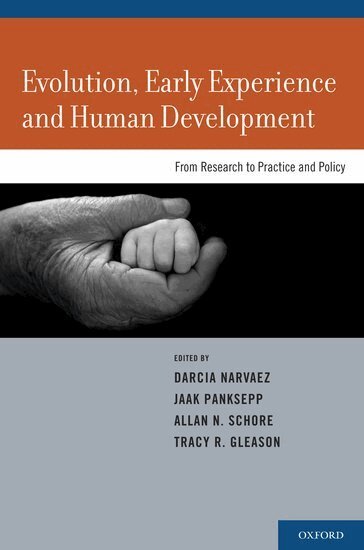
Evolution, Early Experience and Human Development
From Research to Practice and Policy
Inbunden, Engelska, 2012
1 454 kr
Skickas inom 5-8 vardagar
The field of cognitive psychology has expanded rapidly in recent years, with experts in affective and cognitive neuroscience revealing more about mammalian brain function than ever before. In contrast, psychological problems such as ADHD, autism, anxiety, and depression are on the rise, as are medical conditions such as diabetes, obesity, and autoimmune disorders. Why, in this era of unprecedented scientific self-knowledge, does there seem to be so much uncertainty about what human beings need for optimal development?Evolution, Early Experience and Human Development asserts that human development is being misshaped by government policies, social practices, and public beliefs that fail to consider basic human needs. In this pioneering volume, scientists from a range of disciplines theorize that the increase in conditions such as depression and obesity can be partially attributed to a disparity between the environments and conditions under which our mammalian brains currently develop and our evolutionary heritage. For example, healthy brain and emotional development depends to a significant extent upon caregiver availability and quality of care. These include practices such as breastfeeding, co-sleeping, and parental social support, which have waned in modern society, but nevertheless may be integral to healthy development. As the authors argue, without a more informed appreciation of the ideal conditions under which human brains/minds develop and function, human beings will continue to struggle with suboptimal mental and physical health, and as problems emerge psychological treatments alone will not be effective. The best approach is to recognize these needs at the outset so as to optimize child development. Evolution, Early Experience and Human Development puts forth a logical, empirically based argument regarding human mammalian needs for optimal development, based on research from anthropology, neurobiology, animal science, and human development. The result is a unique exploration of evolutionary approaches to human behavior that will support the advancement of new policies, new attitudes towards health, and alterations in childcare practices that will better promote healthy human development.
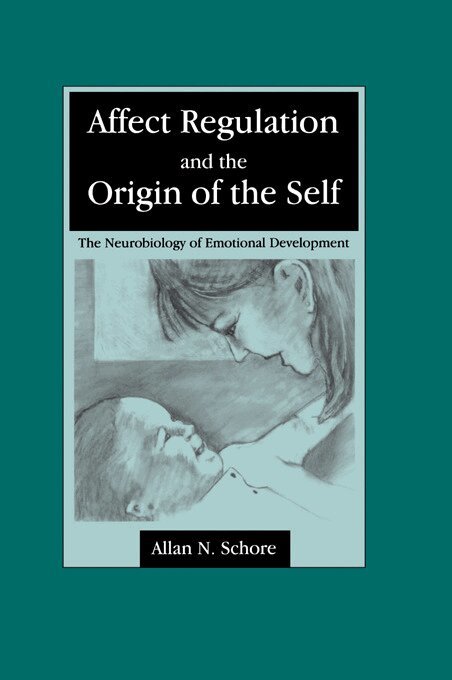
Affect Regulation and the Origin of the Self
The Neurobiology of Emotional Development
Inbunden, Engelska, 1994
2 317 kr
Skickas inom 10-15 vardagar
During the past decade a diverse group of disciplines have simultaneously intensified their attention upon the scientific study of emotion. This proliferation of research on affective phenomena has been paralleled by an acceleration of investigations of early human structural and functional development. Developmental neuroscience is now delving into the ontogeny of brain systems that evolve to support the psychobiological underpinnings of socioemotional functioning. Studies of the infant brain demonstrate that its maturation is influenced by the environment and is experience-dependent. Developmental psychological research emphasizes that the infant's expanding socioaffective functions are critically influenced by the affect-transacting experiences it has with the primary caregiver. Concurrent developmental psychoanalytic research suggests that the mother's affect regulatory functions permanently shape the emerging self's capacity for self-organization. Studies of incipient relational processes and their effects on developing structure are thus an excellent paradigm for the deeper apprehension of the organization and dynamics of affective phenomena. This book brings together and presents the latest findings of socioemotional studies emerging from the developmental branches of various disciplines. It supplies psychological researchers and clinicians with relevant, up-to-date developmental neurobiological findings and insights, and exposes neuroscientists to recent developmental psychological and psychoanalytic studies of infants. The methodology of this theoretical research involves the integration of information that is being generated by the different fields that are studying the problem of socioaffective development--neurobiology, behavioral neurology, behavioral biology, sociobiology, social psychology, developmental psychology, developmental psychoanalysis, and infant psychiatry. A special emphasis is placed upon the application and incorporation of current developmental data from neurochemistry, neuroanatomy, neuropsychology, and neuroendocrinology into the main body of developmental theory. More than just a review of several literatures, the studies cited in this work are used as a multidisciplinary source pool of experimental data, theoretical concepts, and clinical observations that form the base and scaffolding of an overarching heuristic model of socioemotional development that is grounded in contemporary neuroscience. This psychoneurobiological model is then used to generate a number of heuristic hypotheses regarding the proximal causes of a wide array of affect-related phenomena--from the motive force that drives human attachment to the proximal causes of psychiatric disturbances and psychosomatic disorders, and indeed to the origin of the self.
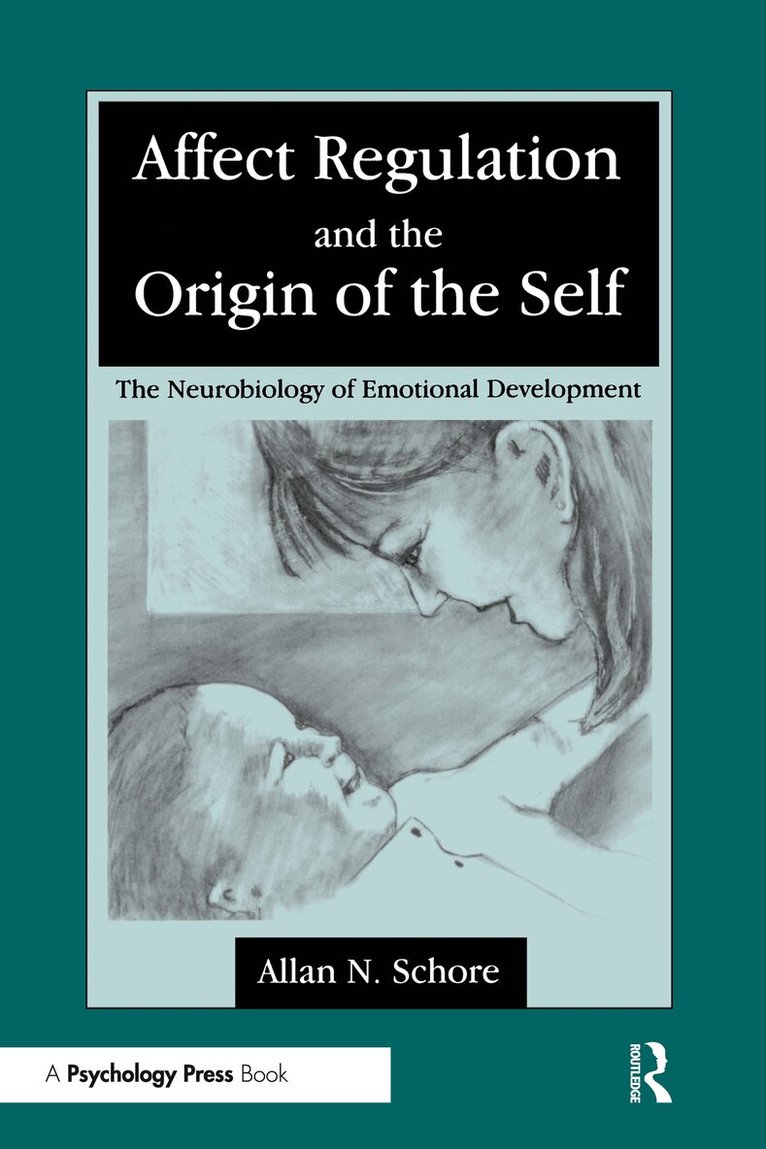
Affect Regulation and the Origin of the Self
The Neurobiology of Emotional Development
Häftad, Engelska, 1999
1 434 kr
Skickas inom 10-15 vardagar
During the past decade a diverse group of disciplines have simultaneously intensified their attention upon the scientific study of emotion. This proliferation of research on affective phenomena has been paralleled by an acceleration of investigations of early human structural and functional development. Developmental neuroscience is now delving into the ontogeny of brain systems that evolve to support the psychobiological underpinnings of socioemotional functioning. Studies of the infant brain demonstrate that its maturation is influenced by the environment and is experience-dependent. Developmental psychological research emphasizes that the infant's expanding socioaffective functions are critically influenced by the affect-transacting experiences it has with the primary caregiver. Concurrent developmental psychoanalytic research suggests that the mother's affect regulatory functions permanently shape the emerging self's capacity for self-organization. Studies of incipient relational processes and their effects on developing structure are thus an excellent paradigm for the deeper apprehension of the organization and dynamics of affective phenomena. This book brings together and presents the latest findings of socioemotional studies emerging from the developmental branches of various disciplines. It supplies psychological researchers and clinicians with relevant, up-to-date developmental neurobiological findings and insights, and exposes neuroscientists to recent developmental psychological and psychoanalytic studies of infants. The methodology of this theoretical research involves the integration of information that is being generated by the different fields that are studying the problem of socioaffective development--neurobiology, behavioral neurology, behavioral biology, sociobiology, social psychology, developmental psychology, developmental psychoanalysis, and infant psychiatry. A special emphasis is placed upon the application and incorporation of current developmental data from neurochemistry, neuroanatomy, neuropsychology, and neuroendocrinology into the main body of developmental theory. More than just a review of several literatures, the studies cited in this work are used as a multidisciplinary source pool of experimental data, theoretical concepts, and clinical observations that form the base and scaffolding of an overarching heuristic model of socioemotional development that is grounded in contemporary neuroscience. This psychoneurobiological model is then used to generate a number of heuristic hypotheses regarding the proximal causes of a wide array of affect-related phenomena--from the motive force that drives human attachment to the proximal causes of psychiatric disturbances and psychosomatic disorders, and indeed to the origin of the self.
Affect Regulation and the Origin of the Self
The Neurobiology of Emotional Development
Inbunden, Engelska, 2015
3 295 kr
Skickas inom 10-15 vardagar
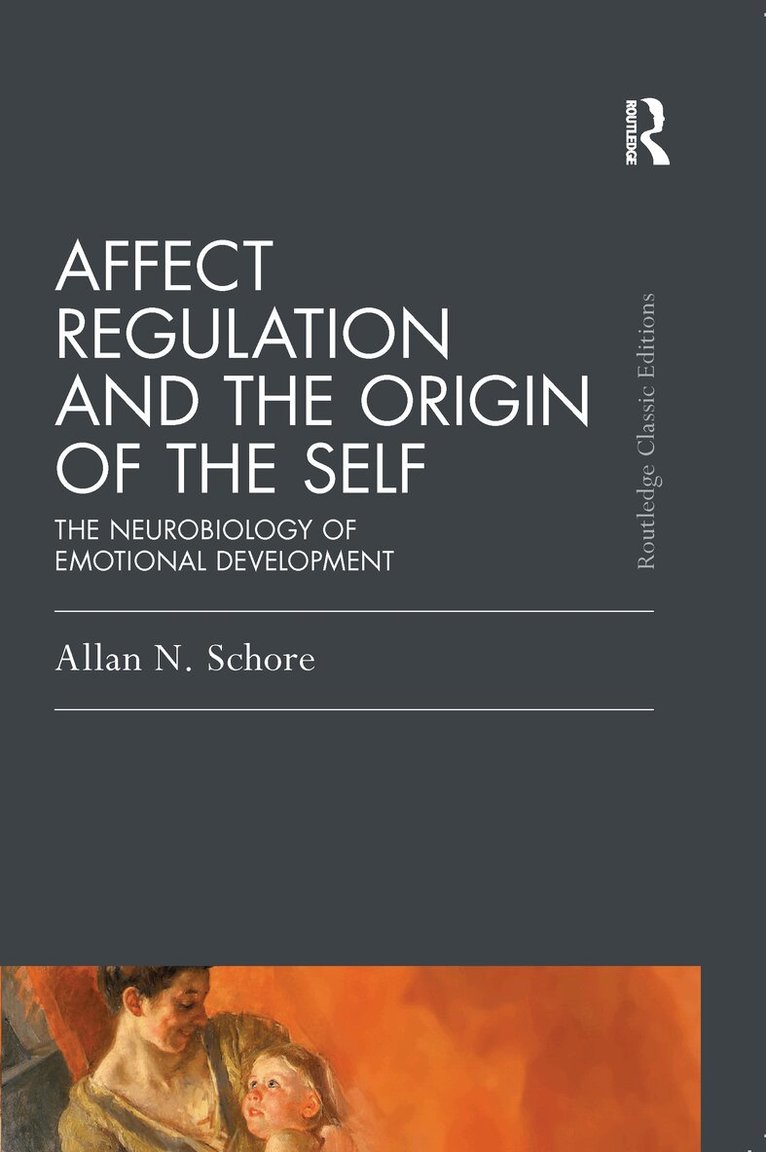
For over three decades, Allan N. Schore has authored numerous volumes, chapters, and articles on regulation theory, a biopsychosocial model of the development, psychopathogenesis, and treatment of the implicit subjective self. The theory is grounded in the integration of psychology, psychiatry, and neuroscience, and it is now being used by both clinicians to update psychotherapeutic models and by researchers to generate research. First published in 1994, this pioneering volume represented the inaugural expression of his interdisciplinary model, and has since been hailed by a number of scientific and clinical disciplines as a groundbreaking and paradigm-shifting work. This volume appeared at a time when the problem of emotion, ignored for most of the last century, was finally beginning to be addressed by science, including the emergent field of affective neuroscience. After a century of the dominance of the verbal left brain, it presented a detailed characterization of the early developing right brain and it unique social, emotional, and survival functions, not only in infancy but across all later stages of the human life span. It also offered a scientifically testable and clinical relevant model of the development of the human unconscious mind.Affect Regulation and the Origin of the Self acts as a keystone and foundation for all of Schore’s later writings, as every subsequent book, article, and chapter that followed represented expansions of this seminal work.
Affect Regulation and the Origin of the Self
The Neurobiology of Emotional Development
Häftad, Engelska, 2015
1 364 kr
Skickas inom 10-15 vardagar
For over three decades, Allan N. Schore has authored numerous volumes, chapters, and articles on regulation theory, a biopsychosocial model of the development, psychopathogenesis, and treatment of the implicit subjective self. The theory is grounded in the integration of psychology, psychiatry, and neuroscience, and it is now being used by both clinicians to update psychotherapeutic models and by researchers to generate research. First published in 1994, this pioneering volume represented the inaugural expression of his interdisciplinary model, and has since been hailed by a number of scientific and clinical disciplines as a groundbreaking and paradigm-shifting work. This volume appeared at a time when the problem of emotion, ignored for most of the last century, was finally beginning to be addressed by science, including the emergent field of affective neuroscience. After a century of the dominance of the verbal left brain, it presented a detailed characterization of the early developing right brain and it unique social, emotional, and survival functions, not only in infancy but across all later stages of the human life span. It also offered a scientifically testable and clinical relevant model of the development of the human unconscious mind.Affect Regulation and the Origin of the Self acts as a keystone and foundation for all of Schore’s later writings, as every subsequent book, article, and chapter that followed represented expansions of this seminal work.