Allan S. Gilbert - Böcker
Visar alla böcker från författaren Allan S. Gilbert. Handla med fri frakt och snabb leverans.
4 produkter
4 produkter
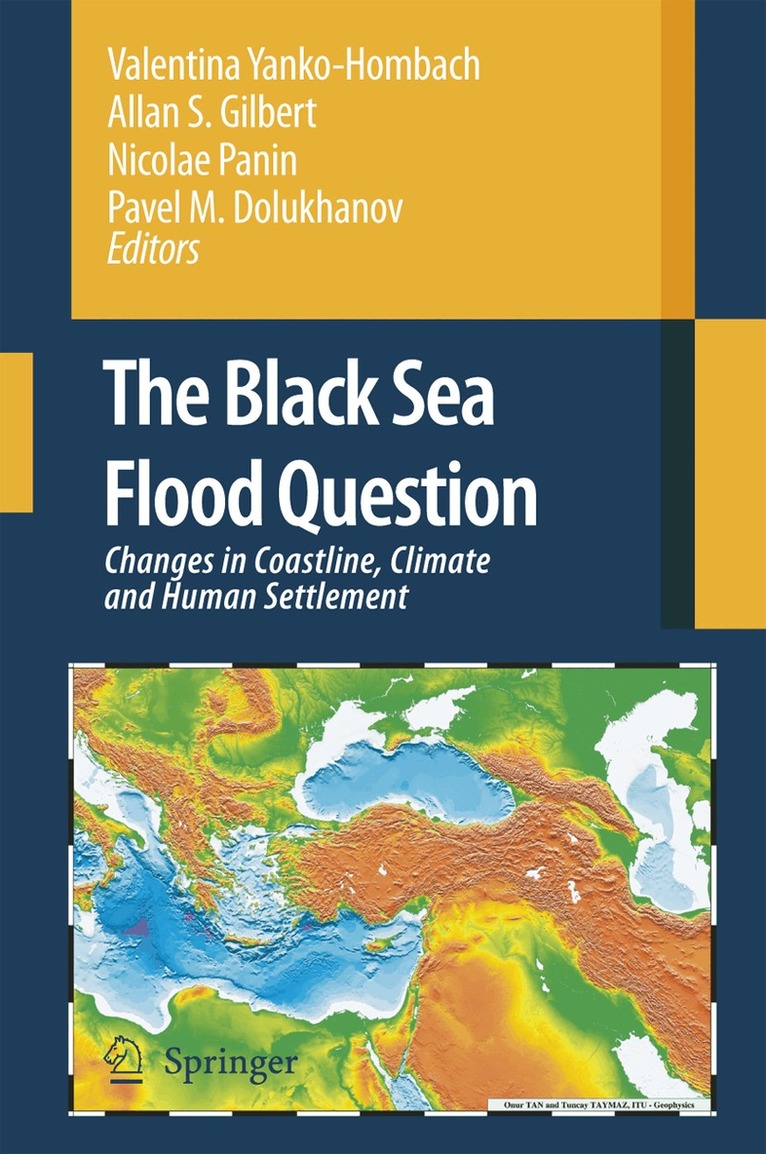
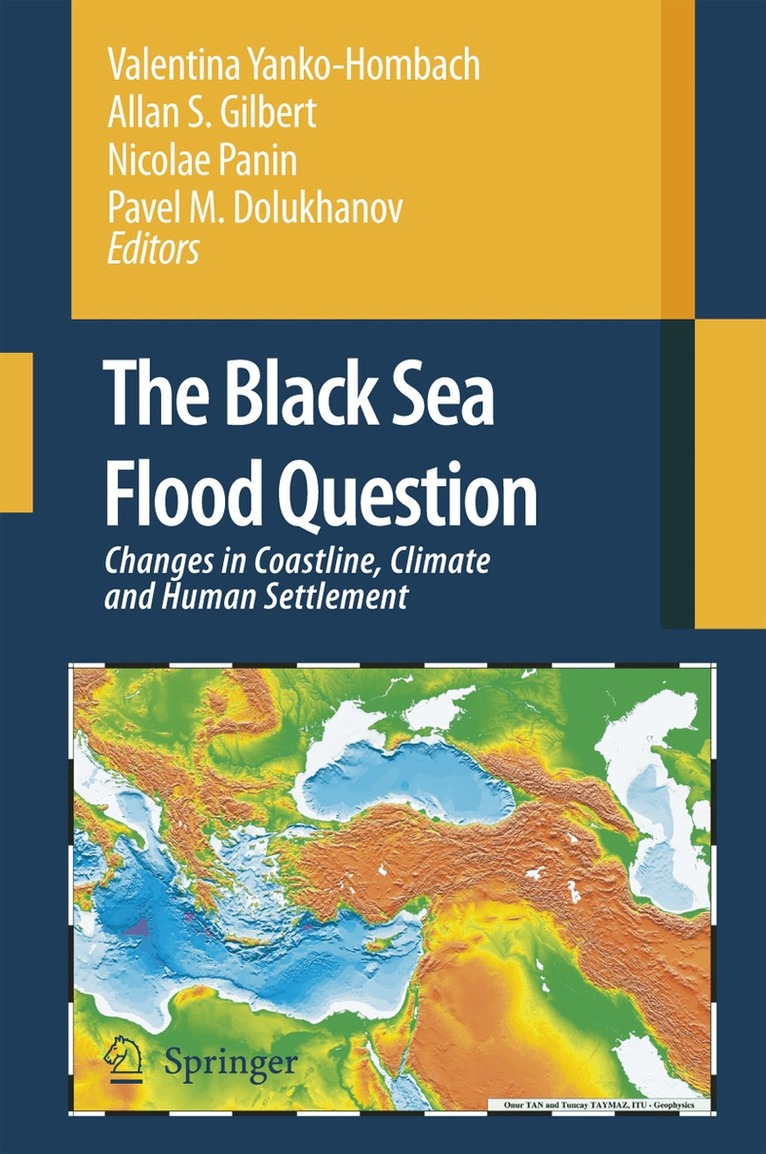
Black Sea Flood Question: Changes in Coastline, Climate and Human Settlement
Inbunden, Engelska, 2006
2 644 kr
Skickas inom 10-15 vardagar
Stimulated by "Noah’s Flood Hypothesis" proposed by W. Ryan and W. Pitman in which a catastrophic inundation of the Pontic basin was linked to the biblical story, leading experts in Black Sea research (including oceanography, marine geology, paleoclimate, paleoenvironment, archaeology, and linguistic spread) provide overviews of their data and interpretations obtained through empirical scientific approaches. Among the contributors are many East European scientists whose work has rarely been published outside of Cyrillic. Each of the 35 papers marshals its own evidence for or against the flood hypothesis. No summary or overall resolution to the flood question is presented, but instead access is provided to a broad range of interdisciplinary information that crosses previously impenetrable language barriers so that new work in the region can proceed with the benefit of a wider frame of reference. The three fundamental scenarios describing the late glacial to Holocene rise in the level of the Black Sea—catastrophic, gradual, and oscillating—are presented in the early pages, with the succeeding papers organized by geographic sector: northern (Ukraine), western (Moldova, Romania, and Bulgaria), southern (Turkey), and eastern (Georgia and Russia), as well as three papers on the Mediterranean. The volume thus brings together eastern and western scholarship to share research findings and perspectives on a controversial subject. In addition, appendices are included containing some 600 radiocarbon dates from the Pontic region obtained by USSR and western laboratories.
Del 90 - Culture and History of the Ancient Near East
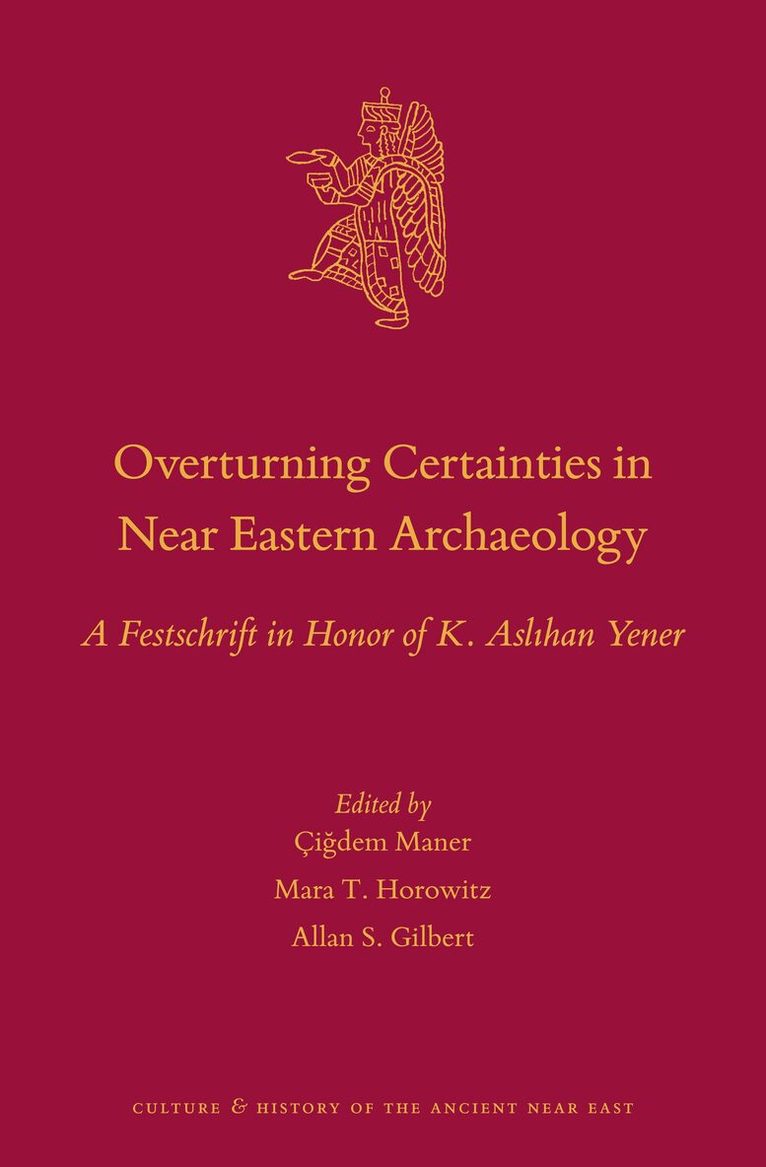
Overturning Certainties in Near Eastern Archaeology
A Festschrift in Honor of K. Aslıhan Yener
Inbunden, Engelska, 2017
3 142 kr
Skickas inom 5-8 vardagar
This volume, Overturning Certainties in Near Eastern Archaeology, is a festschrift dedicated to Professor K. Aslıhan Yener in honor of over four decades of exemplary research, teaching, fieldwork, and publication. The thirty-five chapters presented by her colleagues includes a broad, interdisciplinary range of studies in archaeology, archaeometry, art history, and epigraphy of the Ancient Near East, especially reflecting Prof Yener’s interests in metallurgy, small finds, trade, Anatolia, and the site of Tell Atchana/Alalakh."The richness of this volume inevitably emerges from those contributions on exchange and technology using philology and/or archaeology." - David A. Warburton, Institute for the History of Ancient Civilizations, Northeast Normal University, in: Bibliotheca Orientalis 76,1-2 (2019)
6 525 kr
Skickas inom 10-15 vardagar
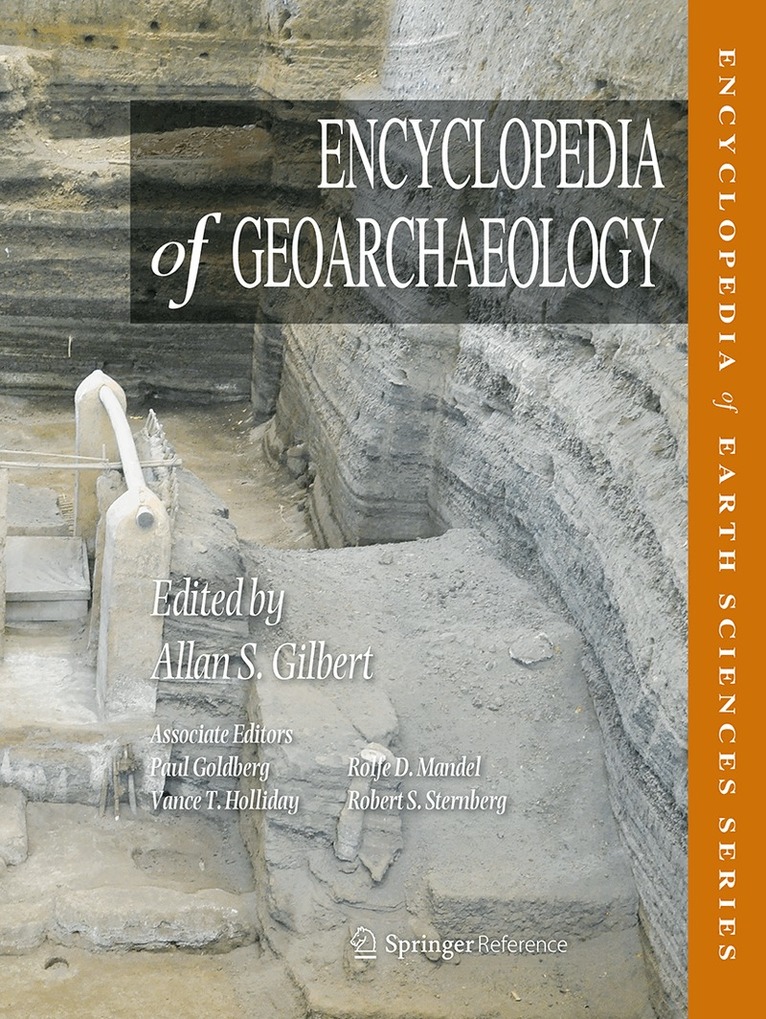
Geoarchaeology is the archaeological subfield that focuses on archaeological information retrieval and problem solving utilizing the methods of geological investigation. Archaeological recovery and analysis are already geoarchaeological in the most fundamental sense because buried remains are contained within and removed from an essentially geological context. Yet geoarchaeological research goes beyond this simple relationship and attempts to build collaborative links between specialists in archaeology and the earth sciences to produce new knowledge about past human behavior using the technical information and methods of the geosciences. The principal goals of geoarchaeology lie in understanding the relationships between humans and their environment. These goals include (1) how cultures adjust to their ecosystem through time, (2) what earth science factors were related to the evolutionary emergence of humankind, and (3) which methodological tools involving analysis ofsediments and landforms, documentation and explanation of change in buried materials, and measurement of time will allow access to new aspects of the past.This encyclopedia defines terms, introduces problems, describes techniques, and discusses theory and strategy, all in a format designed to make specialized details accessible to the public as well as practitioners. It covers subjects in environmental archaeology, dating, materials analysis, and paleoecology, all of which represent different sources of specialist knowledge that must be shared in order to reconstruct, analyze, and explain the record of the human past. It will not specifically cover sites, civilizations, and ancient cultures, etc., that are better described in other encyclopedias of world archaeology.The EditorAllan S. Gilbert is Professor of Anthropology at Fordham University in the Bronx, New York. He holds a B.A. from Rutgers University, and his M.A., M.Phil., and Ph.D. were earned atColumbia University. His areas of research interest include the Near East (late prehistory and early historic periods) as well as the Middle Atlantic region of the U.S. (historical archaeology). His specializations are in archaeozoology of the Near East and geoarchaeology, especially mineralogy and compositional analysis of pottery and building materials. Publications have covered a range of subjects, including ancient pastoralism, faunal quantification, skeletal microanatomy, brick geochemistry, and two co-edited volumes on the marine geology and geoarchaeology of the Black Sea basin.
2 644 kr
Skickas inom 10-15 vardagar
Stimulated by "Noah’s Flood Hypothesis" proposed by W. Ryan and W. Pitman in which a catastrophic inundation of the Pontic basin was linked to the biblical story, leading experts in Black Sea research (including oceanography, marine geology, paleoclimate, paleoenvironment, archaeology, and linguistic spread) provide overviews of their data and interpretations obtained through empirical scientific approaches. Among the contributors are many East European scientists whose work has rarely been published outside of Cyrillic. Each of the 35 papers marshals its own evidence for or against the flood hypothesis. No summary or overall resolution to the flood question is presented, but instead access is provided to a broad range of interdisciplinary information that crosses previously impenetrable language barriers so that new work in the region can proceed with the benefit of a wider frame of reference. The three fundamental scenarios describing the late glacial to Holocene rise in the level of the Black Sea—catastrophic, gradual, and oscillating—are presented in the early pages, with the succeeding papers organized by geographic sector: northern (Ukraine), western (Moldova, Romania, and Bulgaria), southern (Turkey), and eastern (Georgia and Russia), as well as three papers on the Mediterranean. The volume thus brings together eastern and western scholarship to share research findings and perspectives on a controversial subject. In addition, appendices are included containing some 600 radiocarbon dates from the Pontic region obtained by USSR and western laboratories.