Allison Pugh - Böcker
Visar alla böcker från författaren Allison Pugh. Handla med fri frakt och snabb leverans.
4 produkter
4 produkter
244 kr
Skickas inom 7-10 vardagar
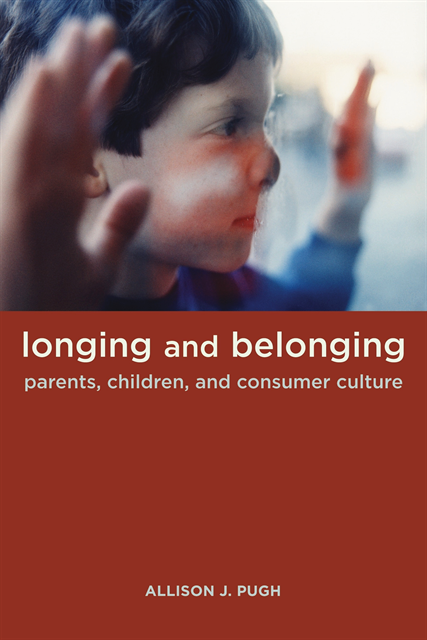
Even as they see their wages go down and their buying power decrease, many parents are still putting their kids' material desires first. These parents struggle with how to handle children's consumer wants, which continue unabated despite the economic downturn. And, indeed, parents and other adults continue to spend billions of dollars on children every year. Why do children seem to desire so much, so often, so soon, and why do parents capitulate so readily? To determine what forces lie behind the onslaught of Nintendo Wiis and Bratz dolls, Allison J. Pugh spent three years observing and interviewing children and their families. In "Longing and Belonging: Parents, Children, and Consumer Culture", Pugh teases out the complex factors that contribute to how we buy, from lunchroom conversations about Game Boys to the stark inequalities facing American children. Pugh finds that children's desires stem less from striving for status or falling victim to advertising than from their yearning to join the conversation at school or in the neighborhood.Most parents respond to children's need to belong by buying the particular goods and experiences that act as passports in children's social worlds, because they sympathize with their children's fear of being different from their peers. Even under financial constraints, families prioritize children 'feeling normal'. Pugh masterfully illuminates the surprising similarities in the fears and hopes of parents and children from vastly different social contexts, showing that while corporate marketing and materialism play a part in the commodification of childhood, at the heart of the matter is the desire to belong.
237 kr
Skickas inom 7-10 vardagar
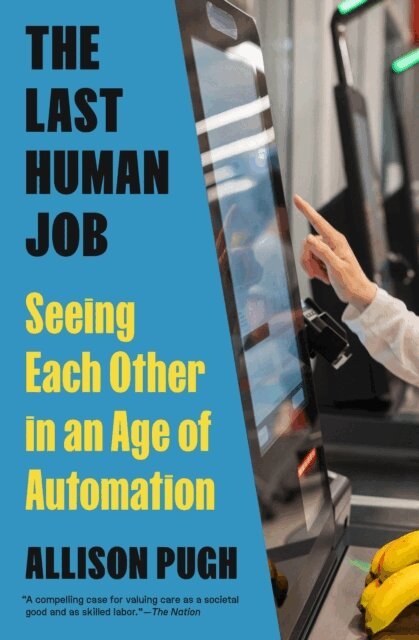
A timely and urgent argument for preserving the work that connects us in the age of automation"A compelling case for valuing care as a societal good and as skilled labor."—The NationWith the rapid development of artificial intelligence and labor-saving technologies like self-checkouts and automated factories, the future of work has never been more uncertain, and even jobs requiring high levels of human interaction are no longer safe. The Last Human Job explores the human connections that underlie our work, arguing that what people do for each other in these settings is valuable and worth preserving.Drawing on in-depth interviews and observations with people in a broad range of professions—from physicians, teachers, and coaches to chaplains, therapists, caregivers, and hairdressers—Allison Pugh develops the concept of “connective labor,” a kind of work that relies on empathy, the spontaneity of human contact, and a mutual recognition of each other’s humanity. The threats to connective labor are not only those posed by advances in AI or apps; Pugh demonstrates how profit-driven campaigns imposing industrial logic shrink the time for workers to connect, enforce new priorities of data and metrics, and introduce standardized practices that hinder our ability to truly see each other. She concludes with profiles of organizations where connective labor thrives, offering practical steps for building a social architecture that works.Vividly illustrating how connective labor enriches the lives of individuals and binds our communities together, The Last Human Job is a compelling argument for us to recognize, value, and protect humane work in an increasingly automated and disconnected world.
160 kr
Skickas inom 7-10 vardagar
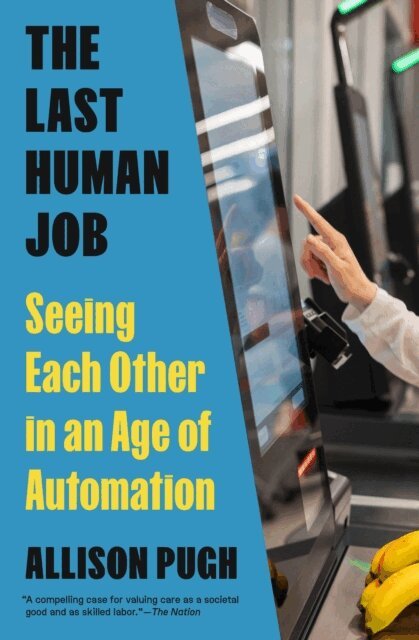
A timely and urgent argument for preserving the work that connects us in the age of automation"A compelling case for valuing care as a societal good and as skilled labor."—The NationWith the rapid development of artificial intelligence and labor-saving technologies like self-checkouts and automated factories, the future of work has never been more uncertain, and even jobs requiring high levels of human interaction are no longer safe. The Last Human Job explores the human connections that underlie our work, arguing that what people do for each other in these settings is valuable and worth preserving.Drawing on in-depth interviews and observations with people in a broad range of professions—from physicians, teachers, and coaches to chaplains, therapists, caregivers, and hairdressers—Allison Pugh develops the concept of “connective labor,” a kind of work that relies on empathy, the spontaneity of human contact, and a mutual recognition of each other’s humanity. The threats to connective labor are not only those posed by advances in AI or apps; Pugh demonstrates how profit-driven campaigns imposing industrial logic shrink the time for workers to connect, enforce new priorities of data and metrics, and introduce standardized practices that hinder our ability to truly see each other. She concludes with profiles of organizations where connective labor thrives, offering practical steps for building a social architecture that works.Vividly illustrating how connective labor enriches the lives of individuals and binds our communities together, The Last Human Job is a compelling argument for us to recognize, value, and protect humane work in an increasingly automated and disconnected world.
123 kr
Tillfälligt slut
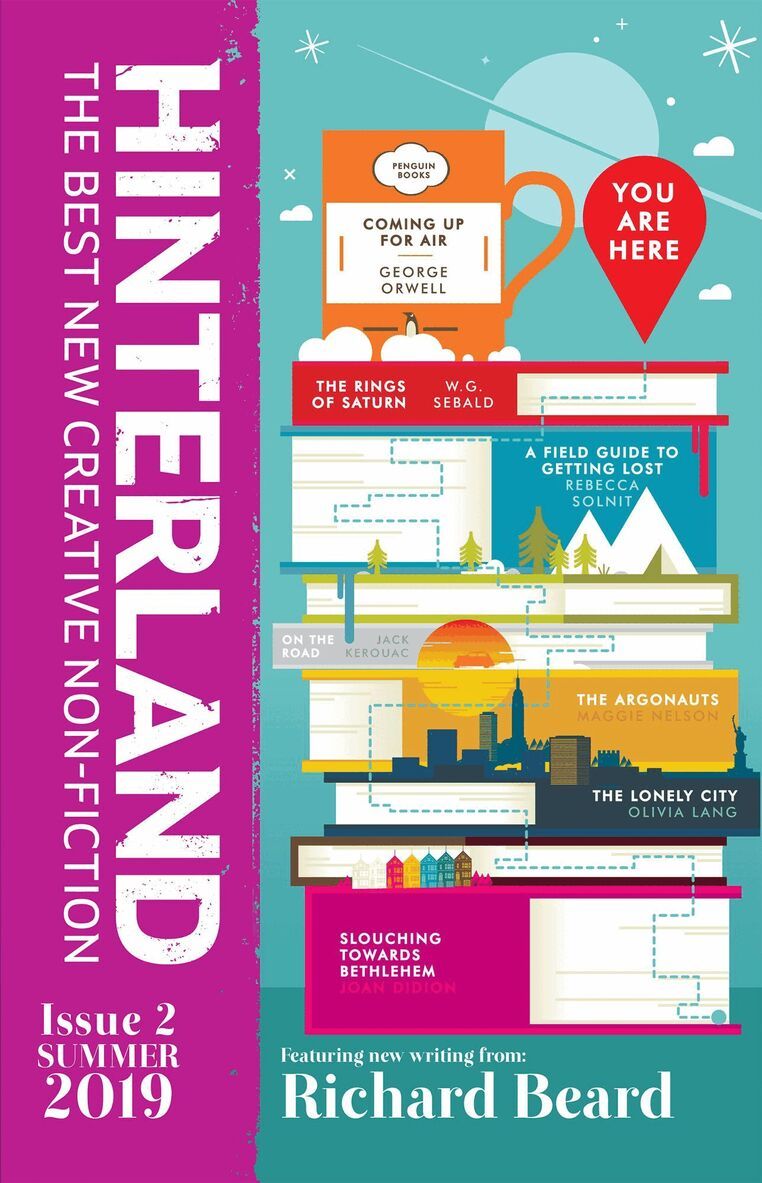
Hinterland is a quarterly, print and digital magazine dedicated to creative non-fiction.Hinterland offers an answer to the question ‘what is creative non-fiction?’ by showcasing the best new writing across the fields of memoir, essay, travel and food writing, reportage, psychoscape, biography, flash non-fiction and more. Their pages bring together work by established, award-winning authors alongside new writers, many of whom we are thrilled to publish for the first time and whose work, we promise, will merit your full attention. Hinterland intends to challenge, move, entertain and, above all, be a fantastic read. Their second issue features brand-new non-fiction by Richard Beard (The Day that went Missing) with accompanying illustrations by Dru Marland and a non-fiction play by Antoinette Moses, as well as a stellar line up of talented new writers who we know you’re going to love. Issue 2 also includes an interview with Bart Van Es (The Cut Out Girl), a photo essay by photographer Martin Eberlen and a look at the life of the Speaker of the House, John Bercow, by Stephen Massil.