Allison Weir - Böcker
Visar alla böcker från författaren Allison Weir. Handla med fri frakt och snabb leverans.
5 produkter
5 produkter
875 kr
Skickas inom 7-10 vardagar
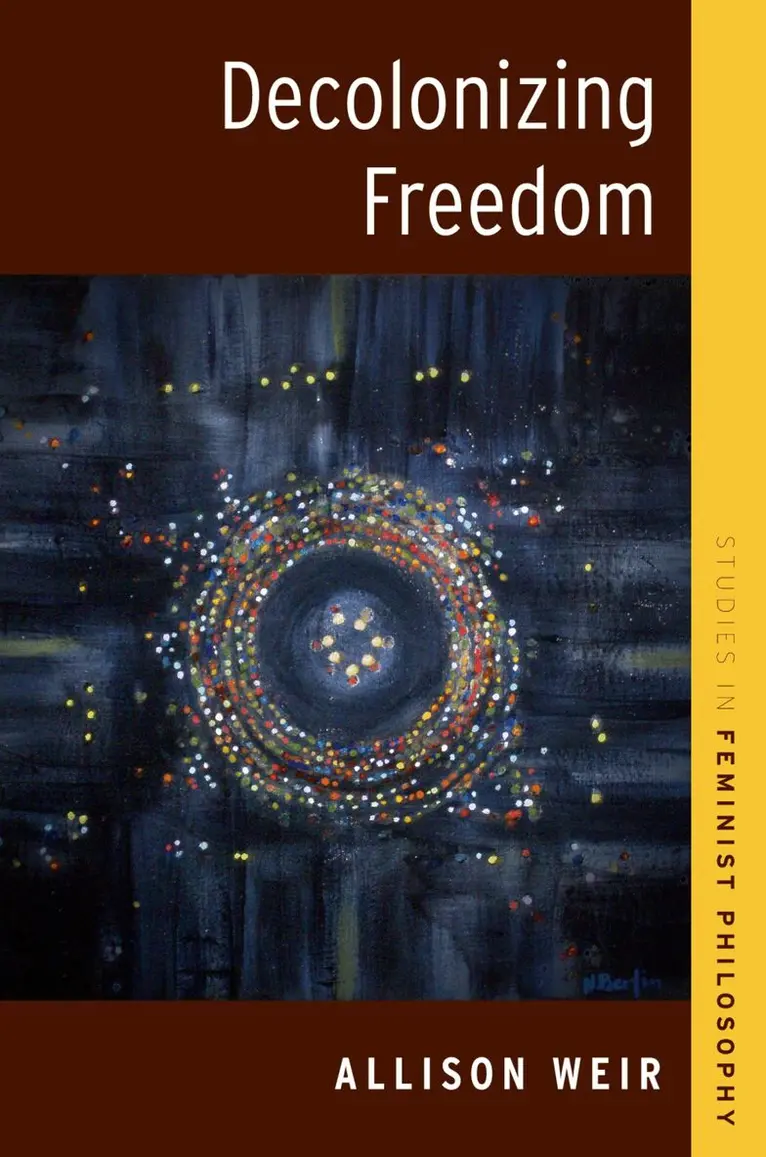
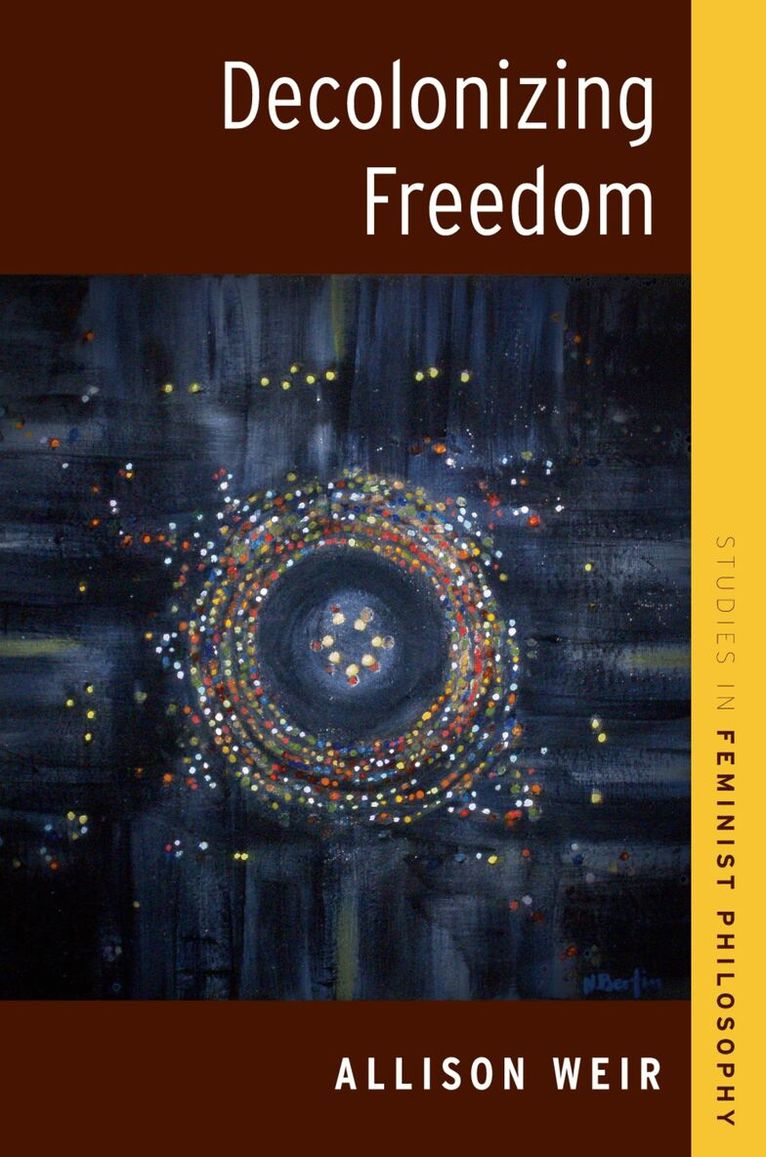
Freedom is celebrated as the definitive ideal of modern western civilization. Yet in western thought and practice, the freedom of some has typically been defined through opposition to the unfreedom of others. These exclusions are not secondary to a prior concept of freedom but are constitutive exclusions that have shaped the ways in which western theorists define what freedom is. Allison Weir draws on Indigenous political philosophies and practices of decolonization grounded in conceptions of relationality and resurgence, in dialogue with western philosophies, to reconstruct a tradition of relational freedom as a distinctive political conception of freedom: a radically democratic mode of engagement and participation in social and political relations with an infinite range of strange and diverse beings perceived as free agents in interdependent relations in a shared world. Through the work of Leanne Betasamosake Simpson, John Borrows, Glen Coulthard, Audra Simpson, Rauna Kuokkanen, Joanne Barker, Jodi Byrd, James Tully, and many others, this book traces a tradition of colonial unknowing in western conceptions of freedom from Hobbes through republican and critical theories, and explores a countertradition of relations between freedom and collective love, exemplified in Leanne Betasamosake Simpson's love of land and Hannah Arendt's love of the world. It considers Indigenous modes of world-creation as performative, affective, embodied strategies of democratic life, skilled modes of addressing diversity and conflict, fear and hostility, in practices of freedom that embrace polycentric knowledges and rooted dynamisms, in contexts of complexity and constant change. Weir argues that Indigenous women's struggles to belong to communities and participate in governance have engendered new theories of relational rights that combine politics of rights and resurgence, and calls for a coalitional politics guided by queer and feminist Indigenous models of transformative resurgence. Finally, Weir proposes an approach to critical theory as a practice of self-transformation through openness to the other, oriented toward relational freedom.
319 kr
Skickas inom 5-8 vardagar
Freedom is celebrated as the definitive ideal of modern western civilization. Yet in western thought and practice, the freedom of some has typically been defined through opposition to the unfreedom of others. These exclusions are not secondary to a prior concept of freedom but are constitutive exclusions that have shaped the ways in which western theorists define what freedom is. Allison Weir draws on Indigenous political philosophies and practices of decolonization grounded in conceptions of relationality and resurgence, in dialogue with western philosophies, to reconstruct a tradition of relational freedom as a distinctive political conception of freedom: a radically democratic mode of engagement and participation in social and political relations with an infinite range of strange and diverse beings perceived as free agents in interdependent relations in a shared world. Through the work of Leanne Betasamosake Simpson, John Borrows, Glen Coulthard, Audra Simpson, Rauna Kuokkanen, Joanne Barker, Jodi Byrd, James Tully, and many others, this book traces a tradition of colonial unknowing in western conceptions of freedom from Hobbes through republican and critical theories, and explores a countertradition of relations between freedom and collective love, exemplified in Leanne Betasamosake Simpson's love of land and Hannah Arendt's love of the world. It considers Indigenous modes of world-creation as performative, affective, embodied strategies of democratic life, skilled modes of addressing diversity and conflict, fear and hostility, in practices of freedom that embrace polycentric knowledges and rooted dynamisms, in contexts of complexity and constant change. Weir argues that Indigenous women's struggles to belong to communities and participate in governance have engendered new theories of relational rights that combine politics of rights and resurgence, and calls for a coalitional politics guided by queer and feminist Indigenous models of transformative resurgence. Finally, Weir proposes an approach to critical theory as a practice of self-transformation through openness to the other, oriented toward relational freedom.
1 932 kr
Skickas inom 5-8 vardagar
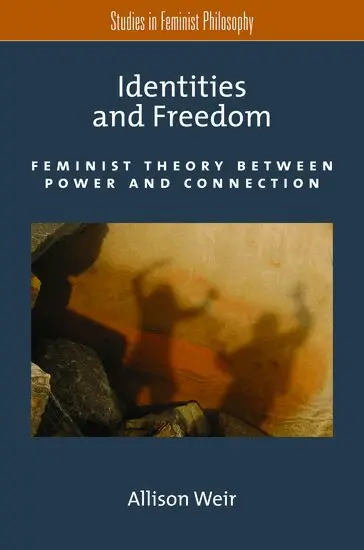
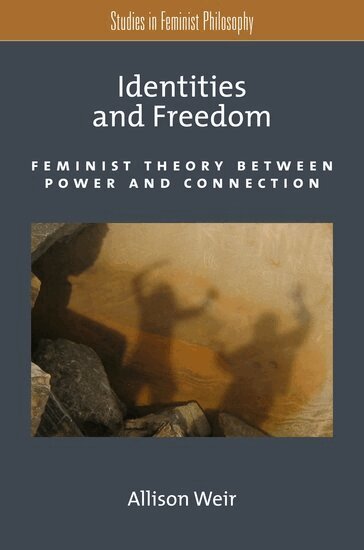
How can we think about identities in the wake of feminist critiques of identity and identity politics? In Identities and Freedom, Allison Weir rethinks conceptions of individual and collective identities in relation to freedom. Drawing on Taylor and Foucault, Butler, Zerilli, Mahmood, Mohanty, Young, and others, Weir develops a complex and nuanced account of identities that takes seriously the ways in which identity categories are bound up with power relations, with processes of subjection and exclusion, yet argues that identities are also sources of important values, and of freedom, for they are shaped and sustained by relations of interdependence and solidarity. Moving out of the paradox of identity and freedom requires understanding identities as effects of multiple contesting relations of power and relations of interdependence. "This is a terrific book, one that stakes out an original and distinctive position in some well-worn debates, and that brings together diverse bodies of theory in an insightful and productive way. It is a real gem. It offers substantial new insights into how feminist theorists can go on in the wake of the relentless critique of the notion of identity. The book will make a significant contribution to ongoing debates in feminist theory over the vexed question of identity - a question that is absolutely central to feminist theory, and has been so for at least the last twenty years." - Amy Allen, Department of Philosophy, Dartmouth College"This book makes great contributions to the feminist literature by reconceptualizing IDENTITY in terms of connectedness and FREEDOM in terms of practices of belonging. Through a fascinating and innovative synthesis of Michel Foucault and Charles Taylor, Weir's communitarian approach develops new arguments for the need to cultivate resistant identities and resistant communities. This impressive book is full of original ideas masterfully articulated in critical engagements with leading feminist scholars such as Saba Mahmood, Cynthia Willett, Iris Young, and Linda Zerilli. This provocative book is a must read for anyone interested in contemporary discussions of freedom, resistance, identity, and community." - José Medina, Department of Philosophy, Vanderbilt University
386 kr
Skickas inom 5-8 vardagar
How can we think about identities in the wake of feminist critiques of identity and identity politics? In Identities and Freedom, Allison Weir rethinks conceptions of individual and collective identities in relation to freedom. Drawing on Taylor and Foucault, Butler, Zerilli, Mahmood, Mohanty, Young, and others, Weir develops a complex and nuanced account of identities that takes seriously the ways in which identity categories are bound up with power relations, with processes of subjection and exclusion, yet argues that identities are also sources of important values, and of freedom, for they are shaped and sustained by relations of interdependence and solidarity. Moving out of the paradox of identity and freedom requires understanding identities as effects of multiple contesting relations of power and relations of interdependence. "This is a terrific book, one that stakes out an original and distinctive position in some well-worn debates, and that brings together diverse bodies of theory in an insightful and productive way. It is a real gem. It offers substantial new insights into how feminist theorists can go on in the wake of the relentless critique of the notion of identity. The book will make a significant contribution to ongoing debates in feminist theory over the vexed question of identity - a question that is absolutely central to feminist theory, and has been so for at least the last twenty years." - Amy Allen, Department of Philosophy, Dartmouth College"This book makes great contributions to the feminist literature by reconceptualizing IDENTITY in terms of connectedness and FREEDOM in terms of practices of belonging. Through a fascinating and innovative synthesis of Michel Foucault and Charles Taylor, Weir's communitarian approach develops new arguments for the need to cultivate resistant identities and resistant communities. This impressive book is full of original ideas masterfully articulated in critical engagements with leading feminist scholars such as Saba Mahmood, Cynthia Willett, Iris Young, and Linda Zerilli. This provocative book is a must read for anyone interested in contemporary discussions of freedom, resistance, identity, and community." - José Medina, Department of Philosophy, Vanderbilt University
613 kr
Skickas inom 10-15 vardagar
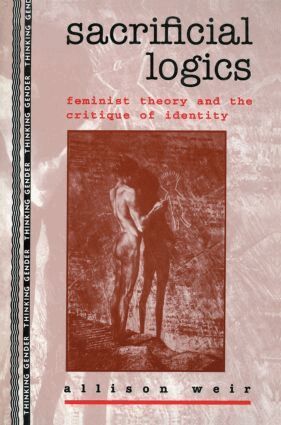
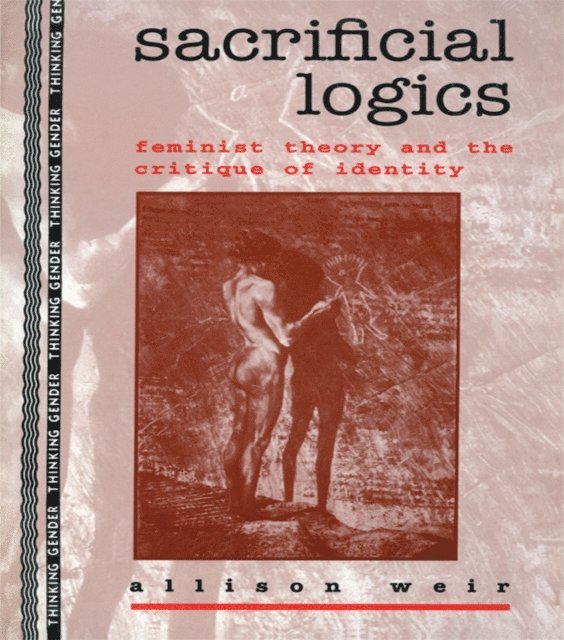
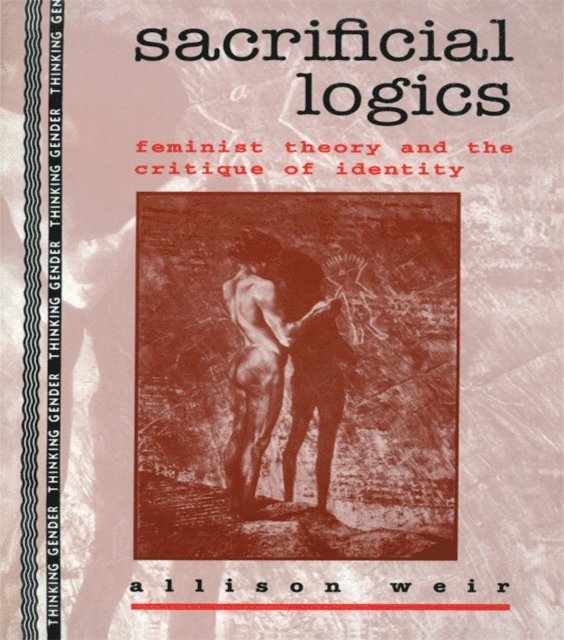
Allison Weir sets forth a concept of identity which depends on an acceptance of nonidentity, difference, and connection to others, defined as a capacity to participate in a social world. Weir argues that the equation of identity with repression and domination links "relational feminists" like Nancy Chodorow, who equate self-identity with the repression of connection to others, and poststructuralist feminists like Judith Butler, who view any identity as a repression of nonidentity or difference. Weir traces this conception of identity as domination back to Simone de Beauvoir's theories of the relation of self and other.