Alon Confino - Böcker
Visar alla böcker från författaren Alon Confino. Handla med fri frakt och snabb leverans.
8 produkter
8 produkter
412 kr
Skickas inom 11-20 vardagar
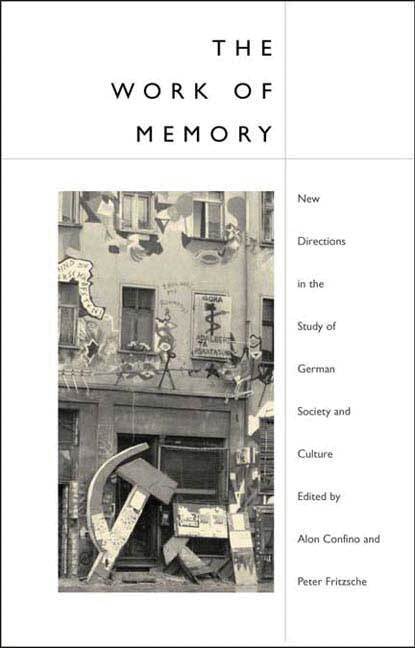
Coming to terms with a troubled past is the mark of the modern condition. But how does memory operate? This powerful collection of original essays probes this question by focusing on Germany, where historical trauma and political turbulence over the past century have deeply scarred modern memory and identity. Tracing the role of memory in German history between the Reformation and reunification, contributors show how memory has a history and the presence of the past has historical context. With scholarly zeal and keen insight, these essays draw on ghost stories and the postwar fiction of Heinrich BÖll, among other memory sites, escorting the reader through the streets of Alt Hildesheim and the grocery aisles of East Germany. By historicizing memory, this volume surpasses the efforts of previous memory scholarship in confronting Germany's National Socialist past. Standard approaches to memory in modern Germany have explored how the past represents social relations and is commemorated in literature, art, and personal narrative. In taking memory "out of the museum" and "beyond the monument," The Work of Memory investigates the ways memory forms social relations and is integral to the construction of identities, communities, and policies. Profound and provocative, The Work of Memory contributes to a much-needed anthropology of memory in modern Germany.
218 kr
Tillfälligt slut
1 024 kr
Skickas inom 7-10 vardagar
Alon Confino seeks to rethink dominant interpretations of the Holocaust by examining it as a problem in cultural history. As the main research interests of Holocaust scholars are frequently covered terrain - the anti-Semitic ideological campaign, the machinery of killing, the brutal massacres during the war - Confino's research goes in a new direction. He analyzes the culture and sensibilities that made it possible for the Nazis and other Germans to imagine the making of a world without Jews. Confino seeks these insights from the ways historians interpreted another short, violent and foundational event in modern European history - the French Revolution. The comparison of the ways we understand the Holocaust with scholars' interpretations of the French Revolution allows Confino to question some of the basic assumptions of present-day historians concerning historical narration, explanation and understanding.
280 kr
Skickas inom 7-10 vardagar
Alon Confino seeks to rethink dominant interpretations of the Holocaust by examining it as a problem in cultural history. As the main research interests of Holocaust scholars are frequently covered terrain - the anti-Semitic ideological campaign, the machinery of killing, the brutal massacres during the war - Confino's research goes in a new direction. He analyzes the culture and sensibilities that made it possible for the Nazis and other Germans to imagine the making of a world without Jews. Confino seeks these insights from the ways historians interpreted another short, violent and foundational event in modern European history - the French Revolution. The comparison of the ways we understand the Holocaust with scholars' interpretations of the French Revolution allows Confino to question some of the basic assumptions of present-day historians concerning historical narration, explanation and understanding.
Nation As a Local Metaphor
Wurttemberg, Imperial Germany, and National Memory, 1871-1918
Häftad, Engelska, 1997
516 kr
Skickas inom 10-15 vardagar
All nations make themselves up as they go along, but not all make themselves up in the same way. In this study, Alon Confino explores how Germans turned national and argues that they imagined the nation as an extension of their local place. In 1871, the work of political unification had been completed, but Germany remained a patchwork of regions with different histories and traditions. Germans had to construct a national memory to reconcile the peculiarities of the region and the totality of the nation. This identity project, examined by Confino as it evolved in the southwestern state of WArttemberg, oscillated between failure and success. The national holiday of Sedan Day failed in the 1870s and 1880s to symbolically commingle localness and nationhood. Later, the idea of the Heimat, or homeland, did prove capable of representing interchangeably the locality, the region, and the nation in a distinct national narrative and in visual images. The German nationhood project was successful, argues Confino, because Germans made the nation into an everyday, local experience through a variety of cultural forms, including museums, school textbooks, popular poems, travel guides, posters, and postcards. But it was not unique. Confino situates German nationhood within the larger context of modernity, and in doing so he raises broader questions about how people in the modern world use the past in the construction of identity. |In a careful reexamination of the historical evidence, Alan Nolan explodes many longstanding myths about Robert E. Lee and the Civil War.
461 kr
Skickas inom 10-15 vardagar
An acknowledged authority on German history and memory, Alon Confino presents in this volume an original critique of the relations between nationhood, memory, and history, applied to the specific case of Germany. In ten essays (three never before published and one published only in German), Confino offers a distinct view of German nationhood in particular and of nationhood in general as a product of collective negotiation and exchange between the many memories that exist in the nation. The first group of essays centers on the period from 1871 to 1990 and explores how Germans used conceptions of the local, or Heimat, to identify what it meant to be German in a century of ideological upheavals. The second group of essays comprehensively critiques and analyzes the ways laypersons and scholars use the notion of memory as a tool to understand the past. Arguing that the case of Germany contains particular characteristics with broader implications for the way historians practice their trade, ""Germany as a Culture of Remembrance"" examines the limits and possibilities of writing history.
Between Mass Death and Individual Loss
The Place of the Dead in Twentieth-Century Germany
Häftad, Engelska, 2011
583 kr
Skickas inom 3-6 vardagar
Recent years have witnessed growing scholarly interest in the history of death. Increasing academic attention toward death as a historical subject in its own right is very much linked to its pre-eminent place in 20th-century history, and Germany, predictably, occupies a special place in these inquiries. This collection of essays explores how German mourning changed over the 20th century in different contexts, with a particular view to how death was linked to larger issues of social order and cultural self-understanding. It contributes to a history of death in 20th-century Germany that does not begin and end with the Third Reich.
Between Mass Death and Individual Loss
The Place of the Dead in Twentieth-Century Germany
Inbunden, Engelska, 2008
2 014 kr
Skickas inom 3-6 vardagar
Recent years have witnessed growing scholarly interest in the history of death. Increasing academic attention toward death as a historical subject in its own right is very much linked to its pre-eminent place in 20th-century history, and Germany, predictably, occupies a special place in these inquiries. This collection of essays explores how German mourning changed over the 20th century in different contexts, with a particular view to how death was linked to larger issues of social order and cultural self-understanding. It contributes to a history of death in 20th-century Germany that does not begin and end with the Third Reich.