A.M. Devine – författare
Visar alla böcker från författaren A.M. Devine. Handla med fri frakt och snabb leverans.
4 produkter
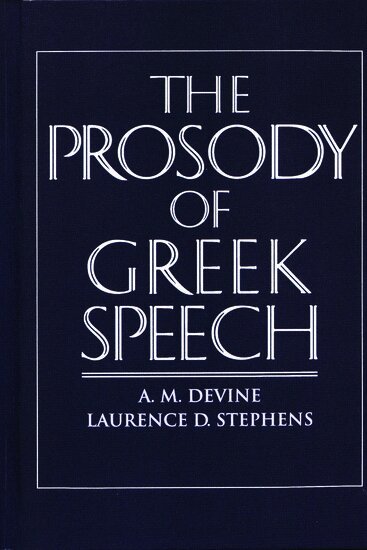
The Prosody of Greek Speech
Av A.M. Devine, Laurence D Stephens
Häftad, 2008
1176 kr
Lägg i varukorg
The reconstruction of the prosody of a dead language is, on the face of it, an almost impossible undertaking. However, once a general theory of prosody has been developed from eliable data in living languages, it is possible to exploit texts as sources of answers to questions that would normally be …
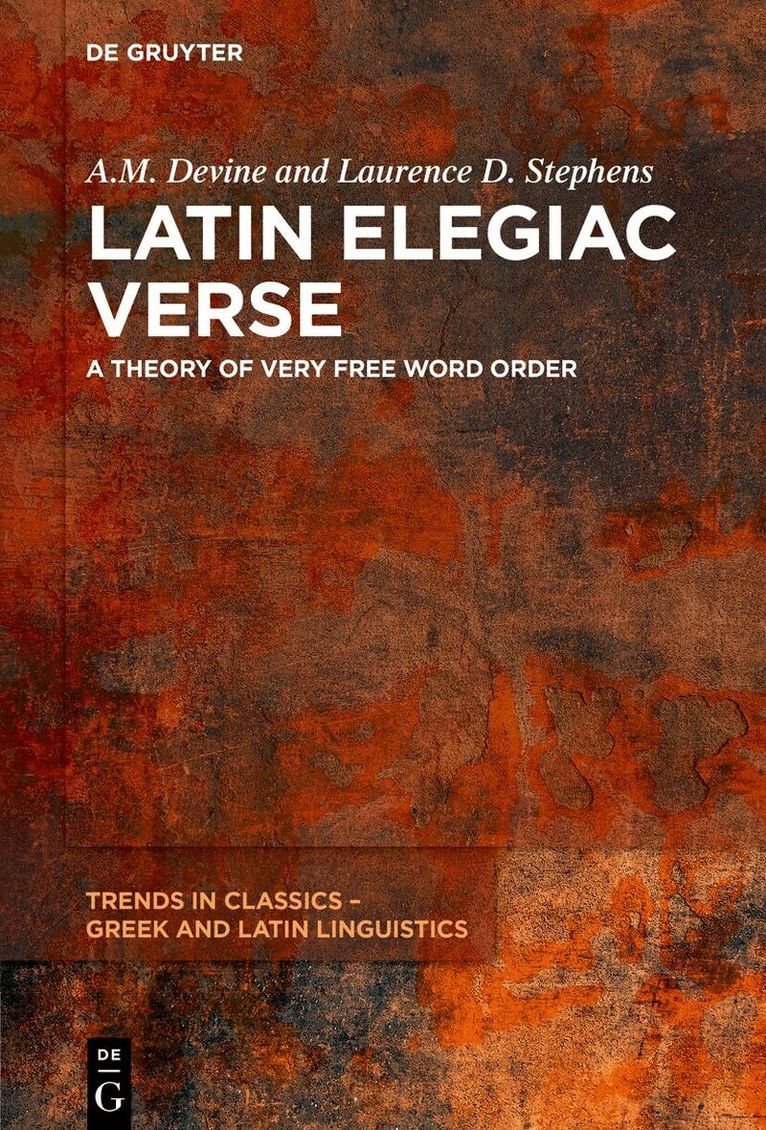
Latin Elegiac Verse
A Theory of Very Free Word Order
Av A.M. Devine, Laurence D. Stephens
Inbunden, 2024
2212 kr
Lägg i varukorg
A striking feature of Latin elegiac verse is its very free word order. One gets the impression that the word order is just random or that the rules of Latin syntax have been suspended for metrical convenience. Combining ample philological documentation with an overall theoretical stance, this book …
Latin Elegiac Verse
A Theory of Very Free Word Order
Av Laurence D. Stephens, A.M. Devine
E-bok, 2024
1796 kr
Lägg i varukorg
A striking feature of Latin elegiac verse is its very free word order. One gets the impression that the word order is just random or that the rules of Latin syntax have been suspended for metrical convenience. Combining ample philological documentation with an overall theoretical stance, this book …
Latin Elegiac Verse
A Theory of Very Free Word Order
Av Laurence D. Stephens, A.M. Devine
E-bok, 2024
1887 kr
Lägg i varukorg
A striking feature of Latin elegiac verse is its very free word order. One gets the impression that the word order is just random or that the rules of Latin syntax have been suspended for metrical convenience. Combining ample philological documentation with an overall theoretical stance, this book …