Amanda D. Clark – författare
Visar alla böcker från författaren Amanda D. Clark. Handla med fri frakt och snabb leverans.
3 produkter
3 produkter
657 kr
Kommande
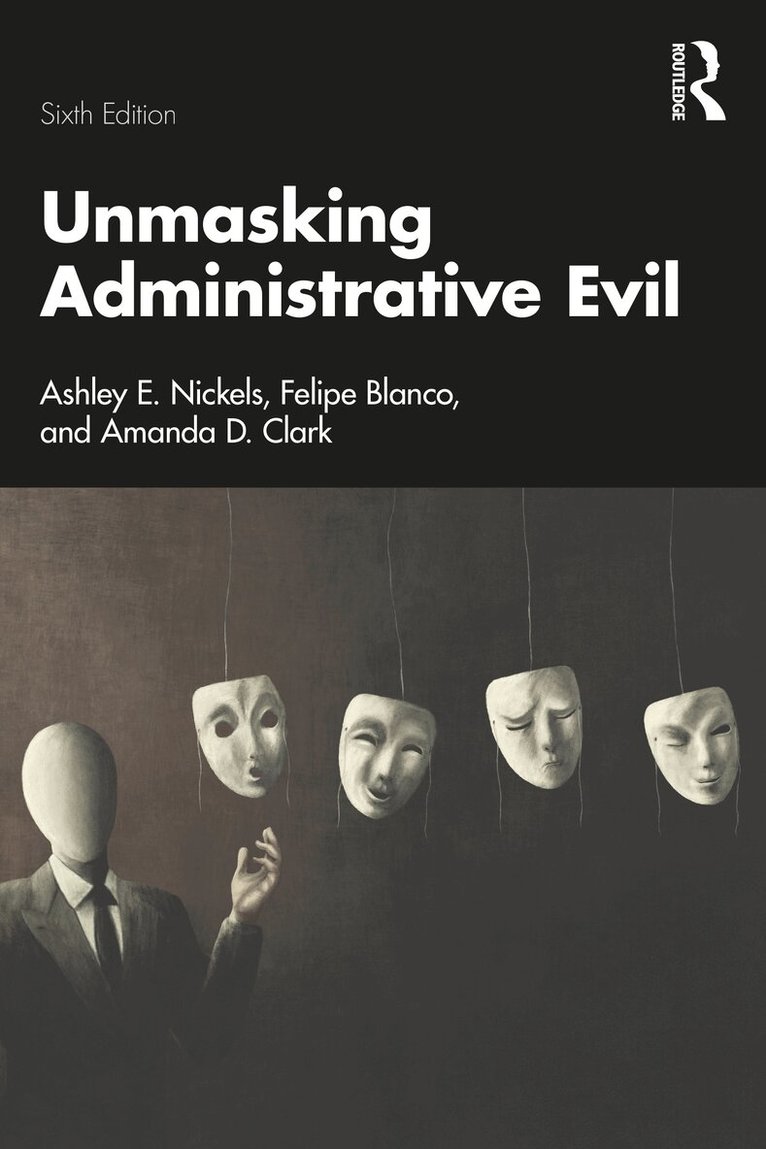
The relationship between evil and public affairs, as well as other fields and professions in public life, has come to the fore as institutions of government seek new ways to operate in an environment of extreme mistrust. Unmasking Administrative Evil, 6th Edition argues that the tendency toward administrative evil, as manifested in acts of dehumanization and genocide, is deeply woven into the identity of public affairs. Indeed, ordinary people may simply act appropriately in their organizational role—in essence, just doing what those around them would agree they should be doing—and at the same time, participate in what a critical and reasonable observer, usually well after the fact, would call evil. Even worse, under conditions of moral inversion, ordinary people can all too easily engage in acts of administrative evil while believing that what they are doing is not only correct, but in fact, good. This timely sixth edition offers important updates, including:Each chapter—except for Chapter 3 on the Holocaust—has been updated and revised, weaving in more recent literature and highlighting contemporary scholarship that draws on the concept of administrative evil;An expanded discussion of the War on Terror in Chapter 4, extending its legacy from 2001 into the current moment, with particular attention to how it has shaped immigration and customs enforcement under the second Trump Administration;A deeper exploration of how administrative evil is embedded in public policy in Chapter 5, drawing on recent literature on administrative racism and how the social construction of the "other" through language becomes encoded in and reproduced by public policy;A thoroughly updated Chapter 6, which focuses on the Flint Water Crisis, with a new section examining what has unfolded in the decade since a state of emergency was declared;A fully revised Chapter 7, now featuring more detailed treatment of generative AI, private prisons, and other related issues;The addition of nonviolent action as a fourth approach to ethical responses in Chapter 8, complementing putting cruelty first, deliberative democratic praxis, and virtue ethics.Laying the groundwork for a more ethical and democratic public life – one that recognizes its potential for evil and avoids state-sponsored dehumanization and destruction – Unmasking Administrative Evil, 6th Edition is required reading for all students of administrative ethics and public service ethics, as well as those in other administrative sciences.
2 245 kr
Kommande
The relationship between evil and public affairs, as well as other fields and professions in public life, has come to the fore as institutions of government seek new ways to operate in an environment of extreme mistrust. Unmasking Administrative Evil, 6th Edition argues that the tendency toward administrative evil, as manifested in acts of dehumanization and genocide, is deeply woven into the identity of public affairs. Indeed, ordinary people may simply act appropriately in their organizational role—in essence, just doing what those around them would agree they should be doing—and at the same time, participate in what a critical and reasonable observer, usually well after the fact, would call evil. Even worse, under conditions of moral inversion, ordinary people can all too easily engage in acts of administrative evil while believing that what they are doing is not only correct, but in fact, good. This timely sixth edition offers important updates, including:Each chapter—except for Chapter 3 on the Holocaust—has been updated and revised, weaving in more recent literature and highlighting contemporary scholarship that draws on the concept of administrative evil;An expanded discussion of the War on Terror in Chapter 4, extending its legacy from 2001 into the current moment, with particular attention to how it has shaped immigration and customs enforcement under the second Trump Administration;A deeper exploration of how administrative evil is embedded in public policy in Chapter 5, drawing on recent literature on administrative racism and how the social construction of the "other" through language becomes encoded in and reproduced by public policy;A thoroughly updated Chapter 6, which focuses on the Flint Water Crisis, with a new section examining what has unfolded in the decade since a state of emergency was declared;A fully revised Chapter 7, now featuring more detailed treatment of generative AI, private prisons, and other related issues;The addition of nonviolent action as a fourth approach to ethical responses in Chapter 8, complementing putting cruelty first, deliberative democratic praxis, and virtue ethics.Laying the groundwork for a more ethical and democratic public life – one that recognizes its potential for evil and avoids state-sponsored dehumanization and destruction – Unmasking Administrative Evil, 6th Edition is required reading for all students of administrative ethics and public service ethics, as well as those in other administrative sciences.
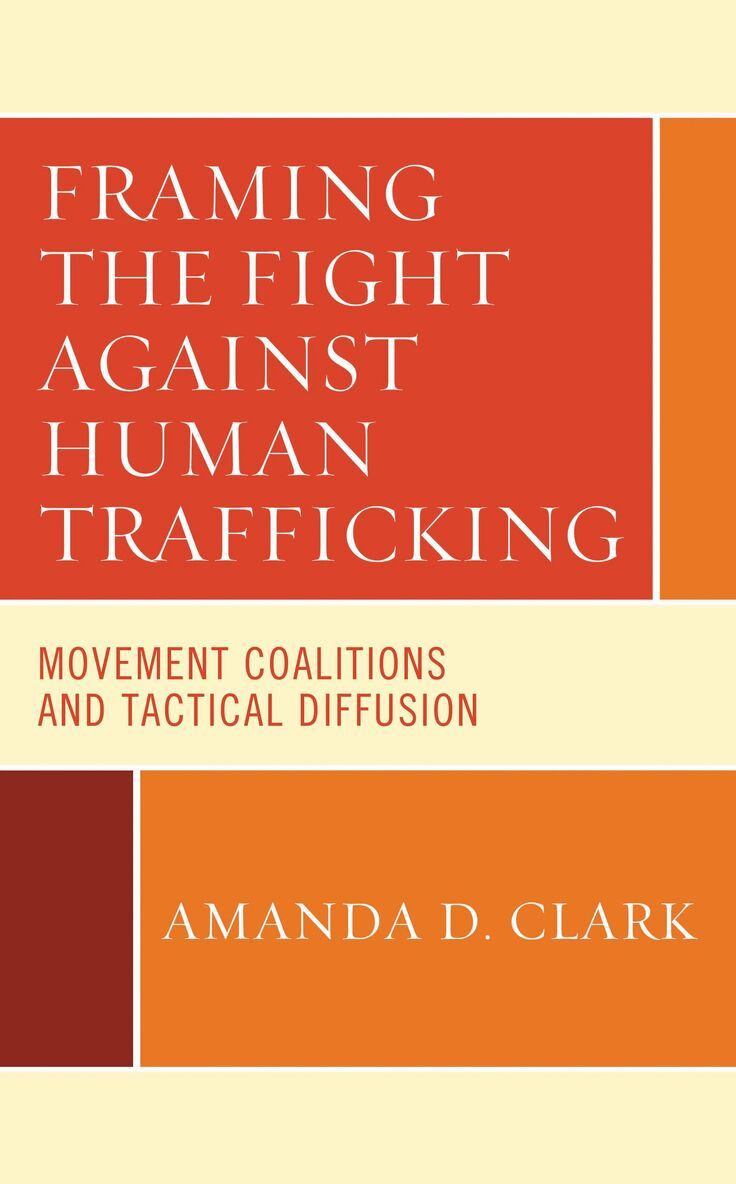
Framing the Fight against Human Trafficking
Movement Coalitions and Tactical Diffusion
Inbunden, Engelska, 2019
1 126 kr
Skickas inom 10-15 vardagar
Nongovernmental organizations (NGOs) in the anti–human trafficking movement have proliferated over the past few decades; many of these NGOs have joined coalitions to pool resources and expertise. How do changes in the external political environment or the internal coalition structure impact NGO framing strategy? Framing the fight Against Human Trafficking: Movement Coalitions and Tactical Diffusion uses a unique dataset to analyze the discursive processes of fifteen U.S. anti-trafficking NGOs involved in the Alliance to End Slavery and Trafficking (ATEST) from 2008-2014. This analysis shows that ATEST has targeted the state (contentious politics) and private industry (private politics) to advance its agenda. Sex trafficking has normally been met with tactics from the contentious politics model due to its historical legal connection with prostitution; labor trafficking, conversely, has been approached via the private politics model due to its connection with business. However, the coalition’s formal organizational structure has enabled members to learn from each other and apply these models in innovative ways. This study builds theory by showing how learning in social movement coalitions can diffuse tactics and provide new action repertoires for members.