Amber E. Boydstun - Böcker
Visar alla böcker från författaren Amber E. Boydstun. Handla med fri frakt och snabb leverans.
6 produkter
6 produkter
789 kr
Skickas inom 7-10 vardagar
Media attention can play a profound role in whether or not officials act on a policy issue, but how policy issues make the news in the first place has remained a puzzle. Why do some issues go viral and then just as quickly fall off the radar? How is it that the media can sustain public interest for months in a complex story like negotiations over Obamacare while ignoring other important issues in favor of stories on "balloon boy"? With Making the News, Amber E. Boydstun offers an eye-opening look at the explosive patterns of media attention that determine which issues are brought before the public. At the heart of her argument is the observation that the media have two modes: an "alarm mode" for breaking stories and a "patrol mode" for covering them in greater depth. While institutional incentives often initiate alarm mode around a story, they also propel news outlets into the watchdog - like patrol mode around its policy implications - until the next big news item breaks. What results from this pattern of fixation followed by rapid change is skewed coverage of policy issues, with a few receiving the majority of media attention while others receive none at all.Boydstun documents this systemic explosiveness and skew through analysis of media coverage across policy issues, including in-depth looks at the waxing and waning coverage around two issues: capital punishment and the "war on terror." Making the News shows how the seemingly unpredictable day-to-day decisions of the newsroom produce distinct patterns of operation with implications - good and bad - for national politics.
252 kr
Skickas inom 7-10 vardagar
Media attention can play a profound role in whether or not officials act on a policy issue, but how policy issues make the news in the first place has remained a puzzle. Why do some issues go viral and then just as quickly fall off the radar? How is it that the media can sustain public interest for months in a complex story like negotiations over Obamacare while ignoring other important issues in favor of stories on "balloon boy"? With Making the News, Amber E. Boydstun offers an eye-opening look at the explosive patterns of media attention that determine which issues are brought before the public. At the heart of her argument is the observation that the media have two modes: an "alarm mode" for breaking stories and a "patrol mode" for covering them in greater depth. While institutional incentives often initiate alarm mode around a story, they also propel news outlets into the watchdog - like patrol mode around its policy implications - until the next big news item breaks. What results from this pattern of fixation followed by rapid change is skewed coverage of policy issues, with a few receiving the majority of media attention while others receive none at all.Boydstun documents this systemic explosiveness and skew through analysis of media coverage across policy issues, including in-depth looks at the waxing and waning coverage around two issues: capital punishment and the "war on terror." Making the News shows how the seemingly unpredictable day-to-day decisions of the newsroom produce distinct patterns of operation with implications - good and bad - for national politics.
344 kr
Skickas inom 7-10 vardagar
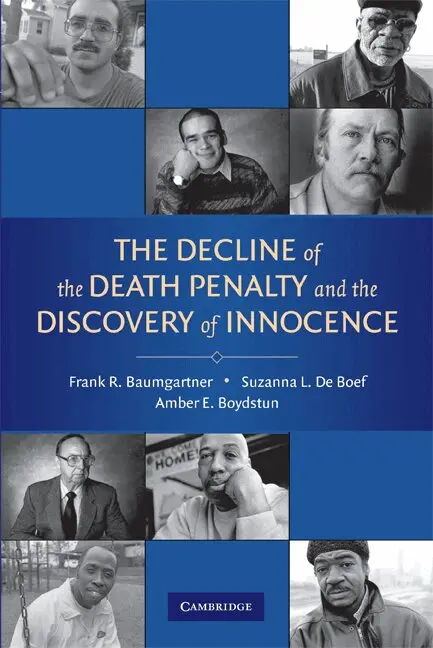
Since 1996, death sentences in America have declined by more than 60 percent, reversing a generation-long trend toward greater acceptance of capital punishment. In theory, most Americans continue to support the death penalty. But it is no longer seen as a theoretical matter. Prosecutors, judges, and juries across the country have moved in large numbers to give much greater credence to the possibility of mistakes - mistakes that in this arena are potentially fatal. The discovery of innocence, documented in this book through painstaking analyses of media coverage and with newly developed methods, has led to historic shifts in public opinion and to a sharp decline in use of the death penalty by juries across the country. A social cascade, starting with legal clinics and innocence projects, has snowballed into a national phenomenon that may spell the end of the death penalty in America.
821 kr
Skickas inom 7-10 vardagar
Since 1996, death sentences in America have declined by more than 60 percent, reversing a generation-long trend toward greater acceptance of capital punishment. In theory, most Americans continue to support the death penalty. But it is no longer seen as a theoretical matter. Prosecutors, judges, and juries across the country have moved in large numbers to give much greater credence to the possibility of mistakes - mistakes that in this arena are potentially fatal. The discovery of innocence, documented in this book through painstaking analyses of media coverage and with newly developed methods, has led to historic shifts in public opinion and to a sharp decline in use of the death penalty by juries across the country. A social cascade, starting with legal clinics and innocence projects, has snowballed into a national phenomenon that may spell the end of the death penalty in America.
753 kr
Skickas inom 7-10 vardagar
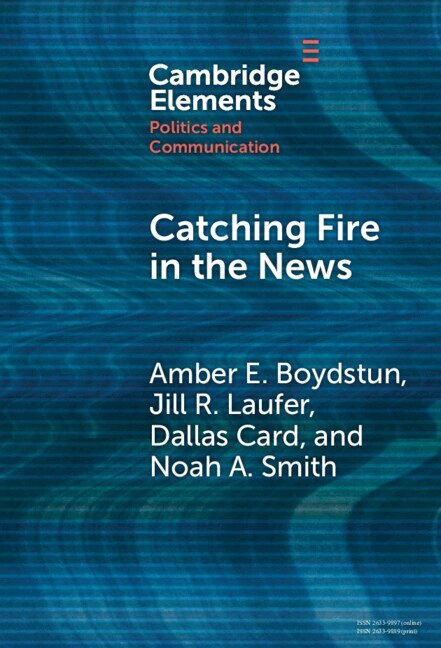
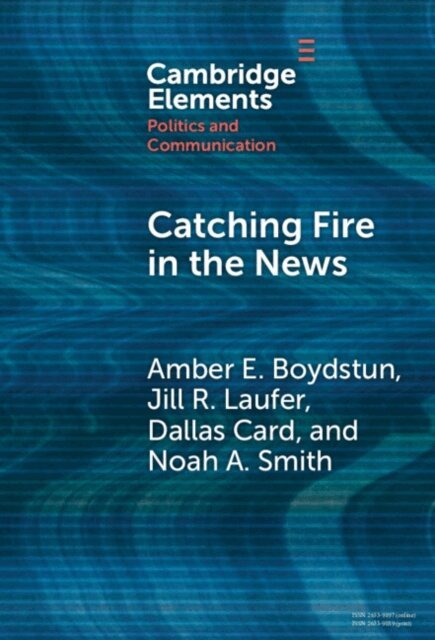
Why do some events catch fire in the news, producing a media storm, while many similar events go all but unnoticed? This Element uses a fire triangle analogy to explain the necessary conditions of media storms. The "heat" is the spark: a dramatic event or discovery. The "fuel" is the political and cultural landscape, including similar items in recent news, and current debates that allow the event to be framed in a resonant way. The "oxygen" is the available news agenda space, plus attention the event receives beyond the news (by activists, politicians, people on social media, etc.). Media storms are not easily predictable; it takes the right event, at the right time, with the right momentum of attention. But when the political stars align and a media storm erupts, it can be a window of opportunity for change. This Element is also available as Open Access on Cambridge Core.
234 kr
Skickas inom 7-10 vardagar
Why do some events catch fire in the news, producing a media storm, while many similar events go all but unnoticed? This Element uses a fire triangle analogy to explain the necessary conditions of media storms. The "heat" is the spark: a dramatic event or discovery. The "fuel" is the political and cultural landscape, including similar items in recent news, and current debates that allow the event to be framed in a resonant way. The "oxygen" is the available news agenda space, plus attention the event receives beyond the news (by activists, politicians, people on social media, etc.). Media storms are not easily predictable; it takes the right event, at the right time, with the right momentum of attention. But when the political stars align and a media storm erupts, it can be a window of opportunity for change. This Element is also available as Open Access on Cambridge Core.