Amelia María de la Luz Montes – författare
Visar alla böcker från författaren Amelia María de la Luz Montes. Handla med fri frakt och snabb leverans.
3 produkter
3 produkter
444 kr
Skickas inom 10-15 vardagar
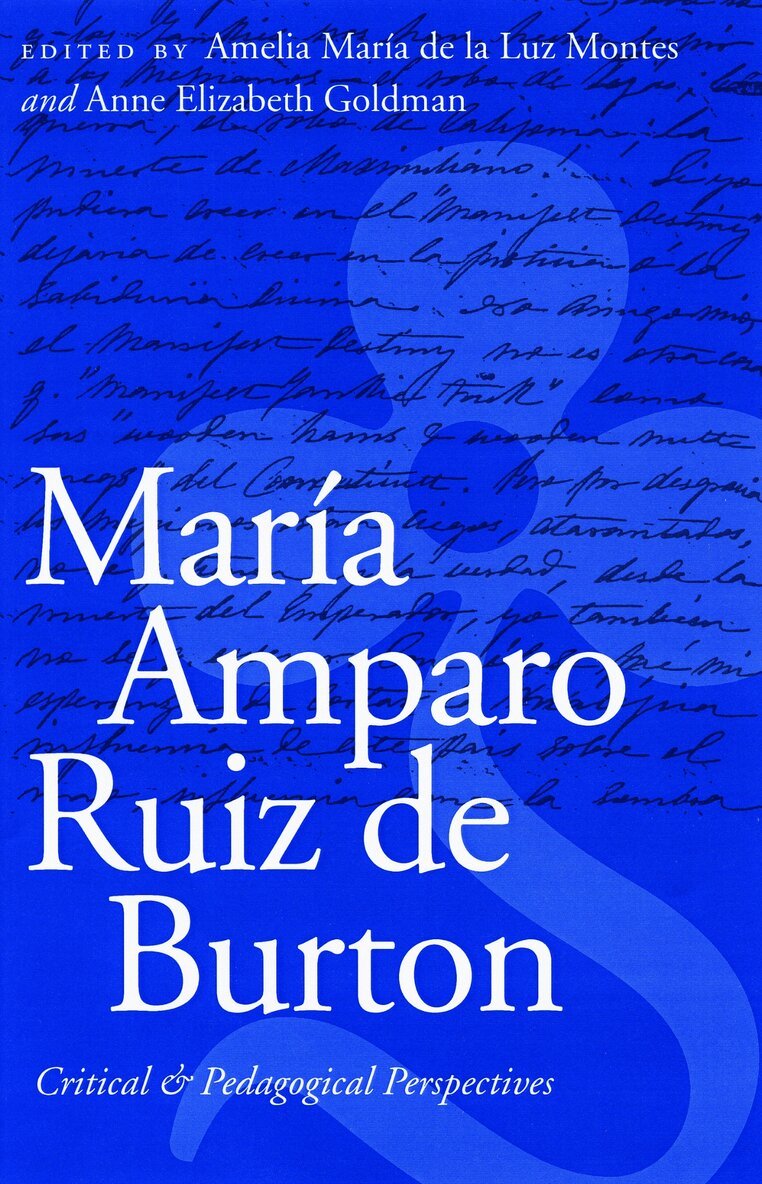
Since the recent republication of her novel The Squatter and the Don, María Amparo Ruiz de Burton (1832–95) has become a key figure in the recovery of nineteenth-century Mexican American literature. An aristocratic Californiana, she championed the rights of Mexican Americans in novels, plays, and letters. Her 1885 novel called attention to the illegal appropriation of Mexican land by the United States government, and she critiqued the political mores of America after the Civil War in light of the Mexican-American war. Her keen assessment of corporate capitalism at the end of the nineteenth century, frank acknowledgment of feminine desire, and deft insights about economic realities and class relations were unique among her American peers. Using Ruiz de Burton's work to analyze the critical schism conventionally imposed on nineteenth-century literary culture in America, the essays in this collection also draw connections between her work and the contemporary Chicana and Chicano canons. At once richly historical and critically nuanced, these essays appraise a politically complex Mexican American writer alternately celebrated as marginalized and censured for her identification with a social elite. This volume includes a section on pedagogy that offers a discussion of teaching approaches, syllabi, discussion questions, and assignments.
1 310 kr
Kommande
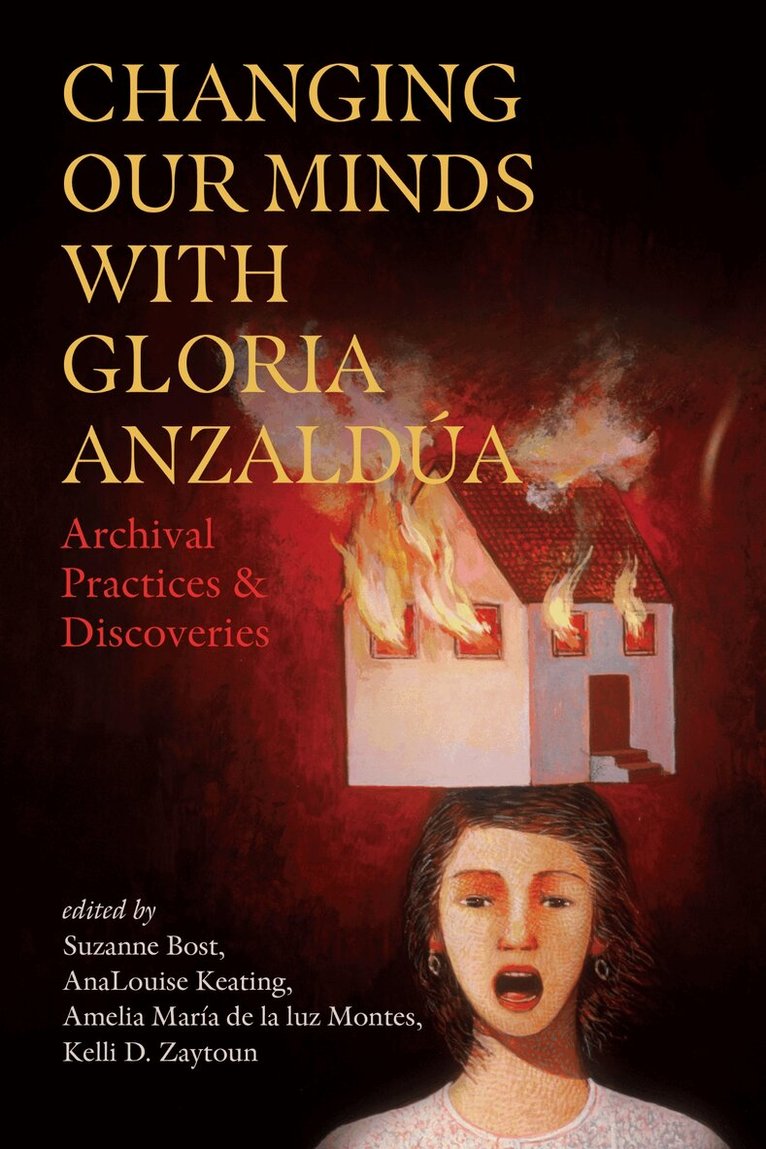
A collection of essays using Gloria Anzaldúa's archival works to further explore and reassess the meaning of her legacy.In the 1980s, Gloria Anzaldúa's pioneering Borderlands/La Frontera and This Bridge Called My Back created new and durable trajectories for feminist, queer, Latinx, and postcolonial thought. Still, much of her writing was never published. Drawing on Anzaldúa's impressive archive—manuscript drafts, personal memorabilia, correspondence, and drawings held at the Benson Collection at the University of Texas, Austin—this volume explores what we are still learning from a pathbreaking scholar more than twenty years after her death.Changing Our Minds with Gloria Anzaldúa gathers essays from eleven writers working in diverse fields, including philosophy, literature, geography, performance studies, and visual arts. All have been powerfully influenced by Anzaldúa, and after examining her archives, all came to know her work anew. Each chapter relates discoveries among the unpublished materials, illuminating Anzaldúa's celebrated texts and raising novel questions. A meditation, as well, on archivalism itself, Changing Our Minds reckons with the power of dusty papers to motivate new generations of readers outside the geographies and academic departments in which Anzaldúa has long been a fixture.
397 kr
Kommande
A collection of essays using Gloria Anzaldúa's archival works to further explore and reassess the meaning of her legacy.In the 1980s, Gloria Anzaldúa's pioneering Borderlands/La Frontera and This Bridge Called My Back created new and durable trajectories for feminist, queer, Latinx, and postcolonial thought. Still, much of her writing was never published. Drawing on Anzaldúa's impressive archive—manuscript drafts, personal memorabilia, correspondence, and drawings held at the Benson Collection at the University of Texas, Austin—this volume explores what we are still learning from a pathbreaking scholar more than twenty years after her death.Changing Our Minds with Gloria Anzaldúa gathers essays from eleven writers working in diverse fields, including philosophy, literature, geography, performance studies, and visual arts. All have been powerfully influenced by Anzaldúa, and after examining her archives, all came to know her work anew. Each chapter relates discoveries among the unpublished materials, illuminating Anzaldúa's celebrated texts and raising novel questions. A meditation, as well, on archivalism itself, Changing Our Minds reckons with the power of dusty papers to motivate new generations of readers outside the geographies and academic departments in which Anzaldúa has long been a fixture.