
Amie Thomasson - Böcker
Visar alla böcker från författaren Amie Thomasson. Handla med fri frakt och snabb leverans.
5 produkter
5 produkter

433 kr
Skickas inom 5-8 vardagar
In the decades following Quine, debates about existence have taken center stage in the metaphysics. But neo-Quinean ontology has reached a crisis point, given the endless proliferation of positions and lack of any clear idea of how to resolve debates. The most prominent challenge to mainstream ontological debates has come from the idea that disputants can be seen as using the quantifier with different meanings, leaving the dispute merely verbal. Nearly all of the work in defense of hard ontology has gone into arguing against quantifier variance. This volume argues that hard ontology faces an entirely different challenge, which remains even if the threat of quantifier variance can be avoided. The challenge comes from the 'easy approach to ontology': a view that is arguably the heir to Carnap's own position. The idea of the easy approach is that many ontological questions can be answered by undertaking trivial inferences from uncontroversial premises, making prolonged disputes about the questions out of place. This book aims to develop the easy approach to ontology, showing how it leads to both a first-order simple realism about the disputed entities and a form of meta-ontological deflationism that takes ontological disputes themselves to be misguided, since existence questions may be answered by straightforward conceptual and/or empirical work. It also aims to defend the easy approach against a range of arguments wielded against it and to show it to be a viable and attractive alternative to the quagmire of hard ontology.
1 322 kr
Skickas inom 5-8 vardagar
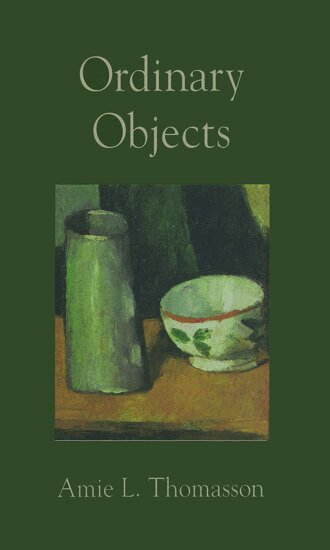
Arguments that ordinary inanimate objects such as tables and chairs, sticks and stones, simply do not exist have become increasingly common and increasingly prominent. Some are based on demands for parsimony or for a non-arbitrary answer to the special composition question; others arise from prohibitions against causal redundancy, ontological vagueness, or co-location; and others still come from worries that a common sense ontology would be a rival to a scientific one.Until now, little has been done to address these arguments in a unified and systematic way. Ordinary Objects is designed to fill this gap, demonstrating that the mistakes behind all of these superficially diverse eliminativist arguments may be traced to a common source. It aims to develop an ontology of ordinary objects subject to no such problems, providing perhaps the first sustained defense of a common sense ontology in two generations. The work done along the way addresses a number of major issues in philosophy of language and metaphysics, contributing to debates about analyticity, identity conditions, co-location and the grounding problem, vagueness, overdetermination, parsimony, and ontological commitment.In the end, the most important result of addressing these eliminativist arguments is not merely avoiding their conclusions; examining their failings also gives us reason to suspect that many apparent disputes in ontology are pseudo-debates. For it brings into question widely-held assumptions about which uses of metaphysical principles are appropriate, which metaphysical demands are answerable, and how we should go about addressing such fundamental questions as "What exists?". As a result, the work of Ordinary Objects promises to provide not only the route to a reflective understanding of our unreflective common-sense view, but also a better understanding of the proper methods and limits of metaphysics. "Ordinary Objects is well worth reading because it sheds new light on how to preserve the credibility of familiar things."--Marianne Djuth, The Review of Metaphysics "In Ordinary Objects , Amie Thomasson mounts a spirited and vigorous defense of the reality of ordinary objects."--Terry Horgan, Times Literary Supplement"Ordinary Objects is a fine book.... [Thomasson] writes insightfully and persuasively, and she has a realistic view of what metaphysical arguments can and cannot demonstrate... she approaches metaphysical theorizing more systematically than many other recent writers, drawing attention to the ways in which questionable assumptions in one area of philosophy are undergirding seemingly powerful arguments in another. Everyone working in metaphysics should make time for this volume."--R. W. Fischer, Metaphilosophy "In Ordinary Objects , Thomasson pursues an integrated conception of ontology and metaontology. In ontology, she defends the existence of shoes, ships, and other ordinary objects. In metaontology, she defends a deflationary view of ontological inquiry, designed to suck the air out of arguments against ordinary objects. The result is an elegant and insightful defense of a common sense worldview."--Jonathan Schaffer, Philosophical Books "Amie Thomasson has written a lovely book which is certain to irritate many professional metaphysicians. But it is not just irritating: it is challenging...This book would be good supplementary text for upper-level metaphysics classes or seminars in which the sorts of arguments to which Thomasson replies are also read."--Alan Sidelle, The Philosophical Quarterly
353 kr
Skickas
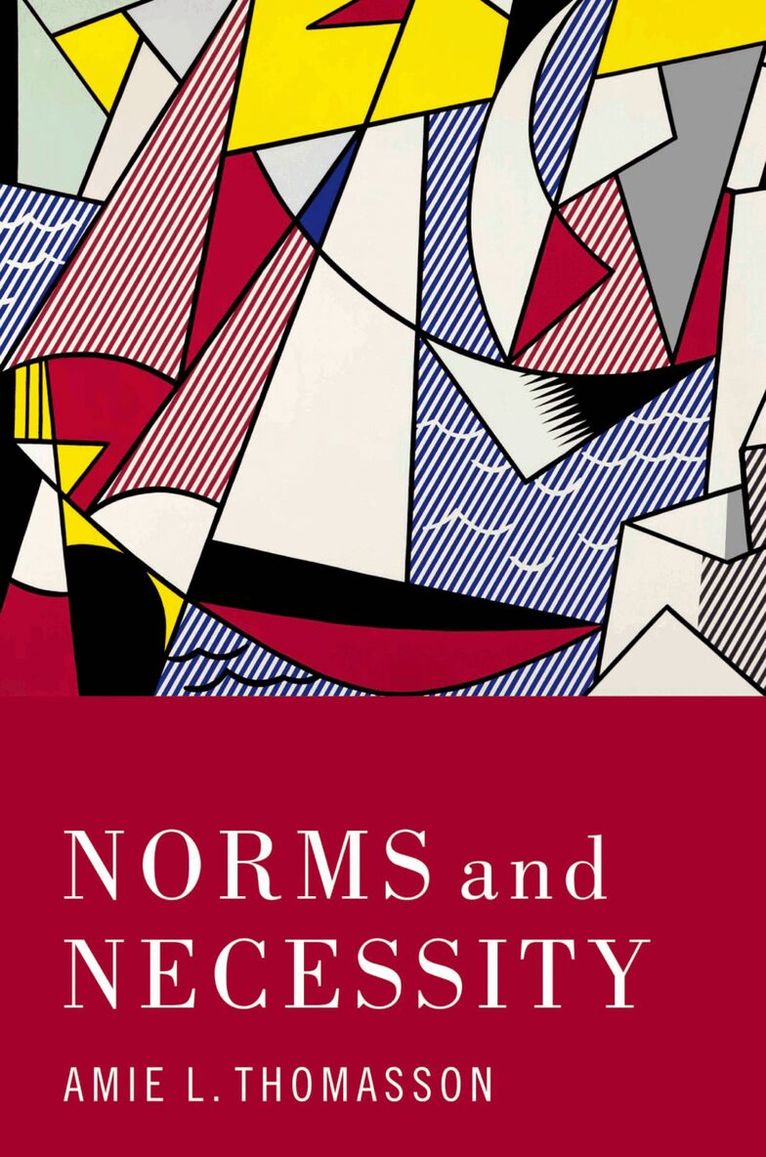
Claims about what is metaphysically necessary or possible have long played a central role in metaphysics and other areas of philosophy. Such claims are traditionally thought of as aiming to describe a special kind of modal fact or property, or perhaps facts about other possible worlds. But that assumption leads to difficult ontological, epistemological, and methodological puzzles. Should we accept that there are modal facts or properties, or other possible worlds? If so, what could these things be? How could we come to know what the modal facts or properties are? How can we resolve philosophical debates about what is metaphysically necessary or possible?Norms and Necessity develops a new approach to understanding our claims about metaphysical possibility and necessity: Modal Normativism. The Normativist rejects the assumption that modal claims aim to describe modal features or possible worlds, arguing instead that they serve as useful ways of conveying, reasoning with, and renegotiating semantic rules and their consequences. By dropping the descriptivist assumption, the Normativist is able to unravel the notorious ontological problems of modality, and provide a clear and plausible story about how we can come to know what is metaphysically necessary or possible. Most importantly, this approach helps demystify philosophical methodology. It reveals that resolving metaphysical modal questions does not require a special form of philosophical insight or intuition. Instead, it requires nothing more mysterious than empirical knowledge, conceptual mastery, and an ability to explicitly convey and renegotiate semantic rules.

366 kr
Skickas
In Rethinking Metaphysics, Amie Thomasson aims to change how we think about metaphysics: what it can do, and why it matters. Traditional metaphysics has aimed to discover deep truths about the world. But this has led to rivalries with science, epistemological mysteries, and a despairing scepticism about how we could gain knowledge in metaphysics. Thomasson argues that the problems with prior approaches to metaphysics arise from a problematic assumption that all discourse functions in the same way. Drawing on work in linguistics, she shows how to develop a richer view of linguistic functions that enables us to see why this assumption leads us astray. By better understanding the plurality of linguistic functions, she argues, we can also disentangle ourselves from many old metaphysical problems--including problems about properties, numbers, morality and modality. In place of the traditional model, we should think of metaphysics as work in conceptual engineering--including both a reverse engineering project aimed at understanding how various parts of our language and conceptual scheme work and what functions they serve, and a constructive engineering project that investigates what concepts and language we should use and how we should use them. Rethinking metaphysics as conceptual engineering in this way enables us to avoid the problems of traditional metaphysics, while also demonstrating the perennial importance of metaphysics to human life.

386 kr
Skickas inom 5-8 vardagar
Arguments that ordinary inanimate objects such as tables and chairs, sticks and stones, simply do not exist have become increasingly common and increasingly prominent. Some are based on demands for parsimony or for a non-arbitrary answer to the special composition question; others arise from prohibitions against causal redundancy, ontological vagueness, or co-location; and others still come from worries that a common sense ontology would be a rival to a scientific one.Until now, little has been done to address these arguments in a unified and systematic way. Ordinary Objects is designed to fill this gap, demonstrating that the mistakes behind all of these superficially diverse eliminativist arguments may be traced to a common source. It aims to develop an ontology of ordinary objects subject to no such problems, providing perhaps the first sustained defense of a common sense ontology in two generations. The work done along the way addresses a number of major issues in philosophy of language and metaphysics, contributing to debates about analyticity, identity conditions, co-location and the grounding problem, vagueness, overdetermination, parsimony, and ontological commitment.In the end, the most important result of addressing these eliminativist arguments is not merely avoiding their conclusions; examining their failings also gives us reason to suspect that many apparent disputes in ontology are pseudo-debates. For it brings into question widely-held assumptions about which uses of metaphysical principles are appropriate, which metaphysical demands are answerable, and how we should go about addressing such fundamental questions as "What exists?". As a result, the work of Ordinary Objects promises to provide not only the route to a reflective understanding of our unreflective common-sense view, but also a better understanding of the proper methods and limits of metaphysics. "Ordinary Objects is well worth reading because it sheds new light on how to preserve the credibility of familiar things."--Marianne Djuth, The Review of Metaphysics "In Ordinary Objects , Amie Thomasson mounts a spirited and vigorous defense of the reality of ordinary objects."--Terry Horgan, Times Literary Supplement"Ordinary Objects is a fine book.... [Thomasson] writes insightfully and persuasively, and she has a realistic view of what metaphysical arguments can and cannot demonstrate... she approaches metaphysical theorizing more systematically than many other recent writers, drawing attention to the ways in which questionable assumptions in one area of philosophy are undergirding seemingly powerful arguments in another. Everyone working in metaphysics should make time for this volume."--R. W. Fischer, Metaphilosophy "In Ordinary Objects , Thomasson pursues an integrated conception of ontology and metaontology. In ontology, she defends the existence of shoes, ships, and other ordinary objects. In metaontology, she defends a deflationary view of ontological inquiry, designed to suck the air out of arguments against ordinary objects. The result is an elegant and insightful defense of a common sense worldview."--Jonathan Schaffer, Philosophical Books "Amie Thomasson has written a lovely book which is certain to irritate many professional metaphysicians. But it is not just irritating: it is challenging...This book would be a good supplementary text for upper-level metaphysics classes or seminars in which the sorts of arguments to which Thomasson replies are also read."--Alan Sidelle, The Philosophical Quarterly