Amy Cook - Böcker
Visar alla böcker från författaren Amy Cook. Handla med fri frakt och snabb leverans.
18 produkter
18 produkter
662 kr
Skickas inom 10-15 vardagar
Jung and Kierkegaard identifies authenticity, suffering and self-deception as the three key themes that connect the work of Carl Jung and Søren Kierkegaard. There is, in the thinking of these pioneering psychologists of the human condition, a fundamental belief in the healing potential of a religious outlook. This engaging and erudite text explores the significance of the similarities of thinking between Kierkegaard and Jung, bridging the gap between the former’s particular brand of existential Christian psychology and the latter’s own unique philosophy. Given the similarity of their work and experiences that were common to both of their personal biographies, particularly the relationship that each had with his father, one might expect Jung to have found in Kierkegaard a kindred spirit. Yet this was not the case, and Jung viewed Kierkegaard with great scorn. That there exists such a strong comparison and extensive overlap in the life and thought of these towering figures of psychology and philosophy leads us to question why it is that Jung so strongly rejected Kierkegaard. Such hostility is particularly fascinating given the striking similarity that Jung’s own analytical psychology bears to the Christian psychology upheld by Kierkegaard. Cook’s thought-provoking book fills a very real gap in Jungian scholarship and is the first attempt to undertake a direct comparison between Jung and Kierkegaard’s models of development. It is therefore essential reading for academics and postgraduate students with an interest in Jungian and Kierkegaard scholarship, as well as psychology, philosophy and religion more generally.
313 kr
Skickas inom 7-10 vardagar
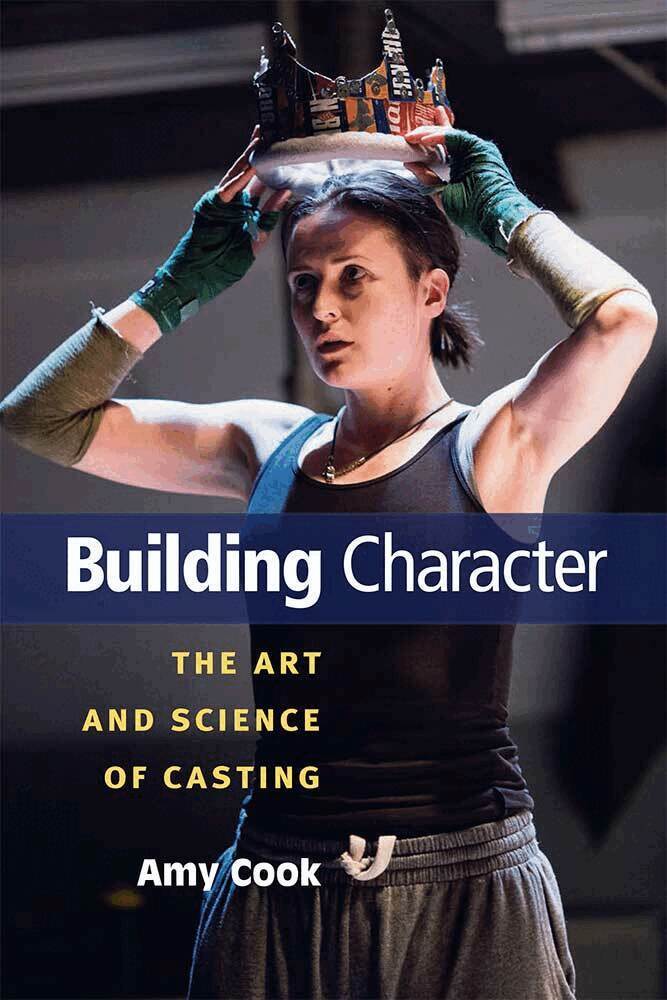
What can we learn about how we understand each other and ourselves by examining the casting we find on stage and film—the casting we find perfect and the casting we find wrong? Building Character examines how the process of “casting” an actor in a part creates a character and how this can be usefully understood through deploying theories from the cognitive sciences. A casting director may match the perceived qualities of an actor with the perceived qualities of the character, but the combination is also synergistic; casting a character creates qualities. While casting directors do this professionally, all of us do this when we make sense of the people around us. This book argues that we build the characters of others from a sea of stimuli and that the process of watching actors take on roles improves our ability to “cast” those roles in our daily lives. Amy Cook examines the visible celebrity casting, such as Robert Downey Jr. as Ironman or Judi Dench as Bond’s M, the political casting of one candidate as “presidential” and another as “weak,” the miscasting of racial profiling and sexual assault, and the counter casting that results when actors and characters are not where or who we expect.
1 023 kr
Skickas inom 7-10 vardagar
What can we learn about how we understand each other and ourselves by examining the casting we find on stage and film—the casting we find perfect and the casting we find wrong? Building Character examines how the process of “casting” an actor in a part creates a character and how this can be usefully understood through deploying theories from the cognitive sciences. A casting director may match the perceived qualities of an actor with the perceived qualities of the character, but the combination is also synergistic; casting a character creates qualities. While casting directors do this professionally, all of us do this when we make sense of the people around us. This book argues that we build the characters of others from a sea of stimuli and that the process of watching actors take on roles improves our ability to “cast” those roles in our daily lives. Amy Cook examines the visible celebrity casting, such as Robert Downey Jr. as Ironman or Judi Dench as Bond’s M, the political casting of one candidate as “presidential” and another as “weak,” the miscasting of racial profiling and sexual assault, and the counter casting that results when actors and characters are not where or who we expect.
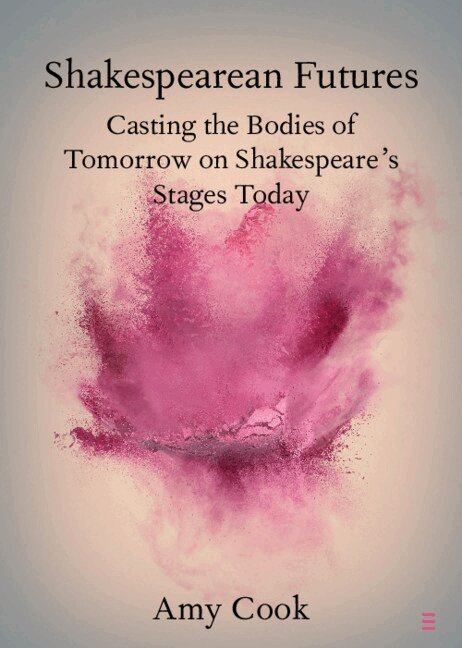
Shakespearean Futures
Casting the Bodies of Tomorrow on Shakespeare's Stages Today
Häftad, Engelska, 2020
269 kr
Skickas inom 7-10 vardagar
Casting is the process by which directors assign parts to actors, creating the idea of the character for the audience. Casting is how we rehearse change, as we come to see an expanded repertoire of the kinds of bodies that are selected to play the lead, the hero, and the villain. This Element focuses on the casting in productions of Shakespeare from 2017-2020 to demonstrate how casting functions affectively and cognitively to reimagine who can be what. The central argument is that directors are using casting as the central mode of meaning-making in productions of Shakespeare.
1 954 kr
Skickas inom 10-15 vardagar
Jung and Kierkegaard identifies authenticity, suffering and self-deception as the three key themes that connect the work of Carl Jung and Søren Kierkegaard. There is, in the thinking of these pioneering psychologists of the human condition, a fundamental belief in the healing potential of a religious outlook. This engaging and erudite text explores the significance of the similarities of thinking between Kierkegaard and Jung, bridging the gap between the former’s particular brand of existential Christian psychology and the latter’s own unique philosophy. Given the similarity of their work and experiences that were common to both of their personal biographies, particularly the relationship that each had with his father, one might expect Jung to have found in Kierkegaard a kindred spirit. Yet this was not the case, and Jung viewed Kierkegaard with great scorn. That there exists such a strong comparison and extensive overlap in the life and thought of these towering figures of psychology and philosophy leads us to question why it is that Jung so strongly rejected Kierkegaard. Such hostility is particularly fascinating given the striking similarity that Jung’s own analytical psychology bears to the Christian psychology upheld by Kierkegaard. Cook’s thought-provoking book fills a very real gap in Jungian scholarship and is the first attempt to undertake a direct comparison between Jung and Kierkegaard’s models of development. It is therefore essential reading for academics and postgraduate students with an interest in Jungian and Kierkegaard scholarship, as well as psychology, philosophy and religion more generally.
1 314 kr
Skickas inom 10-15 vardagar
Performance and medicine are now converging in unprecedented ways. London’s theatres reveal an appetite for medical themes – John Boyega is subjected to medical experiments in Jack Thorne’s Woycek, while Royal National Theatre produces a novel musical about cancer. At the same time, performance-makers seek to improve our health, using dance to increase mobility for those living with Parkinson’s disease or performance magic as physiotherapy for children with paraplegia. Performance, Medicine and the Human surveys this emerging field, providing case studies based on the author’s own experience of devising medical performances in collaboration with cancer patients, biomedical scientists and healthcare educators. Examining contemporary medical performance reveals an ancient preoccupation, evident in the practices of both theatre and healing, with the human. Like medicine, theatre puts the human on display in order to understand and, perhaps, alleviate the suffering inherent to the human condition. Medical practice constitutes a sort of theatre in which doctors, nurses and patients perform their humaneness and humanity. This insight has much to offer at a time when established notions of the human are being radically rethought, partly in response to emerging biomedical knowledge. Performance, Medicine and the Human argues that contemporary medical performance can shed new light on what it means to be human – and what we mean by the human, the humane, humanism and the humanities – at a time when these notions are being fundamentally rethought. Its insights are relevant to scholars in performance studies, the medical humanities, healthcare education and beyond.
1 314 kr
Skickas inom 10-15 vardagar
Through an examination of examples from performance, museum displays and popular culture that stage the body as a specimen, Performing Specimens maps the relations between these performative acts and the medical practices of collecting, storing and showing specimens in a variety of modes and contexts. Moving from an examination of the medical and historical contexts of specimen display in the museum and the anatomy theatre to contemporary performance, Gianna Bouchard engages with examples from live art, bio-art, popular culture and theatre that stage the performer’s body as a specimen. It examines the ethical relationships involved in these particular moments of display – both in the staging and in how we look at the specimen body. This is a landmark study for those working in the fields of theatre, performance and the medical humanities, with a specific focus on the ethics of display and the ethics of spectatorship, emerging at the intersection of performance and medicine.Among the works and examples considered are 18th-century anatomical waxes from the Museo di Storia Naturale la Specola in Florence, Italy, and their contemporary version in the Bodyworlds exhibition of ‘plastinated’ corpses; organ retention scandals; current legislation, such as the Human Tissue Act 2004; the work of performance company Clod Ensemble and Stein|Holum Projects, the performer and disability activist, Mat Fraser and live artist, Martin O’Brien, alongside visual artists Helen Pynor and Peta Clancy , artists Peggy Shaw and ORLAN.
461 kr
Skickas inom 10-15 vardagar
Through an examination of examples from performance, museum displays and popular culture that stage the body as a specimen, Performing Specimens maps the relations between these performative acts and the medical practices of collecting, storing and showing specimens in a variety of modes and contexts. Moving from an examination of the medical and historical contexts of specimen display in the museum and the anatomy theatre to contemporary performance, Gianna Bouchard engages with examples from live art, bio-art, popular culture and theatre that stage the performer’s body as a specimen. It examines the ethical relationships involved in these particular moments of display – both in the staging and in how we look at the specimen body. This is a landmark study for those working in the fields of theatre, performance and the medical humanities, with a specific focus on the ethics of display and the ethics of spectatorship, emerging at the intersection of performance and medicine.Among the works and examples considered are 18th-century anatomical waxes from the Museo di Storia Naturale la Specola in Florence, Italy, and their contemporary version in the Bodyworlds exhibition of ‘plastinated’ corpses; organ retention scandals; current legislation, such as the Human Tissue Act 2004; the work of performance company Clod Ensemble and Stein|Holum Projects, the performer and disability activist, Mat Fraser and live artist, Martin O’Brien, alongside visual artists Helen Pynor and Peta Clancy , artists Peggy Shaw and ORLAN.
461 kr
Skickas inom 10-15 vardagar
Performance and medicine are now converging in unprecedented ways. London’s theatres reveal an appetite for medical themes – John Boyega is subjected to medical experiments in Jack Thorne’s Woycek, while Royal National Theatre produces a novel musical about cancer. At the same time, performance-makers seek to improve our health, using dance to increase mobility for those living with Parkinson’s disease or performance magic as physiotherapy for children with paraplegia. Performance, Medicine and the Human surveys this emerging field, providing case studies based on the author’s own experience of devising medical performances in collaboration with cancer patients, biomedical scientists and healthcare educators. Examining contemporary medical performance reveals an ancient preoccupation, evident in the practices of both theatre and healing, with the human. Like medicine, theatre puts the human on display in order to understand and, perhaps, alleviate the suffering inherent to the human condition. Medical practice constitutes a sort of theatre in which doctors, nurses and patients perform their humaneness and humanity. This insight has much to offer at a time when established notions of the human are being radically rethought, partly in response to emerging biomedical knowledge. Performance, Medicine and the Human argues that contemporary medical performance can shed new light on what it means to be human – and what we mean by the human, the humane, humanism and the humanities – at a time when these notions are being fundamentally rethought. Its insights are relevant to scholars in performance studies, the medical humanities, healthcare education and beyond.
1 177 kr
Skickas inom 10-15 vardagar
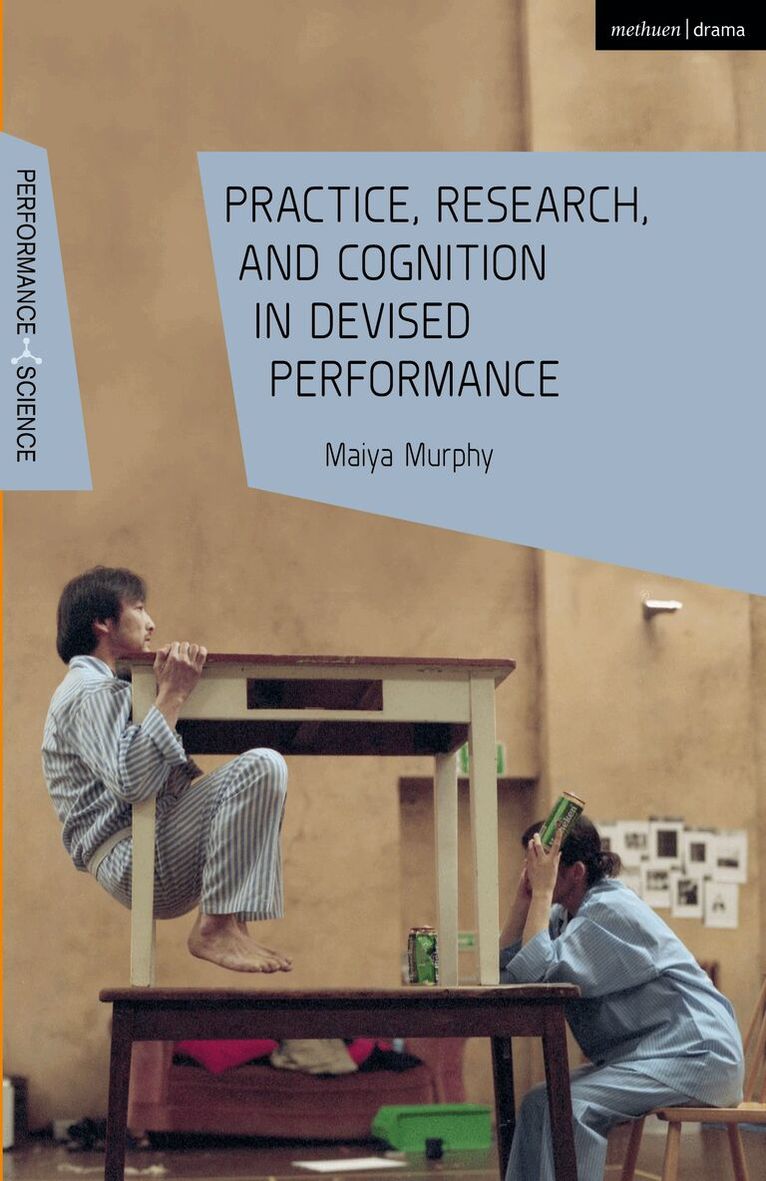
This interdisciplinary study explores devised performance and practice research at the intersection of the cognitive sciences and arts.It interrogates relationships between epistemology and cognition, action and aesthetics, and first-person experience and third-person investigation. Pairing practice research methodologies from theatre and performance with cognitive and neuroscientific approaches—both theoretical and empirical—it reveals new insights into the practices of collective creation in theatre.To foreground the insider knowledge inherent to practice research, the main case studies are works created and performed by Maiya Murphy’s international movement-based devising collective, Autopoetics. Autopoetics’ work is contextualized in reference to major international devising companies, dance companies, and interdisciplinary research projects including Complicité, Frantic Assembly, Forced Entertainment, Tectonic Theater Project, The Necessary Stage, Company Wayne McGregor, Australian Dance Theatre, Choreography and Cognition, Motion Bank and Watching Dance: Kinesthetic Empathy. Practice, Research, and Cognition in Devised Performance proposes a model for breaking down disciplinary silos to freshly access the processes of collaborative practice and invigorate research in the humanities and arts.
557 kr
Kommande
502 kr
Skickas inom 10-15 vardagar
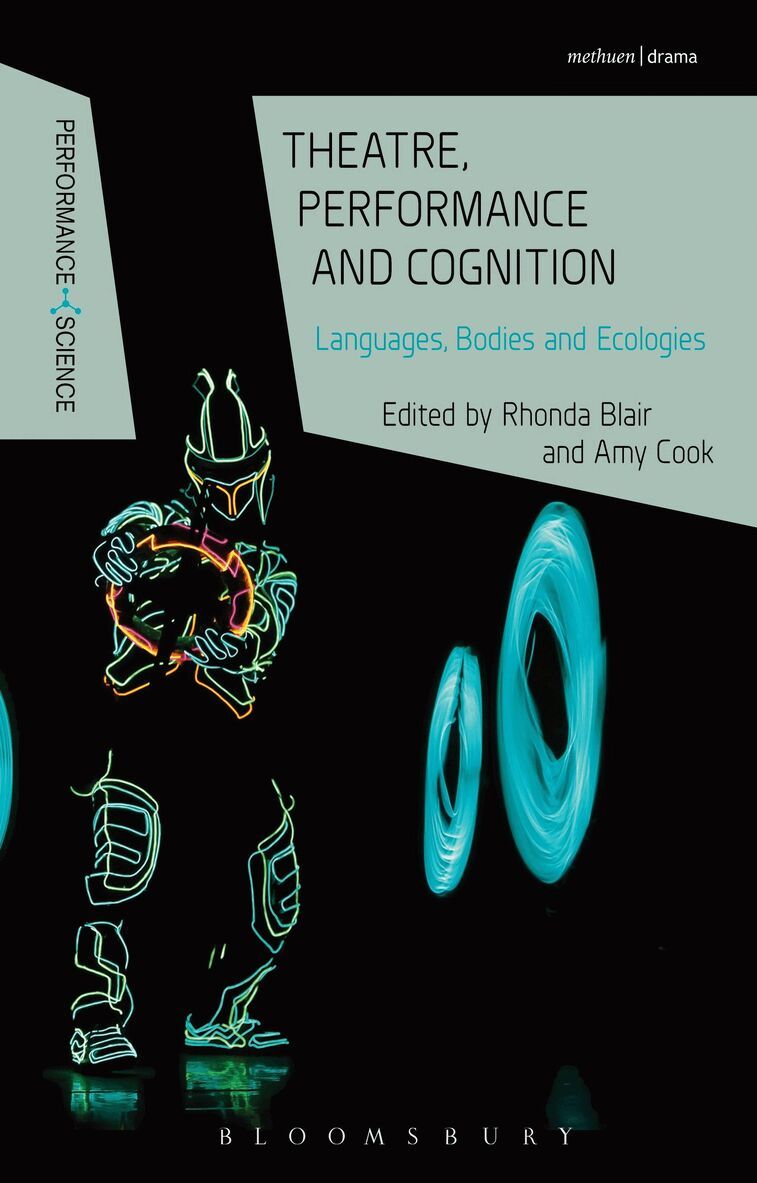
Theatre, Performance and Cognition introduces readers to the key debates, areas of research, and applications of the cognitive sciences to the humanities, and to theatre and performance in particular. It features the most exciting work being done at the intersection of theatre and cognitive science, containing both selected scientific studies that have been influential in the field, each introduced and contextualised by the editors, together with related scholarship from the field of theatre and performance that demonstrates some of the applications of the cognitive sciences to actor training, the rehearsal room and the realm of performance more generally.The three sections consider the principal areas of research and application in this interdisciplinary field, starting with a focus on language and meaning-making in which Shakespeare's work and Tom Stoppard's Arcadia are considered. In the second part which focuses on the body, chapters consider applications for actor and dance training, while the third part focuses on dynamic ecologies, of which the body is a part.
1 888 kr
Skickas inom 10-15 vardagar
Theatre, Performance and Cognition introduces readers to the key debates, areas of research, and applications of the cognitive sciences to the humanities, and to theatre and performance in particular. It features the most exciting work being done at the intersection of theatre and cognitive science, containing both selected scientific studies that have been influential in the field, each introduced and contextualised by the editors, together with related scholarship from the field of theatre and performance that demonstrates some of the applications of the cognitive sciences to actor training, the rehearsal room and the realm of performance more generally.The three sections consider the principal areas of research and application in this interdisciplinary field, starting with a focus on language and meaning-making in which Shakespeare's work and Tom Stoppard's Arcadia are considered. In the second part which focuses on the body, chapters consider applications for actor and dance training, while the third part focuses on dynamic ecologies, of which the body is a part.
1 177 kr
Skickas inom 10-15 vardagar
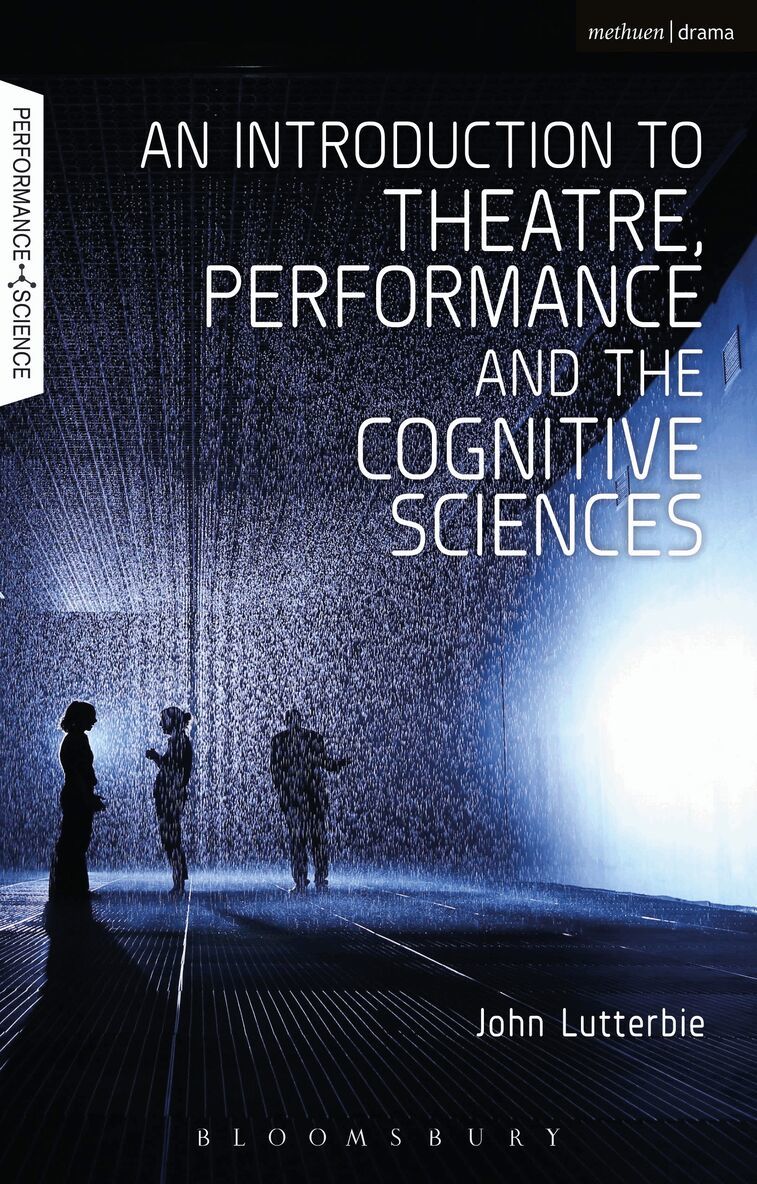
This is the first textbook designed for students, practitioners and scholars of the performing arts who are curious about the power of the cognitive sciences to throw light on the processes of performance. It equips readers with a clear understanding of how research in cognitive neuroscience has illuminated and expanded traditional approaches to thinking about topics such as the performer, the spectator, space and time, culture, and the text. Each chapter considers four layers of performance: conventional forms of theatre, performance art, and everyday life, offering an expansive vision of the impact of the cognitive sciences on performance in the widest sense. Written in an approachable style, An Introduction to Theatre, Performance and the Cognitive Sciences weaves together case studies of a wide range of performances with scientific evidence and post-structural theory. Artists such as Robert Wilson, Societas Raffaello Sanzio, Ariane Mnouchkine, Bertolt Brecht, and Antonin Artaud are brought into conversation with theories of Gilles Deleuze, Shaun Gallagher, Alva Noë, Tim Ingold and the science of V. S. Ramachandran, Vittorio Gallese, and Antonio Damasio. John Lutterbie offers a complex understanding of not only the act of performing but the forces that mark the place of theatre in contemporary society.In drawing on a variety of scientific articles, Lutterbie provides readers with an accessible account of significant research in areas in the field and reveals how the sciences can help us understand the experience of art.
365 kr
Skickas inom 10-15 vardagar
This is the first textbook designed for students, practitioners and scholars of the performing arts who are curious about the power of the cognitive sciences to throw light on the processes of performance. It equips readers with a clear understanding of how research in cognitive neuroscience has illuminated and expanded traditional approaches to thinking about topics such as the performer, the spectator, space and time, culture, and the text. Each chapter considers four layers of performance: conventional forms of theatre, performance art, and everyday life, offering an expansive vision of the impact of the cognitive sciences on performance in the widest sense. Written in an approachable style, An Introduction to Theatre, Performance and the Cognitive Sciences weaves together case studies of a wide range of performances with scientific evidence and post-structural theory. Artists such as Robert Wilson, Societas Raffaello Sanzio, Ariane Mnouchkine, Bertolt Brecht, and Antonin Artaud are brought into conversation with theories of Gilles Deleuze, Shaun Gallagher, Alva Noë, Tim Ingold and the science of V. S. Ramachandran, Vittorio Gallese, and Antonio Damasio. John Lutterbie offers a complex understanding of not only the act of performing but the forces that mark the place of theatre in contemporary society.In drawing on a variety of scientific articles, Lutterbie provides readers with an accessible account of significant research in areas in the field and reveals how the sciences can help us understand the experience of art.
135 kr
Skickas inom 5-8 vardagar
139 kr
Skickas inom 5-8 vardagar
242 kr
Skickas inom 5-8 vardagar