Amy H. Liu - Böcker
Visar alla böcker från författaren Amy H. Liu. Handla med fri frakt och snabb leverans.
6 produkter
6 produkter
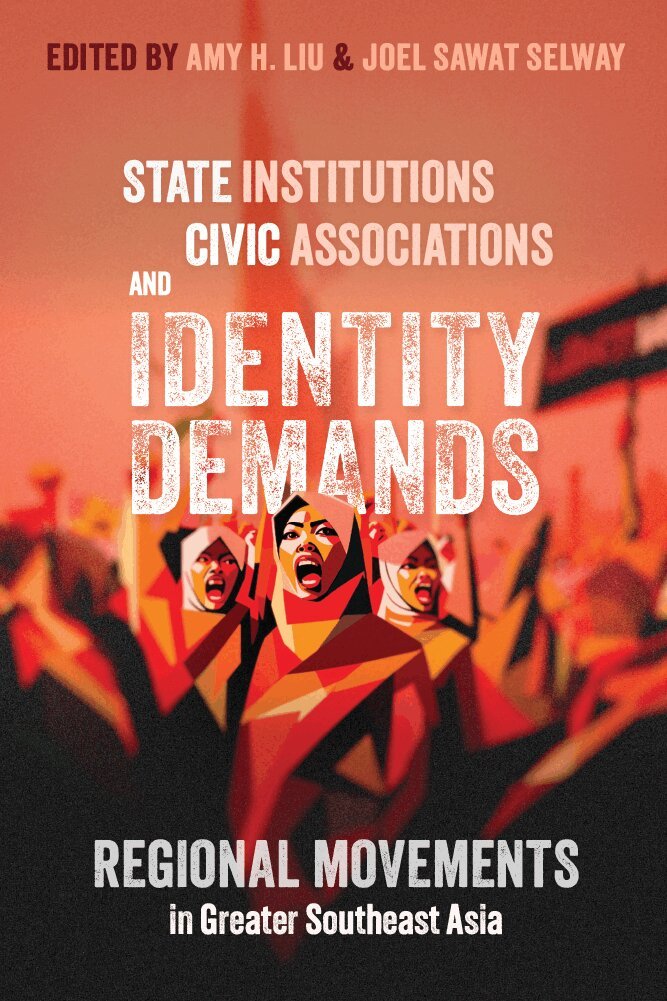
State Institutions, Civic Associations, and Identity Demands
Regional Movements in Greater Southeast Asia
Häftad, Engelska, 2024
436 kr
Skickas inom 7-10 vardagar
While the media tends to pay the most attention to violent secessionist movements or peaceful independence movements, it is just as important to understand why there are regions where political movements for autonomy fail to develop. In neglecting regions without political movements or full-blown independence demands, theories may be partial at best and incorrect at worst.State Institutions, Civic Associations, and Identity Demands examines over a dozen regions, comparing and contrasting successful cases to abandoned, unsuccessful, or dormant cases. The cases range from successful secession (East Timor, Singapore) and ongoing secessionist movements (Southern Philippines), to internally divided regional movements (Kachin State), low-level regionalist stirrings (Lanna, Taiwan), and local but not regional mobilization of identity (Bali, Minahasan), all the way to failed movements (Bataks, South Maluku) and regions that remain politically inert (East and North Malaysia, Northeast Thailand). While each chapter is written by a country expert, the contributions rely on a range of methods, from comparative historical analysis, to ethnography, field interviews, and data from public opinion surveys. Together, they contribute important new knowledge on little-known cases that nevertheless illuminate the history of regions and ethnic groups in Southeast Asia. Although focused on Southeast Asia, the book identifies the factors that can explain why movements emerge and successfully develop and concludes with a chapter by Henry Hale that illustrates how this can be applied globally.
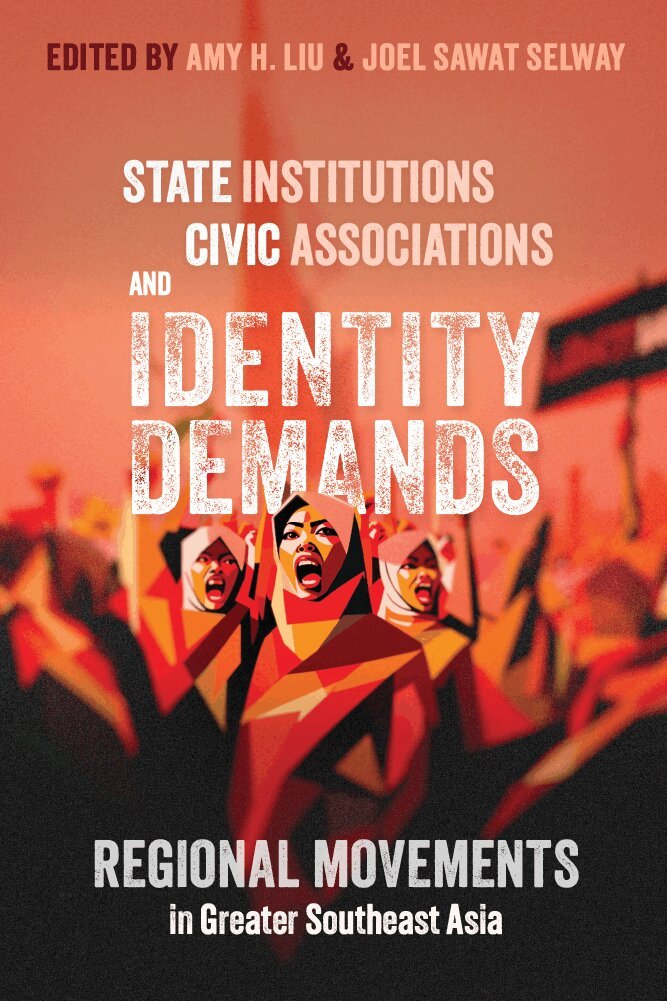
State Institutions, Civic Associations, and Identity Demands
Regional Movements in Greater Southeast Asia
Inbunden, Engelska, 2024
1 033 kr
Skickas inom 7-10 vardagar
While the media tends to pay the most attention to violent secessionist movements or peaceful independence movements, it is just as important to understand why there are regions where political movements for autonomy fail to develop. In neglecting regions without political movements or full-blown independence demands, theories may be partial at best and incorrect at worst.State Institutions, Civic Associations, and Identity Demands examines over a dozen regions, comparing and contrasting successful cases to abandoned, unsuccessful, or dormant cases. The cases range from successful secession (East Timor, Singapore) and ongoing secessionist movements (Southern Philippines), to internally divided regional movements (Kachin State), low-level regionalist stirrings (Lanna, Taiwan), and local but not regional mobilization of identity (Bali, Minahasan), all the way to failed movements (Bataks, South Maluku) and regions that remain politically inert (East and North Malaysia, Northeast Thailand). While each chapter is written by a country expert, the contributions rely on a range of methods, from comparative historical analysis, to ethnography, field interviews, and data from public opinion surveys. Together, they contribute important new knowledge on little-known cases that nevertheless illuminate the history of regions and ethnic groups in Southeast Asia. Although focused on Southeast Asia, the book identifies the factors that can explain why movements emerge and successfully develop and concludes with a chapter by Henry Hale that illustrates how this can be applied globally.
861 kr
Skickas inom 10-15 vardagar
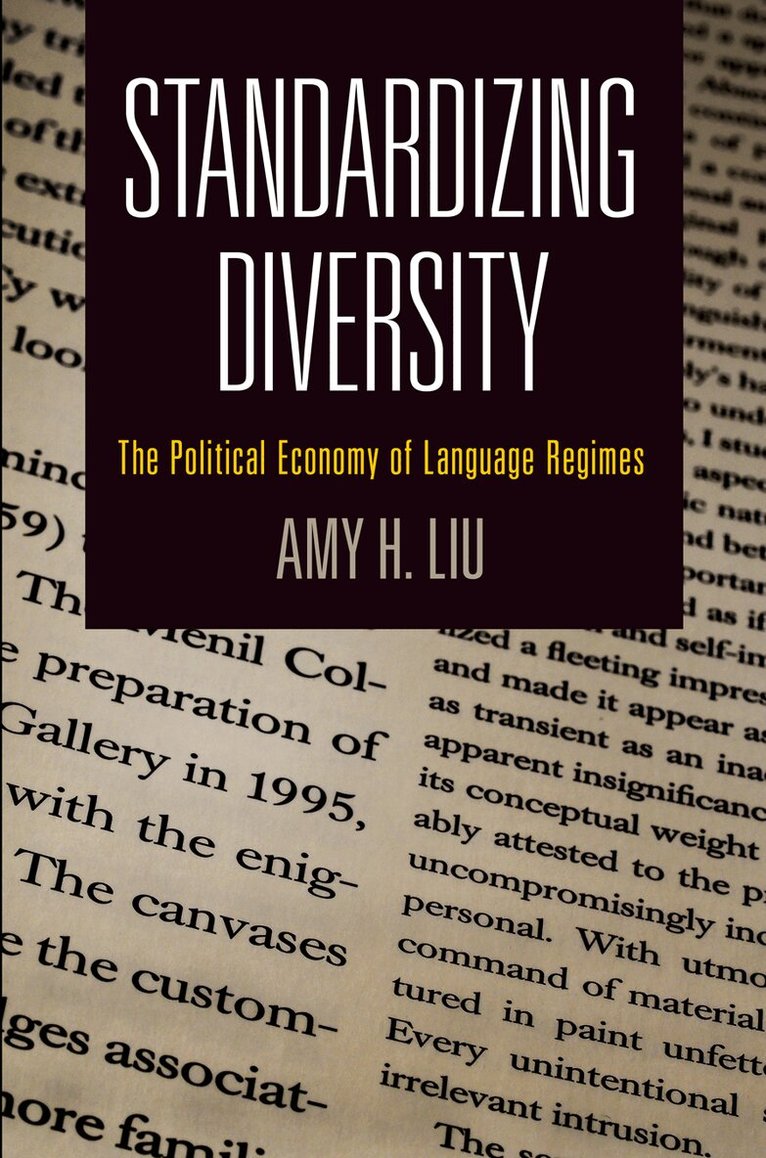
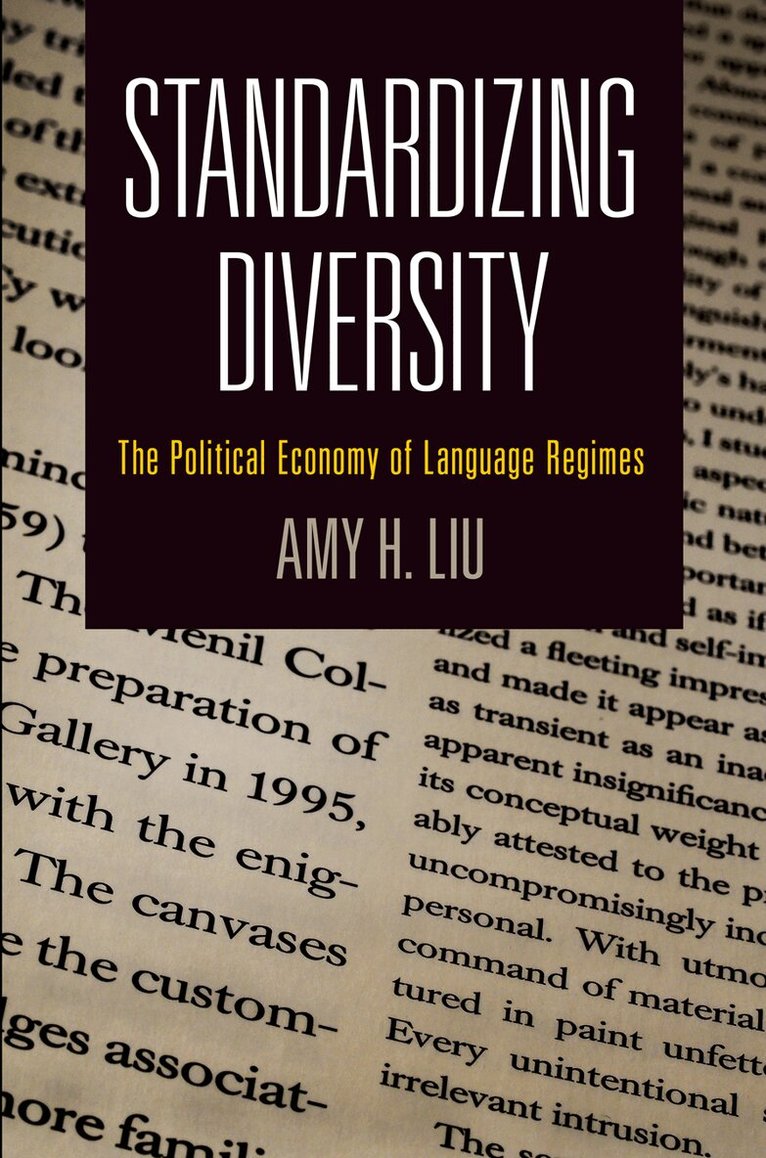
Languages have deep political significance beyond communication: a common language can strengthen cultural bonds and social trust, or it may exacerbate cultural differences and power imbalances. Language regimes that emerge from political bargains can centralize power by favoring the language of one ethnolinguistic group, share power by recognizing multiple mother tongues, or neutralize power through the use of a lingua franca. Cultural egoism, communicative efficiency, or collective equality determines the choice. As Amy H. Liu demonstrates, the conditions surrounding the choice of a language regime also have a number of implications for a nation's economy.Standardizing Diversity examines the relationship between the distribution of linguistic power and economic growth. Using a newly assembled dataset of all language-in-education policies in Asia from 1945 to 2005 and drawing on fieldwork data from Malaysia and Singapore, Liu shows language regimes that recognize a lingua franca exclusively-or at least above all others-tend to develop social trust, attract foreign investment, and stimulate economic growth. Particularly at high levels of heterogeneity, the recognition of a lingua franca fosters equality and facilitates efficiency. Her findings challenge the prevailing belief that linguistic diversity inhibits economic growth, suggesting instead that governments in even the most ethnically heterogeneous countries have institutional tools to standardize their diversity and to thrive economically.
Gender, Ethnicity, and Intersectionality in Cabinets
Asia and Europe in Comparative Perspective
Häftad, Engelska, 2025
234 kr
Skickas inom 7-10 vardagar
What explains patterns of representation – of women and ethnic minorities – in government cabinets? The authors argue governments diversify their cabinets when (1) a minority group – and it need not be ethnic – is sizable and can mobilize (political competition); and/or (2) the general population believes in and expects the inclusion of minorities (popular norms). The authors test their argument using original cabinet data from Asia and Europe (N=93) 1960-2015 and a most-similar design of four case studies. They identify the gender and ethnicity of 91,000 country-year-minister observations – with consideration of the rank of their ministerial portfolio. They find evidence that in countries where there is political competition and/or popular norms, cabinets have fewer double-hegemons. However, this does not necessarily suggest minorities are holding portfolios of substantive prestige. This project offers a way to study intersectionality in democratic representation and political institutions.
Gender, Ethnicity, and Intersectionality in Cabinets
Asia and Europe in Comparative Perspective
Inbunden, Engelska, 2025
753 kr
Skickas inom 7-10 vardagar
What explains patterns of representation – of women and ethnic minorities – in government cabinets? The authors argue governments diversify their cabinets when (1) a minority group – and it need not be ethnic – is sizable and can mobilize (political competition); and/or (2) the general population believes in and expects the inclusion of minorities (popular norms). The authors test their argument using original cabinet data from Asia and Europe (N=93) 1960-2015 and a most-similar design of four case studies. They identify the gender and ethnicity of 91,000 country-year-minister observations – with consideration of the rank of their ministerial portfolio. They find evidence that in countries where there is political competition and/or popular norms, cabinets have fewer double-hegemons. However, this does not necessarily suggest minorities are holding portfolios of substantive prestige. This project offers a way to study intersectionality in democratic representation and political institutions.
234 kr
Skickas inom 7-10 vardagar
What explains the treatment of ethnic minorities in Southeast Asia? This Element conceptually disaggregates ethnicity into multiple constituent markers - specifically language, religion, and phenotype. By focusing on the interaction between these three ethnic markers, Liu and Ricks explore how overlap between these markers can affect whether a minority integrates within a broader ethnic identity; successfully extracts accommodation as unique group; or engages in a contentious and potentially violent relationship with the hegemon. The argument is tested through six case studies: (1) ethnic Lao in Thailand: integration; (2) ethnic Chinese in Thailand: integration; (3) ethnic Chinese in Malaysia: accommodation; (4) ethnic Malays in Singapore: accommodation; (5) ethnic Malays in Thailand: contention; and (6) ethnic Chinese in Indonesia: contention.