Roman Hlatky – författare
Visar alla böcker från författaren Roman Hlatky. Handla med fri frakt och snabb leverans.
4 produkter
4 produkter
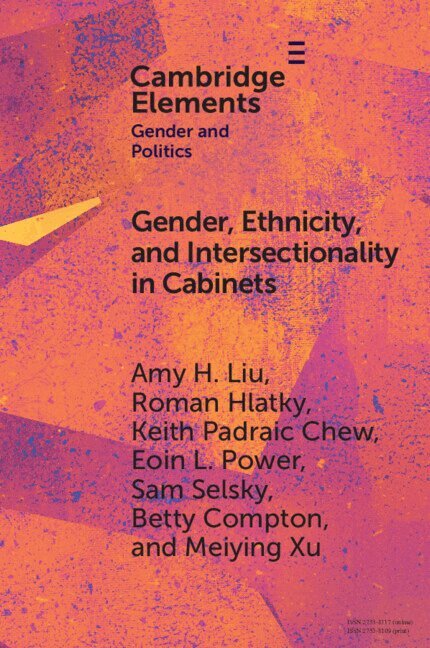
Gender, Ethnicity, and Intersectionality in Cabinets
Asia and Europe in Comparative Perspective
Häftad, Engelska, 2025
232 kr
Skickas inom 7-10 vardagar
What explains patterns of representation - of women and ethnic minorities - in government cabinets? The authors argue governments diversify their cabinets when (1) a minority group - and it need not be ethnic - is sizable and can mobilize (political competition); and/or (2) the general population believes in and expects the inclusion of minorities (popular norms). The authors test their argument using original cabinet data from Asia and Europe (N=93) 1960-2015 and a most-similar design of four case studies. They identify the gender and ethnicity of 91,000 country-year-minister observations - with consideration of the rank of their ministerial portfolio. They find evidence that in countries where there is political competition and/or popular norms, cabinets have fewer double-hegemons. However, this does not necessarily suggest minorities are holding portfolios of substantive prestige. This project offers a way to study intersectionality in democratic representation and political institutions.
Gender, Ethnicity, and Intersectionality in Cabinets
Asia and Europe in Comparative Perspective
Inbunden, Engelska, 2025
748 kr
Skickas inom 7-10 vardagar
What explains patterns of representation - of women and ethnic minorities - in government cabinets? The authors argue governments diversify their cabinets when (1) a minority group - and it need not be ethnic - is sizable and can mobilize (political competition); and/or (2) the general population believes in and expects the inclusion of minorities (popular norms). The authors test their argument using original cabinet data from Asia and Europe (N=93) 1960-2015 and a most-similar design of four case studies. They identify the gender and ethnicity of 91,000 country-year-minister observations - with consideration of the rank of their ministerial portfolio. They find evidence that in countries where there is political competition and/or popular norms, cabinets have fewer double-hegemons. However, this does not necessarily suggest minorities are holding portfolios of substantive prestige. This project offers a way to study intersectionality in democratic representation and political institutions.
748 kr
Kommande
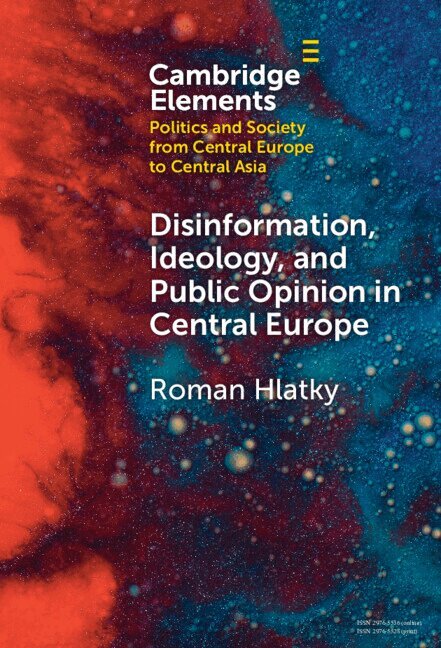
In Central and Eastern Europe, disinformation threatens democratic stability, inflames ideological divides, and weakens Western geopolitical commitments. Drawing on cross-national analyses, as well as in-depth studies of the Czech Republic and Slovakia, this Element analyzes: the relationship between ideological polarization and disinformation supply; the challenges of building anti-disinformation efforts; individual-level demand for disinformation; and the effects of disinformation on public opinion. Ideological polarization over sociocultural issues predicts disinformation supply, and sociocultural conservatives with anti-Western views constitute a disinformation-susceptible audience that struggles to distinguish between false and true narratives. Elite-level divisions over the threat posed by disinformation exacerbate these dynamics, hampering efforts to build disinformation resilience. However, disinformation largely fails to persuade. Amongst most individuals, attitudinal backlash is more common. Disinformation does not win over hearts and minds; rather, its appeal reflects the salience of contentious issues that have emerged as a result of wider political realignments.
232 kr
Kommande
In Central and Eastern Europe, disinformation threatens democratic stability, inflames ideological divides, and weakens Western geopolitical commitments. Drawing on cross-national analyses, as well as in-depth studies of the Czech Republic and Slovakia, this Element analyzes: the relationship between ideological polarization and disinformation supply; the challenges of building anti-disinformation efforts; individual-level demand for disinformation; and the effects of disinformation on public opinion. Ideological polarization over sociocultural issues predicts disinformation supply, and sociocultural conservatives with anti-Western views constitute a disinformation-susceptible audience that struggles to distinguish between false and true narratives. Elite-level divisions over the threat posed by disinformation exacerbate these dynamics, hampering efforts to build disinformation resilience. However, disinformation largely fails to persuade. Amongst most individuals, attitudinal backlash is more common. Disinformation does not win over hearts and minds; rather, its appeal reflects the salience of contentious issues that have emerged as a result of wider political realignments.