Amy J. Rutenberg - Böcker
Visar alla böcker från författaren Amy J. Rutenberg. Handla med fri frakt och snabb leverans.
4 produkter
4 produkter
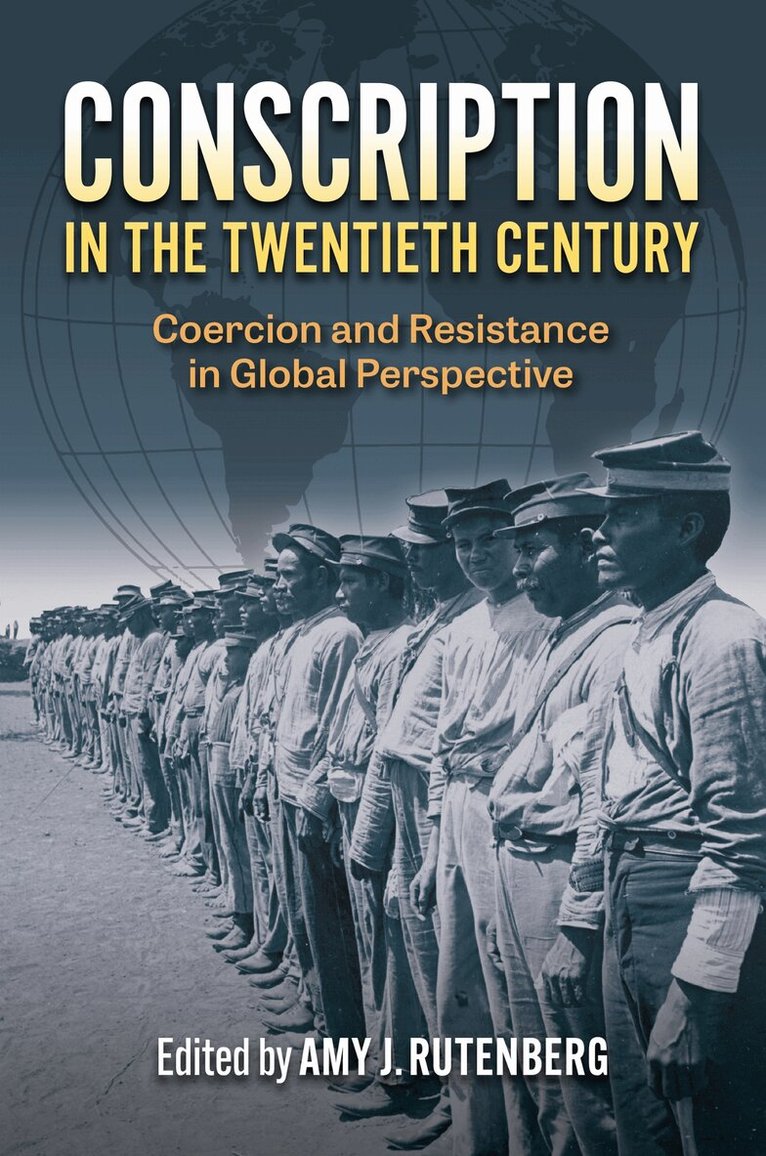
Conscription in the Twentieth Century
Coercion and Resistance in Global Perspective
Inbunden, Engelska, 2026
677 kr
Kommande
This collection reveals conscription as one of the most powerful—and coercive—tools of the modern state, a litmus test for the relationship between governments, militaries, and the people they claim to defend.Americans often view their military through the lens of confident exceptionalism—a belief that the challenges faced by other nations could never take root in the United States. Our history, we tell ourselves, proves it. Yet a closer look at how Americans have responded to military service reveals a far more complicated story: moments of internal rebellion, mass resistance to conscription, ethically fraught wars, and recurring gaps between the military and the society it serves. These realities call not for complacency, but for humility—and for serious engagement with the experiences of others.Conscription in the Twentieth Century confronts one of the most fundamental questions in civil-military relations: who serves. While often framed as a uniquely American debate, this question has shaped national identity, citizenship, social cohesion, and political legitimacy across the world and in different types of government. Drawing on a remarkable range of international case studies, this volume shows how conscription has unified societies and fractured them, strengthened democratic legitimacy and exposed its absence.At a moment when democracies confront politicized militaries, recruiting crises, declining public trust, and widening civil-military divides, the lessons of this book are both timely and urgent. Essential reading for students of military history and civil-military relations, Conscription in the Twentieth Century will also speak directly to policymakers, military professionals, and anyone grappling with the future of democratic defense.
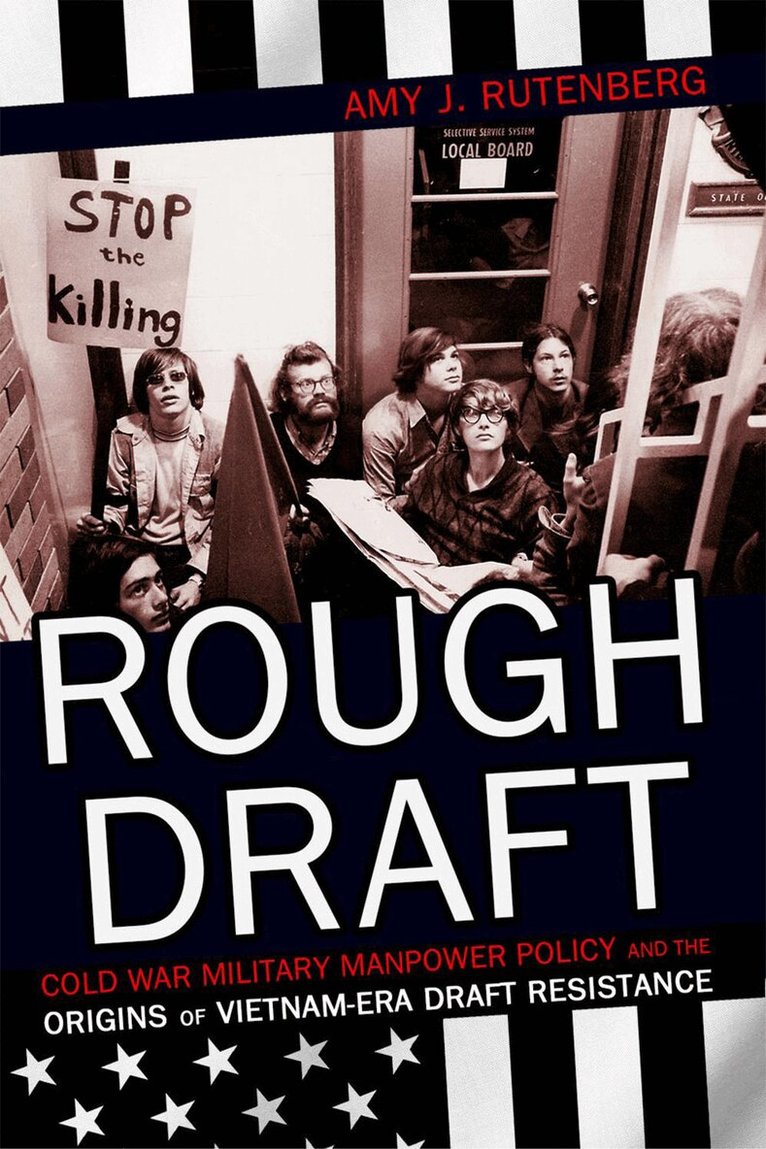
Rough Draft
Cold War Military Manpower Policy and the Origins of Vietnam-Era Draft Resistance
Inbunden, Engelska, 2019
1 604 kr
Skickas inom 10-15 vardagar
Rough Draft draws the curtain on the race and class inequities of the Selective Service during the Vietnam War. Amy J. Rutenberg argues that policy makers' idealized conceptions of Cold War middle-class masculinity directly affected whom they targeted for conscription and also for deferment. Federal officials believed that college educated men could protect the nation from the threat of communism more effectively as civilians than as soldiers. The availability of deferments for this group mushroomed between 1945 and 1965, making it less and less likely that middle-class white men would serve in the Cold War army. Meanwhile, officials used the War on Poverty to target poorer and racialized men for conscription in the hopes that military service would offer them skills they could use in civilian life.As Rutenberg shows, manpower policies between World War II and the Vietnam War had unintended consequences. While some men resisted military service in Vietnam for reasons of political conscience, most did so because manpower polices made it possible. By shielding middle-class breadwinners in the name of national security, policymakers militarized certain civilian roles—a move that, ironically, separated military service from the obligations of masculine citizenship and, ultimately, helped kill the draft in the United States.
Rough Draft
Cold War Military Manpower Policy and the Origins of Vietnam-Era Draft Resistance
Häftad, Engelska, 2019
296 kr
Skickas inom 10-15 vardagar
Rough Draft draws the curtain on the race and class inequities of the Selective Service during the Vietnam War. Amy J. Rutenberg argues that policy makers' idealized conceptions of Cold War middle-class masculinity directly affected whom they targeted for conscription and also for deferment. Federal officials believed that college educated men could protect the nation from the threat of communism more effectively as civilians than as soldiers. The availability of deferments for this group mushroomed between 1945 and 1965, making it less and less likely that middle-class white men would serve in the Cold War army. Meanwhile, officials used the War on Poverty to target poorer and racialized men for conscription in the hopes that military service would offer them skills they could use in civilian life.As Rutenberg shows, manpower policies between World War II and the Vietnam War had unintended consequences. While some men resisted military service in Vietnam for reasons of political conscience, most did so because manpower polices made it possible. By shielding middle-class breadwinners in the name of national security, policymakers militarized certain civilian roles—a move that, ironically, separated military service from the obligations of masculine citizenship and, ultimately, helped kill the draft in the United States.
2 386 kr
Kommande
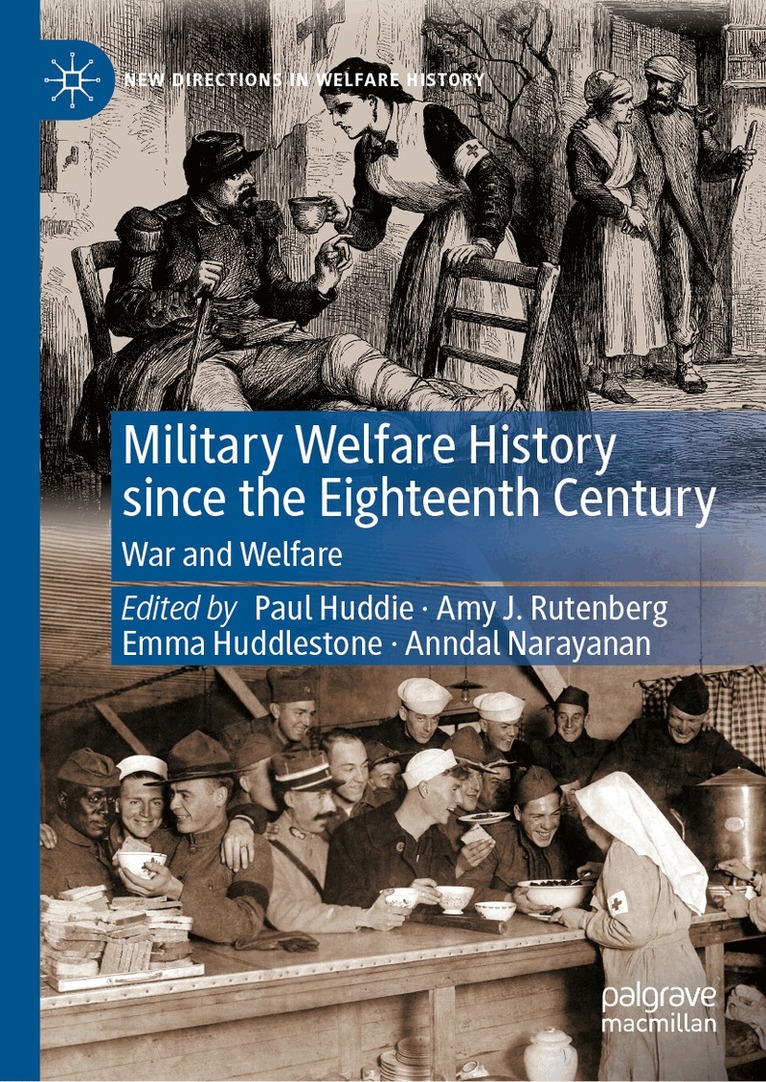
This book offers a groundbreaking exploration of the military welfare history ‘perspective,’ a vital yet often overlooked aspect of welfare studies. It centres and defines military welfare history as an important sub-discipline, and in doing so, makes a significant contribution to scholarly debates, publications and teaching. It also delves into the intricate web of welfare, care, and medical provisions designed exclusively for armed forces personnel and their families, across different eras and regions. Comprising fifteen unique essays, this volume illuminates the diverse and evolving landscape of military welfare from the mid-eighteenth to late-twentieth centuries, spanning geographical contexts from Britain and the USA, to Zimbabwe and Russia.Key concepts such as social justice, citizenship, and the intersection of military and civilian welfare are critically examined. The chapters explore how military welfare was connected to broader societal themes like disability, gender, and state policy, offering fresh insights into the historical and contemporary dynamics of welfare provision. This book is a must-read for scholars and practitioners alike, providing a comprehensive understanding of the military's unique welfare needs and contributions to social policy. Ideal for historians, social scientists, and policy-makers, this volume serves as an essential resource for anyone interested in the complex interplay between military service and welfare systems.