Amy Richlin - Böcker
Visar alla böcker från författaren Amy Richlin. Handla med fri frakt och snabb leverans.
7 produkter
7 produkter
596 kr
Skickas inom 5-8 vardagar
Statues of the god Priapus stood in Roman gardens to warn potential thieves that the god would rape them if they attempted to steal from him. Amy Richlin argues that the attitude of sexual aggressiveness in defence of a bounded area serves as a model for Roman satire from Lucilius to Juvenal. Using literary, anthropological, psychological, and feminist methodologies, she suggests that aggressive sexual humour reinforces aggressive behaviour on both the individual and societal level, and that Roman satire provides an insight into Roman culture.
887 kr
Skickas inom 10-15 vardagar
Provides the first broad introduction to feminist work in classical studies. Including lesbian theory, black feminist theory, American and French feminist theory, classics will never be the same again.
491 kr
Skickas inom 7-10 vardagar
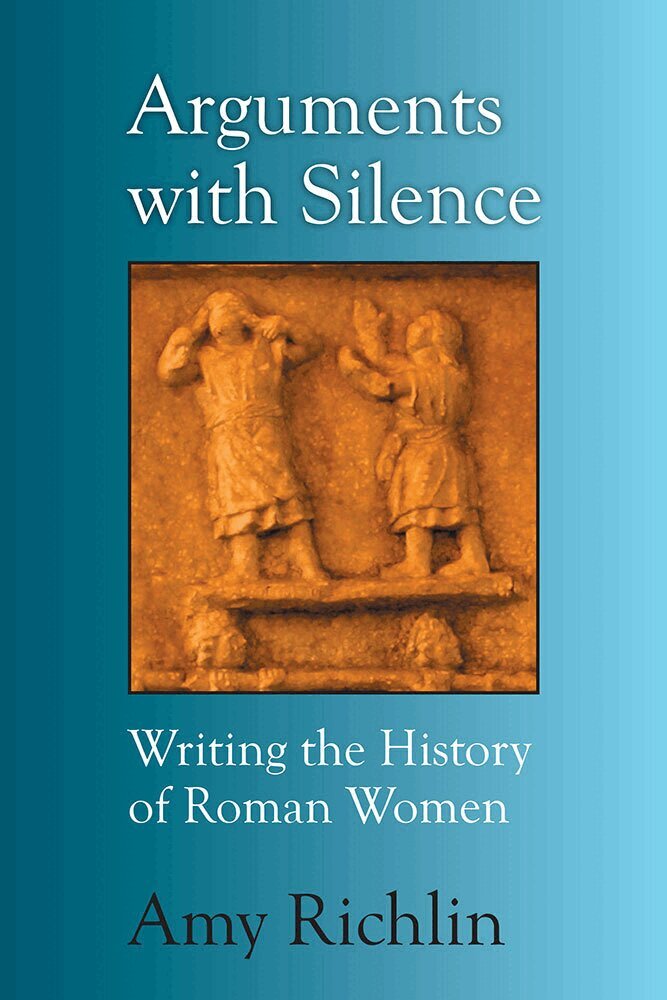
Women in ancient Rome challenge the historian. Widely represented in literature and art, they rarely speak for themselves. Amy Richlin, among the foremost pioneers in ancient studies, gives voice to these women through scholarship that scours sources from high art to gutter invective.In Arguments with Silence, Richlin presents a linked selection of her essays on Roman women’s history, originally published between 1981 and 2001 as the field of “women in antiquity” took shape, and here substantially rewritten and updated. The new introduction to the volume lays out the historical methodologies these essays developed, places this process in its own historical setting, and reviews work on Roman women since 2001, along with persistent silences. Individual chapter introductions locate each piece in the social context of Second Wave feminism in Classics and the academy, explaining why each mattered as an intervention then and still does now.Inhabiting these pages are the women whose lives were shaped by great art, dirty jokes, slavery, and the definition of adultery as a wife’s crime; Julia, Augustus’ daughter, who died, as her daughter would, exiled to a desert island; women wearing makeup, safeguarding babies with amulets, practicing their religion at home and in public ceremonies; the satirist Sulpicia, flaunting her sexuality; and the praefica, leading the lament for the dead.Amy Richlin is one of a small handful of modern thinkers in a position to consider these questions, and this guided journey with her brings surprise, delight, and entertainment, as well as a fresh look at important questions.
189 kr
Skickas inom 11-20 vardagar
2 158 kr
Skickas inom 7-10 vardagar
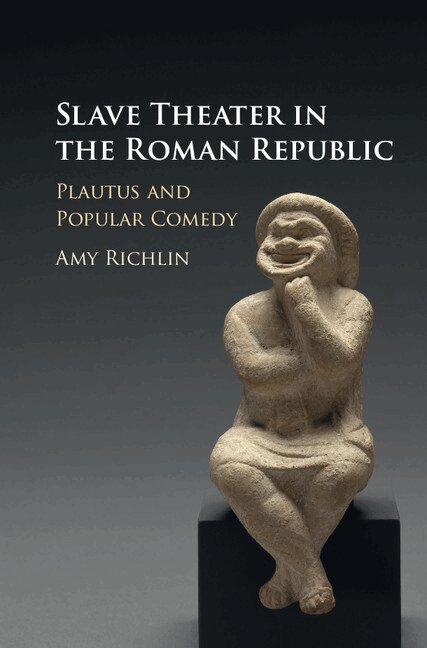
Roman comedy evolved early in the war-torn 200s BCE. Troupes of lower-class and slave actors traveled through a militarized landscape full of displaced persons and the newly enslaved; together, the actors made comedy to address mixed-class, hybrid, multilingual audiences. Surveying the whole of the Plautine corpus, where slaves are central figures, and the extant fragments of early comedy, this book is grounded in the history of slavery and integrates theories of resistant speech, humor, and performance. Part I shows how actors joked about what people feared - natal alienation, beatings, sexual abuse, hard labor, hunger, poverty - and how street-theater forms confronted debt, violence, and war loss. Part II catalogues the onstage expression of what people desired: revenge, honor, free will, legal personhood, family, marriage, sex, food, free speech; a way home, through memory; and manumission, or escape - all complicated by the actors' maleness. Comedy starts with anger.
2 418 kr
Skickas inom 10-15 vardagar
Provides the first broad introduction to feminist work in classical studies. Including lesbian theory, black feminist theory, American and French feminist theory, classics will never be the same again.
553 kr
Skickas inom 7-10 vardagar
Roman comedy evolved early in the war-torn 200s BCE. Troupes of lower-class and slave actors traveled through a militarized landscape full of displaced persons and the newly enslaved; together, the actors made comedy to address mixed-class, hybrid, multilingual audiences. Surveying the whole of the Plautine corpus, where slaves are central figures, and the extant fragments of early comedy, this book is grounded in the history of slavery and integrates theories of resistant speech, humor, and performance. Part I shows how actors joked about what people feared - natal alienation, beatings, sexual abuse, hard labor, hunger, poverty - and how street-theater forms confronted debt, violence, and war loss. Part II catalogues the onstage expression of what people desired: revenge, honor, free will, legal personhood, family, marriage, sex, food, free speech; a way home, through memory; and manumission, or escape - all complicated by the actors' maleness. Comedy starts with anger.