Anders Henriksen - Böcker
Visar alla böcker från författaren Anders Henriksen. Handla med fri frakt och snabb leverans.
3 produkter
3 produkter
596 kr
Skickas inom 5-8 vardagar
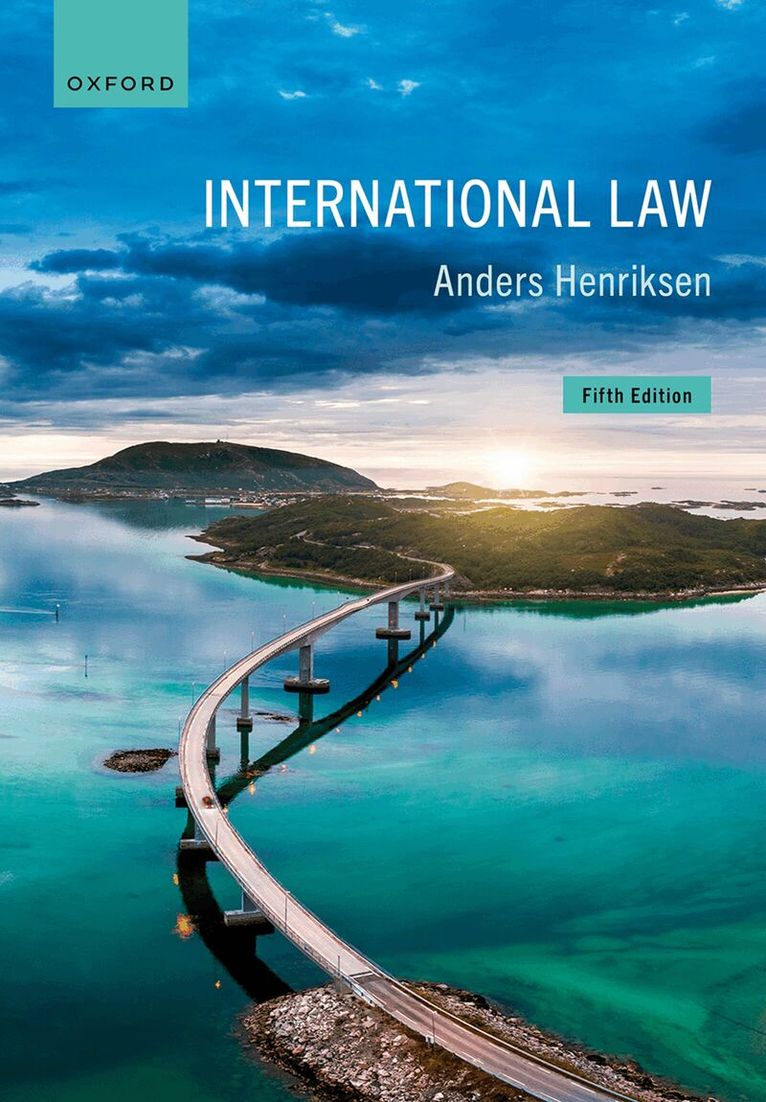
The most student-focused approach, providing ideal coverage for short, foundational courses at European law schools.International Law presents a student-focused approach to the subject; clearly written with non-native English-speaking students in mind, a range of learning features highlight the areas of debate and encourage students to engage critically with key disputes. US BLProvides comprehensive and concise coverage of the central issues in public international law, making this an ideal textbook for students taking short, introductory courses at European law schoolsBEUE US BLTakes a critical perspective on various aspects of international law, introducing the controversies and areas of debate without assuming students' prior knowledge of the topics discussedBEUE US BLSupportive learning features, including central issues boxes, chapter summaries, recommended reading, and discussion questions highlight the essential points and encourage students to engage critically with the legal disputesBEUE New to this edition:US BLDiscussion of current events related to international law, such as Russia's invasion of Ukraine and the on-going armed conflict in Ukraine, as well as issues related to the increased tensions surrounding Taiwan, the economic fall-out in Sri Lanka and the IAEA's assistance mission to the Zaporizhzhya nuclear power plant in UkraineBEUE US BLNew case law from the International Court of Justice, including the Courts' judgment on reparations in the Armed Activities case and its initial proceedings in Ukraine's case against Russia, as well as new cases from the European Court of Human Rights and the International Criminal CourtBEUE US BLCoverage relating to the recent developments in international climate law, including the efforts of small island states in this area and the application of human rights law to climate change litigationBEUE US BLIncludes new introduction to feminist and Third World Approaches to International Law (TWAIL) criticisms of the current legal systemBEUE Digital formats and resourcesThe fourth edition is available for students and institutions to purchase in a variety of formats, and is supported by online resources.US BLThe e-book offers a mobile experience and convenient access along with functionality tools, navigation features and links that offer extra learning support: www.oxfordtextbooks.co.uk/ebooksBEUE Includes online resources including:US BLShort author podcasts introducing the core topicsBEUE US BLAdvice on answering the Questions for Discussion at the end of each chapterBEUE US BLLinks to other international law resourcesBEUE
524 kr
Kommande
The most student-focused approach, providing ideal coverage for short, foundational courses at European law schools.International Law presents a student-focused approach to the subject; clearly written with non-native English-speaking students in mind, a range of learning features highlight the areas of debate and encourage students to engage critically with key disputes.Key features:- Provides comprehensive and concise coverage of the central issues in public international law, making this an ideal textbook for students taking short, introductory courses at European law schools.- Clearly explained and written with non-native English-speaking students in mind, the core concepts are presented in an accessible and easy-to-follow style.- Takes a critical perspective on various aspects of international law, introducing the controversies and areas of debate without assuming students' prior knowledge of the topics discussed.- Supportive learning features, including central issues boxes, chapter summaries, recommended reading, and discussion questions highlight the essential points and encourage students to engage critically with the legal disputes.New to this edition:- Discussion of current events related to international law, such as Trump's return to power and the current crisis in the WTO due to Trump's tariffs, Israel's war in Gaza, North Korea's status as a party to the war in Ukraine, and the International Criminal Court's indictment of Putin.- New case law from the International Court of Justice, including the Court's 2025 advisory opinion on Climate Change and its advisory opinion on Israel's activities in the Occupied Palestinian Territories.- New cases from the European Court of Human Rights, such as Russia's violations of human rights in Ukraine, including the recent judgments in Ukraine and the Netherlands v. Russia.- Expanded coverage of AI, specifically related to international human rights law and the laws of war, and the Council of Europe's new framework convention on AI.Digital formats and resources The fifth edition is available for students and institutions to purchase in a variety of formats: the e-book and Law Trove offer a mobile experience and convenient access along with short author podcasts introducing core topics, advice on answering end-of-chapter discussion questions, links to international law resources, functionality tools, navigation features, and links that offer extra learning support.For more information about e-books, please visit www.oxfordtextbooks.co.uk/ebooks.
1 857 kr
Skickas inom 5-8 vardagar
The terrorist attacks of 9/11 precipitated significant legal changes over the ensuing ten years, a "long decade" that saw both domestic and international legal systems evolve in reaction to the seemingly permanent threat of international terrorism. At the same time, globalization produced worldwide insecurity that weakened the nation-state's ability to monopolize violence and assure safety for its people. The Long Decade: How 9/11 Changed the Law contains contributions by international legal scholars who critically reflect on how the terrorist attacks of 9/11 precipitated these legal changes. This book examines how the uncertainties of the "long decade" made fear a political and legal force, challenged national constitutional orders, altered fundamental assumptions about the rule of law, and ultimately raised questions about how democracy and human rights can cope with competing security pressures, while considering the complex process of crafting anti-terrorism measures.