Andrae M. Marak - Böcker
Visar alla böcker från författaren Andrae M. Marak. Handla med fri frakt och snabb leverans.
2 produkter
2 produkter
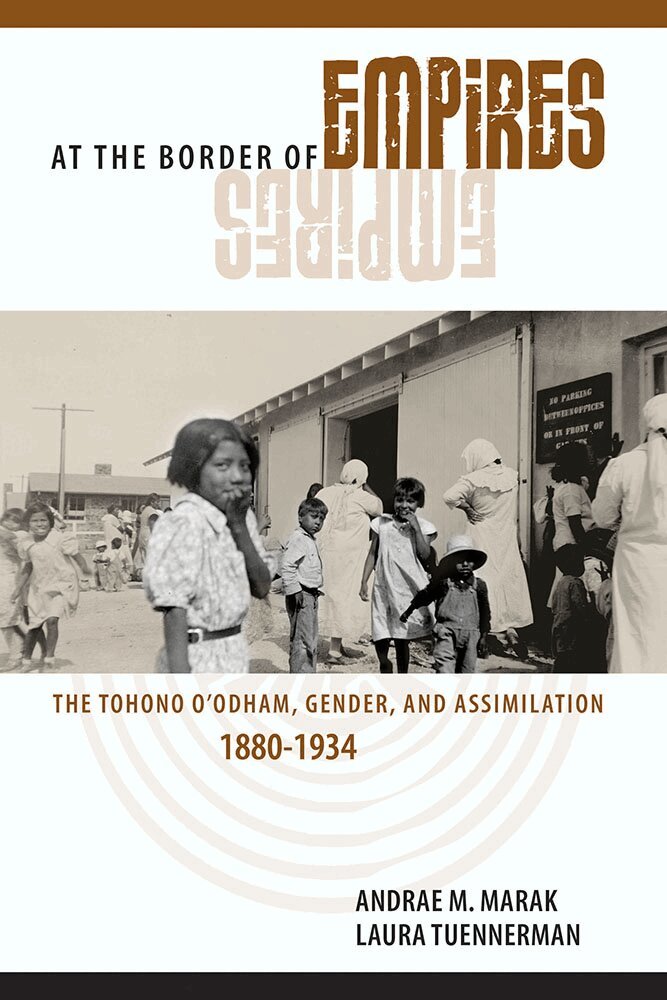
At the Border of Empires
The Tohono O'odham, Gender, and Assimilation, 1880-1934
Häftad, Engelska, 2017
333 kr
Skickas inom 7-10 vardagar
The story of the Tohono O’odham peoples offers an important account of assimilation. Bifurcated by a border demarcating Mexico and the United States that was imposed on them after the Gadsden Purchase in 1853, the Tohono O’odham lived at the edge of two empires. Although they were often invisible to the majority cultures of the region, they attracted the attention of reformers and government officials in the United States, who were determined to “assimilate” native peoples into “American society.” By focusing on gender norms and ideals in the assimilation of the Tohono O’odham, At the Border of Empires provides a lens for looking at both Native American history and broader societal ideas about femininity, masculinity, and empire around the turn of the twentieth century. Beginning in the 1880s, the US government implemented programs to eliminate “vice” among the Tohono O’odham and to encourage the morals of the majority culture as the basis of a process of “Americanization.” During the next fifty years, tribal norms interacted with—sometimes conflicting with and sometimes reinforcing—those of the larger society in ways that significantly shaped both government policy and tribal experience. This book examines the mediation between cultures, the officials who sometimes developed policies based on personal beliefs and gender biases, and the native people whose lives were impacted as a result. These issues are brought into useful relief by comparing the experiences of the Tohono O’odham on two sides of a border that was, from a native perspective, totally arbitrary.
410 kr
Skickas inom 10-15 vardagar
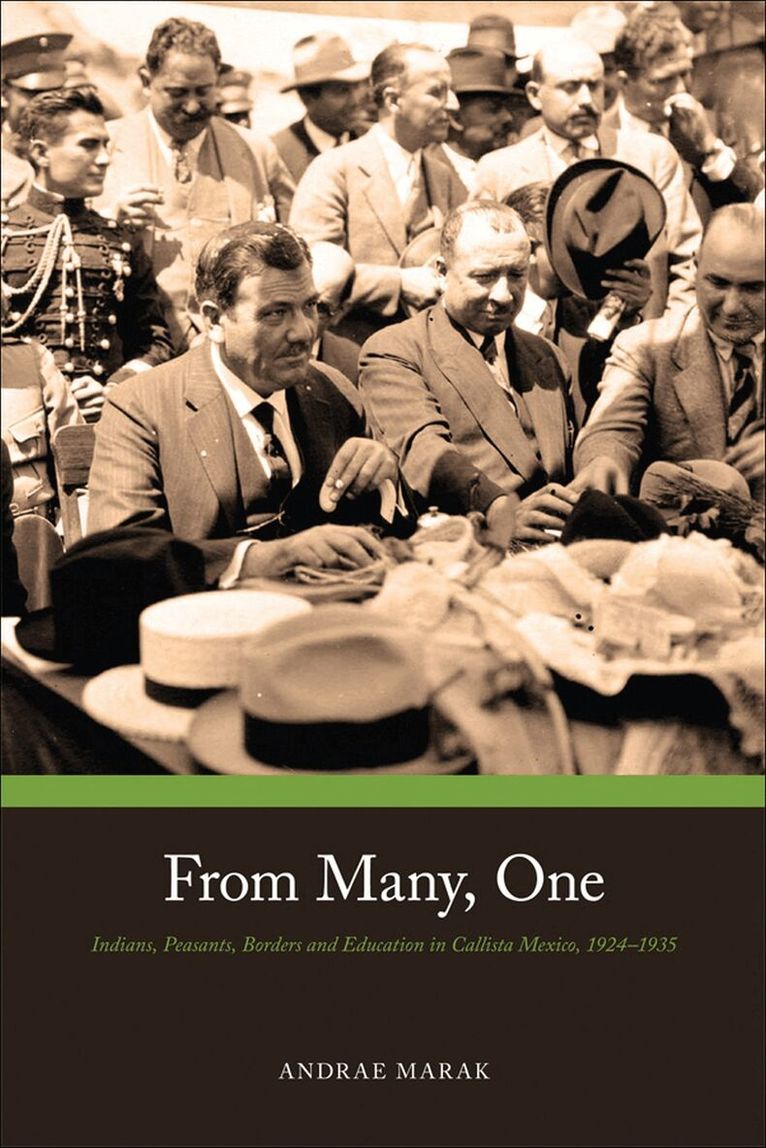
From Many, One looks at the educational policies and practices of the presidency of Plutarco Elías Calles in post-evolutionary Mexico. Andrae Marak examines attempts of the Calles government to centralize control over education in the U.S.-Mexican borderlands region and to transform its rural and indigenous inhabitants into more ""mainstream"" Mexicans. During his presidency and the period known as the Maximato, Plutarco Elias Calles put in place a series of national educational policies with the goal of constructing an economically prosperous and culturally unified Mexico. Marak's analysis of the federal government's attempt to promote nationalism highlights the ways in which the federal government sought to incorporate and unify Mexico through centralization and assimilation as well as the ways in which it tried to define itself in relation to what was not Mexican, an especially prominent issue along the U.S.-Mexican border. Calles' new educational policies sparked a good deal of backlash among those affected. Marak's study focuses on three main incidents which caused the most contention: the establishment of frontier schools along the border in order to promote nationalism and protect against the onslaught of U.S. cultural and economic imperialism; the takeover of state primary schools by government inspectors in Chihuahua; and the government's indigenous assimilation program, which aimed to integrate numerous culturally distinct groups into a monocultural Mexican nation.