András L. Pap – författare
Visar alla böcker från författaren András L. Pap. Handla med fri frakt och snabb leverans.
8 produkter
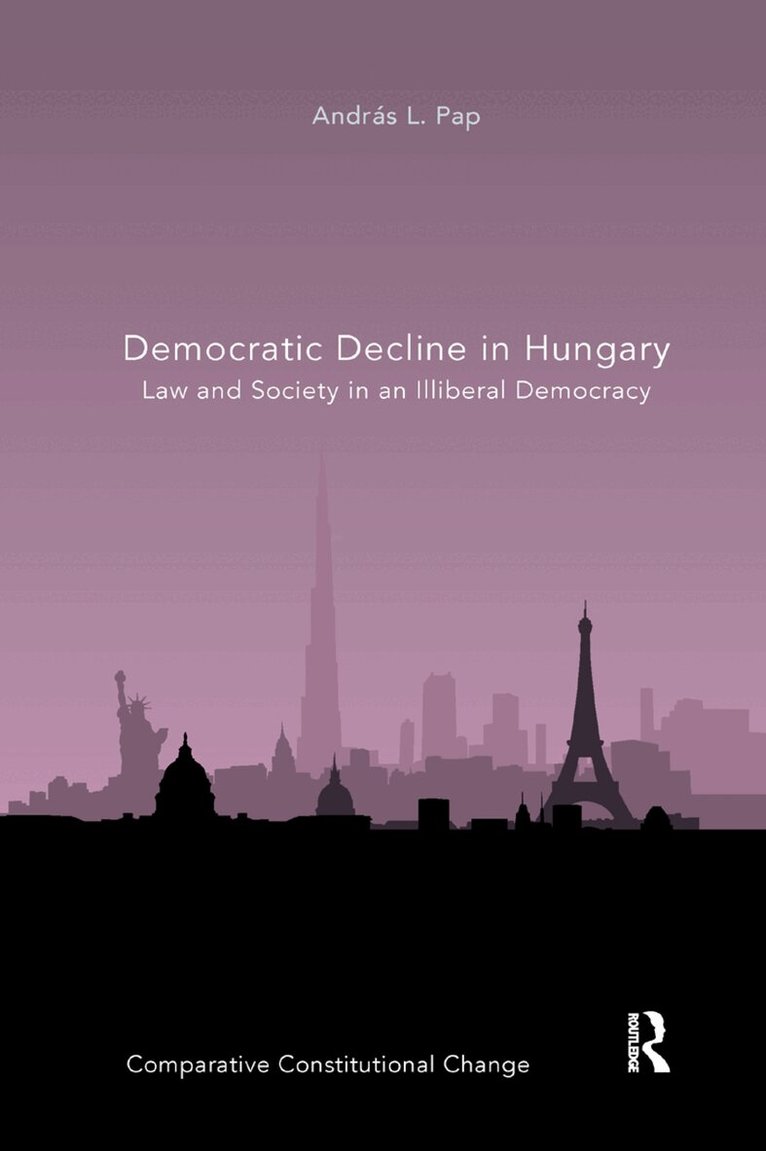
Democratic Decline in Hungary
Law and Society in an Illiberal Democracy
Häftad, 2019
662 kr
Lägg i varukorg
This book shows the rise and morphology of a self-identified `illiberal democracy’, the first 21st century illiberal political regime arising in the European Union. Since 2010, Viktor Orbán’s governments in Hungary have convincingly offered an anti-modernist and anti-cosmopolitan/anti-European …
Race, Ethnicity, Nationality and the Law
Legal Paradoxes in Conceptualization and Operationalization
Inbunden, 2025
2309 kr
Lägg i varukorg
This book provides a complex insight into how law, as a distinct tool and technology, conceptualizes and operationalizes race, ethnicity and nationality. The focus of the comparative project, by bringing examples from five continents and scores of jurisdictions, as well as showcases for hybrid, …
Race, Ethnicity, Nationality and the Law
Legal Paradoxes in Conceptualization and Operationalization
E-bok, 2025
765 kr
Lägg i varukorg
This book provides a complex insight into how law, as a distinct tool and technology, conceptualizes and operationalizes race, ethnicity and nationality. The focus of the comparative project, by bringing examples from five continents and scores of jurisdictions, as well as showcases for hybrid, …
Race, Ethnicity, Nationality and the Law
Legal Paradoxes in Conceptualization and Operationalization
E-bok, 2025
765 kr
Lägg i varukorg
This book provides a complex insight into how law, as a distinct tool and technology, conceptualizes and operationalizes race, ethnicity and nationality. The focus of the comparative project, by bringing examples from five continents and scores of jurisdictions, as well as showcases for hybrid, …
Democratic Decline in Hungary
Law and Society in an Illiberal Democracy
Inbunden, 2017
2309 kr
Lägg i varukorg
This book shows the rise and morphology of a self-identified `illiberal democracy’, the first 21st century illiberal political regime arising in the European Union. Since 2010, Viktor Orbán’s governments in Hungary have convincingly offered an anti-modernist and anti-cosmopolitan/anti-European …
Democratic Decline in Hungary
Law and Society in an Illiberal Democracy
E-bok, 2017
781 kr
Lägg i varukorg
This book shows the rise and morphology of a self-identified `illiberal democracy’, the first 21st century illiberal political regime arising in the European Union. Since 2010, Viktor Orbán’s governments in Hungary have convincingly offered an anti-modernist and anti-cosmopolitan/anti-European …
Democratic Decline in Hungary
Law and Society in an Illiberal Democracy
E-bok, 2017
781 kr
Lägg i varukorg
This book shows the rise and morphology of a self-identified `illiberal democracy’, the first 21st century illiberal political regime arising in the European Union. Since 2010, Viktor Orbán’s governments in Hungary have convincingly offered an anti-modernist and anti-cosmopolitan/anti-European …
Academic Freedom and Authoritarianism
Global Lessons from Hungary
Av Nóra Chronowski, Konrad Lachmayer m. fl.
Inbunden, 2027
1229 kr
Kommande
This book explores the challenges to academic freedom posed by authoritarianism, populism and illiberalism.Privatisation, funding cuts and the establishment of sham institutions are just some of the tools used by authoritarian governments to exert pressure on scholars and their institutions. It …