Andre Millard - Böcker
Visar alla böcker från författaren Andre Millard. Handla med fri frakt och snabb leverans.
7 produkter
7 produkter
496 kr
Skickas inom 7-10 vardagar
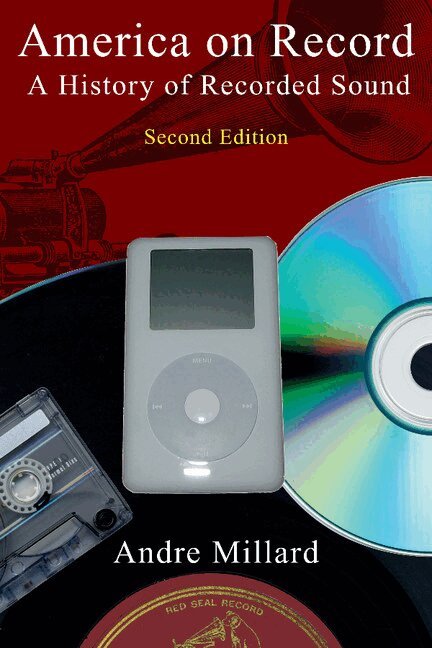
With Thomas Edison's invention of the phonograph, the beautiful music that was the preserve of the wealthy became a mass-produced consumer good, cheap enough to be available to all. In 1877 Edison dreamed that one day there would be a talking machine in every home. America on Record: A History of Recorded Sound, first published in 2006, provides a history of sound recording from the first thin sheet of tinfoil that was manipulated into retaining sound to the home recordings of rappers in the 1980s and the high-tech studios of the 1990s. This book examines the important technical developments of acoustic, electric, and digital sound reproduction while outlining the cultural impact of recorded music and movies. This second edition updates the story, describing the digital revolution of sound recording with the rise of computers, Napster, DVD, MP3, and iPod.
1 106 kr
Skickas inom 7-10 vardagar
With Thomas Edison's invention of the phonograph, the beautiful music that was the preserve of the wealthy became a mass-produced consumer good, cheap enough to be available to all. In 1877 Edison dreamed that one day there would be a talking machine in every home. America on Record: A History of Recorded Sound, first published in 2006, provides a history of sound recording from the first thin sheet of tinfoil that was manipulated into retaining sound to the home recordings of rappers in the 1980s and the high-tech studios of the 1990s. This book examines the important technical developments of acoustic, electric, and digital sound reproduction while outlining the cultural impact of recorded music and movies. This second edition updates the story, describing the digital revolution of sound recording with the rise of computers, Napster, DVD, MP3, and iPod.
Del 10 - Johns Hopkins Studies in the History of Technology
Edison and the Business of Innovation
Häftad, Engelska, 1993
534 kr
Skickas inom 5-8 vardagar
This is the story of the "other" Thomas Edison-not the heroic lone inventor, but Edison the businessman, industrialist, and successful manager of one of the world's largest industrial research laboratories. Tracing his career from his boyhood to his death in 1931, Edison and the Business of Innovation reveals Edison to be an entrepreneur of extraordinary vision. From extensive research in the Edison archives at West Orange, New Jersey, Andre Millard presents new information about Edison the businessman and provides new interpretations of old issues.
587 kr
Skickas
Since the guitar was first electrified in the 1930s, it has become an American icon and has transformed the soundtrack of our lives with its wide range of sounds-from seductive twang to howling distortion. Relatively inexpensive, easy to learn, and fun to play, the electric guitar is a truly democratic instrument. Millions have purchased Rickenbackers, Gibsons, Fenders, and other brands of guitars over the decades, fueling daydreams of fame and fortune. In The Electric Guitar: A History of an American Icon, scholars working in American studies, business history, the history of technology, and musicology come together to explore the electric guitar's importance as an invention and its peculiar place in American culture. Documenting the critical and ever-evolving relationship among inventors, craftsmen, musicians, businessmen, music writers, and fans, the contributors look at the guitar not just as an instrument, but as a mass-produced consumer good that changed the sound of popular music and the self image of musicians.Avoiding the familiar stories, The Electric Guitar covers the careers and influence of guitar heroes such as Buddy Holly and Jimi Hendrix, but it also looks at lesser known but equally influential guitarists, such as Sister Rosetta Tharpe and Ike Turner. It also explains the importance of record producers such as Lee Hazlewood, effects pioneers like Roger Mayer, and electronics engineers such as Jim Marshall-all of whom played vital parts in constructing the sounds we associate with the electric guitar. From inventor's workbench to factory floor to recording studio, Andre Millard and his colleagues trace the development of the instrument, its use across musical genres, and its profound impact on popular culture and American identity.
537 kr
Tillfälligt slut
The fame, talent, and success of the Beatles need no introduction. Nor does the world need another book exploring the band's skill and its influence on music and society in the United States, Britain, and the rest of the world. Andre Millard instead studies the Beatlemania phenomenon from an original perspective - the relationship among the music business, recording technologies, and teens and young adult culture of the era. Millard argues that, despite the Beatles' indisputable skill, they would not have attained the global recognition and been as influential without the convergence of significant developments in the way music was produced, recorded, sold, and consumed. As the Second Industrial Revolution hit full swing and baby boomers came of age, the reel-to-reel recorder and other technological advances sped the evolution of the music business. Musicians, recording studios and record labels, and music fans used and interacted with music-making and - playing technology in new ways. Higher quality machines made listening to records and the radio an experience that one could easily share with others, even if they weren't in the same physical space.At the same time, an increase in cross-Atlantic commerce - especially of entertainment products - led to a freer exchange of ideas and styles of expression, notably among the middle and lower classes in the U.S. and the UK. At that point, Millard argues, the Beatles rode their remarkable musicianship and cultural savvy to an unprecedented bond with their fans-and spawned Beatlemania. Refreshing and insightful, "Beatlemania" offers a deeper understanding the days of the Fab Four and the band's long-term effects on the business and culture of pop music.
262 kr
Tillfälligt slut
The fame, talent, and success of the Beatles need no introduction. Nor does the world need another book exploring the band's skill and its influence on music and society in the United States, Britain, and the rest of the world. Andre Millard instead studies the Beatlemania phenomenon from an original perspective - the relationship among the music business, recording technologies, and teens and young adult culture of the era. Millard argues that, despite the Beatles' indisputable skill, they would not have attained the global recognition and been as influential without the convergence of significant developments in the way music was produced, recorded, sold, and consumed. As the Second Industrial Revolution hit full swing and baby boomers came of age, the reel-to-reel recorder and other technological advances sped the evolution of the music business. Musicians, recording studios and record labels, and music fans used and interacted with music-making and -playing technology in new ways. Higher quality machines made listening to records and the radio an experience that one could easily share with others, even if they weren't in the same physical space.At the same time, an increase in cross-Atlantic commerce - especially of entertainment products - led to a freer exchange of ideas and styles of expression, notably among the middle and lower classes in the U.S. and the UK. At that point, Millard argues, the Beatles rode their remarkable musicianship and cultural savvy to an unprecedented bond with their fans-and spawned Beatlemania. Refreshing and insightful, "Beatlemania" offers a deeper understanding the days of the Fab Four and the band's long-term effects on the business and culture of pop music.
562 kr
Skickas inom 7-10 vardagar
James Bond’s amazing gadgets reveal both enthusiasm about technology and fear of its potential ramifications.The popularity of the 007 franchise depends on a seductive formula of sex, violence, and snobbery. Much of its appeal, too, lies in its gadgets: slick, somewhat improbable technological devices that give everyone’s favorite secret agent the edge over his adversaries. In Equipping James Bond, André Millard chronicles a hundred-year history of espionage technology through the lens of Ian Fleming’s infamous character and his ingenious spyware. Beginning with the creation of MI6, the British secret service, Millard traces the development of espionage technology from the advanced weaponry of the nineteenth century to the evolving threat of computer hacking and surveillance. Arguing that the gadgets in the books and films articulate the leading edge of technological awareness at the time, Millard describes how Bond goes from protecting 1950s England from criminal activity to saving a world threatened by nuclear bombs, poison gas, and attacks from space. As a modern and modernizing hero, Bond has to keep up with the times. His film franchise is committed to equipping both Bond and his adversaries with the latest technological gadgets. Simultaneously, Millard stresses, the villains and threats that Bond faces embody contemporary fears about the downside of technological change. Taking a wide-ranging look at factual (and fictional) technology, Millard views the James Bond universe as evidence for popular perceptions of technological development as both inevitably progressive and apocalyptically threatening.