Andrea E. Pia - Böcker
Visar alla böcker från författaren Andrea E. Pia. Handla med fri frakt och snabb leverans.
2 produkter
2 produkter
533 kr
Skickas inom 7-10 vardagar
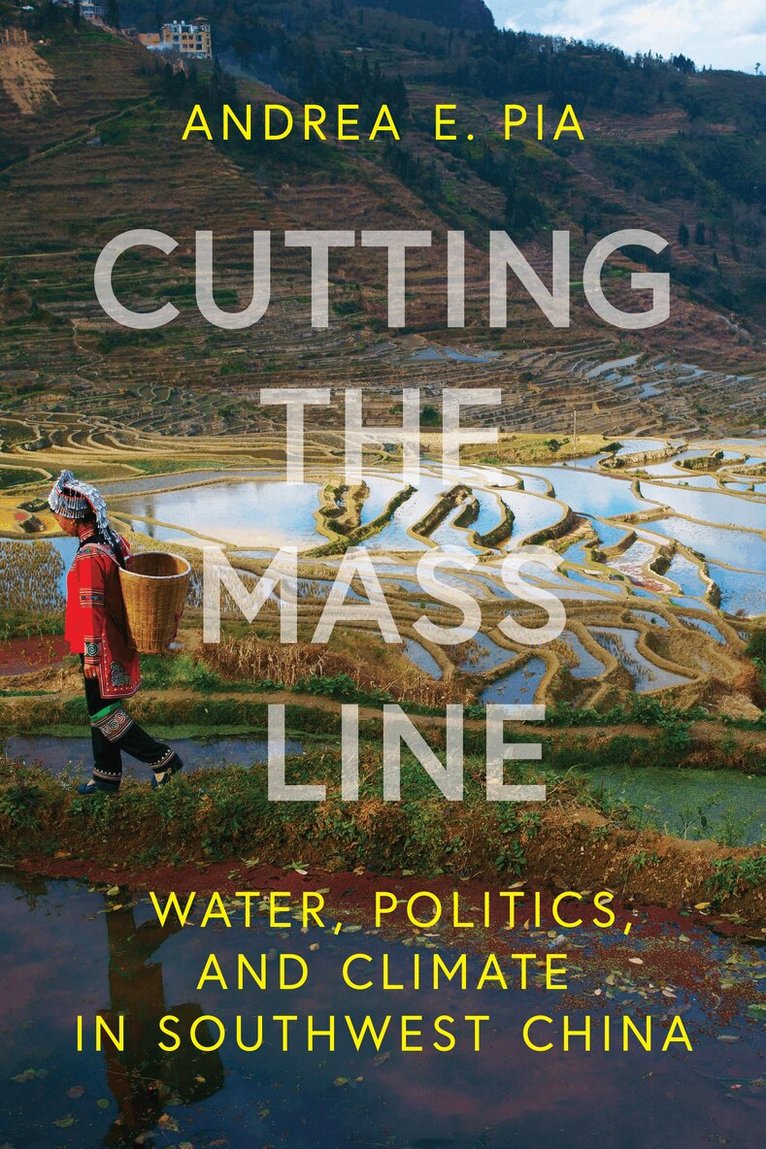
Explores the growing water supply crisis through an ethnographic study of a rural minority community in China threatened by climate change.China is experiencing climate whiplash—extreme fluctuations between drought and flooding—that threatens the health and autonomy of millions of people. Set against mounting anxiety over the future of global water supplies, Cutting the Mass Line explores the enduring political, technical, and ethical project of making water available to human communities and ecosystems in a time of drought, infrastructural disrepair, and environmental breakdown. Anthropologist Andrea E. Pia explores essential questions of how to manage water resources from the vantage point of Huize County, a water-challenged, ecologically damaged, multi-ethnic area in rural Yunnan Province. Drawing on ethnographic fieldwork, archival materials, and statistical data, Pia brings readers inside the inner workings of China's complex water supply ecosystem by exploring the intricate relationships among Chinese water services agencies; water user associations; dam construction sites; party cadres and rural entrepreneurs, mediators, and farmers; and foreign development planners. The climate crisis and the global politics of sustainability and mitigation offer unanticipated leeway for experimental grassroots intrusions in what has traditionally been the sphere of elite regulatory action: water allocation and distribution. Rural residents' efforts to keep access to local water sources and flourish in their own communities are moving the political possibilities of climate and environmental collective action in exciting and unforeseen directions. As the world grapples with challenges to water quality, supply, and control, the impacts of China's resource management strategies will be a provocative and useful study for the future.
1 235 kr
Skickas inom 5-8 vardagar
Decades-old calls to recognise China’s significance for anthropological theory and the social sciences are more urgent than ever. Yet, Chinese-grounded ideas remain marginal, with China often seen as an ‘Other’ rather than a source of widely applicable theory. Drawing on East Asian postcolonial scholarship, this volume argues that without taking China seriously as a knowledge producer and a key agent in a post-global world, social scientists risk misinterpreting the global present. As Western globalisation wanes and anthropology reassesses the relationship between ethnography and theory, we show how ‘China’ must be understood as an ordinary, integral context for research worldwide.