Andrea Goulet - Böcker
Visar alla böcker från författaren Andrea Goulet. Handla med fri frakt och snabb leverans.
3 produkter
3 produkter
276 kr
Kommande
867 kr
Skickas inom 10-15 vardagar
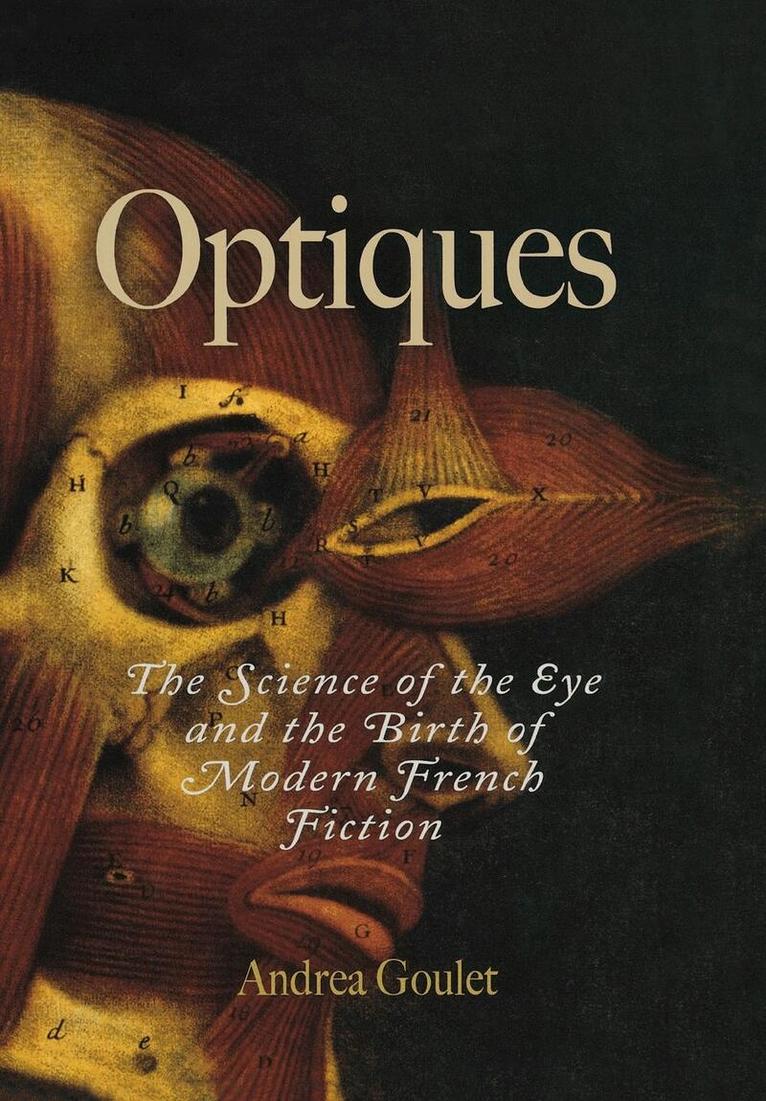
Andrea Goulet takes the study of the novel into the realm of the visual by situating it in the context of nineteenth-century scientific and philosophical discourse about the nature of sight. She argues that French realism, detective fiction, science fiction, and literature of the fantastic from 1830 to 1910 reflected competition between two modern visual modes: a not-yet-outdated idealism and an empiricism that located truth in the body. More specifically, the book argues that key narrative forms of the nineteenth century were shaped by a set of scientific debates: between idealism and materialism in HonorÉ Balzac's ComÉdie humaine, between deduction and induction in early French detective fiction, and between objective vision and subjective vision in the "optogram" fictions of Jules Verne and others.Goulet aims to revise critical views on the modern novel in a number of ways. For instance, although many literary studies focus on the impact of cinema, photography, and painting, Optiques asserts the materialist bases of realism by establishing a genealogy of popular fictional genres as fundamentally optical, that is, as articulated according to bodily notions of sight.With its chronological and interdisciplinary scope, Optiques stands to contribute an important chapter to the study of literary modernity in its scientific context.
386 kr
Skickas inom 5-8 vardagar
Orphan Black: Performance, Gender, Biopolitics is an edited collection that covers the areas in which the series has generated the most academic interest: performance and technology; gender and reproduction; biopolitics and community. Chapters explore the digital innovations and technical interactions between human and machine that allow the show to challenge conventional notions of performance and identity, while others address family themes and Orphan Black’s own textual genealogy within the contexts of (post-)evolutionary science, reproductive technology and the politics of gender. Still others extend that inquiry on family to the broader question of community in a ‘posthuman’ world of biopolitical power; here, scholars mobilize philosophy, history of science and literary theory to analyze how Orphan Black depicts resistance to the many forms of power that attempt to capture, monitor and shape life.