Andrea Grosso Ciponte - Böcker
Visar alla böcker från författaren Andrea Grosso Ciponte. Handla med fri frakt och snabb leverans.
3 produkter
3 produkter
226 kr
Skickas inom 5-8 vardagar
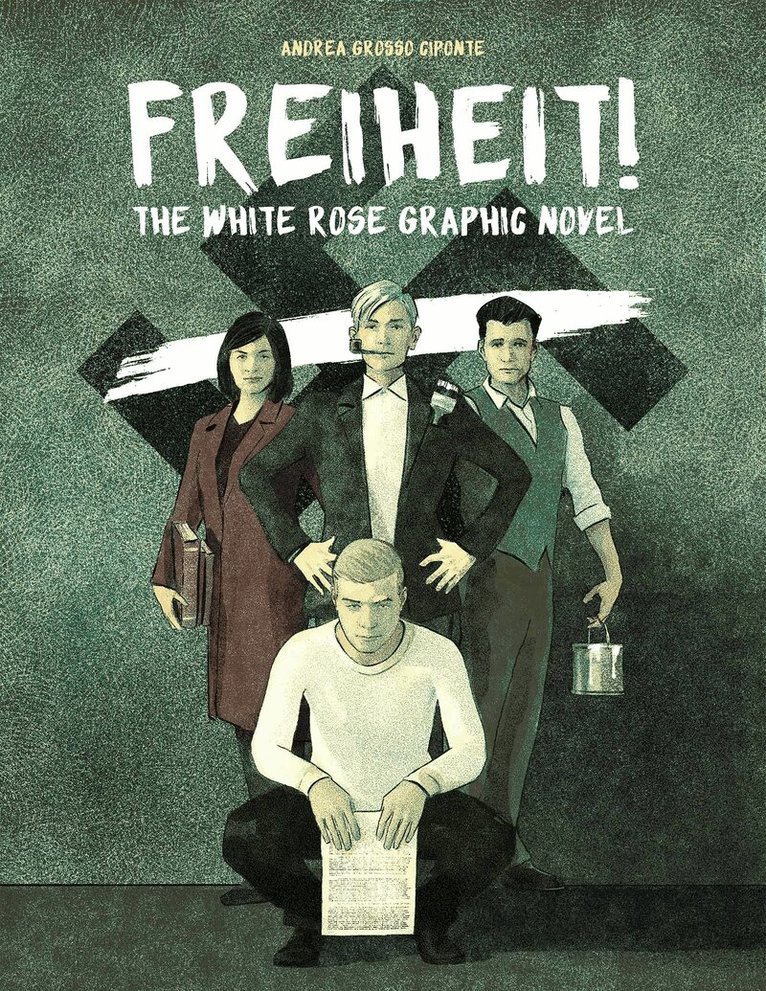
The dramatic true story of a handful of students who resisted the Nazis and paid with their lives, now in a stunning graphic novel.With an entire nation blindly following an evil leader, where did a handful of students find the courage to resist? The university students who formed the White Rose, an undercover resistance movement in Nazi Germany, knew that doing so could cost them their lives. But some things are worth dying for.The White Rose printed and distributed leaflets to expose Nazi atrocities and wake up their fellow citizens. The Gestapo caught and executed them. Sophie Scholl was twenty-one; her brother Hans, twenty-four; Christoph Probst, twenty-three; Alexander Schmorell and Willi Graf, twenty-five.But the White Rose was not silenced. Their heroism continues to inspire new generations of resisters. Now, for the first time, this story that has been celebrated in print and film can be experienced as a graphic novel. Italian artist Andrea Grosso Ciponte’s haunting imagery will resonate with today’s students and activists. The challenges they face may vary, but the need for young people to stand up against evil, whatever the cost, will remain.
99 kr
Tillfälligt slut
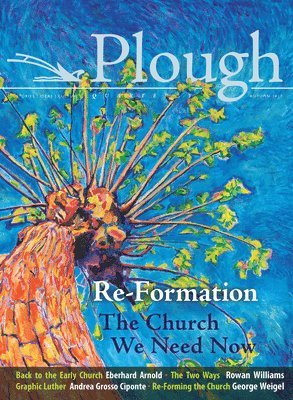
On the 500th anniversary of the Reformation, this issue of Plough Quarterly explores the reformation the church needs today.This year’s five-hundredth anniversary of the Reformation comes just as Christianity is undergoing what may prove to be its biggest recalibration since the fourth century. Christendom, the system in which Christianity shaped Western laws and society as the majority religion, has been shaky since the Enlightenment. Now it’s in its death throes, felled by secularization, consumerism, and the sexual revolution. For better or worse, Christians must learn to be a minority. There’s no better time than now to recall Karl Barth’s dictum: the church must always be reformed. What is the re-formed church we need now?In this issue, George Weigel and Eberhard Arnold call the church to turn back to its sources and to seek renewal in the example of the first Christians, for whom Christianity was not just a Sunday religion or a private affair. It meant belonging to the fellowship of disciples, whose way of life was countercultural to that of the surrounding pagan society, as Rowan Williams points out. Today, Christians of all traditions are realizing that we are again called, in the words of Rabbi Lord Jonathan Sacks, to form a creative minority. Pastors Jin Kim and Claudio Oliver explore how to practice communal Christianity in different contexts, and Andreas Knapp and Cécile Massie document the vibrancy of the persecuted church in Syria and Turkey. Editor Peter Mommsen explores the legacy and triumph of the Radical Reformation.Also in this issue:Reviews of Ben Sasse’s The Vanishing American Adult, Alan Kreider’s The Patient Ferment of the Early Church, Tobias Jones’s A Place of Refuge, and Andrzej Franaszek’s MiłoszPoetry by Mary M. BrownInsights from early church leaders Ignatius, Hermas, and PolycarpAn excerpt from Renegade, Plough’s graphic novel on Martin Luther’s lifeArt and photography by Daniel Bonnell, Jason Landsel, Randall M. Hasson, Rachel Wright, Arthur Brouthers, Andrea Grosso Ciponte, Olivia Clifton-Bligh, Malcolm Coils, Cécile Massie, Jader Gneiting, and Dean MitchellPlough Quarterly features stories, ideas, and culture for people eager to put their faith into action. Each issue brings you in-depth articles, interviews, poetry, book reviews, and art to help you put Jesus’ message into practice and find common cause with others.
100 kr
Skickas inom 5-8 vardagar
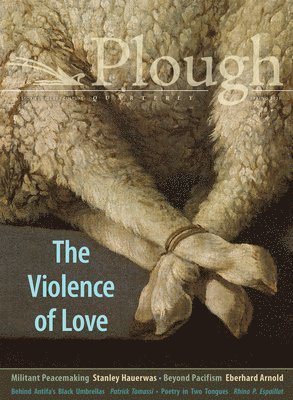
How did violence become OK? And is there any way back?At some point between George Floyd’s killing on May 25 and the invasion of the US Capitol on January 6, America’s consensus against political violence crumbled. Before 2020, almost everyone agreed that it should be out of bounds. Now, many are ready to justify such violence – at least when it is their side breaking windows or battling police officers. Something significant seems to have slipped. Is there any way back?As Christians, we need to consider what guilt we bear, with the rise of a decidedly unchristian “Christian nationalism” that historically has deep roots in American Christian culture. But shouldn’t we also be asking ourselves what a truly Christian stance might look like, one that reflects Jesus’ blessings on the peacemakers, the merciful, and the meek?Oscar Romero, when accused of preaching revolutionary violence, responded: “We have never preached violence, except the violence of love, which left Christ nailed to a cross.” If we take Jesus’ example and his call to nonviolence at face value, we’re left with all kinds of interesting questions: What about policing? What about the military? What about participating in government? This issue of Plough addresses some of these questions and explores what a life lived according to love rather than violence might look like.In this issue:- Anthony M. Barr revisits James Baldwin’s advice about undoing racism.- Gracy Olmstead describes welcoming the baby she did not expect during a pandemic.- Patrick Tomassi debates nonviolence with Portland’s anarchists and Proud Boys.- Scott Beauchamp advises on what not to ask war veterans.- Rachel Pieh Jones reveals what Muslims have taught her about prayer.- Eberhard Arnold argues that Christian nonviolence is more than pacifism.- Stanley Hauerwas presents a vision of church you’ve never seen in practice.- Andrea Grosso Ciponte graphically portrays the White Rose student resistance to Nazism.- Zito Madu illuminates rap’s role in escaping the violence of poverty.- Springs Toledo recounts his boxing match with an undefeated professional.You’ll also find:- An interview with poet Rhina P. Espaillat- New poems by Catherine Tufariello- Profiles of Anabaptist leader Felix Manz and community founder Lore Weber- Reviews of Marly Youmans’s Charis in the World of Wonders, Judith D. Schwartz’s The Reindeer Chronicles, Chris Lombardi’s I Ain’t Marching Anymore, and Martín Espada’s FloatersPlough Quarterly features stories, ideas, and culture for people eager to put their faith into action. Each issue brings you in-depth articles, interviews, poetry, book reviews, and art to help you put Jesus’ message into practice and find common cause with others.