
Andrea Wilson Nightingale - Böcker
Visar alla böcker från författaren Andrea Wilson Nightingale. Handla med fri frakt och snabb leverans.
5 produkter
5 produkter
1 245 kr
Skickas inom 7-10 vardagar
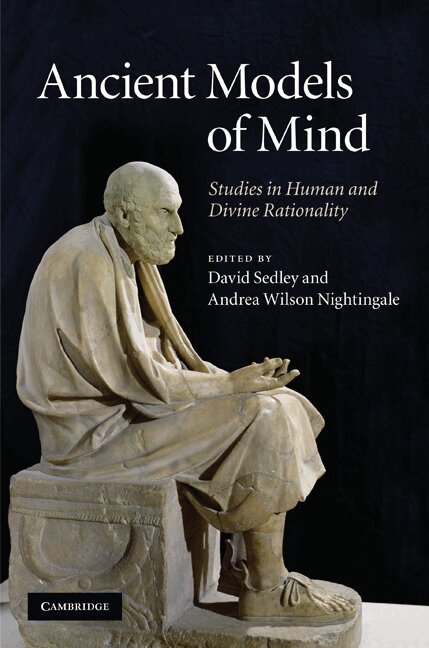
How does God think? How, ideally, does a human mind function? Must a gap remain between these two paradigms of rationality? Such questions exercised the greatest ancient philosophers, including those featured in this book: Socrates, Plato, Aristotle, the Stoics and Plotinus. This volume encompasses a series of studies by leading scholars, revisiting key moments of ancient philosophy and highlighting the theme of human and divine rationality in both moral and cognitive psychology. It is a tribute to Professor A. A. Long, and reflects multiple themes of his own work.
Spectacles of Truth in Classical Greek Philosophy
Theoria in its Cultural Context
Häftad, Engelska, 2009
560 kr
Skickas inom 7-10 vardagar
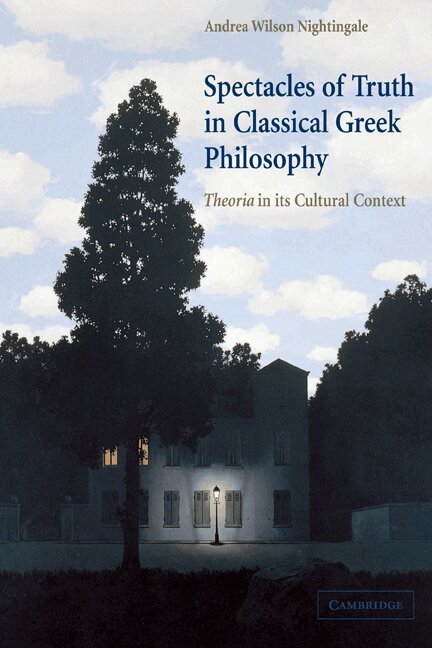
In fourth-century Greece (BCE), the debate over the nature of philosophy generated a novel claim: that the highest form of wisdom is theoria, the rational 'vision' of metaphysical truths (the 'spectator theory of knowledge'). This 2004 book offers an original analysis of the construction of 'theoretical' philosophy in fourth-century Greece. In the effort to conceptualise and legitimise theoretical philosophy, the philosophers turned to a venerable cultural practice: theoria (state pilgrimage). In this practice, an individual journeyed abroad as an official witness of sacralized spectacles. This book examines the philosophic appropriation and transformation of theoria, and analyses the competing conceptions of theoretical wisdom in fourth-century philosophy. By tracing the link between traditional and philosophic theoria, this book locates the creation of theoretical philosophy in its historical context, analysing theoria as a cultural and an intellectual practice. It develops a new, interdisciplinary approach, drawing on philosophy, history and literary studies.
1 245 kr
Skickas inom 7-10 vardagar
This 1995 book takes as its starting point Plato's incorporation of specific genres of poetry and rhetoric into his dialogues. The author argues that Plato's 'dialogues' with traditional genres are part and parcel of his effort to define 'philosophy'. Before Plato, 'philosophy' designated 'intellectual cultivation' in the broadest sense. When Plato appropriated the term for his own intellectual project, he created a new and specialised discipline. In order to define and legitimise 'philosophy', Plato had to match it against genres of discourse that had authority and currency in democratic Athens. By incorporating the text or discourse of another genre, Plato 'defines' his new brand of wisdom in opposition to traditional modes of thinking and speaking. By targeting individual genres of discourse Plato marks the boundaries of 'philosophy' as a discursive and as a social practice.
560 kr
Skickas inom 7-10 vardagar
This 1995 book takes as its starting point Plato's incorporation of specific genres of poetry and rhetoric into his dialogues. The author argues that Plato's 'dialogues' with traditional genres are part and parcel of his effort to define 'philosophy'. Before Plato, 'philosophy' designated 'intellectual cultivation' in the broadest sense. When Plato appropriated the term for his own intellectual project, he created a new and specialised discipline. In order to define and legitimise 'philosophy', Plato had to match it against genres of discourse that had authority and currency in democratic Athens. By incorporating the text or discourse of another genre, Plato 'defines' his new brand of wisdom in opposition to traditional modes of thinking and speaking. By targeting individual genres of discourse Plato marks the boundaries of 'philosophy' as a discursive and as a social practice.
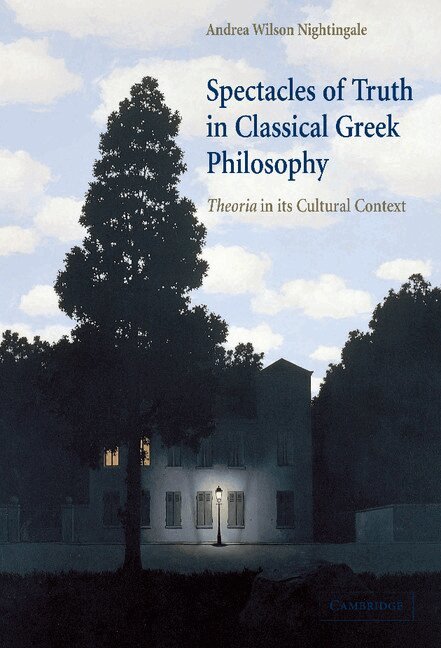
Spectacles of Truth in Classical Greek Philosophy
Theoria in its Cultural Context
Inbunden, Engelska, 2004
1 245 kr
Skickas inom 7-10 vardagar
In fourth-century Greece (BCE), the debate over the nature of philosophy generated a novel claim: that the highest form of wisdom is theoria, the rational 'vision' of metaphysical truths (the 'spectator theory of knowledge'). This 2004 book offers an original analysis of the construction of 'theoretical' philosophy in fourth-century Greece. In the effort to conceptualise and legitimise theoretical philosophy, the philosophers turned to a venerable cultural practice: theoria (state pilgrimage). In this practice, an individual journeyed abroad as an official witness of sacralized spectacles. This book examines the philosophic appropriation and transformation of theoria, and analyses the competing conceptions of theoretical wisdom in fourth-century philosophy. By tracing the link between traditional and philosophic theoria, this book locates the creation of theoretical philosophy in its historical context, analysing theoria as a cultural and an intellectual practice. It develops a new, interdisciplinary approach, drawing on philosophy, history and literary studies.