Andreas Hofele – författare
Visar alla böcker från författaren Andreas Hofele. Handla med fri frakt och snabb leverans.
8 produkter
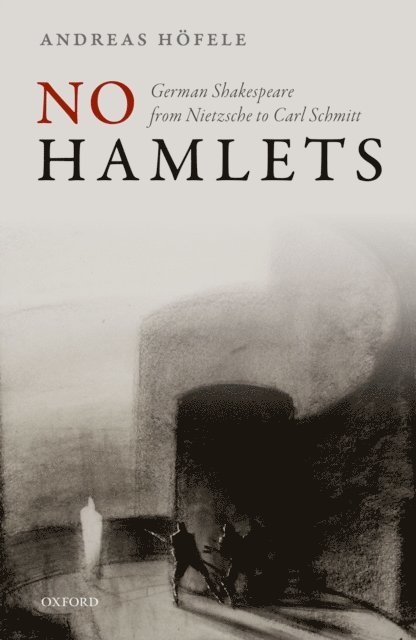
No Hamlets
German Shakespeare from Nietzsche to Carl Schmitt
E-bok, 2016
485 kr
Lägg i varukorg
No Hamlets is the first critical account of the role of Shakespeare in the intellectual tradition of the political right in Germany from the founding of the Empire in 1871 to the ''Bonn Republic'' of the Cold War era. In this sustained study, Andreas Höfele begins with Friedrich Nietzsche and …
No Hamlets
German Shakespeare from Nietzsche to Carl Schmitt
E-bok, 2016
431 kr
Lägg i varukorg
No Hamlets is the first critical account of the role of Shakespeare in the intellectual tradition of the political right in Germany from the founding of the Empire in 1871 to the 'Bonn Republic' of the Cold War era. In this sustained study, Andreas Hofele begins with Friedrich Nietzsche and follows …
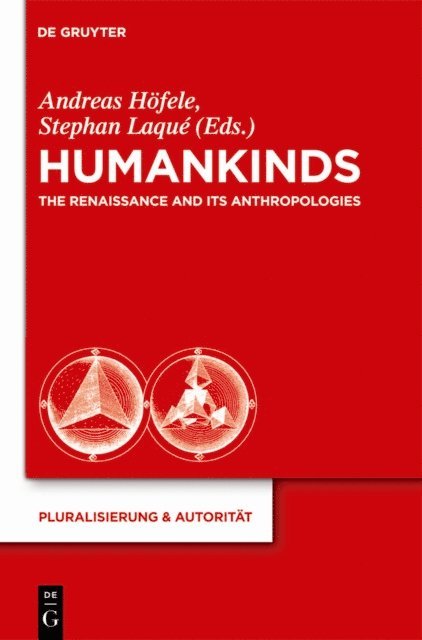
Humankinds
The Renaissance and Its Anthropologies
Av Stephan Laque, Andreas Hofele
E-bok, 2011
2488 kr
Lägg i varukorg
Anthropology is a notoriously polysemous term. Within a continental European academic context, it is usually employed in the sense of philosophical anthropology , and mainly concerned with exploring concepts of a universal human nature. By contrast, Anglo-American scholarship almost exclusively …
Die Frühe Neuzeit. Revisionen einer Epoche
Av Wulf Oesterreicher, Jan-Dirk Muller m. fl.
E-bok, 2013
2697 kr
Lägg i varukorg
Revisionen des Epochenprofils durch einen historisch trennscharfen Konzept-rahmen zu ermöglichen - mit diesem Ziel hat der Münchner Sonderforschungsbereich 573 eine Heuristik erarbeitet, die sich von den Teleologien vorgängiger Forschungsparadigmen abhebt. Anders als Konzepte wie ‚Modernisierung‘, …
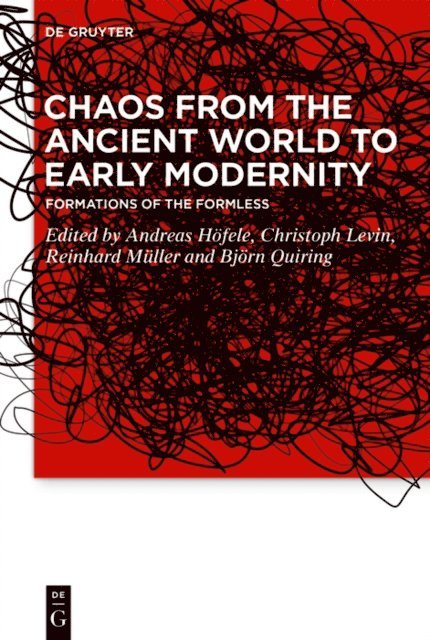
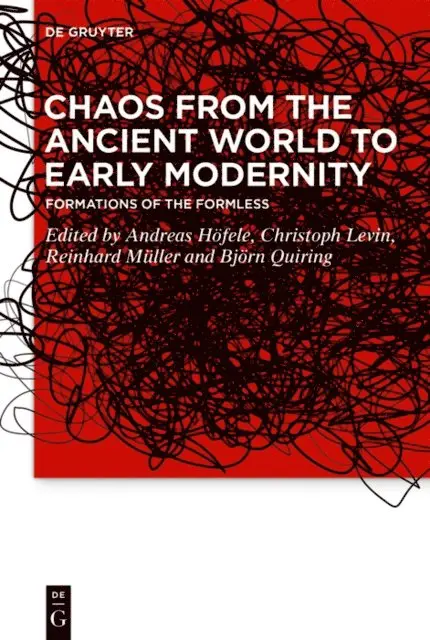
Chaos from the Ancient World to Early Modernity
Formations of the Formless
Av Bjorn Quiring, Reinhard Muller m. fl.
E-bok, 2020
1141 kr
Lägg i varukorg
Chaos is a perennial source of fear and fascination. The original "formless void" (tohu-wa-bohu) mentioned in the book of Genesis, chaos precedes the created world: a state of anarchy before the establishment of cosmic order. But chaos has frequently also been conceived of as a force that persists …
Chaos from the Ancient World to Early Modernity
Formations of the Formless
Av Bjorn Quiring, Reinhard Muller m. fl.
E-bok, 2020
1141 kr
Lägg i varukorg
Chaos is a perennial source of fear and fascination. The original "formless void" (tohu-wa-bohu) mentioned in the book of Genesis, chaos precedes the created world: a state of anarchy before the establishment of cosmic order. But chaos has frequently also been conceived of as a force that persists …
Renaissance Go-Betweens
Cultural Exchange in Early Modern Europe
Av Werner von Koppenfels, Andreas Hofele
E-bok, 2011
2193 kr
Lägg i varukorg
The volume analyses some of the travelling and bridge-building activities that went on in Renaissance Europe, mainly but not exclusively across the Channel, true to Montaigne's epoch-making program of describing 'the passage'. Its emphasis on Anglo-Continental relations ensures a firm basis in …
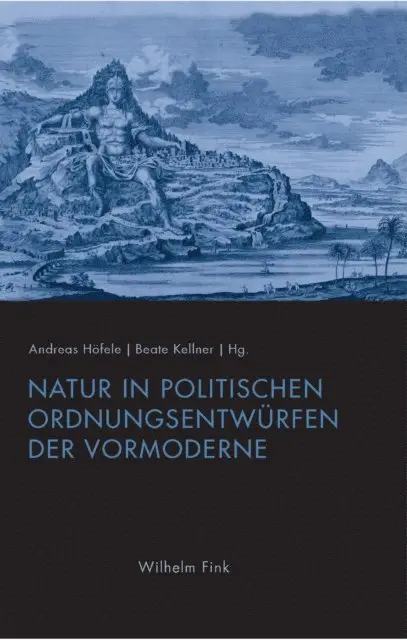
Natur in politischen Ordnungsentwürfen der Vormoderne
Av Beate Kellner, Andreas Hofele
E-bok, 2018
1184 kr
Lägg i varukorg
Von der Antike bis an die Schwelle der Moderne wurden politische Ordnungen immer wieder im Rückgriff auf die schillernde Semantik von ›Natur‹ bestimmt. Was lange Zeit als obsolet galt, erlebt in der politischen Rhetorik unserer Tage eine erstaunliche Renaissance. Durch die Rekonstruktion der …