Bjorn Quiring – författare
870 kr
Läs direkt efter köp
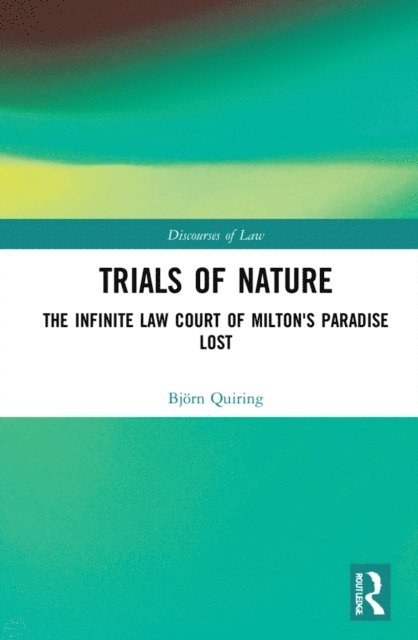
Focusing on John Milton’s Paradise Lost , this book investigates the metaphorical identification of nature with a court of law – an old and persistent trope, haunted by ancient aporias, at the intersection of jurisprudence, philosophy and literature. In an enormous variety of texts, from the Greek beginnings of Western literature onward, nature has been described as a courtroom in which an all- encompassing trial takes place and a universal verdict is executed. The first, introductory part of this study sketches an overview of the metaphor’s development in European history, from antiquity to the seventeenth century. In its second, more extensive part, the book concentrates on Milton’s epic Paradise Lost in which the problem of the natural law court finds one of its most fascinating and detailed articulations. Using conceptual tools provided by Hannah Arendt, Walter Benjamin, Hans Blumenberg, Gilles Deleuze, William Empson and Alfred North Whitehead, the study demonstrates that the conflicts in Milton’s epic revolve around the tension between a universal legal procedure inherent in nature and the positive legal decrees of the deity. The divine rule is found to consolidate itself by Nature’s supplementary shadow government; their inconsistencies are not flaws, but rather fundamental rhetorical assets, supporting a law that is inherently "double- formed". In Milton’s world, human beings are thus confronted with a twofold law that entraps them in its endlessly proliferating double binds, whether they obey or not. The analysis of this strange juridical structure can open up new perspectives on Milton’s epic, as well as on the way legal discourse tends to entangle norms with facts and thus to embed itself in human life. This original and intriguing book will appeal not only to those engaged in the study of Milton, but also to anyone interested in the relationship between law, history, literature and philosophy.
870 kr
Läs direkt efter köp
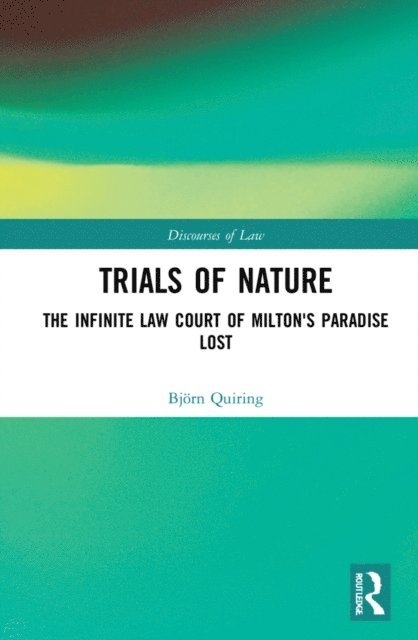
Focusing on John Milton’s Paradise Lost , this book investigates the metaphorical identification of nature with a court of law – an old and persistent trope, haunted by ancient aporias, at the intersection of jurisprudence, philosophy and literature. In an enormous variety of texts, from the Greek beginnings of Western literature onward, nature has been described as a courtroom in which an all- encompassing trial takes place and a universal verdict is executed. The first, introductory part of this study sketches an overview of the metaphor’s development in European history, from antiquity to the seventeenth century. In its second, more extensive part, the book concentrates on Milton’s epic Paradise Lost in which the problem of the natural law court finds one of its most fascinating and detailed articulations. Using conceptual tools provided by Hannah Arendt, Walter Benjamin, Hans Blumenberg, Gilles Deleuze, William Empson and Alfred North Whitehead, the study demonstrates that the conflicts in Milton’s epic revolve around the tension between a universal legal procedure inherent in nature and the positive legal decrees of the deity. The divine rule is found to consolidate itself by Nature’s supplementary shadow government; their inconsistencies are not flaws, but rather fundamental rhetorical assets, supporting a law that is inherently "double- formed". In Milton’s world, human beings are thus confronted with a twofold law that entraps them in its endlessly proliferating double binds, whether they obey or not. The analysis of this strange juridical structure can open up new perspectives on Milton’s epic, as well as on the way legal discourse tends to entangle norms with facts and thus to embed itself in human life. This original and intriguing book will appeal not only to those engaged in the study of Milton, but also to anyone interested in the relationship between law, history, literature and philosophy.
1 827 kr
Läs direkt efter köp
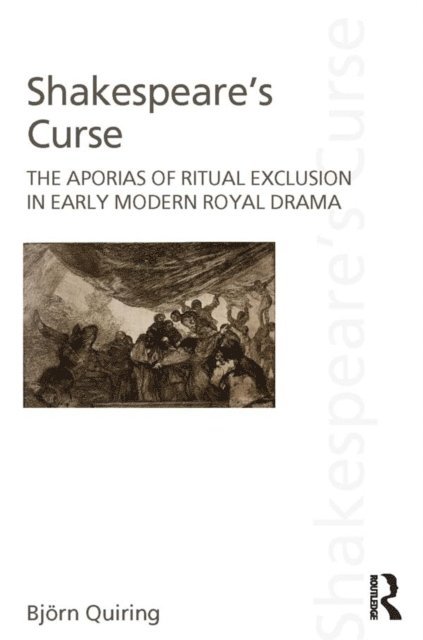
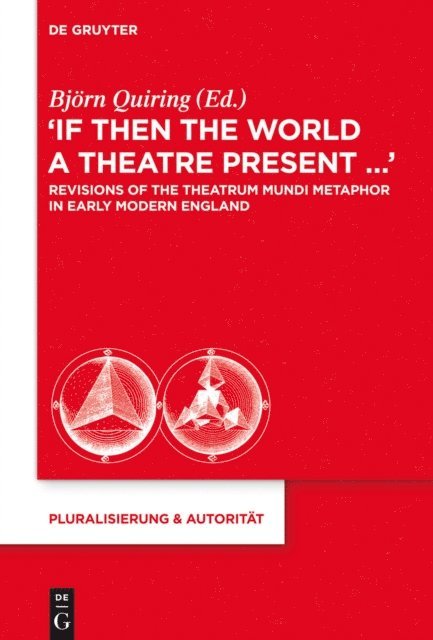
To metaphorize the world as a theatre has been a common procedure since antiquity, but the use of this trope became particularly prominent and pregnant in early modern times, especially in England. Old and new applications of the “theatrum mundi” topos pervaded discourses, often allegorizing the deceitfulness and impermanence of this world as well as the futility of earthly strife. It was frequently woven into arguments against worldly amusements such as the stage: Commercial theatre was declared an undesirable competitor of God’s well-ordered world drama.
Early modern dramatists often reacted to this development by appropriating the metaphor, and in an ingenious twist, some playwrights even appropriated its anti-theatrical impetus: Early modern theatre seemed to discover a denial of its own theatricality at its very core. Drama was found to succeed best when it staged itself as a great unmasking.
To investigate the reasons and effects of these developments, the anthology examines the metaphorical uses of theatre in plays, pamphlets, epics, treatises, legal proclamations and other sources.
1 827 kr
Läs direkt efter köp
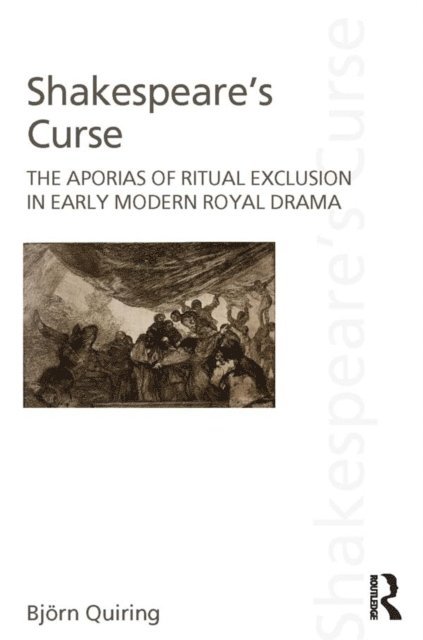
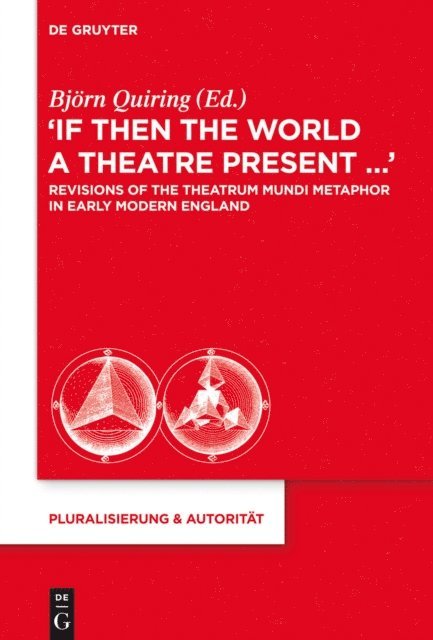
To metaphorize the world as a theatre has been a common procedure since antiquity, but the use of this trope became particularly prominent and pregnant in early modern times, especially in England. Old and new applications of the “theatrum mundi” topos pervaded discourses, often allegorizing the deceitfulness and impermanence of this world as well as the futility of earthly strife. It was frequently woven into arguments against worldly amusements such as the stage: Commercial theatre was declared an undesirable competitor of God’s well-ordered world drama.
Early modern dramatists often reacted to this development by appropriating the metaphor, and in an ingenious twist, some playwrights even appropriated its anti-theatrical impetus: Early modern theatre seemed to discover a denial of its own theatricality at its very core. Drama was found to succeed best when it staged itself as a great unmasking.
To investigate the reasons and effects of these developments, the anthology examines the metaphorical uses of theatre in plays, pamphlets, epics, treatises, legal proclamations and other sources.
1 108 kr
Läs direkt efter köp
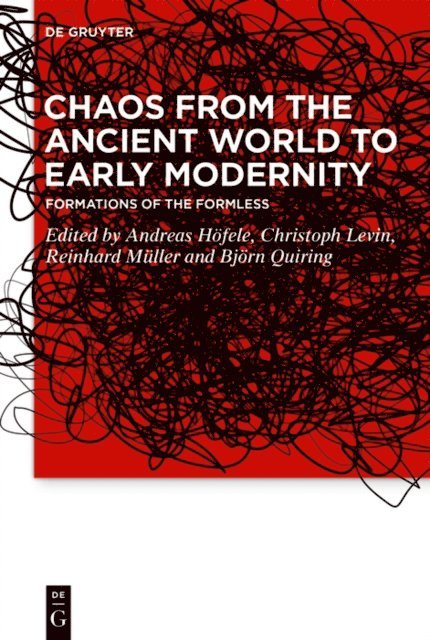
Chaos is a perennial source of fear and fascination. The original "formless void" (tohu-wa-bohu) mentioned in the book of Genesis, chaos precedes the created world: a state of anarchy before the establishment of cosmic order. But chaos has frequently also been conceived of as a force that persists in the cosmos and in society and threatens to undo them both.
From the cultures of the ancient Near East and the Old Testament to early modernity, notions of the divine have included the power to check and contain as well as to unleash chaos as a sanction for the violation of social and ethical norms. Yet chaos has also been construed as a necessary supplement to order, a region of pure potentiality at the base of reality that provides the raw material of creation or even constitutes a kind of alternative order itself. As such, it generates its own peculiar ''formations of the formless''.
Focusing on the connection between the cosmic and the political, this volume traces the continuities and re-conceptualizations of chaos from the ancient Near East to early modern Europe across a variety of cultures, discourses and texts. One of the questions it poses is how these pre-modern ''chaos theories'' have survived into and reverberate in our own time.
1 069 kr
Läs direkt efter köp
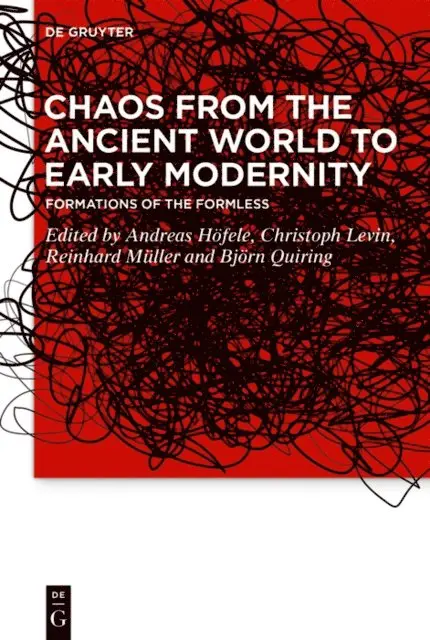
Chaos is a perennial source of fear and fascination. The original "formless void" (tohu-wa-bohu) mentioned in the book of Genesis, chaos precedes the created world: a state of anarchy before the establishment of cosmic order. But chaos has frequently also been conceived of as a force that persists in the cosmos and in society and threatens to undo them both.
From the cultures of the ancient Near East and the Old Testament to early modernity, notions of the divine have included the power to check and contain as well as to unleash chaos as a sanction for the violation of social and ethical norms. Yet chaos has also been construed as a necessary supplement to order, a region of pure potentiality at the base of reality that provides the raw material of creation or even constitutes a kind of alternative order itself. As such, it generates its own peculiar ''formations of the formless''.
Focusing on the connection between the cosmic and the political, this volume traces the continuities and re-conceptualizations of chaos from the ancient Near East to early modern Europe across a variety of cultures, discourses and texts. One of the questions it poses is how these pre-modern ''chaos theories'' have survived into and reverberate in our own time.