Andrei Y. Khrennikov – författare
Visar alla böcker från författaren Andrei Y. Khrennikov. Handla med fri frakt och snabb leverans.
25 produkter
p-Adic Valued Distributions in Mathematical Physics
Inbunden, 1994
1095 kr
Lägg i varukorg
Numbers ... , natural, rational, real, complex, p-adic .... What do you know about p-adic numbers? Probably, you have never used any p-adic (nonrational) number before now. I was in the same situation few years ago. p-adic numbers were considered as an exotic part of pure mathematics without any …
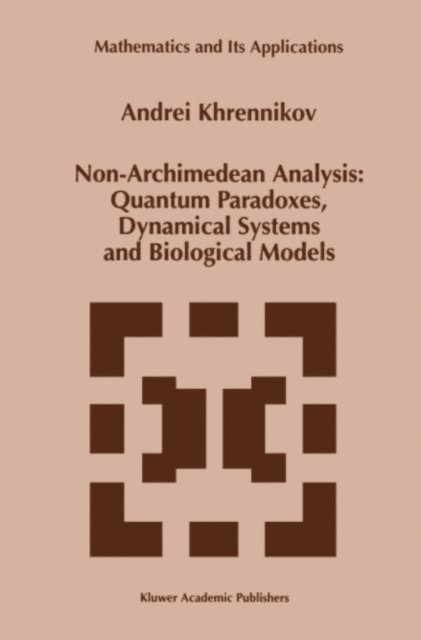
Non-Archimedean Analysis: Quantum Paradoxes, Dynamical Systems and Biological Models
Inbunden, 1997
1095 kr
Lägg i varukorg
N atur non facit saltus? This book is devoted to the fundamental problem which arises contin uously in the process of the human investigation of reality: the role of a mathematical apparatus in a description of reality. We pay our main attention to the role of number systems which are used, or may …
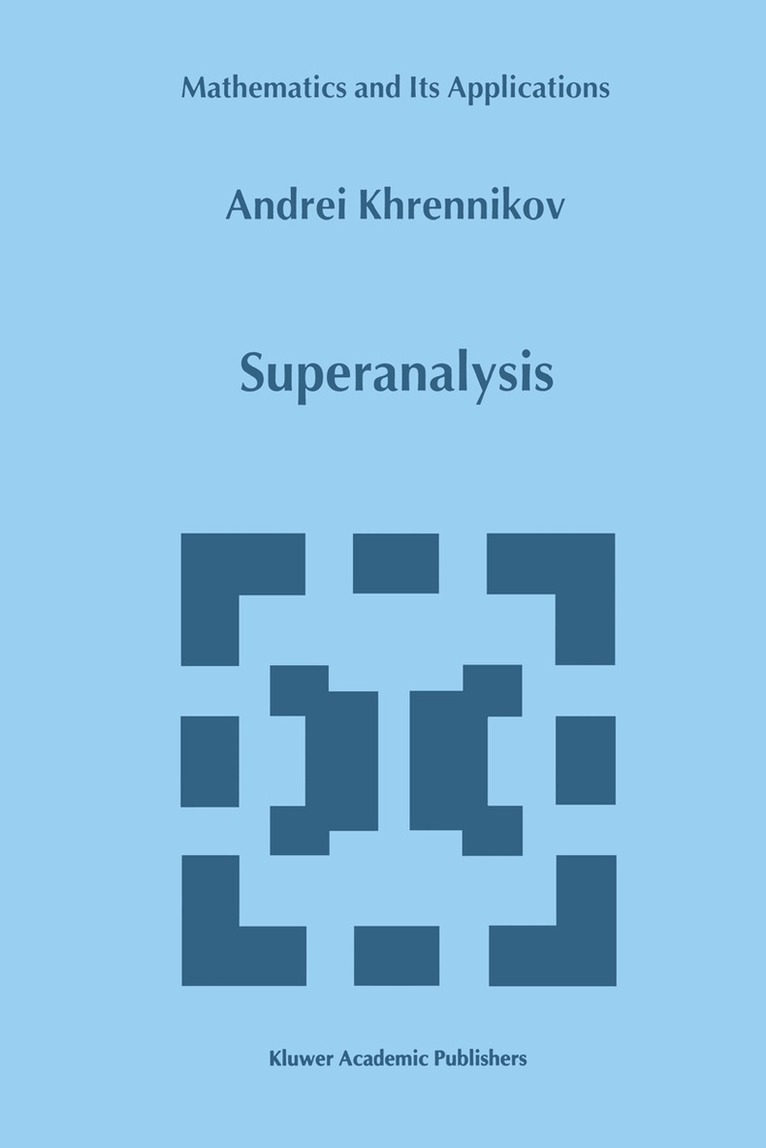
Superanalysis
Inbunden, 1999
1095 kr
Lägg i varukorg
defined as elements of Grassmann algebra (an algebra with anticom muting generators). The derivatives of these elements with respect to anticommuting generators were defined according to algebraic laws, and nothing like Newton's analysis arose when Martin's approach was used. Later, during the …
Information Dynamics in Cognitive, Psychological, Social, and Anomalous Phenomena
Inbunden, 2004
551 kr
Lägg i varukorg
In this book we develop various mathematical models of information dynamics, I -dynamics (including the process of thinking), based on methods of classical and quantum physics. The main aim of our investigations is to describe mathematically the phenomenon of consciousness. We would like to realize …
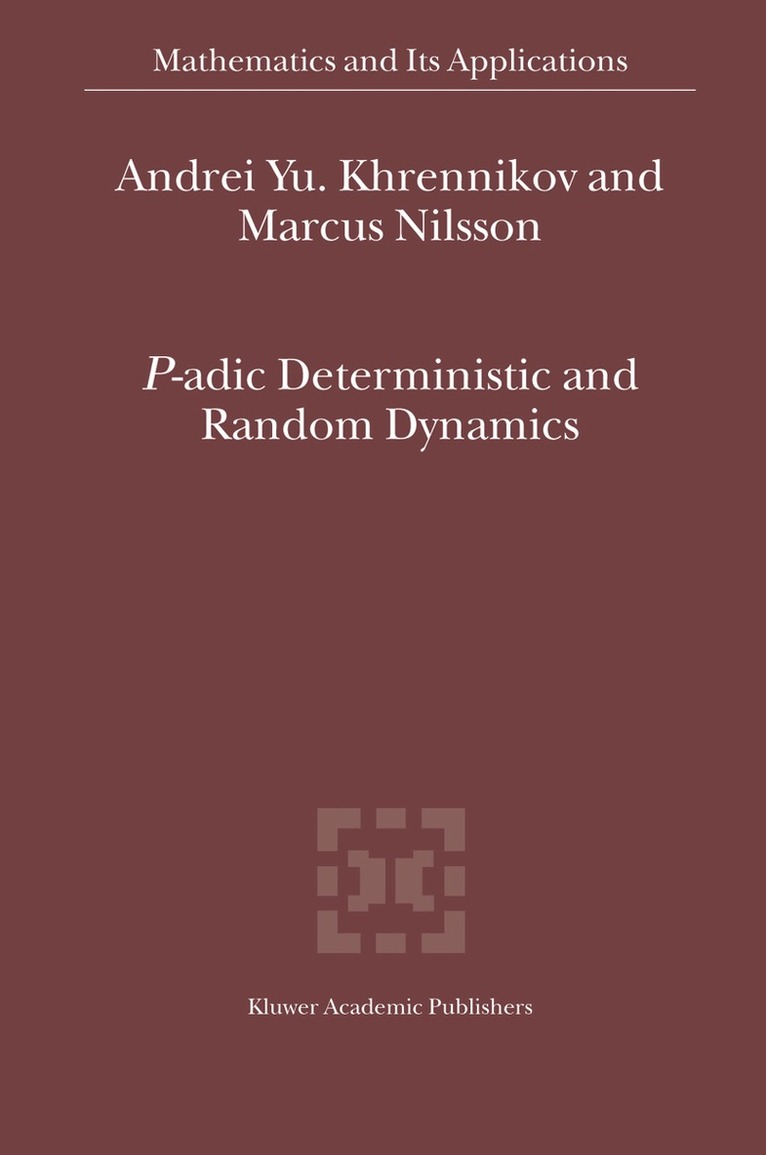
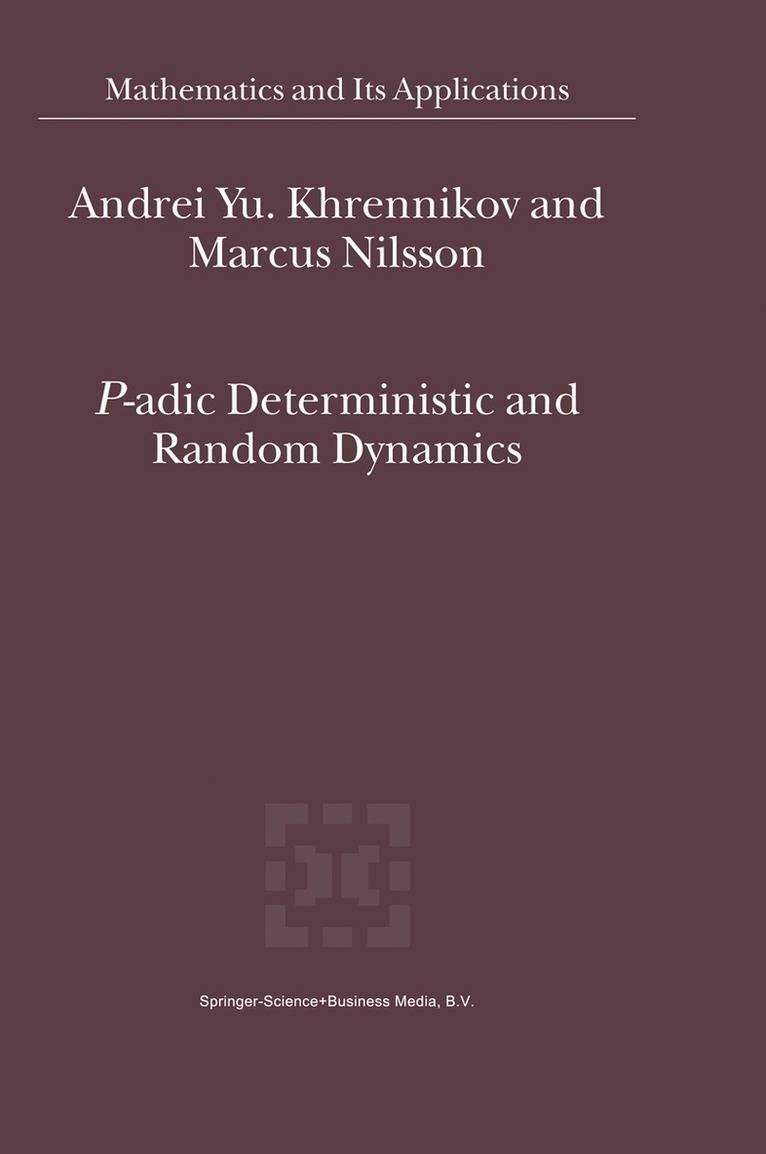
P-adic Deterministic and Random Dynamics
Av Andrei Y. Khrennikov, Marcus Nilsson
Inbunden, 2004
1095 kr
Lägg i varukorg
This book provides an overview of the theory of p-adic (and more general non-Archimedean) dynamical systems. The main part of the book is devoted to discrete dynamical systems. It presents a model of probabilistic thinking on p-adic mental space based on ultrametric diffusion. Coverage also details …
P-adic Deterministic and Random Dynamics
Av Marcus Nilsson, Andrei Y. Khrennikov
E-bok, 2013
1459 kr
Lägg i varukorg
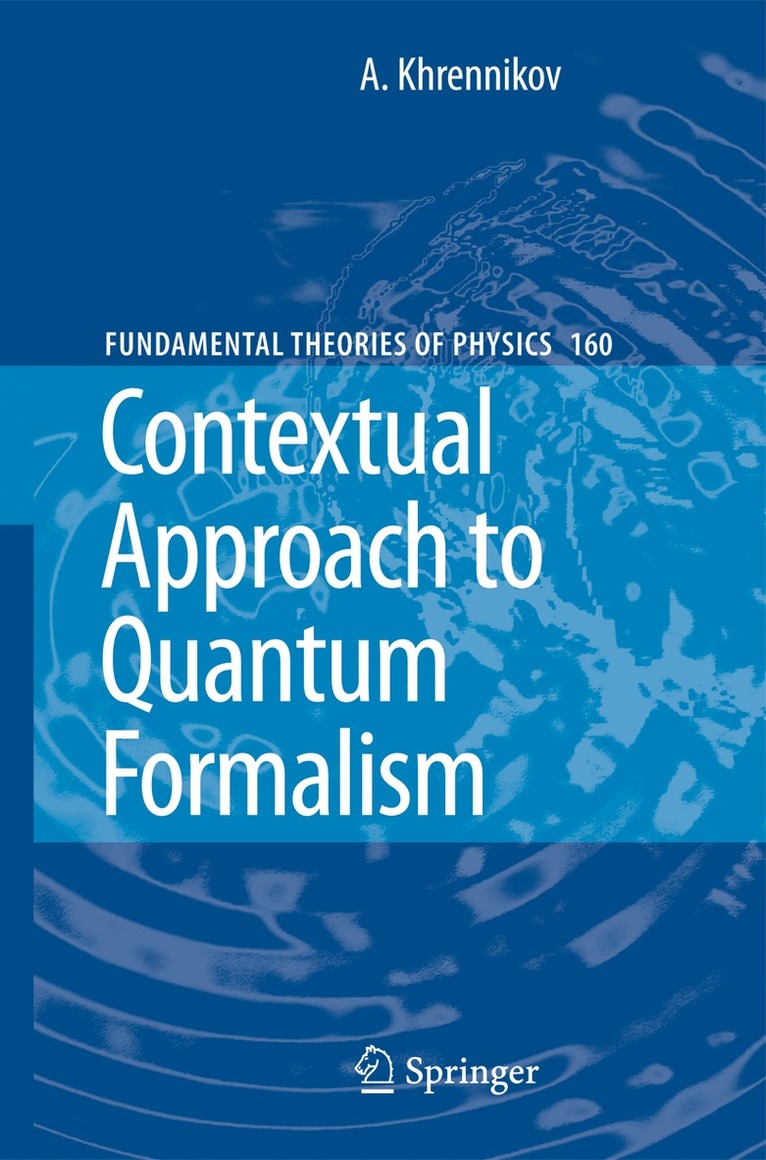
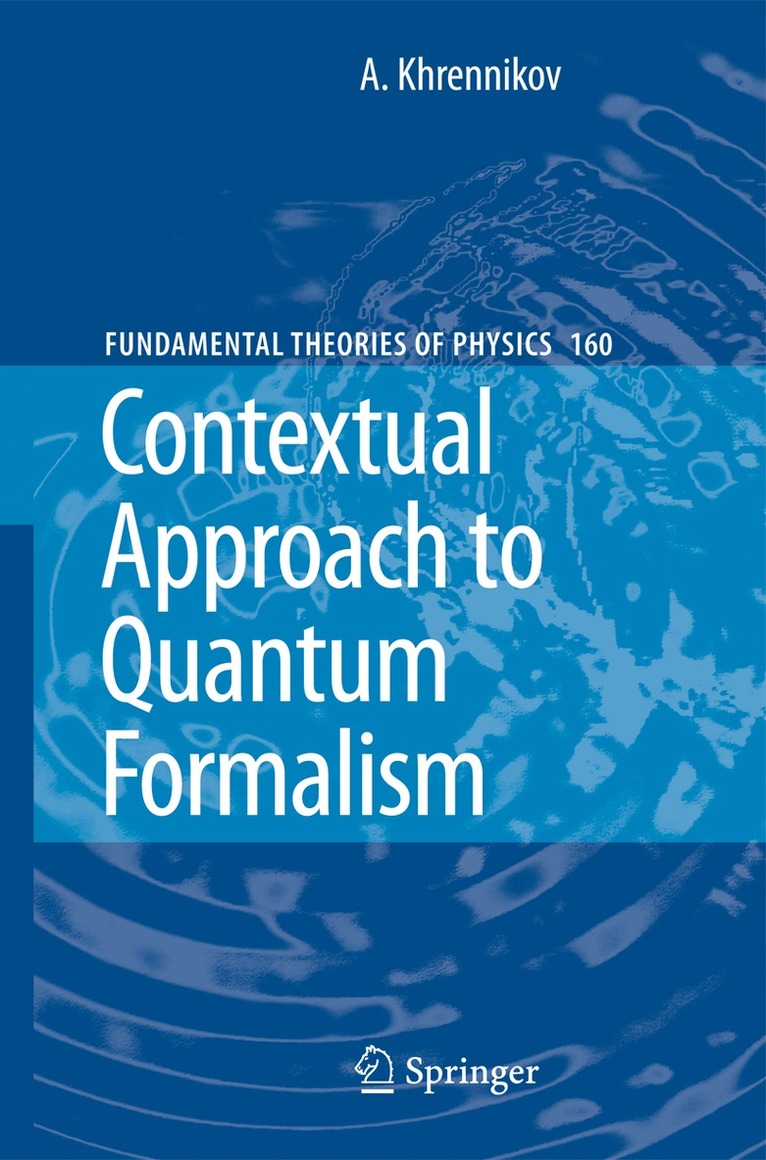
Contextual Approach to Quantum Formalism
Inbunden, 2009
1639 kr
Lägg i varukorg
The aim of this book is to show that the probabilistic formalisms of classical statistical mechanics and quantum mechanics can be unified on the basis of a general contextual probabilistic model. By taking into account the dependence of (classical) probabilities on contexts (i.e. complexes of …
Contextual Approach to Quantum Formalism
E-bok, 2009
2111 kr
Lägg i varukorg
The aim of this book is to show that the probabilistic formalisms of classical statistical mechanics and quantum mechanics can be unified on the basis of a general contextual probabilistic model. By taking into account the dependence of (classical) probabilities on contexts (i.e. complexes of …
Open Quantum Systems in Biology, Cognitive and Social Sciences
Inbunden, 2023
1748 kr
Lägg i varukorg
This book mathematically analyzes the basic problems of biology, decision making and psychology within the framework of the theory of open quantum systems.In recent years there has been an explosion of interest in applications of quantum theory in fields beyond physics. The main areas include …
Open Quantum Systems in Biology, Cognitive and Social Sciences
E-bok, 2023
2282 kr
Lägg i varukorg
This book mathematically analyzes the basic problems of biology, decision making and psychology within the framework of the theory of open quantum systems. In recent years there has been an explosion of interest in applications of quantum theory in fields beyond physics. The main areas include …
Open Quantum Systems in Biology, Cognitive and Social Sciences
Häftad, 2024
1748 kr
Lägg i varukorg
This book mathematically analyzes the basic problems of biology, decision making and psychology within the framework of the theory of open quantum systems.In recent years there has been an explosion of interest in applications of quantum theory in fields beyond physics. The main areas include …
Ubiquitous Quantum Structure
From Psychology to Finance
Inbunden, 2010
1095 kr
Lägg i varukorg
Quantum-like structure is present practically everywhere. Quantum-like (QL) models, i.e. models based on the mathematical formalism of quantum mechanics and its generalizations can be successfully applied to cognitive science, psychology, genetics, economics, finances, and game theory.This book is …
Ubiquitous Quantum Structure
From Psychology to Finance
E-bok, 2010
1427 kr
Lägg i varukorg
Quantum-like structure is present practically everywhere. Quantum-like (QL) models, i.e. models based on the mathematical formalism of quantum mechanics and its generalizations can be successfully applied to cognitive science, psychology, genetics, economics, finances, and game theory. This book is …
Ubiquitous Quantum Structure
From Psychology to Finance
Häftad, 2014
1095 kr
Lägg i varukorg
Quantum-like structure is present practically everywhere. Quantum-like (QL) models, i.e. models based on the mathematical formalism of quantum mechanics and its generalizations can be successfully applied to cognitive science, psychology, genetics, economics, finances, and game theory.This book is …
p-Adic Valued Distributions in Mathematical Physics
Häftad, 2010
1095 kr
Lägg i varukorg
Numbers ... , natural, rational, real, complex, p-adic .... What do you know about p-adic numbers? Probably, you have never used any p-adic (nonrational) number before now. I was in the same situation few years ago. p-adic numbers were considered as an exotic part of pure mathematics without any …
Information Dynamics in Cognitive, Psychological, Social, and Anomalous Phenomena
Häftad, 2011
551 kr
Lägg i varukorg
In this book we develop various mathematical models of information dynamics, I -dynamics (including the process of thinking), based on methods of classical and quantum physics. The main aim of our investigations is to describe mathematically the phenomenon of consciousness. We would like to realize …
P-adic Deterministic and Random Dynamics
Av Andrei Y. Khrennikov, Marcus Nilsson
Häftad, 2010
1095 kr
Lägg i varukorg
This book provides an overview of the theory of p-adic (and more general non-Archimedean) dynamical systems. The main part of the book is devoted to discrete dynamical systems. It presents a model of probabilistic thinking on p-adic mental space based on ultrametric diffusion. Coverage also details …
Contextual Approach to Quantum Formalism
Häftad, 2010
1639 kr
Lägg i varukorg
The aim of this book is to show that the probabilistic formalisms of classical statistical mechanics and quantum mechanics can be unified on the basis of a general contextual probabilistic model. By taking into account the dependence of (classical) probabilities on contexts (i.e. complexes of …
Non-Archimedean Analysis: Quantum Paradoxes, Dynamical Systems and Biological Models
E-bok, 2013
1459 kr
Lägg i varukorg
N atur non facit saltus? This book is devoted to the fundamental problem which arises contin uously in the process of the human investigation of reality: the role of a mathematical apparatus in a description of reality. We pay our main attention to the role of number systems which are used, or may …
Superanalysis
Häftad, 2012
1095 kr
Lägg i varukorg
defined as elements of Grassmann algebra (an algebra with anticom muting generators). The derivatives of these elements with respect to anticommuting generators were defined according to algebraic laws, and nothing like Newton's analysis arose when Martin's approach was used. Later, during the …
Non-Archimedean Analysis: Quantum Paradoxes, Dynamical Systems and Biological Models
Häftad, 2011
1095 kr
Lägg i varukorg
N atur non facit saltus? This book is devoted to the fundamental problem which arises contin uously in the process of the human investigation of reality: the role of a mathematical apparatus in a description of reality. We pay our main attention to the role of number systems which are used, or may …
Superanalysis
E-bok, 2012
1413 kr
Lägg i varukorg
defined as elements of Grassmann algebra (an algebra with anticom muting generators). The derivatives of these elements with respect to anticommuting generators were defined according to algebraic laws, and nothing like Newton''s analysis arose when Martin''s approach was used. Later, during the …
p-Adic Valued Distributions in Mathematical Physics
E-bok, 2013
1459 kr
Lägg i varukorg
Numbers ... , natural, rational, real, complex, p-adic .... What do you know about p-adic numbers? Probably, you have never used any p-adic (nonrational) number before now. I was in the same situation few years ago. p-adic numbers were considered as an exotic part of pure mathematics without any …
Information Dynamics in Cognitive, Psychological, Social, and Anomalous Phenomena
E-bok, 2013
734 kr
Lägg i varukorg
In this book we develop various mathematical models of information dynamics, I -dynamics (including the process of thinking), based on methods of classical and quantum physics. The main aim of our investigations is to describe mathematically the phenomenon of consciousness. We would like to realize …