Andrew Baruch Wachtel - Böcker
Visar alla böcker från författaren Andrew Baruch Wachtel. Handla med fri frakt och snabb leverans.
8 produkter
8 produkter
543 kr
Skickas inom 11-20 vardagar
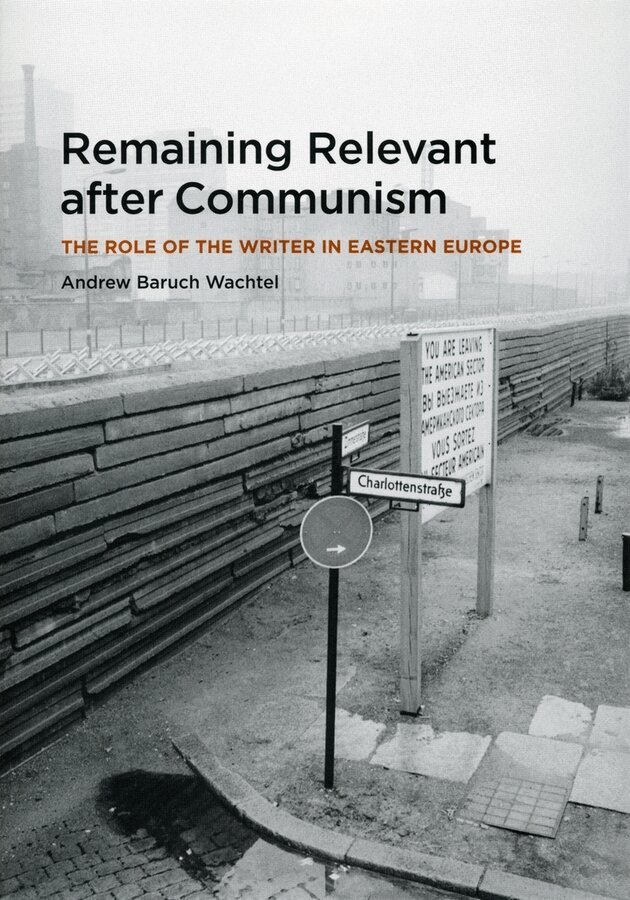
More than any other art form, literature defined Eastern Europe as a cultural and political entity in the second half of the twentieth century. Although often persecuted by the state, East European writers formed what was frequently recognized to be a "second government," and their voices were heard and revered inside and outside the borders of their countries. This study by one of our most influential specialists on Eastern Europe considers the effects of the end of communism on such writers. According to Andrew Baruch Wachtel, the fall of the Berlin Wall and the creation of fledgling societies in Eastern Europe brought an end to the conditions that put the region's writers on a pedestal. In the euphoria that accompanied democracy and free markets, writers were liberated from the burden of grandiose political expectations. But no group is happy to lose its influence: despite recognizing that their exalted social position was related to their reputation for challenging political oppression, such writers have worked hard to retain their status, inventing a series of new strategies for this purpose."Remaining Relevant after Communism" considers these strategies - from pulp fiction to public service - documenting what has happened on the East European scene since 1989.
1 086 kr
Skickas inom 5-8 vardagar
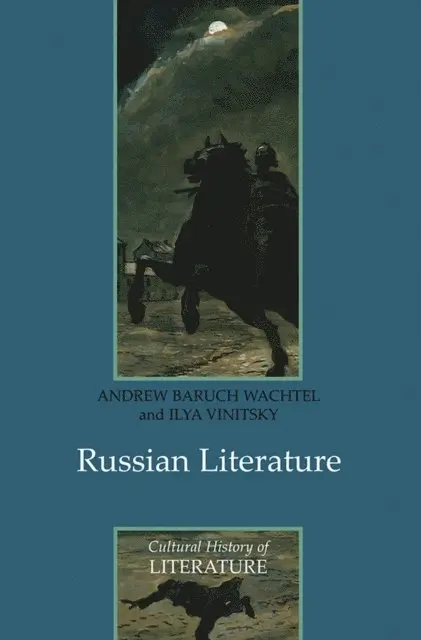
For most English-speaking readers, Russian literature consists of a small number of individual writers – nineteenth-century masters such as Dostoevsky, Tolstoy and Turgenev – or a few well-known works – Chekhov's plays, Brodsky's poems, and perhaps Master and Margarita and Doctor Zhivago from the twentieth century. The medieval period, as well as the brilliant tradition of Russian lyric poetry from the eighteenth century to the present, are almost completely terra incognita, as are the complex prose experiments of Nikolai Gogol, Nikolai Leskov, Andrei Belyi, and Andrei Platonov. Furthermore, those writers who have made an impact are generally known outside of the contexts in which they wrote and in which their work has been received. In this engaging book, Andrew Baruch Wachtel and Ilya Vinitsky provide a comprehensive, conceptually challenging history of Russian literature, including prose, poetry and drama. Each of the ten chapters deals with a bounded time period from medieval Rus’ to the present. In a number of cases, chapters overlap chronologically, thereby allowing a given period to be seen in more than one context. To tell the story of each period, the authors provide an introductory essay touching on the highpoints of its development and then concentrate on one biography, one literary or cultural event, and one literary work, which serve as prisms through which the main outlines of a given period’s development can be discerned. Although the focus is on literature, individual works, lives and events are placed in broad historical context as well as in the framework of parallel developments in Russian art and music
354 kr
Skickas inom 7-10 vardagar
For most English-speaking readers, Russian literature consists of a small number of individual writers - nineteenth-century masters such as Dostoevsky, Tolstoy and Turgenev - or a few well-known works - Chekhov's plays, Brodsky's poems, and perhaps Master and Margarita and Doctor Zhivago from the twentieth century. The medieval period, as well as the brilliant tradition of Russian lyric poetry from the eighteenth century to the present, are almost completely terra incognita, as are the complex prose experiments of Nikolai Gogol, Nikolai Leskov, Andrei Belyi, and Andrei Platonov. Furthermore, those writers who have made an impact are generally known outside of the contexts in which they wrote and in which their work has been received. In this engaging book, Andrew Baruch Wachtel and Ilya Vinitsky provide a comprehensive, conceptually challenging history of Russian literature, including prose, poetry and drama. Each of the ten chapters deals with a bounded time period from medieval Russia to the present. In a number of cases, chapters overlap chronologically, thereby allowing a given period to be seen in more than one context. To tell the story of each period, the authors provide an introductory essay touching on the highpoints of its development and then concentrate on one biography, one literary or cultural event, and one literary work, which serve as prisms through which the main outlines of a given period?s development can be discerned. Although the focus is on literature, individual works, lives and events are placed in broad historical context as well as in the framework of parallel developments in Russian art and music.
1 716 kr
Skickas inom 10-15 vardagar
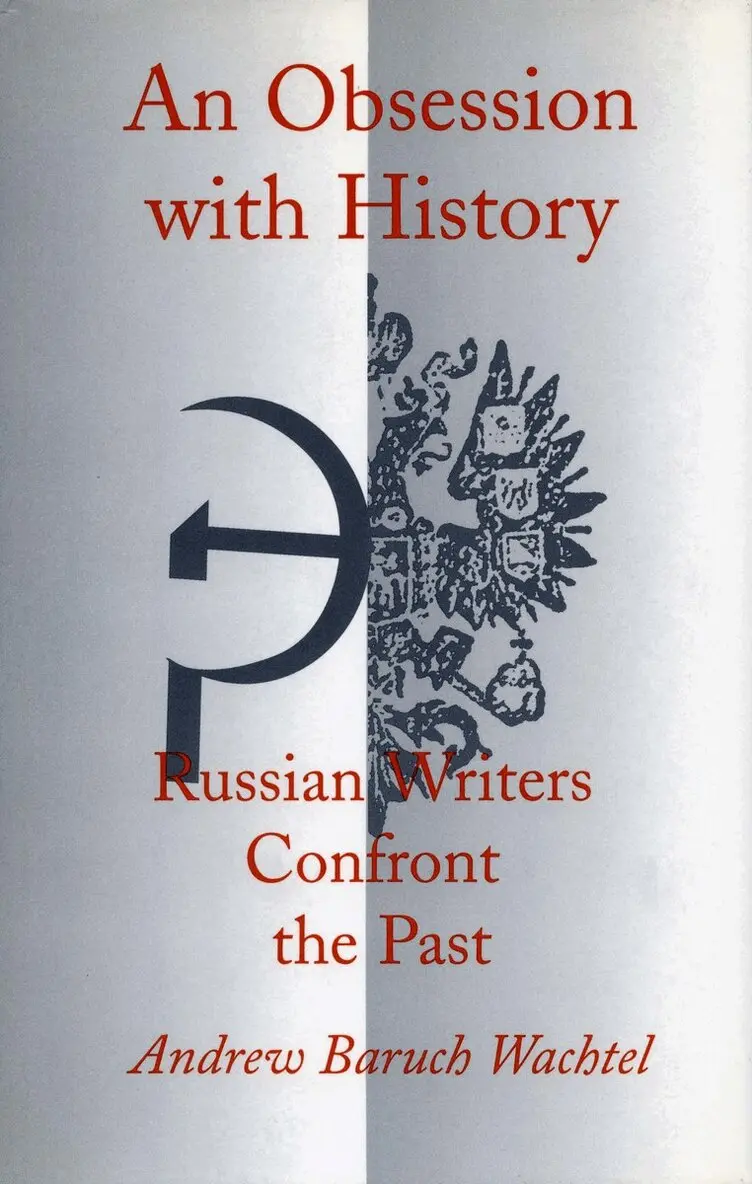
The author traces the role of Russian literature over two hundred years in creating and sustaining the notion of the singularity of their own history and of its relationship to the history of the outside world.The author describes the development of this tradition through an analysis of major works including Karamzin's History of the Russian State, Tolstoy's War and Peace, and Dostoevsky's The Brothers Karamazov. His analysis of this tradition has a dual purpose: to provide a window on the peculiarly Russian attitude toward history and to allow us to read some major works of Russian literature in a new light. The book will be of interest not only to Slavists, but to anyone concerned with the interaction between history and literature.
414 kr
Skickas inom 7-10 vardagar
The author traces the role of Russian literature over two hundred years in creating and sustaining the notion of the singularity of their own history and of its relationship to the history of the outside world.The author describes the development of this tradition through an analysis of major works including Karamzin's History of the Russian State, Tolstoy's War and Peace, and Dostoevsky's The Brothers Karamazov. His analysis of this tradition has a dual purpose: to provide a window on the peculiarly Russian attitude toward history and to allow us to read some major works of Russian literature in a new light. The book will be of interest not only to Slavists, but to anyone concerned with the interaction between history and literature.
Making a Nation, Breaking a Nation
Literature and Cultural Politics in Yugoslavia
Inbunden, Engelska, 1998
1 492 kr
Skickas inom 10-15 vardagar
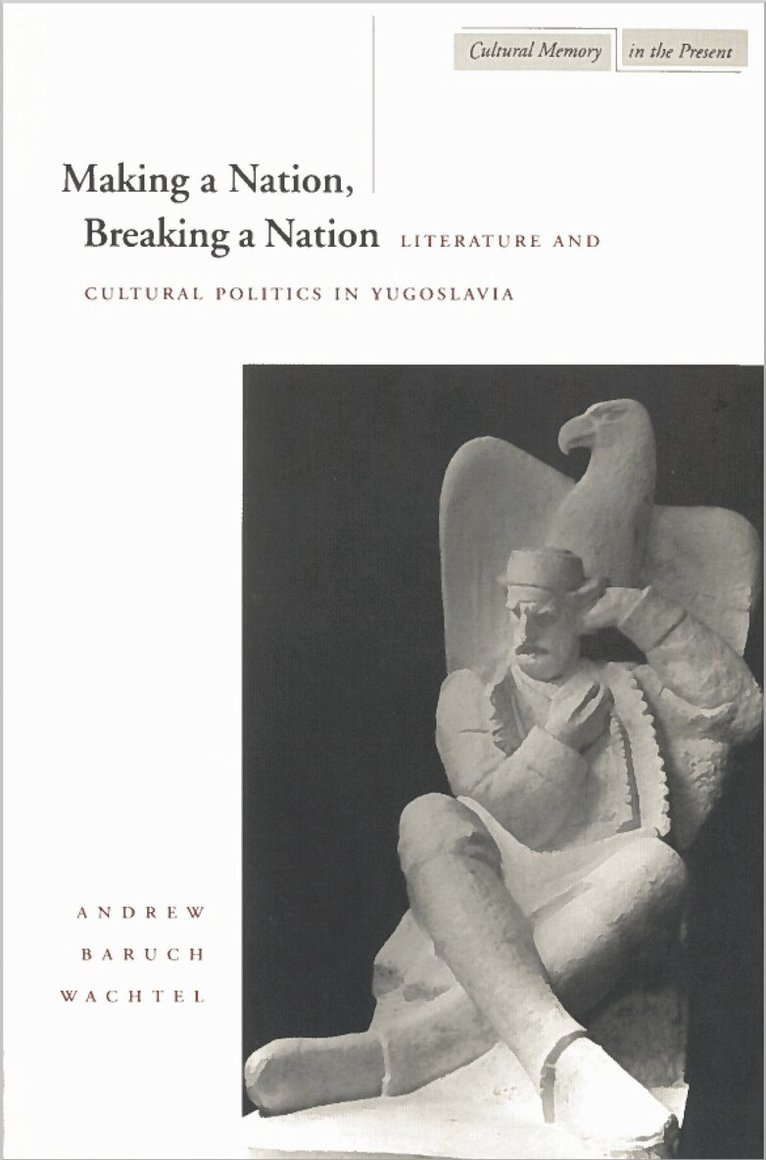
This book focuses on the cultural processes by which the idea of a Yugoslav nation was developed and on the reasons that this idea ultimately failed to bind the South Slavs into a viable nation and state. The author argues that the collapse of multinational Yugoslavia and the establishment of separate uninational states did not result from the breakdown of the political or economic fabric of the Yugoslav state; rather, that breakdown itself sprang from the destruction of the concept of a Yugoslav nation. Had such a concept been retained, a collapse of political authority would have been followed by the eventual reconstitution of a Yugoslav state, as happened after World War II, rather than the creation of separate nation-states.Because the author emphasizes nation building rather than state building, the causes and evidence he cites for Yugoslavia's collapse differ markedly from those that have previously been put forward. He concentrates on culture and cultural politics in the South Slavic lands from the mid-nineteenth century to the present in order to delineate those ideological mechanisms that helped lay the foundation for the formation of a Yugoslav nation in the first place, sustained the nation during its approximately seventy-year existence, and led to its dissolution.The book describes the evolution of the idea of Yugoslav national unity in four major areas: linguistic policies geared to creating a shared national language, the promulgation of a Yugoslav literary and artistic canon, an educational policy that emphasized the teaching of literature and history in schools, and the production of new literary and artistic works incorporating a Yugoslav view.In the book's conclusion, the author discusses the relevance of the Yugoslav case for other parts of the world, considering whether the triumph of particularist nationalism is inevitable in multinational states.
Making a Nation, Breaking a Nation
Literature and Cultural Politics in Yugoslavia
Häftad, Engelska, 1998
360 kr
Skickas inom 7-10 vardagar
This book focuses on the cultural processes by which the idea of a Yugoslav nation was developed and on the reasons that this idea ultimately failed to bind the South Slavs into a viable nation and state. The author argues that the collapse of multinational Yugoslavia and the establishment of separate uninational states did not result from the breakdown of the political or economic fabric of the Yugoslav state; rather, that breakdown itself sprang from the destruction of the concept of a Yugoslav nation. Had such a concept been retained, a collapse of political authority would have been followed by the eventual reconstitution of a Yugoslav state, as happened after World War II, rather than the creation of separate nation-states.Because the author emphasizes nation building rather than state building, the causes and evidence he cites for Yugoslavia's collapse differ markedly from those that have previously been put forward. He concentrates on culture and cultural politics in the South Slavic lands from the mid-nineteenth century to the present in order to delineate those ideological mechanisms that helped lay the foundation for the formation of a Yugoslav nation in the first place, sustained the nation during its approximately seventy-year existence, and led to its dissolution.The book describes the evolution of the idea of Yugoslav national unity in four major areas: linguistic policies geared to creating a shared national language, the promulgation of a Yugoslav literary and artistic canon, an educational policy that emphasized the teaching of literature and history in schools, and the production of new literary and artistic works incorporating a Yugoslav view.In the book's conclusion, the author discusses the relevance of the Yugoslav case for other parts of the world, considering whether the triumph of particularist nationalism is inevitable in multinational states.
1 452 kr
Skickas inom 7-10 vardagar
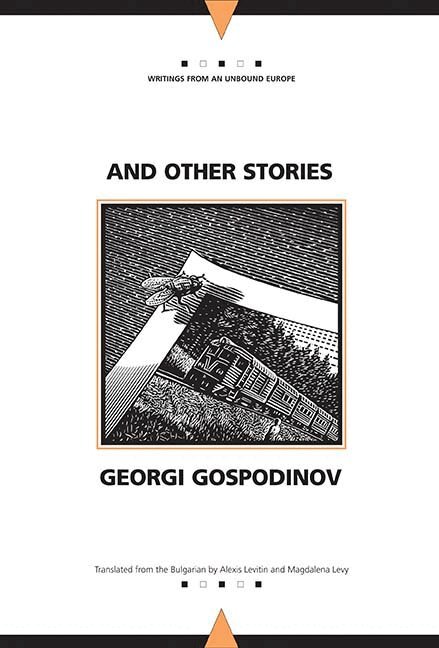
Stories within stories, a few contemporary fables, a hint of the narrative complexity of Borges, a whiff of the gritty realism of pre- and post-communist life in Eastern Europe - these are the elements that come together in a unique and surprising way in the wildly imaginative and endlessly engaging short stories of Georgi Gospodinov. Whether a tongue-in-cheek crime/horror story or the Christmas story of a pig, a language game leading to an unexpected epiphany or an inward-looking tale built on the complexity of a puzzle box, the work in this collection offers a kaleidoscopic experience of a writer whose style has been described as ""anarchic, experimental"" (""New Yorker"") and ""compulsively readable"" (""New York Times""). Gospodinov's debut prose work ""Natural Novel"" was hailed as a ""go-for-broke postmodern construction - a devilish jam of jump-cut narration, pop culture riffs, wholesale quotation, and Chinese-box authorship"" (""Village Voice""). At once familiar and fantastic, his writing is high comedy, high seriousness, and of very high order.