Andrew Billingsley - Böcker
Visar alla böcker från författaren Andrew Billingsley. Handla med fri frakt och snabb leverans.
3 produkter
3 produkter
371 kr
Skickas inom 5-8 vardagar
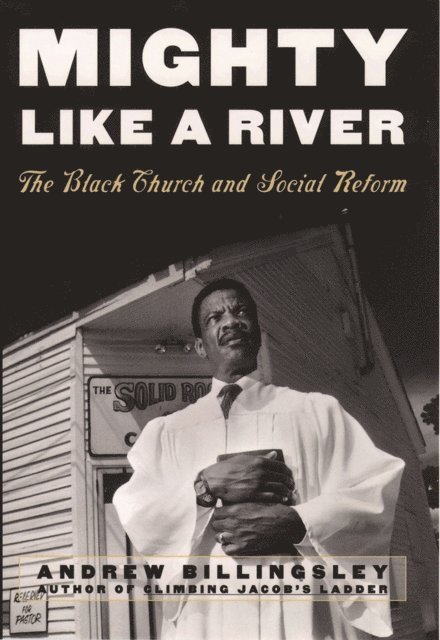
Throughout the history of the African American people there has been no stronger resource for overcoming adversity than the black church. From its role in leading a group of free Blacks to form a colony in Sierra Leone in the 1790s to helping ex-slaves after the Civil War, and from playing major roles in the Civil Rights Movement to offering community outreach programs in American cities today, black churches have been the focal point of social change in their communities. Based on extensive research over several years, Mighty Like a River is the first comprehensive account of how black churches have helped shape American society. An expert in African American culture, Andrew Billingsley surveys nearly a thousand black churches across the country, including its oldest, the First African Baptist Church in Savannah, Georgia. These black churches, whose roots extend back to antebellum times, have periodically confronted social, economic, and political problems facing the African American community. Mighty Like a River addresses such questions as: How widespread and effective is the community activity of black churches? What are the patterns of activities being undertaken today? How do activist churches confront such problems as family instability, youth development, AIDS and other health issues, and care for the elderly?With profiles of the remarkable black heroes and heroines who helped create the activist church, and a compelling agenda for expanding the black church's role in society at large, Mighty Like a River is an inspirational, visionary, and definitive account of the subject.
280 kr
Skickas inom 5-8 vardagar
Climbing Jacob's Ladder traces the history of the black family from its roots in Africa, through slavery, Reconstruction, the Depression, and the civil rights movement, to the present, arguing that black families cannot be measured against white norms.This groundbreaking, provocative work dispels some of the most common myths, misconceptions, misunderstandings, and misinformation about African American families. Climbing Jacob's Ladder takes a fresh look at the evolution of Black families, describes the forces that have shaped them, and examines their resiliency in the face of difficult conditions, and the strengths that help them endure.
244 kr
Skickas inom 7-10 vardagar
A sociological approach to appreciating the heroism and legacy of the Gullah statesman.On May 13, 1862, Robert Smalls (1839-1915) commandeered a Confederate warship, the Planter, from Charleston harbor and piloted the vessel to cheering seamen of the Union blockade, thus securing his place in the annals of Civil War heroics. Slave, pilot, businessman, statesman, U.S. congressman—Smalls played many roles en route to becoming an American icon, but none of his accomplishments was a solo effort. Sociologist Andrew Billingsley offers the first biography of Smalls to assess the influence of his families—black and white, past and present—on his life and enduring legend. In so doing, Billingsley creates a compelling mosaic of evolving black-white social relations in the American South as exemplified by this famous figure and his descendants.Born a slave in Beaufort, South Carolina, Robert Smalls was raised with his master's family and grew up amid an odd balance of privilege and bondage which instilled in him an understanding of and desire for freedom, culminating in his daring bid for freedom in 1862. Smalls served with distinction in the Union forces at the helm of the Planter and, after the war, he returned to Beaufort to buy the home of his former masters—a house that remained at the center of the Smalls family for a century. A founder of the South Carolina Republican Party, Smalls was elected to the state house of representatives, the state senate, and five times to the United States Congress. Throughout the trials and triumphs of his military and public service, he was surrounded by growing family of supporters. Billingsley illustrates how this support system, coupled with Smalls's dogged resilience, empowered him for success.Writing of subsequent generations of the Smalls family, Billingsley delineates the evolving patterns of opportunity, challenge, and change that have been the hallmarks of the African American experience thanks to the selfless investments in freedom and family made by Robert Smalls of South Carolina.