Andrew Canessa - Böcker
Visar alla böcker från författaren Andrew Canessa. Handla med fri frakt och snabb leverans.
8 produkter
8 produkter
431 kr
Skickas inom 3-6 vardagar
694 kr
Skickas inom 7-10 vardagar
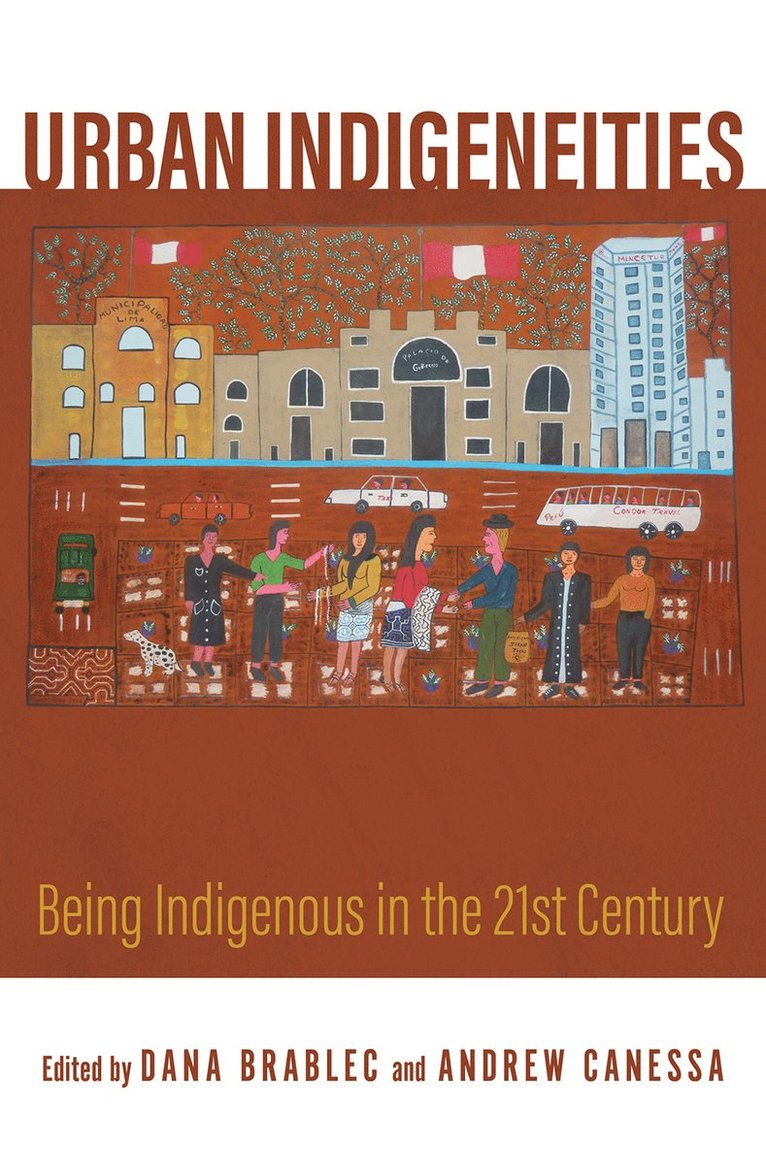
Today a majority of Indigenous peoples live in urban areas: they are builders and cleaners, teachers and lawyers, market women and masons, living in towns and cities surrounded by the people and pollution that characterize life for most individuals in the twenty-first century. Despite this basic fact, the vast majority of studies on Indigenous peoples concentrate solely on rural Indigenous populations.Aiming to highlight these often-overlooked communities, this is the first book to look at urban Indigenous peoples globally and present the urban Indigenous experience--not as the exception but as the norm. The contributing essays draw on a wide range of disciplines, including sociology, anthropology, architecture, land economy, and area studies, and are written by both Indigenous and non-Indigenous scholars. The analysis looks at Indigenous people across the world and draws on examples not usually considered within the study of indigeneity, such as Fiji, Japan, and Russia.Indigeneity is often seen as being “authentic” when it is practiced in remote rural areas, but these essays show that a vigorous, vibrant, and meaningful indigeneity can be created in urban spaces too. The book challenges many of the imaginaries and tropes of what constitutes “the Indigenous” and offers perspectives and tools to understand a contemporary Indigenous urban reality. As such, it is a must-read for anyone interested in the real lives of Indigenous people today.ContributorsChris AndersenGiuliana BoreaDana BrablecAndrew CanessaSandra del Valle CasalsAiko Ikemura AmaralStanislav Saas KsenofontovDaniela PelusoAndrey PetrovMarya Rozanova-SmithKate StevensKanako Uzawa
694 kr
Skickas inom 7-10 vardagar
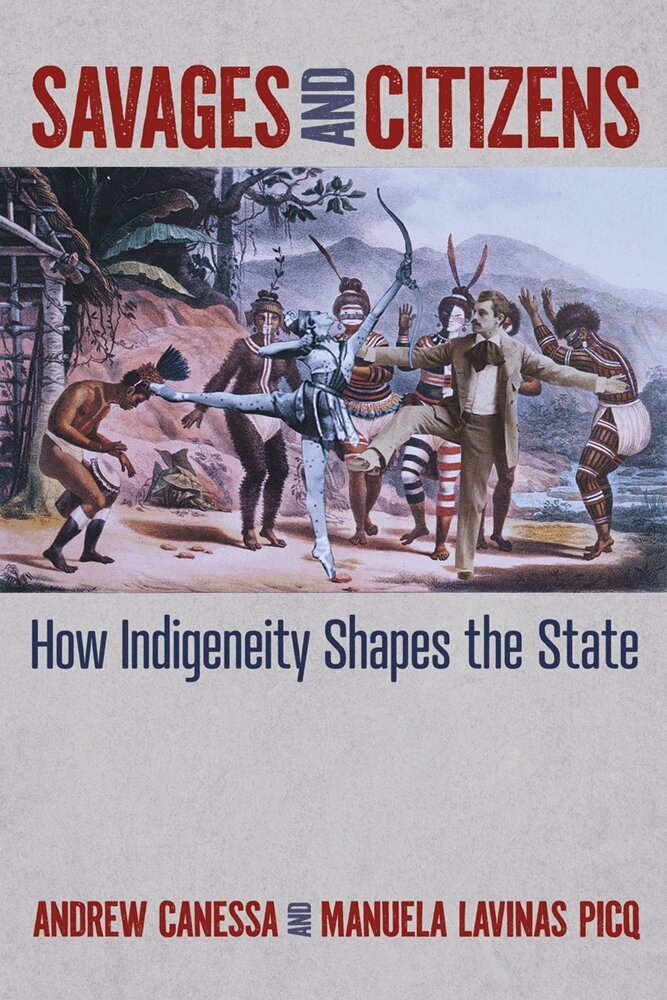
Although Indigenous peoples are often perceived as standing outside political modernity, Savages and Citizens takes the provocative view that Indigenous people have been fundamental to how contemporary state sovereignty was imagined, theorized, and practiced.Delving into European political philosophy, comparative politics, and contemporary international law, the book shows how the concept of indigeneity has shaped the development of the modern state. The exclusion of Indigenous peoples was not a collateral byproduct but political project in which they served as modernity’s indispensable looking glass. The book argues that indigeneity is a political identity relational to modern nation-states and that Indigenous politics, although marking the boundary of the state, are co-constitutive of colonial processes of state-making. In showing how indigeneity is central to how the international system of states operates, the book forefronts Indigenous peoples as political actors to reject essentializing views that reduce them to cultural “survivors” rooted in the past.With insights drawn from diverse global contexts and empirical research from Bolivia and Ecuador, this work advocates for the relevance of Indigenous studies within political science and argues for an ethnography of sovereignty in anthropology. Savages and Citizens makes a compelling case for the centrality of Indigenous perspectives to understand the modern state from political theory to international studies.
364 kr
Skickas inom 7-10 vardagar
Today a majority of Indigenous peoples live in urban areas: they are builders and cleaners, teachers and lawyers, market women and masons, living in towns and cities surrounded by the people and pollution that characterize life for most individuals in the twenty-first century. Despite this basic fact, the vast majority of studies on Indigenous peoples concentrate solely on rural Indigenous populations. Aiming to highlight these often-overlooked communities, this is the first book to look at urban Indigenous peoples globally and present the urban Indigenous experience—not as the exception but as the norm. The contributing essays draw on a wide range of disciplines, including sociology, anthropology, architecture, land economy, and area studies, and are written by both Indigenous and non-Indigenous scholars. The analysis looks at Indigenous people across the world and draws on examples not usually considered within the study of indigeneity, such as Fiji, Japan, and Russia. Indigeneity is often seen as being “authentic” when it is practiced in remote rural areas, but these essays show that a vigorous, vibrant, and meaningful indigeneity can be created in urban spaces too. The book challenges many of the imaginaries and tropes of what constitutes “the Indigenous” and offers perspectives and tools to understand a contemporary Indigenous urban reality. As such, it is a must-read for anyone interested in the real lives of Indigenous people today. Contributors Aiko Ikemura Amaral Chris Andersen Giuliana Borea Dana Brablec Andrew Canessa Sandra del Valle Casals Stanislav Saas Ksenofontov Daniela Peluso Andrey Petrov Marya Rozanova-Smith Kate Stevens Kanako Uzawa
320 kr
Skickas inom 7-10 vardagar
Although Indigenous peoples are often perceived as standing outside political modernity, Savages and Citizens takes the provocative view that Indigenous people have been fundamental to how contemporary state sovereignty was imagined, theorized, and practiced. Delving into European political philosophy, comparative politics, and contemporary international law, the book shows how the concept of indigeneity has shaped the development of the modern state. The exclusion of Indigenous people was not a collateral byproduct; it was a political project in its own right. The book argues that indigeneity is a political identity relational to modern nation-states and that Indigenous politics, although marking the boundary of the state, are co-constitutive of colonial processes of state-making. In showing how indigeneity is central to how the international system of states operates, the book forefronts Indigenous peoples as political actors to reject essentializing views that reduce them to cultural “survivors” rooted in the past. With insights drawn from diverse global contexts and empirical research from Bolivia and Ecuador, this work advocates for the relevance of Indigenous studies within political science and argues for an ethnography of sovereignty in anthropology. Savages and Citizens makes a compelling case for the centrality of Indigenous perspectives to understand the modern state from political theory to international studies.
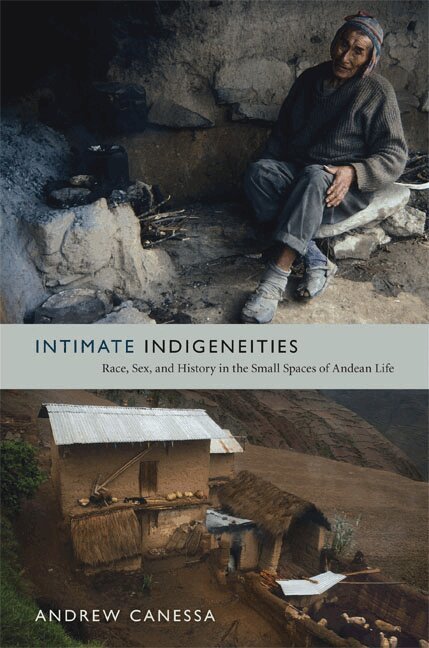
Intimate Indigeneities
Race, Sex, and History in the Small Spaces of Andean Life
Häftad, Engelska, 2012
540 kr
Skickas inom 3-6 vardagar
Drawing on extended ethnographic research conducted over the course of more than two decades, Andrew Canessa explores the multiple identities of a community of people in the Bolivian highlands through their own lived experiences and voices. He examines how gender, race, and ethnic identities manifest themselves in everyday interactions in the Aymara village. Canessa shows that indigeneity is highly contingent; thoroughly imbricated with gendered, racial, and linguistic identities; and informed by a historical consciousness. Addressing how whiteness and indianness are reproduced as hegemonic structures in the village, how masculinities develop as men go to the mines and army, and how memories of a violent past are used to construct a present sense of community, Canessa raises important questions about indigenous politics and the very nature of indigenous identity.
1 749 kr
Skickas inom 7-10 vardagar
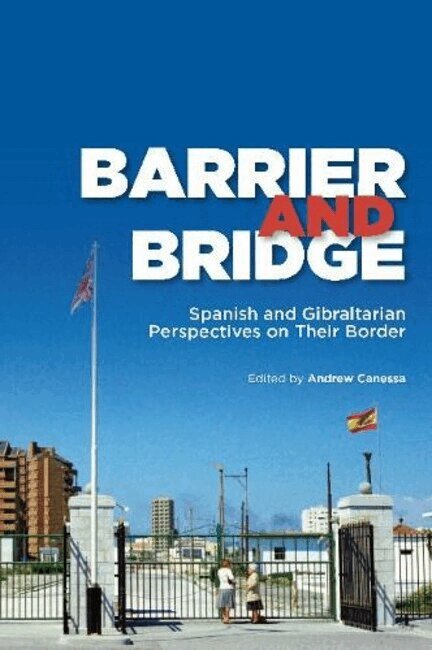
Brexit looms ever closer one of the many problem raised by the UKs departure from the EU is the British Overseas Territory of Gibraltar which shares a land border with Spain across which approximately 40 per cent of Gibraltars labour force cross daily. Real questions are being raised on the future of this border and how it will be managed but one can only understand its future based on a sound knowledge of its evolution. Barrier and Bridge explores the recent history of the border drawing on documentary and oral history accounts on both sides. It offers a human as much as a political history and argues that whereas at the beginning of the twentieth century there was virtually no border and strong cultural, economic, linguistic, and ethnic ties that straddled it, by the end of the century the border denoted a much more profound sense of difference between the populations. The book traces the complex developments over the twentieth century, looking at language change, marriage patterns, governance through the border, the Spanish Civil War and the Second World War and the changing relationship between the UK and the residents of the Rock who, over this period, identified increasingly as British. Eschewing a linear historical narrative, Barrier and Bridge explores the twists and turns, ambivalences and ambiguities, that inhere around this contentious border and concludes that we cannot expect its future to be as predictable as many would assume. Published in association with the Canada Blanch Centre for Contemporary Spanish Studies, LSE
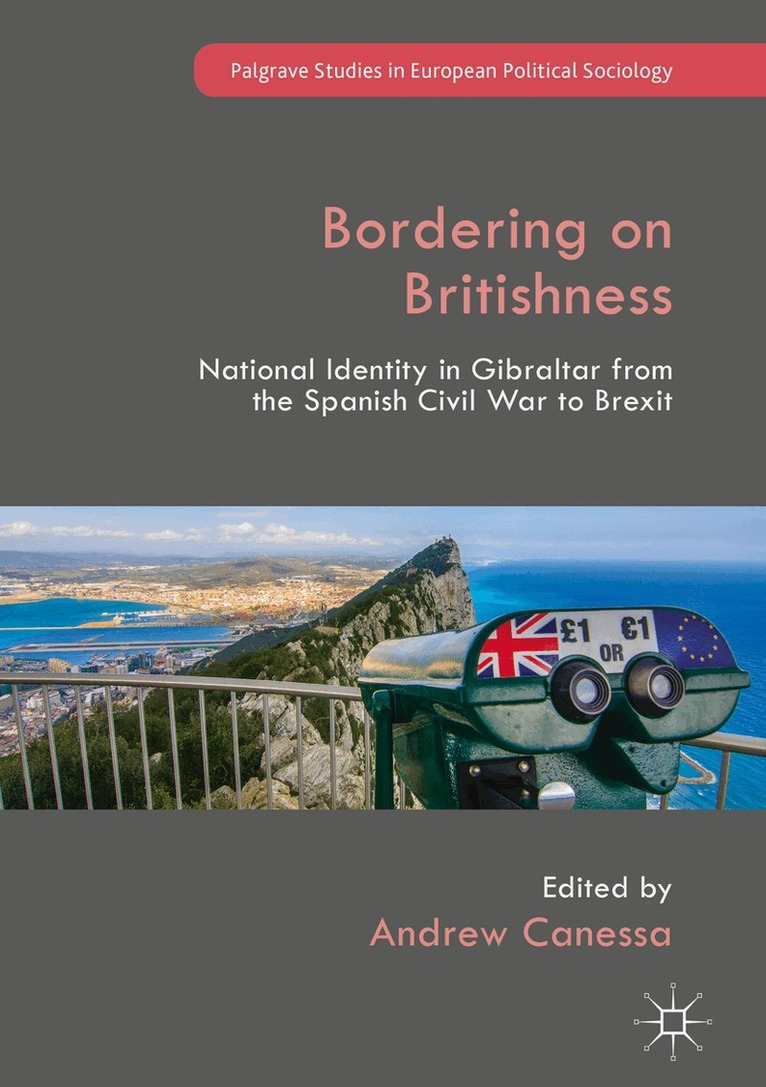
Bordering on Britishness
National Identity in Gibraltar from the Spanish Civil War to Brexit
Inbunden, Engelska, 2019
1 381 kr
Skickas inom 10-15 vardagar
This volume explores how Gibraltarian Britishness was constructed over the course of the twentieth century. Today most Gibraltarians are fiercely proud of their Britishness, sometimes even describing themselves as ‘more British than the British’ and Gibraltar’s Chief Minister in 2018 announced in a radio interview that “We see the world through British eyes.” Yet well beyond the mid-twentieth century the inhabitants of the Rock were overwhelmingly Spanish speaking, had a high rate of intermarriage with Spaniards, and had strong class links and shared interests with their neighbours across the border. At the same time, Gibraltarians had a very clear secondary status with respect to UK British people. By the beginning of the twenty-first century, however, Gibraltarians speak more English than Spanish (with increasing English monolingualism), have full British citizenship and are no longer discriminated against based on their ethnicity; they see themselves as profoundly different culturally to Spanish people across the border. Bordering on Britishness explores and interrogates these changes and examines in depth the evolving relationship Gibraltarians have with Britishness. It also reflects on the profound changes Gibraltar is likely to experience because of Brexit when its border with Spain becomes an external EU border and the relative political strengths of Spain and the UK shift accordingly. If Gibraltarian Britishness has evolved in the past it is certain to evolve in the future and this volume raises the question of how this might change if the UK’s political and economic strength – especially with respect to Gibraltar – begins to wane.