Andrew Coan – författare
Visar alla böcker från författaren Andrew Coan. Handla med fri frakt och snabb leverans.
3 produkter
3 produkter
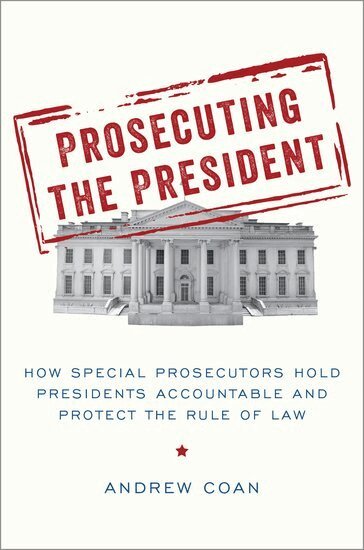
Prosecuting the President
How Special Prosecutors Hold Presidents Accountable and Protect the Rule of Law
Inbunden, Engelska, 2019
366 kr
Skickas inom 5-8 vardagar
"The perfect book for the present moment. Prosecuting the President is magnificent." -- David Marcus, Professor of Law, UCLA In this exceptionally timely book, law professor Andrew Coan explains what every American needs to know about special prosecutors - perhaps the most important and misunderstood public officials of our time.The first special prosecutor was appointed by President Ulysses S. Grant in 1875, to investigate a bribery scandal involving his close friends and associates. Ever since, presidents of both parties have appointed special prosecutors and empowered them to operate with unusual independence. Also called special counsels and independent counsels, such appointments became a standard method for neutralizing political scandals and demonstrating the President's commitment to the rule of law. Special counsel Robert Mueller is the latest example.In Prosecuting the President, Andrew Coan offers a highly engaging look at the long, mostly forgotten history of special prosecutors in American politics. For more than a century, special prosecutors have struck fear into the hearts of Presidents, who have the power to fire them at any time. How could this be, Coan asks? And how could the nation entrust such a high responsibility to such subordinate officials? With vivid storytelling and historical examples, Coan demonstrates that special prosecutors can do much to protect the rule of law under the right circumstances. Many have been thwarted by the formidable challenges of investigating a sitting President and his close associates; a few have abused the powers entrusted to them. But at their best, special prosecutors function as catalysts of democracy, channeling an unfocused popular will to safeguard the rule of law. By raising the visibility of high-level misconduct, they enable the American people to hold the President accountable. Yet, if a President thinks he can fire a special prosecutor without incurring serious political damage, he has the power to do so. Ultimately, Coan concludes, only the American people can decide whether the President is above the law.
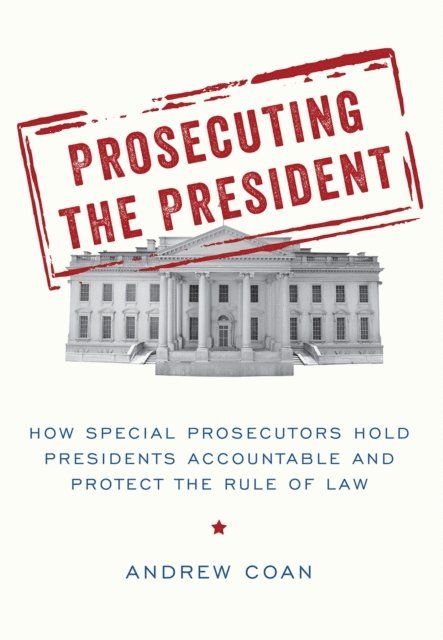
Prosecuting the President
How Special Prosecutors Hold Presidents Accountable and Protect the Rule of Law
Häftad, Engelska, 2020
222 kr
Skickas inom 5-8 vardagar
"The perfect book for the present moment. Prosecuting the President is magnificent." -- David Marcus, Professor of Law, UCLAIn this exceptionally timely book, law professor Andrew Coan explains what every American needs to know about special prosecutors -- perhaps the most important and misunderstood public officials of our time. The first special prosecutor was appointed by President Ulysses S. Grant in 1875, to investigate a bribery scandal involving his close friends and associates. Ever since, presidents of both parties have appointed special prosecutors and empowered them to operate with unusual independence. Also called special counsels and independent counsels, such appointments became a standard method for neutralizing political scandals and demonstrating the President's commitment to the rule of law. Special counsel Robert Mueller is the latest example.In Prosecuting the President, Andrew Coan offers a highly engaging look at the long, mostly forgotten history of special prosecutors in American politics. For more than a century, special prosecutors have struck fear into the hearts of Presidents, who have the power to fire them at any time. How could this be, Coan asks? And how could the nation entrust such a high responsibility to such subordinate officials? With vivid storytelling and historical examples, Coan demonstrates that special prosecutors can do much to protect the rule of law under the right circumstances. Many have been thwarted by the formidable challenges of investigating a sitting President and his close associates; a few have abused the powers entrusted to them. But at their best, special prosecutors function as catalysts of democracy, channeling an unfocused popular will to safeguard the rule of law. By raising the visibility of high-level misconduct, they enable the American people to hold the President accountable. Yet, if a President thinks he can fire a special prosecutor without incurring serious political damage, he has the power to do so. Ultimately, Coan concludes, only the American people can decide whether the President is above the law.
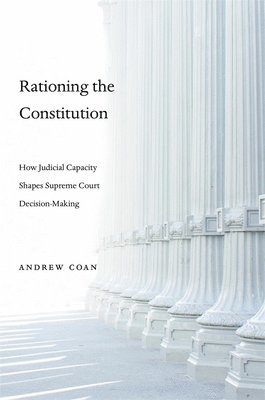
Rationing the Constitution
How Judicial Capacity Shapes Supreme Court Decision-Making
Inbunden, Engelska, 2019
374 kr
Skickas inom 10-15 vardagar
In this groundbreaking analysis of Supreme Court decision-making, Andrew Coan explains how judicial caseload shapes the course of American constitutional law and the role of the Court in American society.Compared with the vast machinery surrounding Congress and the president, the Supreme Court is a tiny institution that can resolve only a small fraction of the constitutional issues that arise in any given year. Rationing the Constitution shows that this simple yet frequently ignored fact is essential to understanding how the Supreme Court makes constitutional law.Due to the structural organization of the judiciary and certain widely shared professional norms, the capacity of the Supreme Court to review lower-court decisions is severely limited. From this fact, Andrew Coan develops a novel and arresting theory of Supreme Court decision-making. In deciding cases, the Court must not invite more litigation than it can handle. On many of the most important constitutional questions—touching on federalism, the separation of powers, and individual rights—this constraint creates a strong pressure to adopt hard-edged categorical rules, or defer to the political process, or both.The implications for U.S. constitutional law are profound. Lawyers, academics, and social activists pursuing social reform through the courts must consider whether their goals can be accomplished within the constraints of judicial capacity. Often the answer will be no. The limits of judicial capacity also substantially constrain the Court’s much touted—and frequently lamented—power to overrule democratic majorities. As Rationing the Constitution demonstrates, the Supreme Court is David, not Goliath.