Andrew Demshuk - Böcker
Visar alla böcker från författaren Andrew Demshuk. Handla med fri frakt och snabb leverans.
7 produkter
7 produkter
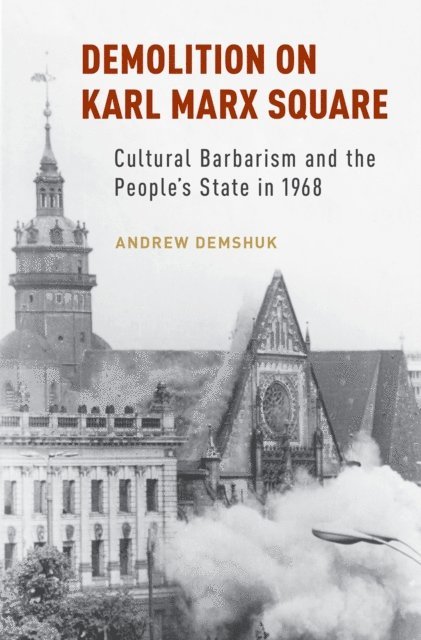
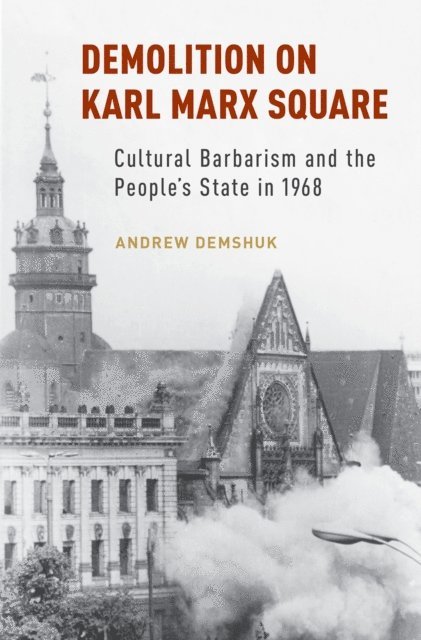
Demolition on Karl Marx Square
Cultural Barbarism and the People's State in 1968
Inbunden, Engelska, 2017
1 147 kr
Skickas inom 5-8 vardagar
Communist East Germany's demolition of Leipzig's perfectly intact medieval University Church in May 1968 was an act decried as "cultural barbarism" across the two Germanies and beyond. Although overshadowed by the crackdown on Prague Spring mere weeks later, the willful destruction of this historic landmark on a central site symbolically renamed Karl Marx Square represents an essential turning point in the relationship between the Communist authorities and the people they claimed to serve. As the largest case of public protest in East German history between the 1953 Uprising and 1989 Revolution, this intimate local trauma exhibits the inner workings of a "dictatorial" system and exposes the often gray and overlapping lines between state and citizenry, which included both quiet and open resistance, passive and active collaboration. Through deep analysis of untapped periodicals and archives (including once-classified State documents, Stasi, and police records, and extensive private protest letters), it introduces a broad cast of characters who helped make the inconceivable possible, and restores the voices of not a few ordinary citizens of all stripes who dared in the name of culture, humanism, and civic pride to protest what they saw as an inconceivable tragedy. In this city that later started the 1989 October Revolution which ultimately triggered the fall of the Berlin Wall, residents from every social background desperately hoped to convince their leaders to step back from the brink. But as the dust cleared in 1968, they saw with all finality that their voices meant nothing, that the DDR was a sham democracy awash with utopian rhetoric that had no connection with their everyday lives. If Communism died in Prague in 1968, it had already died in Leipzig just weeks before, with repercussions that still haunt today's politics of memory.
892 kr
Skickas inom 7-10 vardagar
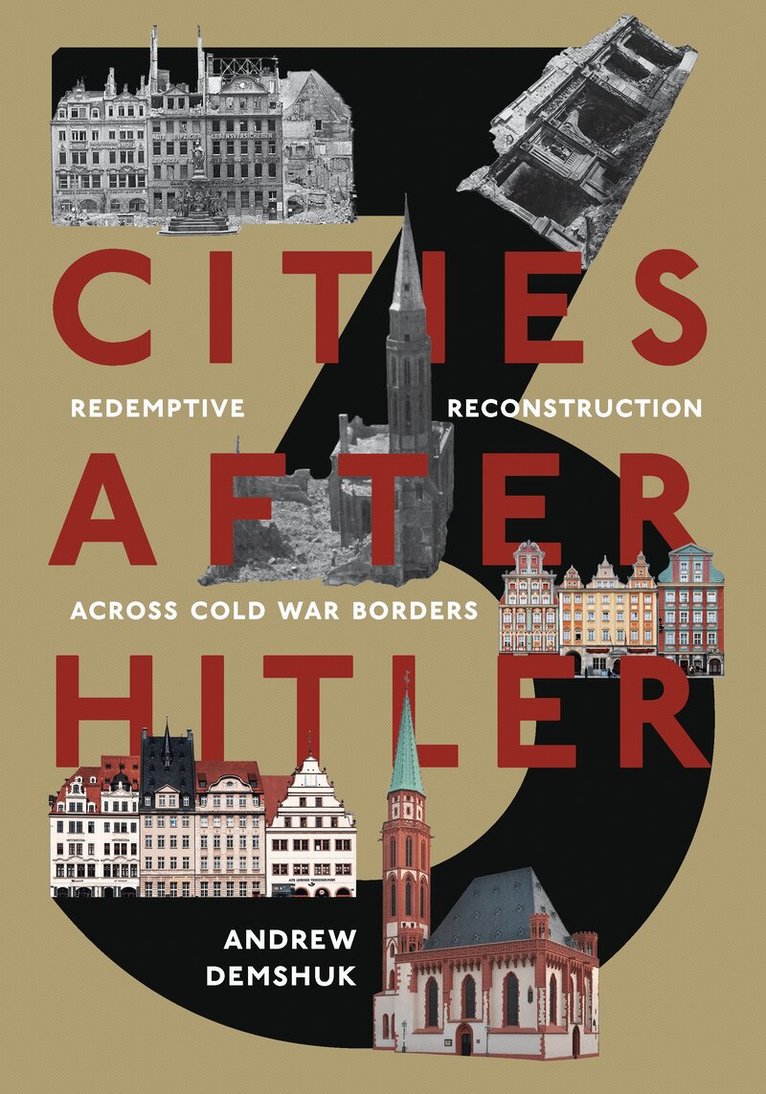
Winner, 2023 SAH Alice Davis Hitchcock Book AwardThree Cities after Hitler compares how three prewar German cities shared decades of postwar development under three competing post-Nazi regimes: Frankfurt in capitalist West Germany, Leipzig in communist East Germany, and Wrocław (formerly Breslau) in communist Poland. Each city was rebuilt according to two intertwined modern trends. First, certain local edifices were chosen to be resurrected as “sacred sites” to redeem the national story after Nazism. Second, these tokens of a reimagined past were staged against the hegemony of modernist architecture and planning, which wiped out much of whatever was left of the urban landscape that had survived the war. All three cities thus emerged with simplified architectural narratives, whose historically layered complexities only survived in fragments where this twofold “redemptive reconstruction” after Nazism had proven less vigorous, sometimes because local citizens took action to save and appropriate them. Transcending both the Iron Curtain and freshly homogenized nation-states, three cities under three rival regimes shared a surprisingly common history before, during, and after Hitler—in terms of both top-down planning policies and residents’ spontaneous efforts to make home out of their city as its shape shifted around them.
1 282 kr
Skickas inom 7-10 vardagar
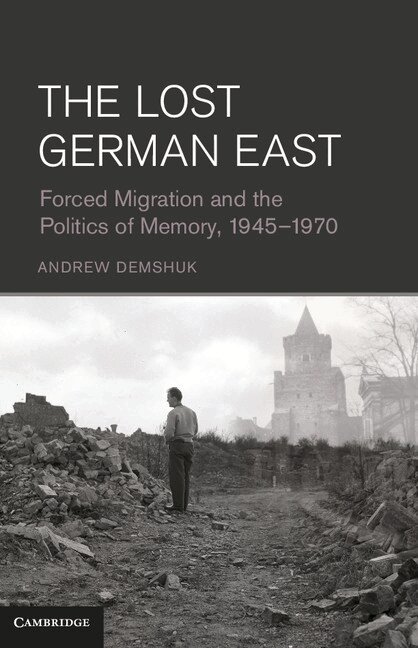
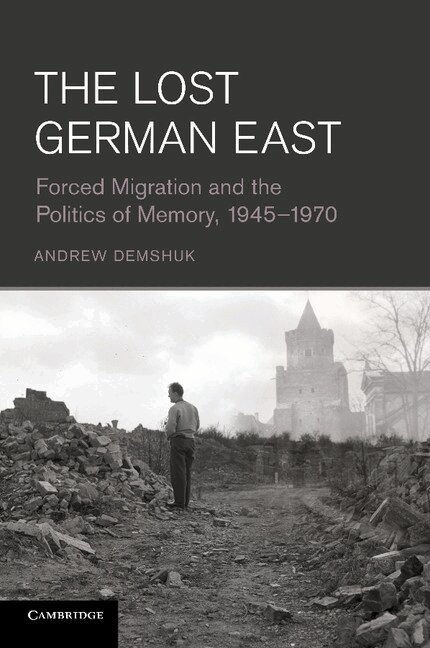
A fifth of West Germany's post-1945 population consisted of ethnic German refugees expelled from Eastern Europe, a quarter of whom came from Silesia. As the richest territory lost inside Germany's interwar borders, Silesia was a leading objective for territorial revisionists, many of whom were themselves expellees. The Lost German East examines how and why millions of Silesian expellees came to terms with the loss of their homeland. Applying theories of memory and nostalgia, as well as recent studies on ethnic cleansing, Andrew Demshuk shows how, over time, most expellees came to recognize that the idealized world they mourned no longer existed. Revising the traditional view that most of those expelled sought a restoration of prewar borders so they could return to the east, Demshuk offers a new answer to the question of why, after decades of violent upheaval, peace and stability took root in West Germany during the tense early years of the Cold War.
577 kr
Skickas inom 7-10 vardagar
A fifth of West Germany's post-1945 population consisted of ethnic German refugees expelled from Eastern Europe, a quarter of whom came from Silesia. As the richest territory lost inside Germany's interwar borders, Silesia was a leading objective for territorial revisionists, many of whom were themselves expellees. The Lost German East examines how and why millions of Silesian expellees came to terms with the loss of their homeland. Applying theories of memory and nostalgia, as well as recent studies on ethnic cleansing, Andrew Demshuk shows how, over time, most expellees came to recognize that the idealized world they mourned no longer existed. Revising the traditional view that most of those expelled sought a restoration of prewar borders so they could return to the east, Demshuk offers a new answer to the question of why, after decades of violent upheaval, peace and stability took root in West Germany during the tense early years of the Cold War.
510 kr
Skickas inom 7-10 vardagar
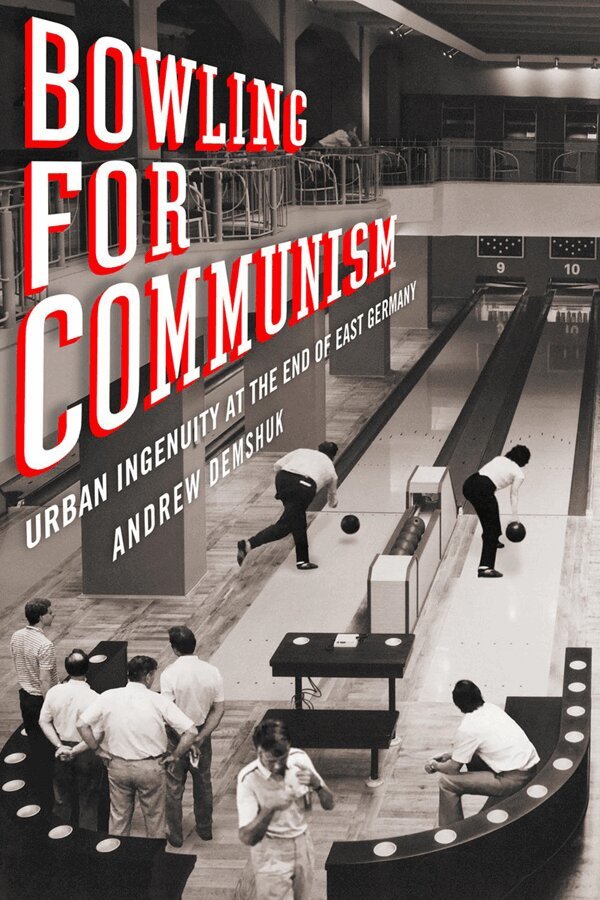
Bowling for Communism illuminates how civic life functioned in Leipzig, East Germany's second-largest city, on the eve of the 1989 revolution by exploring acts of "urban ingenuity" amid catastrophic urban decay. Andrew Demshuk profiles the creative activism of local communist officials who, with the help of scores of volunteers, constructed a palatial bowling alley without Berlin's knowledge or approval. In a city mired in disrepair, civic pride overcame resentment against a regime loathed for corruption, Stasi spies, and the Berlin Wall.Reconstructing such episodes through interviews and obscure archival materials, Demshuk shows how the public sphere functioned in Leipzig before the fall of communism. Hardly detached or inept, local officials worked around centralized failings to build a more humane city. And hardly disengaged, residents turned to black-market construction to patch up their surroundings.Because such "urban ingenuity" was premised on weakness in the centralized regime, the dystopian cityscape evolved from being merely a quotidian grievance to the backdrop for revolution. If, by their actions, officials were demonstrating that the regime was irrelevant, and if, in their own experiences, locals only attained basic repairs outside official channels, why should anyone have mourned the system when it was overthrown?
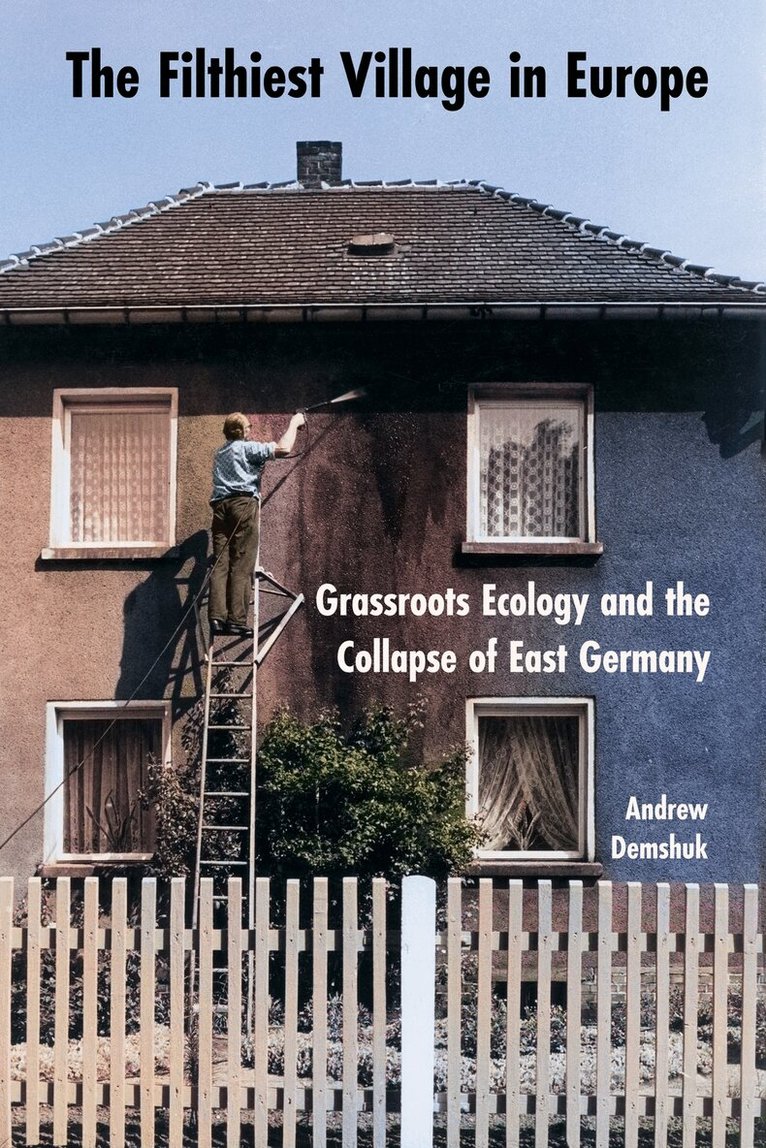
Filthiest Village in Europe
Grassroots Ecology and the Collapse of East Germany
Inbunden, Engelska, 2026
1 604 kr
Skickas inom 10-15 vardagar
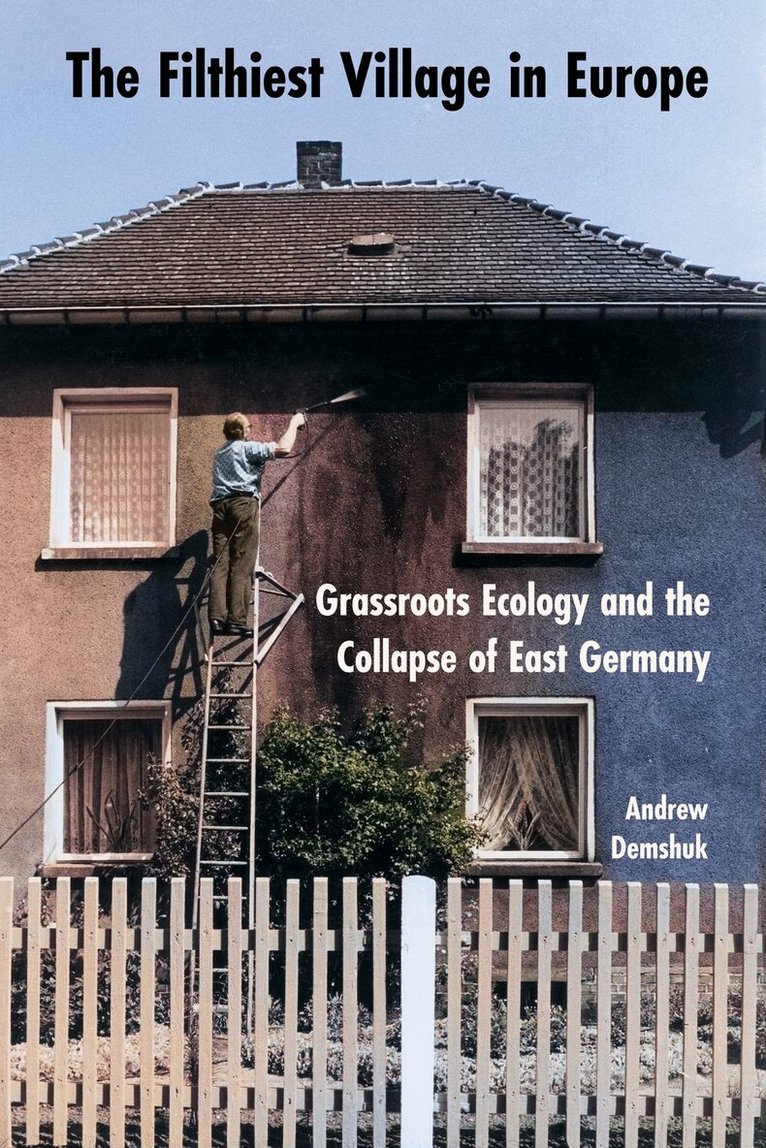
The Filthiest Village in Europe traces how a community shrouded by "industrial fog," at the brink of gaping coal pits, became a symbol that galvanized grassroots ecology – campaigns by diverse local actors that exposed environmental and economic crises East Germany's political system could not resolve. Notoriously known by the late 1980s as "the filthiest village in Europe," Mölbis suffocated downwind from the massively polluting carbochemical Espenhain plant. Applying a myriad of private collections, interviews, and untapped archival sources, Andrew Demshuk reveals how pastors, parents, officials, inspectors, workers, and spies negotiated ossified party structures whose inability to reform was showcased by ever-worsening environmental conditions. After peaceful protests a few kilometers north in Leipzig triggered a revolution, pre-1989 grassroots players launched innovative reconstruction programs with financial and organizational expertise from West Germans. Together, they transformed Europe's filthiest village into a healthy place to live and imbued it with new symbolism, turning it into a sign of hope. The political will and social engagement that saved Mölbis and rejuvenated the surrounding wasteland can inform how to revitalize other postindustrial "filthy places" in our world today.
Filthiest Village in Europe
Grassroots Ecology and the Collapse of East Germany
Häftad, Engelska, 2026
383 kr
Skickas
The Filthiest Village in Europe traces how a community shrouded by "industrial fog," at the brink of gaping coal pits, became a symbol that galvanized grassroots ecology – campaigns by diverse local actors that exposed environmental and economic crises East Germany's political system could not resolve. Notoriously known by the late 1980s as "the filthiest village in Europe," Mölbis suffocated downwind from the massively polluting carbochemical Espenhain plant. Applying a myriad of private collections, interviews, and untapped archival sources, Andrew Demshuk reveals how pastors, parents, officials, inspectors, workers, and spies negotiated ossified party structures whose inability to reform was showcased by ever-worsening environmental conditions. After peaceful protests a few kilometers north in Leipzig triggered a revolution, pre-1989 grassroots players launched innovative reconstruction programs with financial and organizational expertise from West Germans. Together, they transformed Europe's filthiest village into a healthy place to live and imbued it with new symbolism, turning it into a sign of hope. The political will and social engagement that saved Mölbis and rejuvenated the surrounding wasteland can inform how to revitalize other postindustrial "filthy places" in our world today.