Andrew Escobedo - Böcker
Visar alla böcker från författaren Andrew Escobedo. Handla med fri frakt och snabb leverans.
5 produkter
5 produkter
1 542 kr
Skickas inom 10-15 vardagar
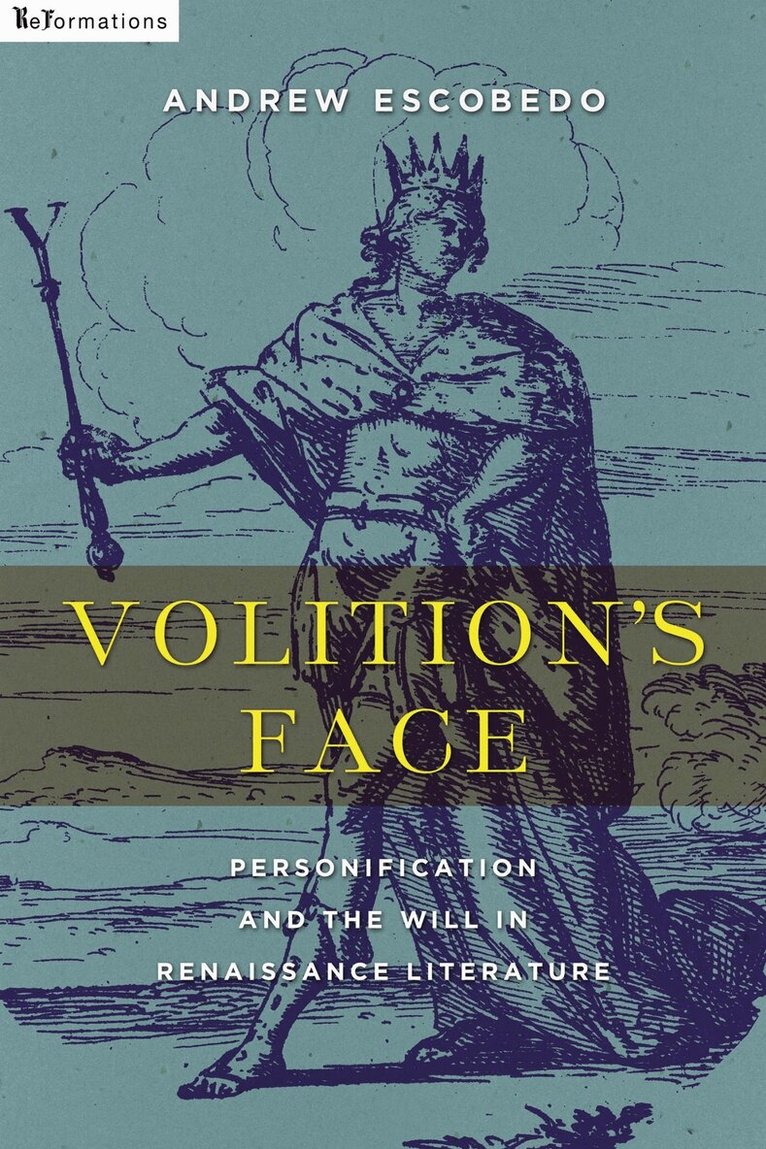
Modern readers and writers find it natural to contrast the agency of realistic fictional characters to the constrained range of action typical of literary personifications. Yet no commentator before the eighteenth century suggests that prosopopoeia signals a form of reduced agency. Andrew Escobedo argues that premodern writers, including Spenser, Marlowe, and Milton, understood personification as a literary expression of will, an essentially energetic figure that depicted passion or concept transforming into action. As the will emerged as an isolatable faculty in the Christian Middle Ages, it was seen not only as the instrument of human agency but also as perversely independent of other human capacities, for example, intellect and moral character. Renaissance accounts of the will conceived of volition both as the means to self-creation and the faculty by which we lose control of ourselves. After offering a brief history of the will that isolates the distinctive features of the faculty in medieval and Renaissance thought, Escobedo makes his case through an examination of several personified figures in Renaissance literature: Conscience in the Tudor interludes, Despair in Doctor Faustus and book I of The Faerie Queen, Love in books III and IV of The Faerie Queen, and Sin in Paradise Lost. These examples demonstrate that literary personification did not amount to a dim reflection of "realistic" fictional character, but rather that it provided a literary means to explore the numerous conundrums posed by the premodern notion of the human will. This book will be of great interest to faculty and graduate students interested in medieval studies and Renaissance literature.
483 kr
Skickas inom 10-15 vardagar
Modern readers and writers find it natural to contrast the agency of realistic fictional characters to the constrained range of action typical of literary personifications. Yet no commentator before the eighteenth century suggests that prosopopoeia signals a form of reduced agency. Andrew Escobedo argues that premodern writers, including Spenser, Marlowe, and Milton, understood personification as a literary expression of will, an essentially energetic figure that depicted passion or concept transforming into action. As the will emerged as an isolatable faculty in the Christian Middle Ages, it was seen not only as the instrument of human agency but also as perversely independent of other human capacities, for example, intellect and moral character. Renaissance accounts of the will conceived of volition both as the means to self-creation and the faculty by which we lose control of ourselves. After offering a brief history of the will that isolates the distinctive features of the faculty in medieval and Renaissance thought, Escobedo makes his case through an examination of several personified figures in Renaissance literature: Conscience in the Tudor interludes, Despair in Doctor Faustus and book I of The Faerie Queen, Love in books III and IV of The Faerie Queen, and Sin in Paradise Lost. These examples demonstrate that literary personification did not amount to a dim reflection of "realistic" fictional character, but rather that it provided a literary means to explore the numerous conundrums posed by the premodern notion of the human will. This book will be of great interest to faculty and graduate students interested in medieval studies and Renaissance literature.
Nationalism and Historical Loss in Renaissance England
Foxe, Dee, Spenser, Milton
Inbunden, Engelska, 2004
818 kr
Skickas inom 10-15 vardagar
Andrew Escobedo here seeks to provide a new understanding of the emergence of national consciousness in England, showing that many Renaissance writers articulated their Englishness temporally, through an engagement with a history they perceived as lost or alienated. According to Escobedo, the English experienced nationalism as a form of community that disrupted earlier religious and social identities, making it difficult to link the national present to the medieval past. Furthermore, he argues, the English faced the nation's temporal isolation before the Enlightenment narrative of historical progress emerged as a means to interpret novelty in a positive light.Escobedo examines how John Foxe, John Dee, Edmund Spenser, and John Milton used narrative representations of nationhood to mediate what they perceived as a troubling breach in history, attempting to bring together the English past, present, and near future in a complete and continuous story. Yet all four authors also register their concern that historical loss may be an inevitable feature of a "modern" England, and they come to see their narratives as long tapestries that spontaneously rip apart as they grow, obliging the weaver to return to repair them. Focusing on Renaissance England's perplexing sense of its time-boundedness, Escobedo presents early national consciousness as stranded awkwardly between the premodern and modern.
1 660 kr
Skickas inom 7-10 vardagar
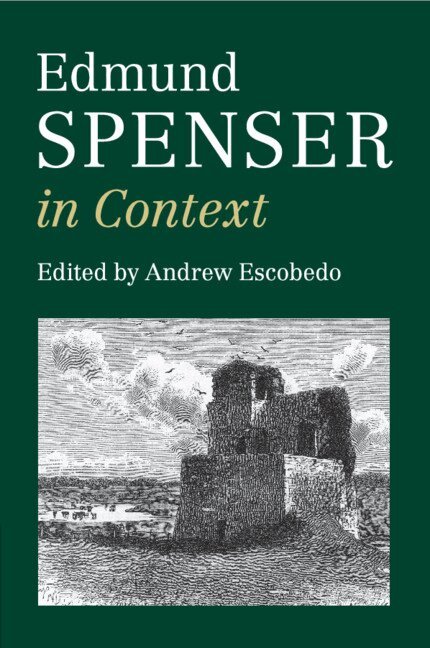
Edmund Spenser's poetry remains an indispensable touchstone of English literary history. Yet for modern readers his deliberate use of archaic language and his allegorical mode of writing can become barriers to understanding his poetry. This volume of thirty-seven essays, written by distinguished scholars, offers a rich introduction to the literary, political and religious contexts that shaped Spenser's poetry, including the environment in which he lived, the genres he drew upon, and the influences that helped to fashion his art. The collection reveals the multiple personae that Spenser constructs within his work: to read Spenser is to read a rich archive of literary forms, and this volume provides the contexts in which to do so. A reading list at the end of the volume will prove invaluable to further study.
429 kr
Skickas inom 7-10 vardagar
Edmund Spenser's poetry remains an indispensable touchstone of English literary history. Yet for modern readers his deliberate use of archaic language and his allegorical mode of writing can become barriers to understanding his poetry. This volume of thirty-seven essays, written by distinguished scholars, offers a rich introduction to the literary, political and religious contexts that shaped Spenser's poetry, including the environment in which he lived, the genres he drew upon, and the influences that helped to fashion his art. The collection reveals the multiple personae that Spenser constructs within his work: to read Spenser is to read a rich archive of literary forms, and this volume provides the contexts in which to do so. A reading list at the end of the volume will prove invaluable to further study.