Andrew Fialka - Böcker
Visar alla böcker från författaren Andrew Fialka. Handla med fri frakt och snabb leverans.
2 produkter
2 produkter
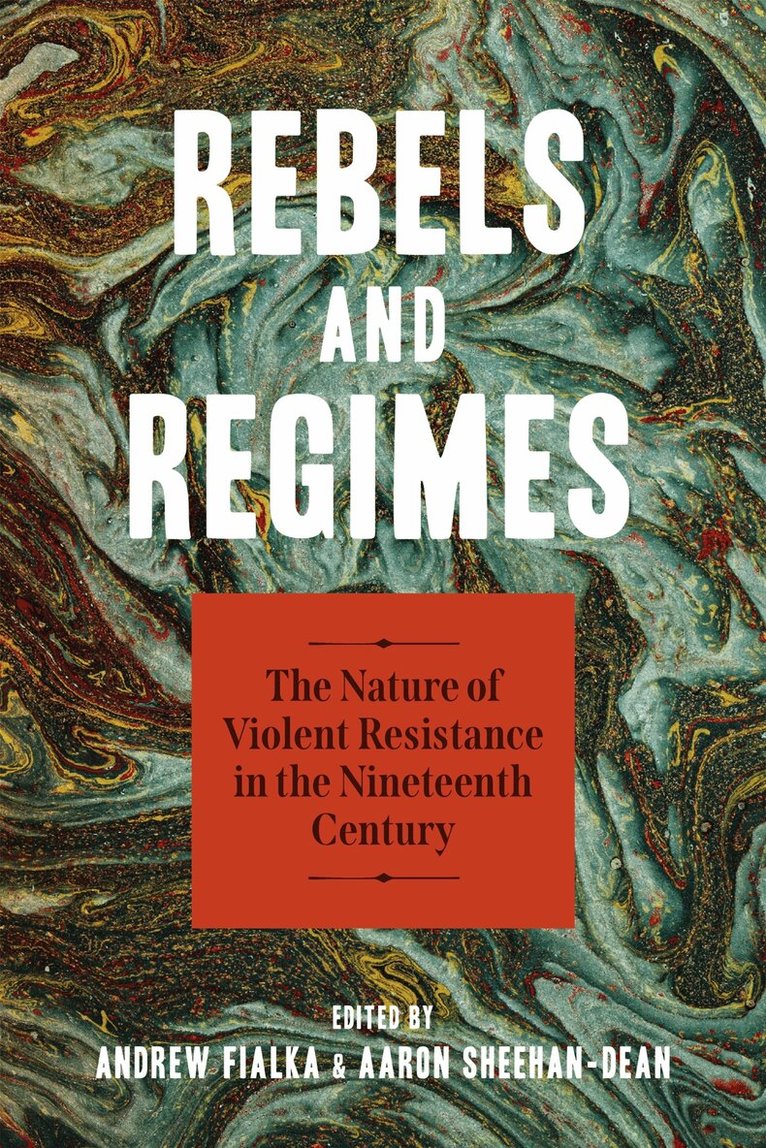
Rebels and Regimes
The Nature of Violent Resistance in the Nineteenth Century
Inbunden, Engelska, 2026
566 kr
Kommande
Rebels and Regimes presents a global view of the nature of violent resistance throughout the nineteenth century. The volume's breadth and scope reveal commonalities and differences among regimes and insurgents in their different contexts, offering a view that the participants themselves never had. The collection is composed of ten essays, each focused on a specific conflict or period of colonial overreach: imperialist efforts against Caribbean maroons, the Peninsular War, the Second Seminole War, the Taiping Rebellion, the American Civil War, Russian imperial expansion, British imperial expansion in both India and South Africa, the War of the Triple Alliance, and the Dutch-Aceh War. Using a comparative approach to show how established regimes fought rebels, the volume emphasizes the importance of race, political rhetoric, and historians' paradigms in understanding nineteenth-century violence. As the collection demonstrates, comparing violence and histories of violence at a global level provides significant historiographic value. Case studies of two or three conflicts abound, but the increasing web of connections—economic, cultural, political, and military—across national communities in this era demands a more comprehensive framing. At an analytical level, the volume lays bare the usefulness and limitations of traditional concepts used to study war, from Eastern and Western ways of war to regular and irregular fighting methods to symmetric and asymmetric warfare. A comparative approach at this scale drives home the characteristic savagery of established regimes, the intentionality in guerrilla violence, and the historian's need to keep the present and the past in view. The essays also remind us of the importance of military thought and violence as one of the axes of globalization in the nineteenth century, something that scholars of globalization have rarely recognized. Andrew Fialka and Aaron Sheehan-Dean, "Military History, Global History, and the Mid-Nineteenth Century" Marcus Nevius, "Little Wars and the Imperial Competition for Sovereignty in the Maroon Caribbean During the Age of Revolutions" Charles Esdaile, "'War to the Knife?': Spanish Guerrillas Reappraised" Samuel Watson, "The Complex Character of the Second Seminole War" Zhenman Ye, "On the March to Victory: Irregular Warfare and the Taiping Rebellion, 1851–1864" Joseph Beilein, "The Word Is Not the Thing: A Short Biography of 'Irregular Warfare' in the American Civil War" Ian Campbell, "Colonial Warfare as Irregular Warfare: Conflict on the Imperial Russian Borderlands During the Nineteenth Century" Gavin Rand, "'The Surf That Marks the Edge and Advance of Civilization': Frontier Wars in Colonial South Asia" Vitor Izecksohn, "The Campaign of Cordilleras in the War of the Triple Alliance, 1869–1870: Resistance or Suicide?" Jacob Ivey, "'A Pretorian Guard of Savages': African Troops and the Implementation of Formal and Informal Order in Nineteenth-Century Natal" Josh Gedeacht, "Harnessing Mobility for Colonial Counterinsurgency: The Case of the Dutch-Aceh War in Southeast Asia, 1873–1904"
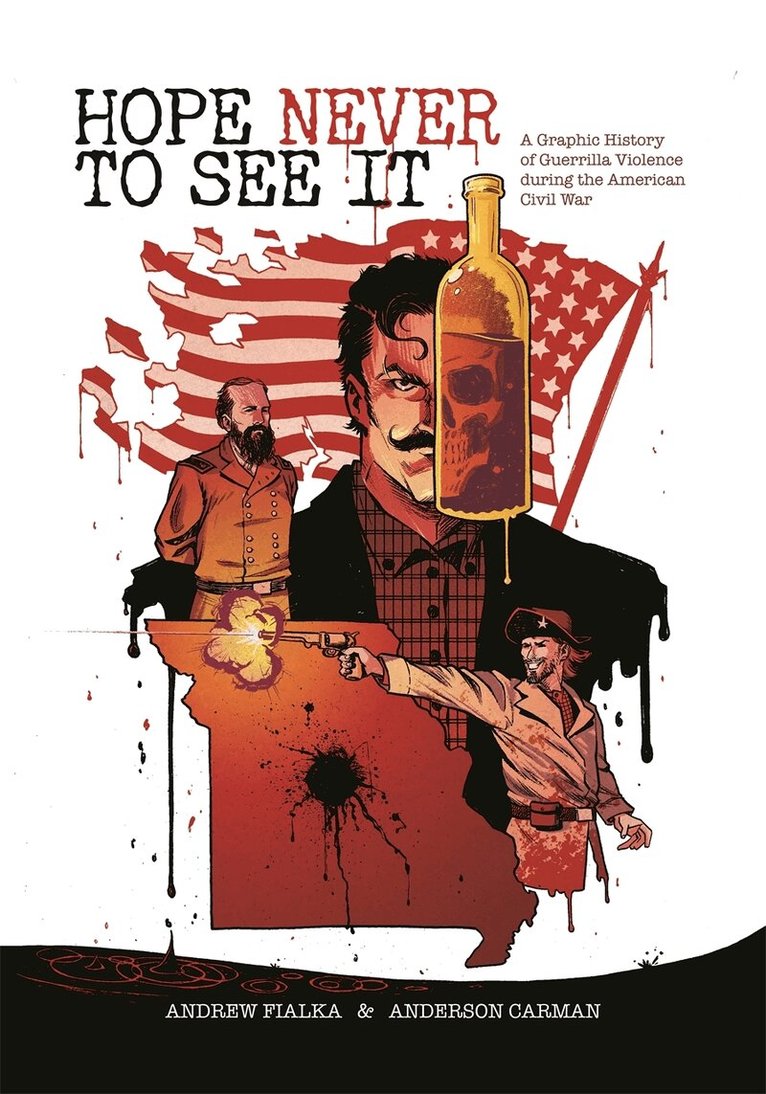
Hope Never to See It
A Graphic History of Guerrilla Violence during the American Civil War
Häftad, Engelska, 2025
257 kr
Skickas inom 3-6 vardagar
Hope Never to See It illustrates two exceptional incidents of occupational and guerrilla violence in Missouri during the American Civil War. The first is a Union spy’s two-week-long murder spree targeting civilians, and the second is a pro-Confederate guerrillas’ mutilation of almost 150 U.S. troops.The men leading the atrocities (Jacob Terman, alias Harry Truman, and “Bloody” Bill Anderson) weren’t so different. Both the Union spy and the infamous Confederate guerrilla claimed to be avenging the deaths of their families, operated under orders from military officials, and were hard drinkers. Their acts outline the terror inflicted on both sides of the struggle.This book’s use of sequential art displays these grisly realities to mute the war’s glorification and to help prompt a modern, meaningful reconciliation with the war. The moral ambiguities contained within this story call into question our understanding of the laws of war and the ways in which wars end.