Andrew H. Wedeman - Böcker
Visar alla böcker från författaren Andrew H. Wedeman. Handla med fri frakt och snabb leverans.
4 produkter
4 produkter
From Mao to Market
Rent Seeking, Local Protectionism, and Marketization in China
Häftad, Engelska, 2009
428 kr
Skickas inom 7-10 vardagar
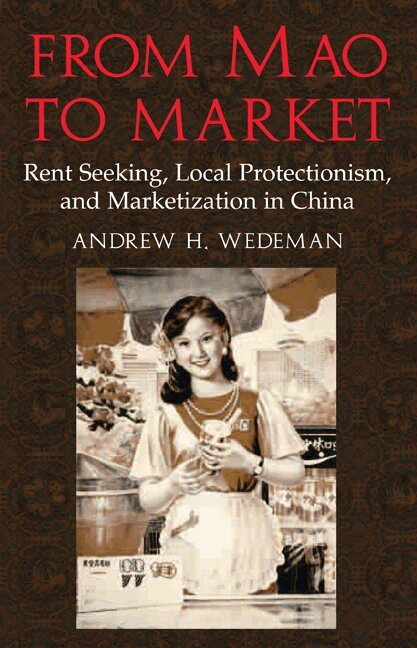
Andrew Wedemen argues that China succeeded in moving from a Maoist command economy to a market economy because the central government failed to prevent local governments from forcing prices to market levels. Having partially decontrolled the economy in the early 1980s, economic reformers baulked at price reform, opting instead for a hybrid system wherein commodities had two prices, one fixed and one floating. Depressed fixed prices led to 'resource wars', as localities battled each other for control over undervalued commodities while inflated consumer goods prices fuelled a headlong investment boom that saturated markets and led to the erection of import barriers. Although local rent seeking and protectionism appeared to carve up the economy, in reality they had not only pushed prices to market levels and cleared the way for sweeping reforms in the 1980s, they had also pushed China past the 'pitfalls' of reform that entrapped other socialist economies.
From Mao to Market
Rent Seeking, Local Protectionism, and Marketization in China
Inbunden, Engelska, 2003
744 kr
Skickas inom 7-10 vardagar
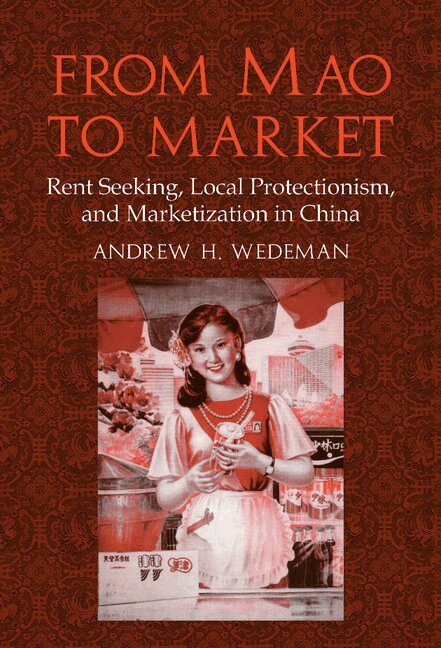
Andrew Wedemen argues that China succeeded in moving from a Maoist command economy to a market economy because the central government failed to prevent local governments from forcing prices to market levels. Having partially decontrolled the economy in the early 1980s, economic reformers baulked at price reform, opting instead for a hybrid system wherein commodities had two prices, one fixed and one floating. Depressed fixed prices led to 'resource wars', as localities battled each other for control over undervalued commodities while inflated consumer goods prices fuelled a headlong investment boom that saturated markets and led to the erection of import barriers. Although local rent seeking and protectionism appeared to carve up the economy, in reality they had not only pushed prices to market levels and cleared the way for sweeping reforms in the 1980s, they had also pushed China past the 'pitfalls' of reform that entrapped other socialist economies.
1 592 kr
Skickas inom 10-15 vardagar
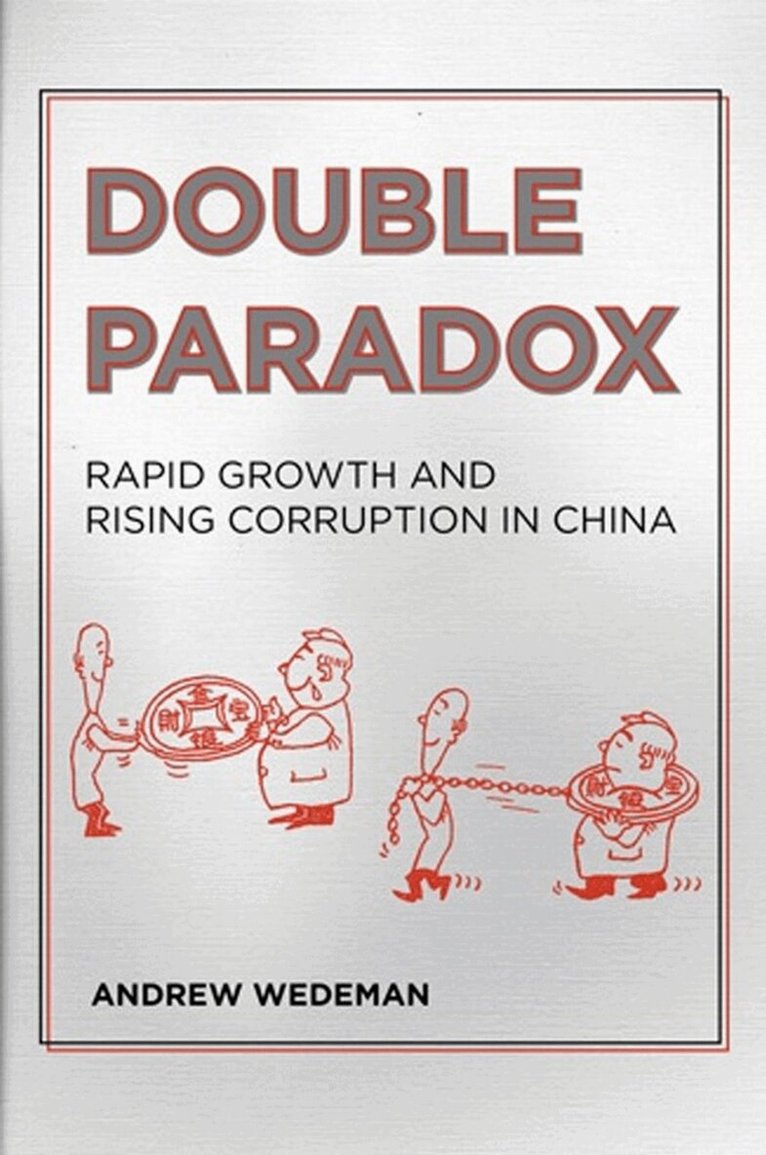
According to conventional wisdom, rising corruption reduces economic growth. And yet, between 1978 and 2010, even as officials were looting state coffers, extorting bribes, raking in kickbacks, and scraping off rents at unprecedented rates, the Chinese economy grew at an average annual rate of 9 percent. In Double Paradox, Andrew Wedeman seeks to explain why the Chinese economy performed so well despite widespread corruption at almost kleptocratic levels.Wedeman finds that the Chinese economy was able to survive predatory corruption because corruption did not explode until after economic reforms had unleashed dynamic growth. To a considerable extent corruption was also a by-product of the transfer of undervalued assets from the state to the emerging private and corporate sectors and a scramble to capture the windfall profits created by their transfer. Perhaps most critically, an anti-corruption campaign, however flawed, has proved sufficient to prevent corruption from spiraling out of control. Drawing on more than three decades of data from China—as well as examples of the interplay between corruption and growth in South Korea, Taiwan, Equatorial Guinea, and other nations in Africa and the Caribbean—Wedeman cautions that rapid growth requires not only ongoing and improved anticorruption efforts but also consolidated and strengthened property rights.
305 kr
Skickas inom 11-20 vardagar
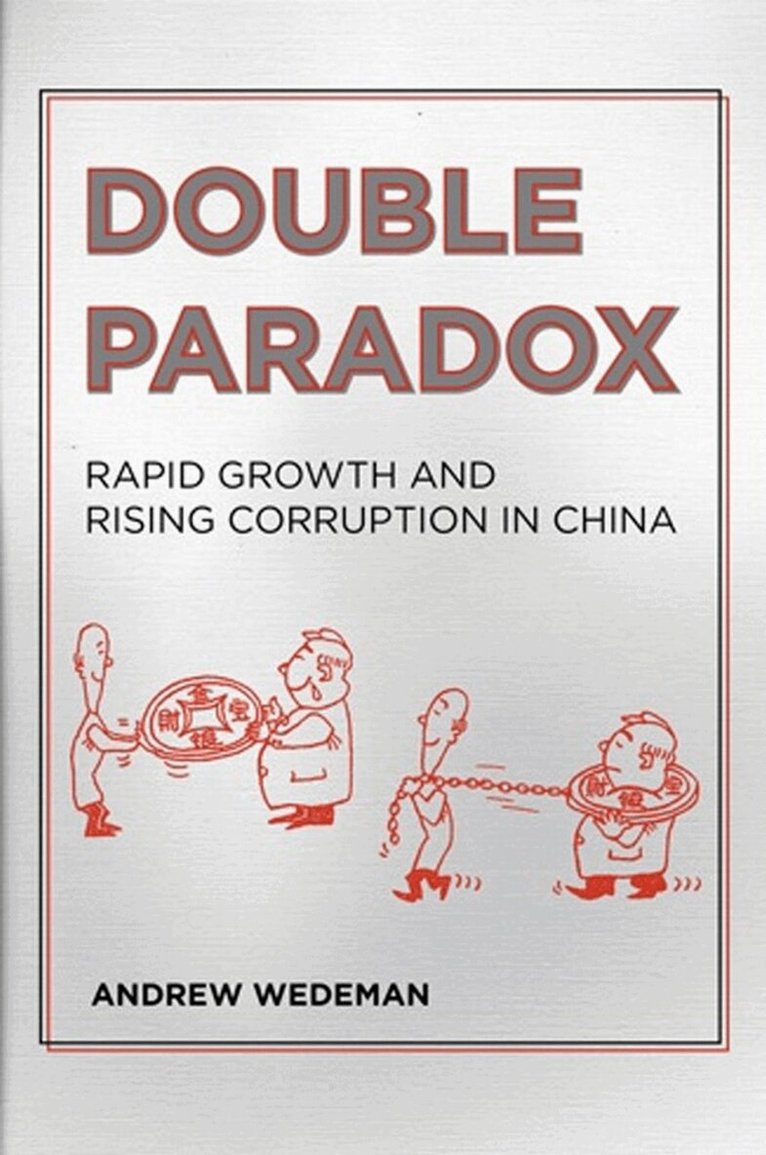
According to conventional wisdom, rising corruption reduces economic growth. And yet, between 1978 and 2010, even as officials were looting state coffers, extorting bribes, raking in kickbacks, and scraping off rents at unprecedented rates, the Chinese economy grew at an average annual rate of 9 percent. In Double Paradox, Andrew Wedeman seeks to explain why the Chinese economy performed so well despite widespread corruption at almost kleptocratic levels.Wedeman finds that the Chinese economy was able to survive predatory corruption because corruption did not explode until after economic reforms had unleashed dynamic growth. To a considerable extent corruption was also a by-product of the transfer of undervalued assets from the state to the emerging private and corporate sectors and a scramble to capture the windfall profits created by their transfer. Perhaps most critically, an anti-corruption campaign, however flawed, has proved sufficient to prevent corruption from spiraling out of control. Drawing on more than three decades of data from China—as well as examples of the interplay between corruption and growth in South Korea, Taiwan, Equatorial Guinea, and other nations in Africa and the Caribbean—Wedeman cautions that rapid growth requires not only ongoing and improved anticorruption efforts but also consolidated and strengthened property rights.