Andrew J. Kirkendall - Böcker
Visar alla böcker från författaren Andrew J. Kirkendall. Handla med fri frakt och snabb leverans.
6 produkter
6 produkter
Class Mates
Male Student Culture and the Making of a Political Class in Nineteenth-Century Brazil
Häftad, Engelska, 2002
379 kr
Skickas inom 10-15 vardagar
This innovative study considers how approximately seven thousand male graduates of law came to understand themselves as having a legitimate claim to authority over nineteenth-century Brazilian society during their transition from boyhood to manhood. While pursuing their traditional studies at Brazil's two law schools, the students devoted much of their energies to theater and literature in an effort to improve their powers of public speaking and written persuasion. These newly minted lawyers quickly became the magistrates, bureaucrats, local and national politicians, diplomats, and cabinet members who would rule Brazil until the fall of the monarchy in 1889.Andrew J. Kirkendall examines the meaning of liberalism for a slave society, the tension between systems of patriarchy and patronage, and the link between language and power in a largely illiterate society. In the interplay between identity and state formation, he explores the processes of socialization that helped Brazil achieve a greater measure of political stability than any other Latin American country.
605 kr
Kommande
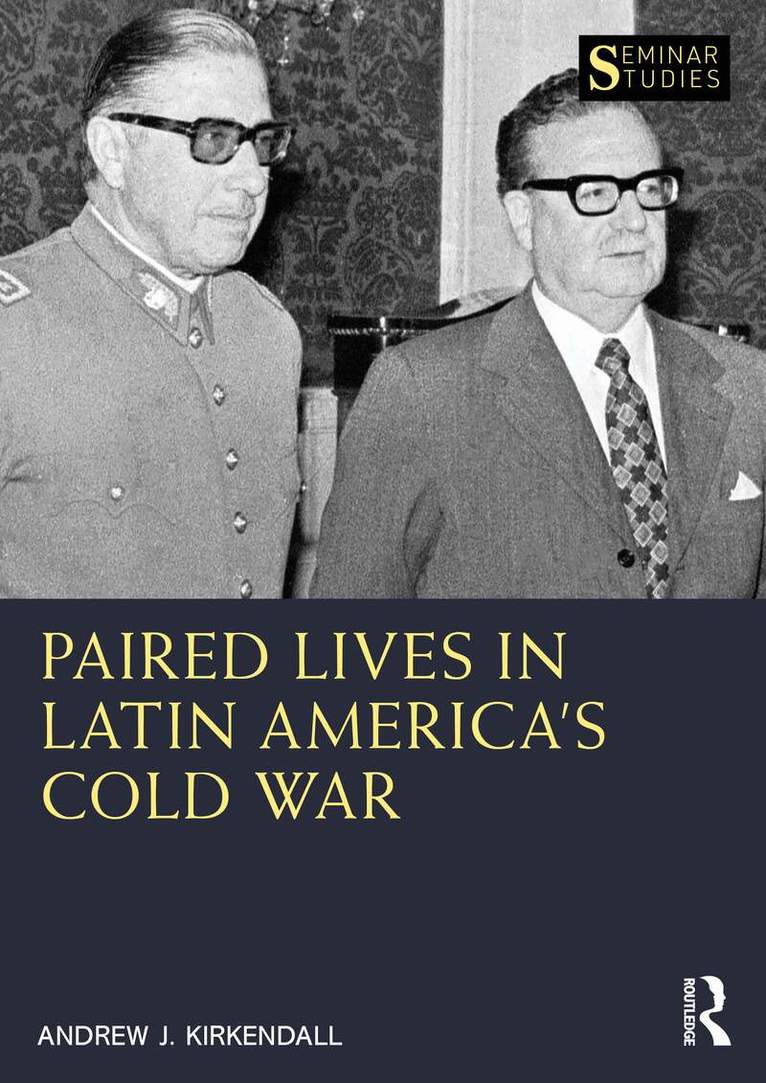
Paired Lives in Latin America’s Cold War takes a biographical approach to teaching the history of the Cold War in Latin America and provides a unique overview to a period that is steeped in reform, revolution, and repression.The chosen pairs from major countries represent the vast number of leaders, intellectuals, and “ordinary people” who all hoped for significant socioeconomic transformation of one kind or another. Such figures include presidents, revolutionary leaders, army generals, a founder of the Mothers of the Plaza de Mayo, democracy and union activists from countries such as Guatemala, Chile, the Dominican Republic, Brazil, Argentina, and Nicaragua. Primary documents such as speeches, interviews, memoirs, and diaries are used to emphasize individuals’ reflections on their experiences and understanding of the Cold War, such as Che Guevara’s diary which recounts his failed insurgency in Bolivia.By including biographies with a large geographical scope from across the political spectrum, this study is a useful introduction for students with little prior knowledge of the Cold War in Latin America. Aided by a Chronology, Who’s Who, Glossary, and Guide to Further Reading, this volume is useful for all students who study the Cold War in Latin America.
2 176 kr
Kommande
Paired Lives in Latin America’s Cold War takes a biographical approach to teaching the history of the Cold War in Latin America and provides a unique overview to a period that is steeped in reform, revolution, and repression.The chosen pairs from major countries represent the vast number of leaders, intellectuals, and “ordinary people” who all hoped for significant socioeconomic transformation of one kind or another. Such figures include presidents, revolutionary leaders, army generals, a founder of the Mothers of the Plaza de Mayo, democracy and union activists from countries such as Guatemala, Chile, the Dominican Republic, Brazil, Argentina, and Nicaragua. Primary documents such as speeches, interviews, memoirs, and diaries are used to emphasize individuals’ reflections on their experiences and understanding of the Cold War, such as Che Guevara’s diary which recounts his failed insurgency in Bolivia.By including biographies with a large geographical scope from across the political spectrum, this study is a useful introduction for students with little prior knowledge of the Cold War in Latin America. Aided by a Chronology, Who’s Who, Glossary, and Guide to Further Reading, this volume is useful for all students who study the Cold War in Latin America.
379 kr
Skickas inom 10-15 vardagar
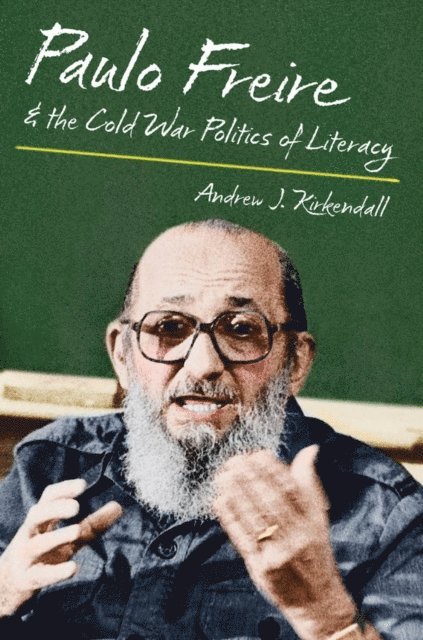
In the twentieth century, illiteracy and its elimination were political issues important enough to figure in the fall of governments (as in Brazil in 1964), the building of nations (in newly independent African countries in the 1970s), and the construction of a revolutionary order (Nicaragua in 1980). This political biography of Paulo Freire (1921-97), who played a crucial role in shaping international literacy education, also presents a thoughtful examination of the volatile politics of literacy during the Cold War.A native of Brazil's impoverished northeast, Freire developed adult literacy training techniques that involved consciousness-raising, encouraging peasants and newly urban peoples to see themselves as active citizens who could transform their own lives. Freire's work for state and national government agencies in Brazil in the early 1960s eventually aroused the suspicion of the Brazilian military, as well as of U.S. government aid programs. Political pressures led to Freire's brief imprisonment, following the military coup of 1964, and then to more than a decade and a half in exile. During this period, Freire continued his work in Chile, Nicaragua, and postindependence African countries, as well as in Geneva with the World Council of Churches and in the United States at Harvard University. Andrew J. Kirkendall's evenhanded appraisal of Freire's pioneering life and work, which remains influential today, gives new perspectives on the history of the Cold War, the meanings of radicalism, and the evolution of the Left in Latin America.
1 054 kr
Skickas inom 10-15 vardagar
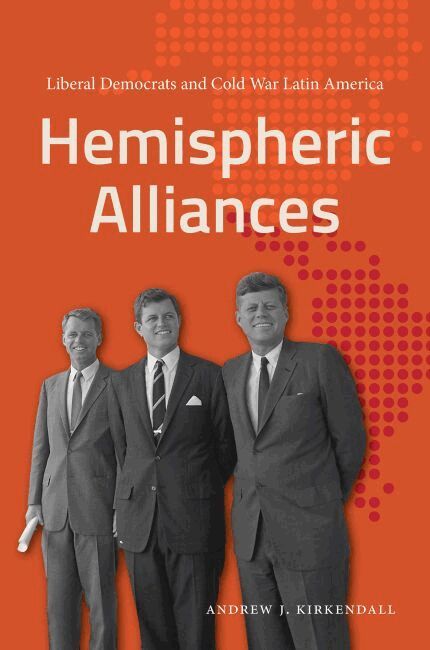
Hemispheric foreign policy has waxed and waned since the Mexican War, and the Cold War presented both extraordinary promises and dangerous threats to U.S.-Latin American cooperation. In Hemispheric Alliances, Andrew J. Kirkendall examines the strengths and weaknesses of new models for U.S.-Latin American relations created by liberal Democrats who came to the fore during the Kennedy Administration and retained significant influence until the Reagan era. Rather than exerting ironfisted power in Latin America, liberal Democrats urged Washington to be a moral rather than a militaristic leader in hemispheric affairs.Decolonization, President Eisenhower's missteps in Latin America, and the Cuban Revolution all played key roles in the Kennedy administration's Alliance for Progress, which liberal Democrats hailed as a new cornerstone for U.S.-Latin American foreign policy. During the Vietnam War era, liberal Democrats began to incorporate human rights more centrally into their agendas, using Latin America as the primary arena for these policies. During the long period of military dictatorship in much of Latin America and the Caribbean, liberal Democrats would see their policies dissolved by the Nixon, Reagan, and Bush administrations who favored militant containment of both communism and absolutism.
517 kr
Skickas inom 10-15 vardagar
Hemispheric foreign policy has waxed and waned since the Mexican War, and the Cold War presented both extraordinary promises and dangerous threats to U.S.–Latin American cooperation. In Hemispheric Alliances, Andrew J. Kirkendall examines the strengths and weaknesses of new models for U.S.–Latin American relations created by liberal Democrats who came to the fore during the Kennedy Administration and retained significant influence until the Reagan era. Rather than exerting ironfisted power in Latin America, liberal Democrats urged Washington to be a moral rather than a militaristic leader in hemispheric affairs. Decolonization, President Eisenhower's missteps in Latin America, and the Cuban Revolution all played key roles in the Kennedy administration's Alliance for Progress, which liberal Democrats hailed as a new cornerstone for U.S.–Latin American foreign policy. During the Vietnam War era, liberal Democrats began to incorporate human rights more centrally into their agendas, using Latin America as the primary arena for these policies. During the long period of military dictatorship in much of Latin America and the Caribbean, liberal Democrats would see their policies dissolved by the Nixon, Reagan, and Bush administrations who favored militant containment of both communism and absolutism.