Andrew Long – författare
Visar alla böcker från författaren Andrew Long. Handla med fri frakt och snabb leverans.
7 produkter
7 produkter
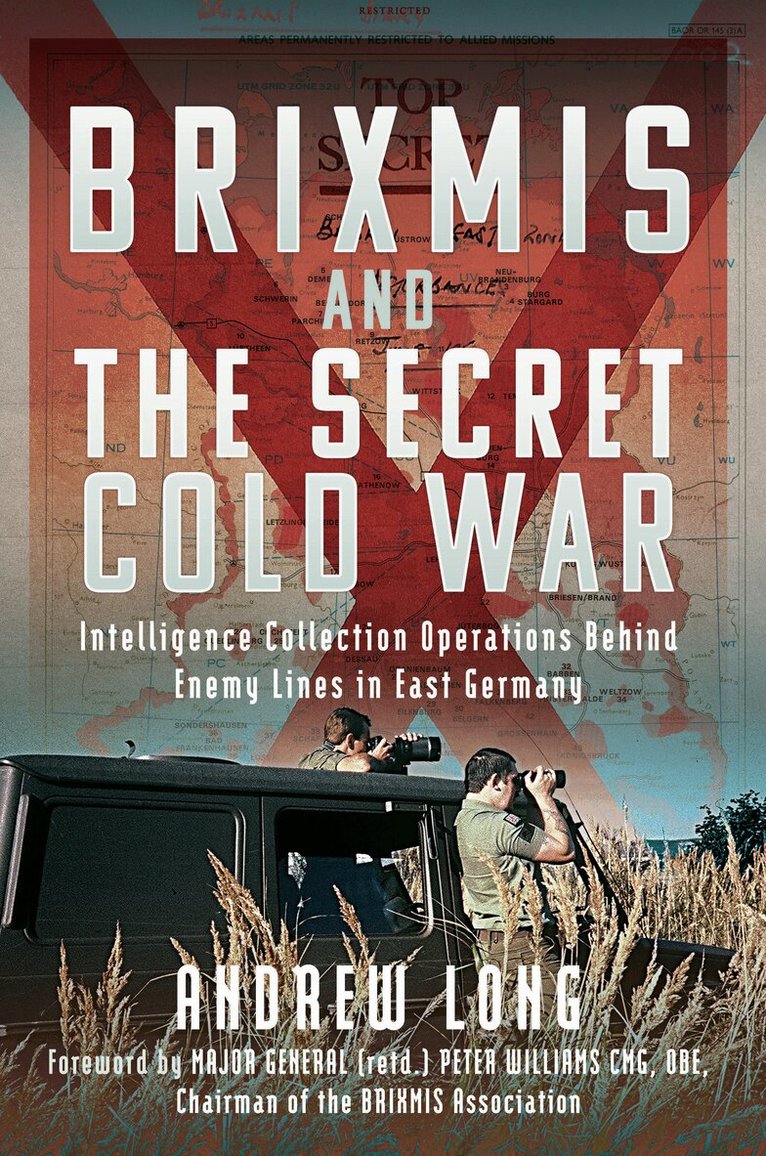
BRIXMIS and the Secret Cold War
Intelligence Collection Operations Behind Enemy Lines in East Germany
Inbunden, Engelska, 2024
266 kr
Skickas
The German Democratic Republic, or East Germany, was the frontline in the Cold War, packed with hundreds of thousands of Soviet and East German troops armed with the latest Warsaw Pact equipment, lined up along the 1,400 km Inner German Border. However, because of the repressive East German police state, little human intelligence about these forces reached the West. Who were they? Where were they located? What were they doing? How were they equipped? What were their intentions? NATO was lined up in West Germany to face these forces and relied on getting up-to-date intelligence to warn of any threat, ‘Indicators of Hostility’ that could be a precursor to an invasion.BRIXMIS, the British Commanders’-in-Chief Mission to the Soviet Forces in Germany, was on hand to provide that intelligence. Thanks to an obscure 1946 agreement between the British and Soviets that established ‘liaison missions’ in their respective zones of occupation, the British were able to send highly qualified military ‘observers’ into East Germany to roam (relatively) freely and keep an eye on what was going on. What started as ‘liaison’, a point of contact between the British and Soviet occupation forces, developed into a very sophisticated intelligence gathering operation, sending ‘tours’ out every day of the year, between 1946 and when the Mission closed in 1990\.These tours were undertaken in high-performance, highly modified marked vehicles, with personnel in uniform and unarmed, apart from professional photographic equipment and occasionally some top-secret gadgets from the boffins back in the UK. They joined their French and American colleagues in snooping around the opposition, photographing military bases, equipment, and manoeuvres, and trying to evade capture by the secret police and counterintelligence units. They faced danger and violence daily, but thanks to their bravery and professionalism, the West had accurate and up to date information on what was happening in East Germany which help keep the peace all that time. This is the story of this little-known unit and their exploits behind enemy lines.
309 kr
Kommande
The Defiant was an advanced aircraft at the time it was designed. Crewed by a pilot and an air gunner, the latter in a Boulton Paul powered turret, it was an exceptionally good gun platform. Though it suffered reliability issues during its early days, once its teething issues were banished the Defiant was a powerful, incredibly stable, and, in the hands of a good pilot, quite manoeuvrable aircraft.A concept that could be traced back to the First World War, it was thought that turreted interceptor aircraft such as the Defiant would be at the forefront of intercepting enemy bomber formations. First flown on 11 August 1937, the development of the Defiant and the tactics to be used by its crews continued right up to, and even beyond, the outbreak of war in 1939.The Defiants’ first combat successes and losses were suffered by 264 Squadron from mid-May 1940 when they operated out of RAF Manston providing air cover over Dunkirk. It is stated that on one single day – 29 May 1940 – Defiant crews destroyed no less than thirty-seven enemy aircraft. By the time the Battle of France had ended, several Defiant crews had reached ‘Ace’ status. Ahead, though, lay the Battle of Britain – by when a second Defiant squadron, No.141, had been formed and become operational.Having only moved south from Scotland eight days earlier, 141 Squadron encountered the Luftwaffe for the first time on 19 July 1940. It was a disaster – six of the nine Defiants were lost, along with ten aircrew. Within forty-eight hours, 141 Squadron was removed from operations and returned to Scotland. Not for nothing have the events that day come to be referred to as the ‘Slaughter of the Innocents’.With 264 Squadron’s losses continuing to mount, after the debacle of 19 July the role of the Defiant as a day fighter came under scrutiny. Even as the Battle of Britain still raged, the Defiant was reborn as a night fighter.The first confirmed Defiant nocturnal ‘kill’, by a 141 Squadron crew, came in mid-September 1940. This was also a period in which Defiant began night intruder sorties over France.New squadrons were soon being formed, with a further four raised by the end of 1940. Six more followed by the end of 1941. They all continued in the night fighter role until March 1942, when it became apparent that the Defiant could no longer compete with the newer German bombers. Nevertheless, in its time as a night fighter, not only had Defiant crews shot down sixty-four enemy aircraft, but they had also been instrumental in the development of Airborne Interception, or A.I., radar.The Defiant still had a part to play in the Allies’ war effort. A number were used by air sea rescue squadrons, as training aircraft at air gunnery schools and operational training units, or even as target tugs. It was with 515 Squadron, which was formed in October 1942 and operated the type until December 1943, that the Defiant undertook radio-countermeasure sorties over Europe. It was these flights that brought to an end the Defiant’s varied and, at times, controversial career – all of which is explored in detail in this book.
Secrets of the Cold War
Espionage and Intelligence Operations - From Both Sides of the Iron Curtain
Inbunden, Engelska, 2022
266 kr
Skickas
The Cold War, which lasted from the end of the Second World War to the collapse of the Soviet Union in 1991, was fought mostly in the shadows, with the superpowers manoeuvring for strategic advantage in an anticipated global armed confrontation that thankfully never happened.How did the intelligence organisations of the major world powers go about their work? What advantages were they looking for? Did they succeed?By examining some of the famous, infamous, or lesser-known intelligence operations from both sides of the Iron Curtain, this book explains how the superpowers went about gathering intelligence on each other, examines the type of information they were looking for, what they did with it, and how it enabled them to stay one step ahead of the opposition. Possession of these secrets threatened a Third World War, but also helped keep the peace for more than four decades.With access to previously unreleased material, the author explores how the intelligence organisations, both civilian and military, took advantage of rapid developments in technology, and how they adapted to the changing threat. The book describes the epic scale of some of these operations, the surprising connections between them, and how they contributed to a complex multi-layered intelligence jigsaw which drove decision making at the highest level.On top of all the tradecraft, gadgets and cloak and dagger', the book also looks at the human side of espionage: their ideologies and motivations, the winners and losers, and the immense courage and frequent betrayal of those whose lives were touched by the Secrets of the Cold War.
Del 27 - Europe@War
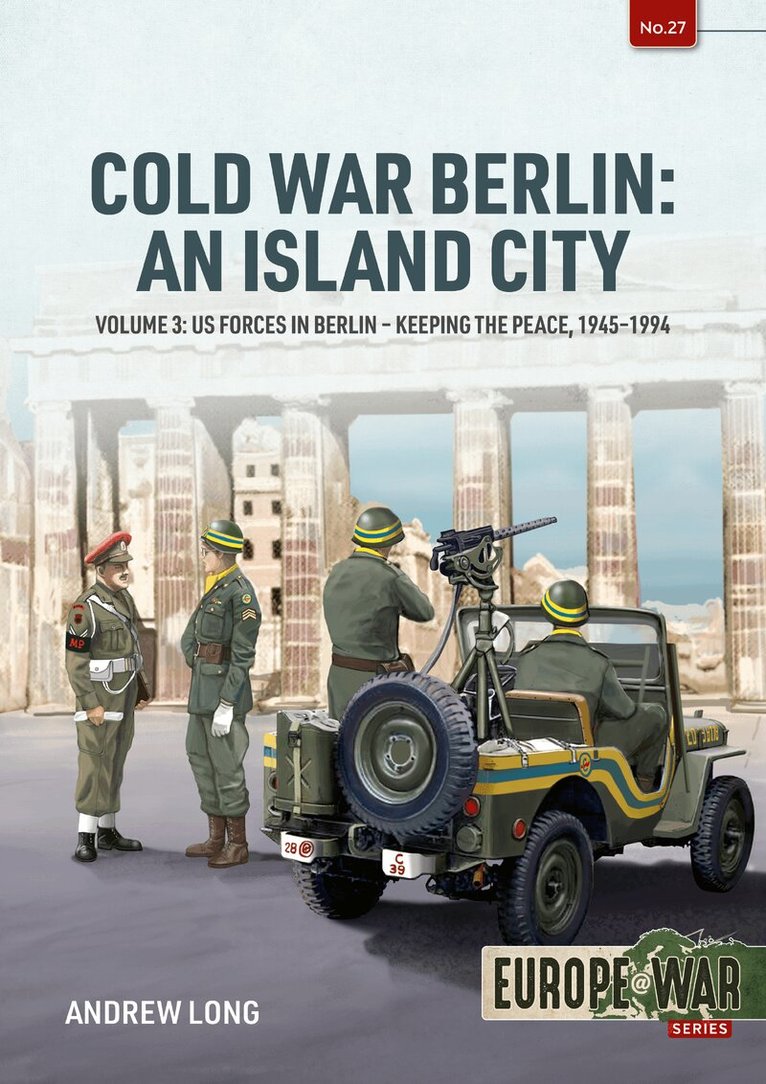
Cold War Berlin: An Island City Volume 3
US Forces in Berlin - Keeping the Peace, 1945-1994
Häftad, Engelska, 2023
214 kr
Skickas
Cold War Berlin: An Island City Volume 4
US Forces in Berlin - Preparing for War, 1945-1994
Häftad, Engelska, 2024
207 kr
Skickas
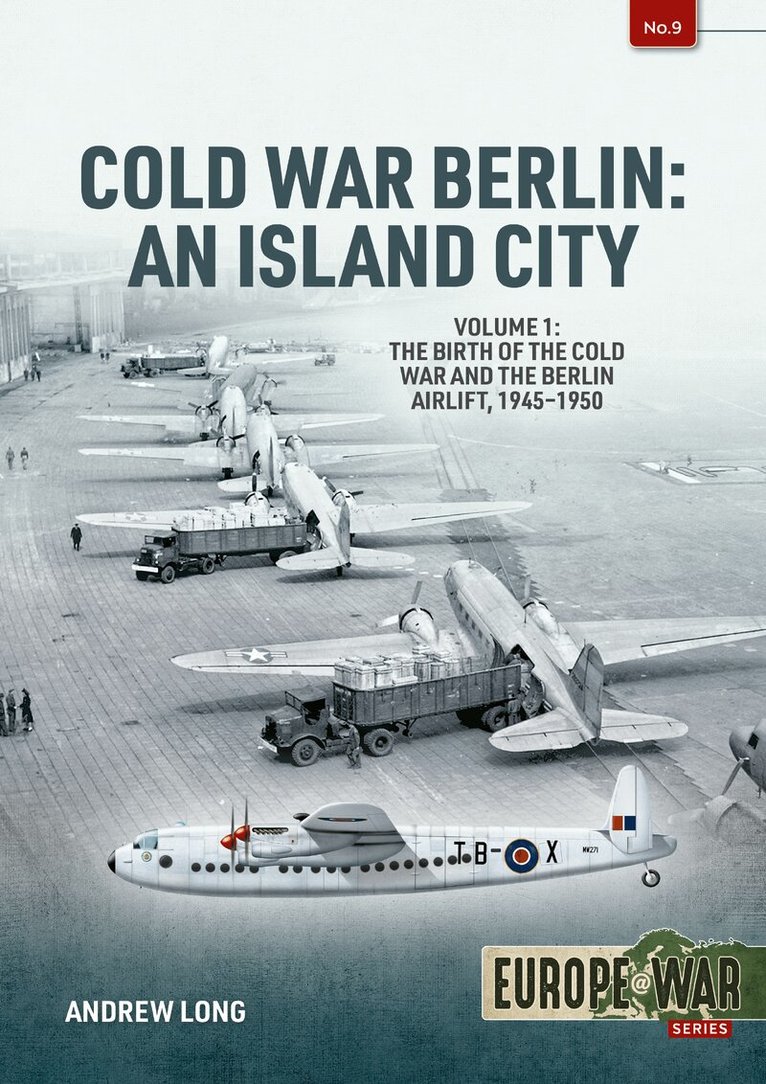
Cold War Berlin: An Island City Volume 1
The Birth of the Cold War and the Berlin Airlift, 1945-1950
Häftad, Engelska, 2021
214 kr
Skickas
Del 12 - Europe@War
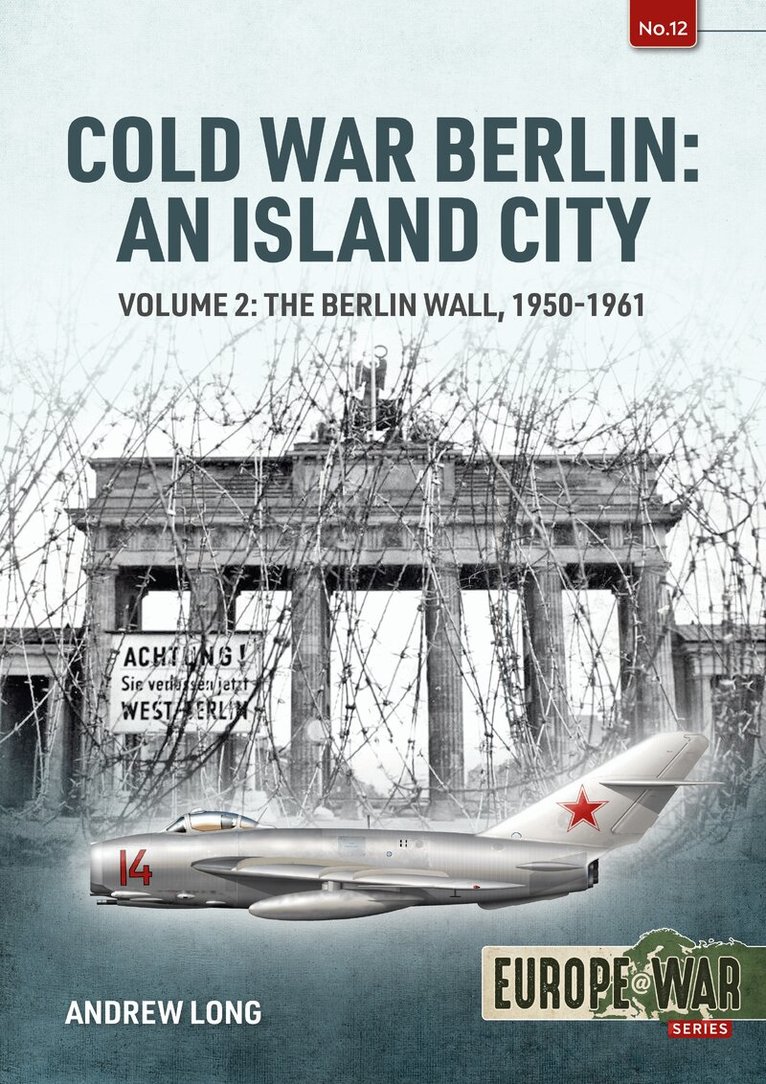
Cold War Berlin: An Island City Volume 2
The Berlin Wall 1950-1961
Häftad, Engelska, 2021
242 kr
Skickas